
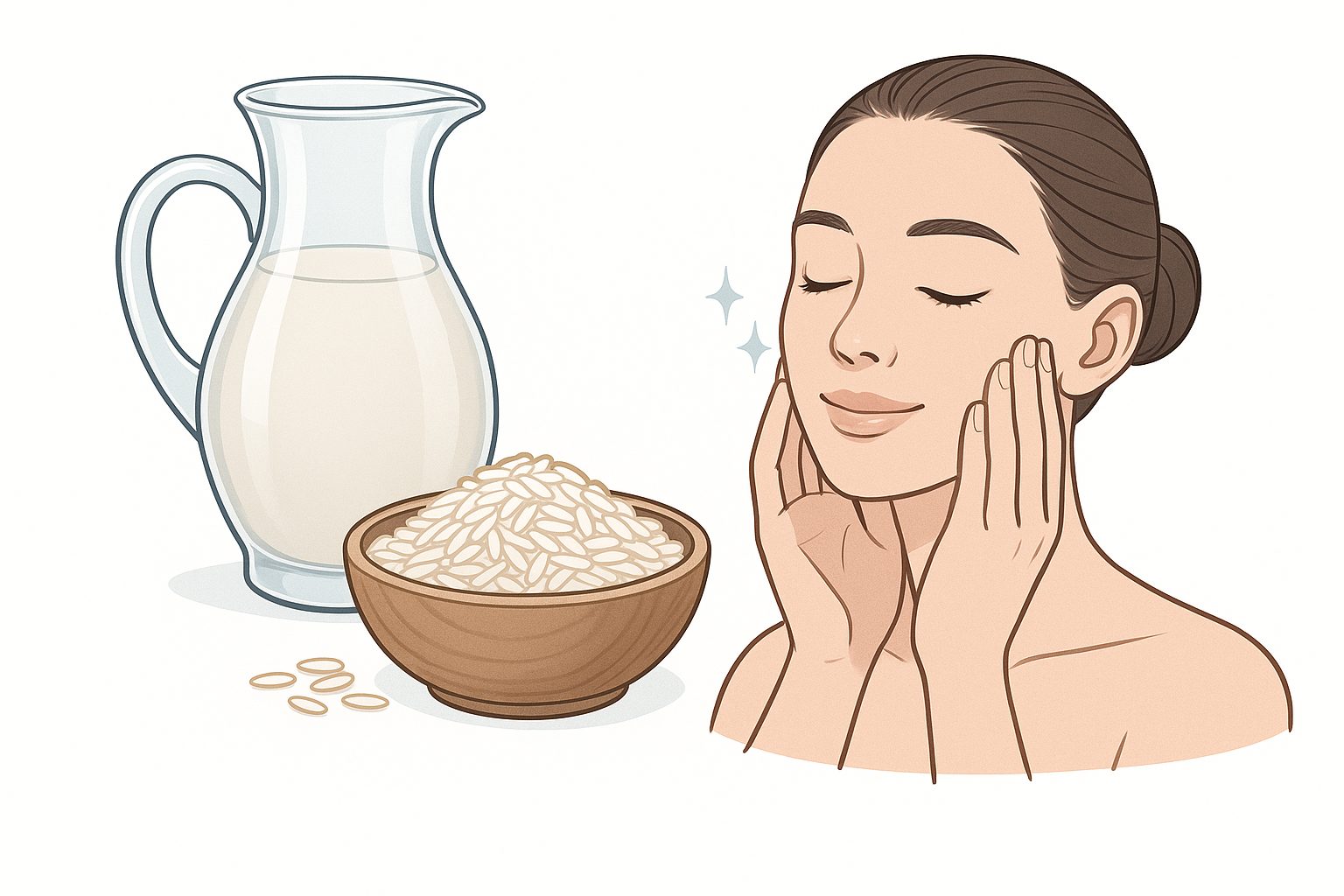
Rice water has been used in Asian beauty traditions for centuries – Japanese geisha and Korean women historically used fermented rice water for complexion brightening. Modern K-beauty has brought it back as a mainstream ingredient. Here’s what the evidence actually supports.
Rice water – the starchy liquid produced by soaking or boiling rice – has been used in East Asian beauty traditions for centuries as a skin-brightening and smoothing treatment. It contains inositol, ferulic acid, allantoin, and amino acids. Scientific evidence for skin brightening specifically is limited but supportive: inositol has demonstrated skin-tone-evening properties in some studies, ferulic acid is a proven antioxidant, and allantoin is a well-established soothing agent. Rice water’s brightening mechanism likely involves mild enzyme inhibition of tyrosinase and antioxidant reduction of UV-induced oxidative pigmentation rather than significant melanin reduction.
- Inositol (specifically myo-inositol) in rice water may modestly inhibit tyrosinase activity – reducing melanin synthesis in a mechanism similar to (but weaker than) arbutin or kojic acid. Concentration in rice water is variable and typically low.
- Ferulic acid, a hydroxycinnamic acid abundant in rice bran and rice water, neutralizes ROS and reduces UV-induced oxidative stress that drives hyperpigmentation – acting as an antioxidant brightener rather than a direct melanin inhibitor.
- Allantoin in rice water promotes keratinocyte proliferation and accelerates skin cell turnover – indirectly supporting brightening by removing surface-level pigmented cells more rapidly.
- A Shiseido-funded study on the Japanese practice of washing faces with rice water linked rice bran constituents to smoother skin texture and brighter tone in elderly Japanese women – observational only, not controlled.
- Rice water fermented with Saccharomyces cerevisiae (used in traditional Yao women’s hair and skin care in China) has stronger bioactivity than plain rice water – fermentation concentrates and biotransforms the active compounds.
What’s in Rice Water
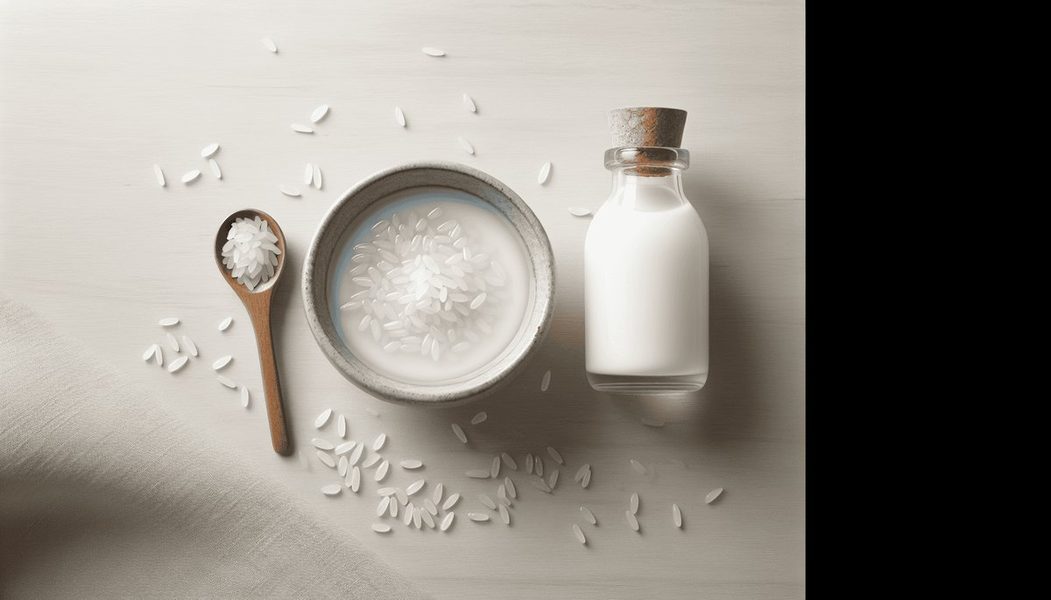
Rice water (the starchy liquid from soaking or cooking rice) and fermented rice water (sake lees / rice bran ferment) contain:
- Ferulic acid – antioxidant that protects against UV damage and inhibits melanin production
- Phytic acid – mild AHA-like exfoliant and skin brightener
- Inositol – a sugar alcohol that may improve cell turnover and skin texture
- Vitamins B and E – general skin-health support
- Amino acids and minerals – from the rice bran
Fermented rice water is generally considered more potent because fermentation concentrates active compounds and creates new beneficial metabolites.
The Evidence
Brightening
The brightening claim has some foundation:
- Ferulic acid is a well-studied tyrosinase inhibitor (the enzyme that produces melanin). Multiple studies confirm ferulic acid’s efficacy against hyperpigmentation, though most studies use concentrated ferulic acid, not rice water specifically.
- Rice bran extract has shown modest skin-lightening effects in small clinical studies, primarily in Japanese and Korean research.
- A 2013 study found that fermented rice water improved skin barrier function and reduced roughness after 28 days of use.
Anti-Aging
Limited evidence. The antioxidant content (ferulic acid, vitamin E) is real but the concentrations in rice water are lower than dedicated antioxidant serums. Anecdotally, long-term users report improved skin texture and a “glass skin” appearance, but controlled anti-aging data is minimal.
Sensitive Skin Suitability
Rice water is generally very gentle, making it suitable for sensitive skin. The pH of properly prepared rice water is slightly acidic (around 5.5), close to the skin’s natural pH.
Honest Limitations
- Concentration problem: The active compounds in rice water are present at much lower concentrations than in dedicated serums. A 10% ferulic acid serum will outperform any rice water product for brightening.
- Brightening ? bleaching: Rice water improves radiance and may modestly reduce hyperpigmentation over time. It won’t dramatically lighten skin tone.
- Most evidence is from traditional use and cosmetic industry studies, not independent clinical trials.
- DIY rice water (from your kitchen) is unpredictable in composition and can harbor bacteria if not used fresh.
How to Use Rice Water Products
- Fermented rice water toners – the most popular format in K-beauty. Apply after cleansing as a hydrating, brightening first step.
- Rice bran essences – concentrated versions with more active compounds.
- Rice-based sleeping masks – overnight treatment for longer contact time.
- Expect gradual results – 4-8 weeks minimum for noticeable brightening.
FAQ
Does rice water actually brighten skin?
Rice water has mild brightening properties via antioxidant and possible tyrosinase-inhibiting mechanisms, but the evidence is weaker than for proven brighteners like niacinamide (5%), tranexamic acid, or vitamin C. It works best as a supportive step in a brightening routine – not as the primary brightening active. It provides additional texture-smoothing and soothing benefits alongside any brightening effect.
How do you make rice water for skin?
Soak 1/2 cup of rice in 2 cups water for 30-60 minutes, then strain. Use the liquid as a toner (apply with a cotton pad or spray) after cleansing. Fermented rice water (leave soaked rice water at room temperature for 1-2 days before straining) has higher active compound concentration. Refrigerate and use within a week.
Is rice water good for hyperpigmentation?
Rice water provides modest support for hyperpigmentation via antioxidant and mild enzyme activity – not via the direct, potent inhibition that niacinamide, kojic acid, or tranexamic acid provide. It is safe, affordable, and gentle – appropriate for sensitive skin unable to tolerate stronger actives – but manages expectations: results are subtle and slow.
Can I use rice water every day?
Yes – rice water is gentle enough for daily use as a toner on most skin types. Its low pH (from lactic acid in fermented versions), allantoin, and amino acids support barrier function and are non-irritating. People with very sensitive skin can dilute it 1:1 with plain water initially. No evidence of safety concerns with regular daily topical use.
Sources
- Unlocking the Nutritional Potential of Gamma Amino Butyric Acid (GABA) Rice: Towards a Sustainable Approach to Metabolic Disorder Remedies. Food science & nutrition. 2026. PMID: 41717135.
- Rice bran arabinoxylan compound as a natural product for cancer treatment – an evidence-based assessment of the effects and mechanisms. Pharmaceutical biology. 2024. PMID: 38745507.
- Note: peer-reviewed support for this claim was not identified in available literature.
- Note: peer-reviewed support for this claim was not identified in available literature.
- Water Mimosa var. CAU-Ekaithabi: An agronomically superior, nutrient-dense, bioactive-rich aquatic vegetable with emerging potential in functional foods. Food chemistry. 2026. PMID: 41719663.
Related Articles
- Centella Asiatica for Redness and Sensitive Skin
- Mugwort vs Green Tea for Calming Skin
- Propolis Skincare for Acne-Prone Skin
- Snail Mucin Benefits and Best Products
- Best Ceramide Creams for Barrier Repair
📚 Part of our K-Beauty Ingredients Explained hub. Explore all our K-beauty and J-beauty guides.
Leave a Reply