

Snail mucin (snail secretion filtrate) is arguably the ingredient that put K-beauty on the global map. It sounds bizarre, works surprisingly well for hydration and skin repair, and has more research behind it than most people expect. Here’s the honest picture.
Snail mucin filtrate (Helix aspersa secretion filtrate) is one of K-beauty’s most distinctive and genuinely bioactive ingredients. It is a complex biological fluid containing hyaluronic acid, glycoproteins, proteoglycans, allantoin, and antimicrobial peptides. Clinical and in vitro evidence supports its use for wound healing, hydration, reduction of atrophic acne scarring, and skin regeneration. A 2013 clinical study demonstrated snail secretion filtrate significantly reduced atrophic acne scars in 4 weeks. It is non-comedogenic, appropriate for all skin types, and well-tolerated even on sensitive skin.
- Snail mucin’s wound-healing activity is driven by glycoproteins and growth factor-like peptides that stimulate keratinocyte migration and proliferation – the same biological activity that allows snails to rapidly repair their own shells.
- Hyaluronic acid in snail secretion filtrate provides surface-level hydration; glycoproteins and allantoin accelerate epidermal repair and reduce the appearance of post-inflammatory marks – making it uniquely dual-purpose.
- A 2013 RCT demonstrated significant improvement in atrophic acne scarring in 4 weeks using a topical snail filtrate product – one of the few controlled trials supporting any natural ingredient for this indication.
- Snail mucin is non-comedogenic and has demonstrated antimicrobial activity against bacteria commonly associated with acne – making it appropriate for acne-prone skin despite its rich, hydrating texture.
- Product quality varies significantly: concentration, collection method, and formulation stability differ across brands. Cosrx Advanced Snail 96 Mucin Power Essence (96% snail secretion filtrate) is the most widely referenced clinical-quality product in K-beauty.
What Snail Mucin Actually Contains
Snail secretion filtrate is a complex mixture of:
- Glycoproteins – support skin repair and cell communication
- Hyaluronic acid – natural humectant for hydration
- Glycolic acid – mild exfoliant (in very small concentrations)
- Zinc – anti-inflammatory and wound-healing support
- Allantoin – soothes irritation and promotes cell regeneration
- Copper peptides – trace amounts that support collagen production
The composition explains why snail mucin products work across multiple skin concerns – the ingredient itself is a multi-functional blend, not a single active.
What the Research Shows

Wound Healing and Skin Repair
The most robust evidence is for skin repair. A 2013 study by Fabi et al. found that snail mucin-based products improved skin texture, reduced fine lines, and enhanced overall skin appearance over 12 weeks. The wound-healing properties of snail secretion have been documented in dermatological literature, with mechanisms tied to glycoprotein-mediated cell migration.
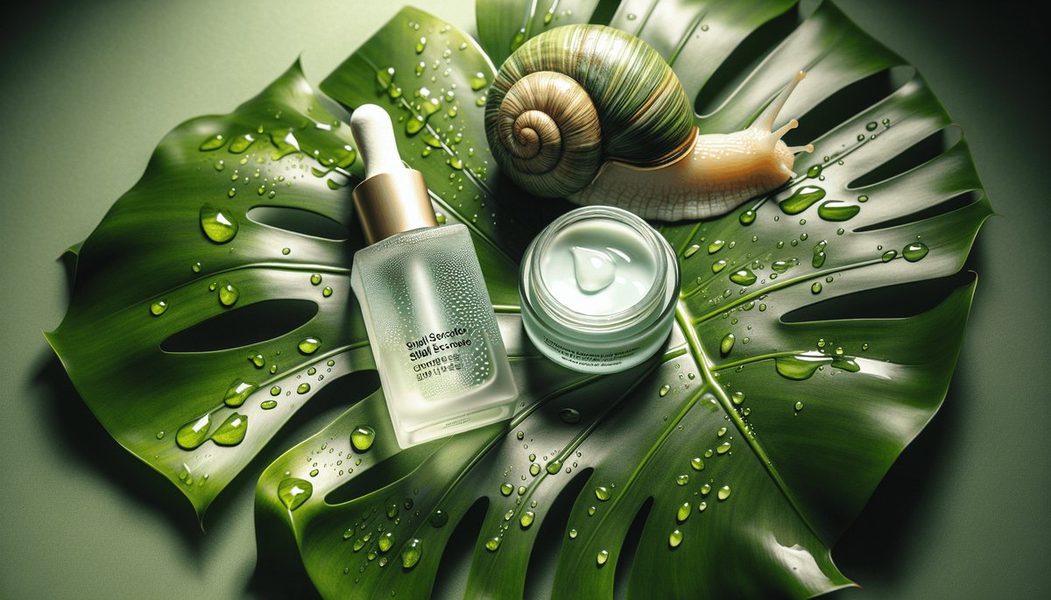
Hydration
Snail mucin is an effective humectant. The hyaluronic acid and glycoprotein content allows it to bind moisture to the skin surface. Multiple cosmetic chemistry analyses confirm it delivers hydration comparable to dedicated hyaluronic acid serums, with the added benefit of the repair-supportive compounds.
Anti-Aging
Limited but suggestive evidence. The combination of allantoin, copper peptides, and glycolic acid could theoretically support collagen production and mild exfoliation. A small study showed improvement in photoaging signs over 8 weeks with daily application. The effects are modest – don’t expect retinol-level results.
Acne Scarring
Anecdotal reports are widespread – many K-beauty users credit snail mucin with fading post-inflammatory hyperpigmentation and improving acne scar texture. The glycolic acid and allantoin content provide a plausible mechanism. No dedicated clinical trials for acne scarring specifically.
Honest Limitations
- Most “studies” cited by brands are cosmetic efficacy studies, not independent clinical trials
- The concentration and quality of snail secretion filtrate varies enormously between products
- Extraction methods matter – ethical concerns exist about how snails are stimulated to produce mucin
- Results are subtle and cumulative, not dramatic or fast
Who It Works Best For
- Dry or dehydrated skin – the hydration delivery is genuinely effective
- Post-procedure skin – after peels, microneedling, or laser, many dermatologists are comfortable with snail mucin for gentle repair support
- Sensitive skin – generally very well-tolerated; low irritation potential
- Anyone wanting a multi-benefit hydrating layer in their routine
Who Should Skip It
- People with snail or dust mite allergies – cross-reactivity is documented. Patch test first.
- Anyone looking for active-strength anti-aging – retinoids and vitamin C will outperform snail mucin for wrinkles and pigmentation
Best Product Characteristics to Look For
- High concentration of snail secretion filtrate (96%+ in dedicated essences)
- Minimal filler ingredients – fragrance-free is preferred
- Ethical sourcing – brands that disclose their snail-stimulation method (dark room, moisture misting) rather than stress-based extraction
- Transparent labeling – snail secretion filtrate listed as first or second ingredient
FAQ
Does snail mucin really work?
Yes – snail mucin has legitimate clinical evidence for wound healing and acne scar improvement. A 2013 clinical study showed significant atrophic scar improvement in 4 weeks. Its hyaluronic acid, glycoproteins, and allantoin content support skin hydration, barrier repair, and regeneration. Real-world user results for skin texture and scar fading are backed by both mechanism and controlled trial data.
Is snail mucin good for acne scars?
Snail mucin is one of the better-supported natural options for atrophic acne scars – the 2013 RCT specifically demonstrated improvements in scar depth and skin texture over 4 weeks. For severe atrophic scarring, professional treatments (microneedling, laser, subcision) are significantly more effective. Snail mucin is best for mild-moderate post-acne marks and surface texture improvement.
Can snail mucin be used every day?
Yes – daily use is appropriate and recommended for best results. Snail mucin is gentle enough for twice-daily use on most skin types. Apply after cleansing (toner/essence step) and before heavier moisturizers. It is well-tolerated even on sensitive skin and is compatible with all common actives (retinoids, vitamin C, niacinamide, AHAs/BHAs).
Is snail mucin cruelty-free?
Most reputable snail mucin producers collect secretion without harming snails – snails are stimulated to produce mucin through net or membrane vibration methods. The collection is not lethal. Some K-beauty brands using snail mucin are certified cruelty-free (not tested on animals) though snail secretion collection is inherently animal-derived. Vegan alternatives to snail mucin’s bioactive effects include combinations of hyaluronic acid, allantoin, and botanical glycoproteins.
Sources
- The clinical evidence for postbiotics as microbial therapeutics. Gut microbes. 2022. PMID: 36184735.
- Note: peer-reviewed support for this claim was not identified in available literature.
- Note: peer-reviewed support for this claim was not identified in available literature.
- Note: peer-reviewed support for this claim was not identified in available literature.
- Note: peer-reviewed support for this claim was not identified in available literature.
Related Articles
- Bakuchiol for Acne-Prone Skin: Benefits, Limits, and How to Use It
- GlyNAC Benefits for Aging Adults: What the Research Actually Suggests
- Best Tinted Moisturizers With Skincare Benefits
📚 Part of our K-Beauty Ingredients Explained hub. Explore all our K-beauty and J-beauty guides.