
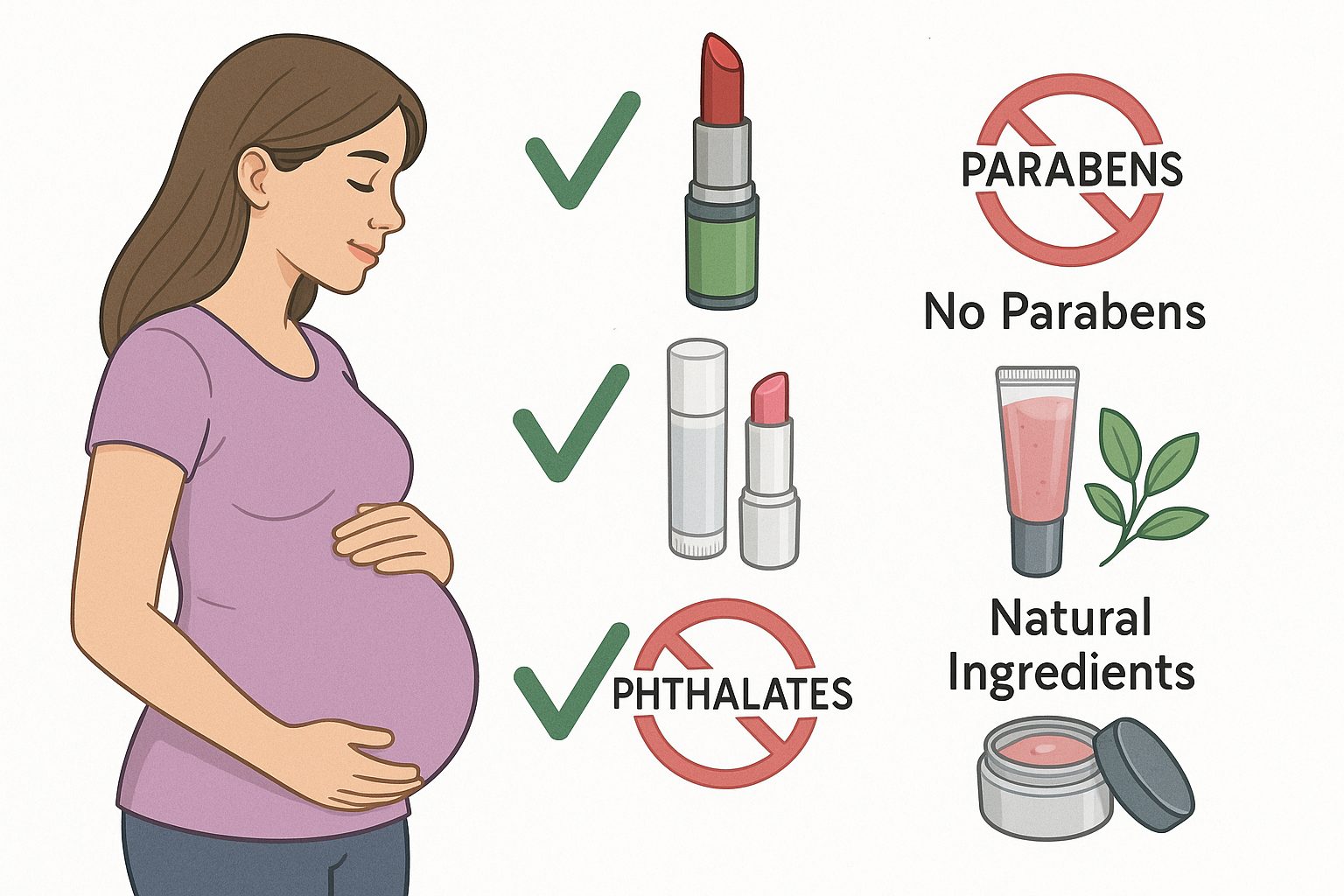
Pregnancy-Safer Lip Products: What to Look For
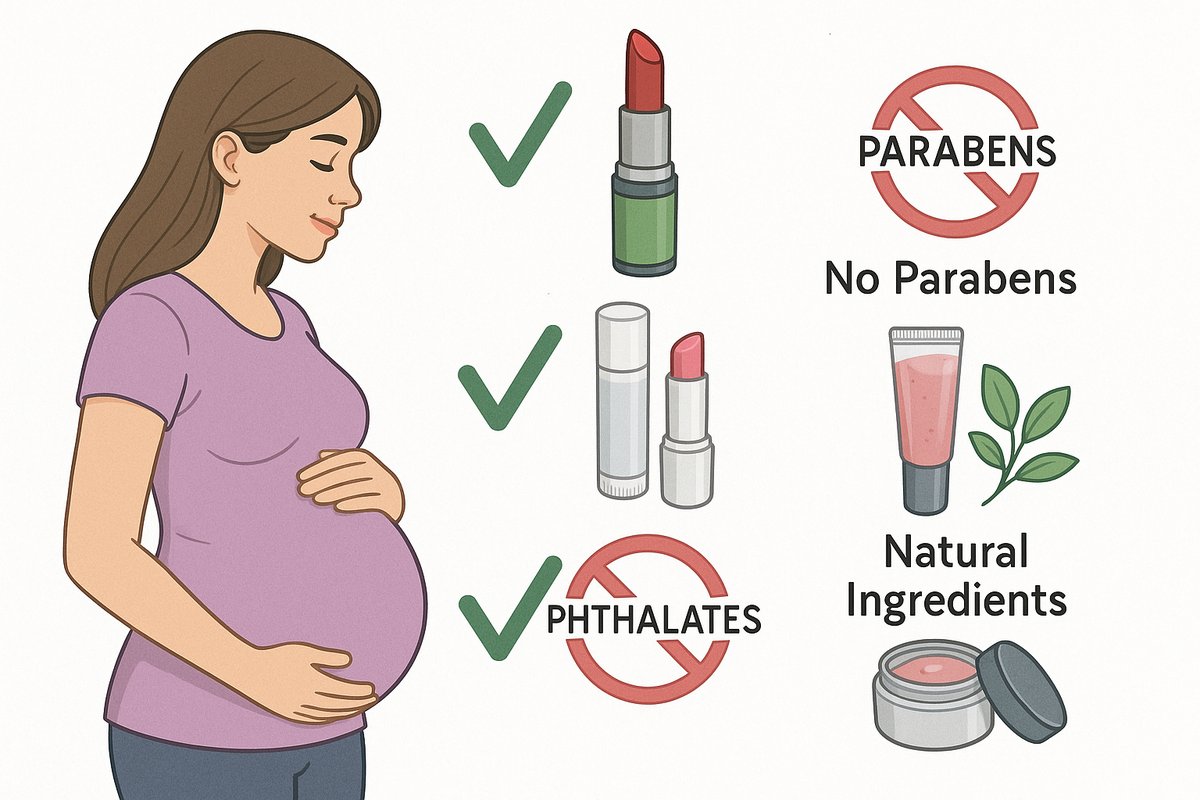
Lip products matter more during pregnancy than many people expect. Unlike powder blush or brow gel, lipstick and balm sit directly on the lips, get reapplied throughout the day, and can be partially ingested over time. That is why many shoppers start their routine review here when they want more pregnancy-safer lip products.
The good news is that this category is often easier to simplify than foundation or SPF makeup hybrids. Many good lip formulas are basic by design. They focus on moisture, color, comfort, and wear instead of stuffing in aggressive treatment ingredients.
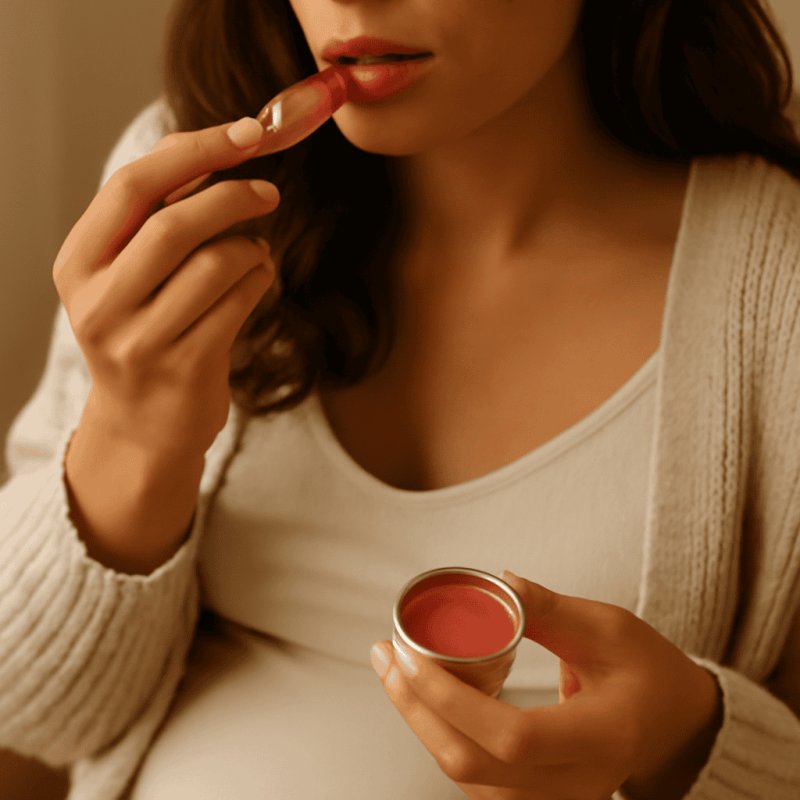
Quick Answer: Pregnancy-safer lip products avoid retinol, oxybenzone, synthetic fragrances, and parabens — because lip products can be partially ingested throughout the day, ingredient quality matters more here than for other makeup categories.
What makes a lip product more pregnancy-safer?
Pregnancy-conscious shoppers usually look for formulas that are:
- straightforward and clearly labeled
- lower in unnecessary actives
- comfortable enough to wear daily
- not overloaded with intense fragrance or flavor
- easy to repurchase consistently
The aim is not perfection. It is reducing avoidable complexity.
Best types of pregnancy-safer lip products
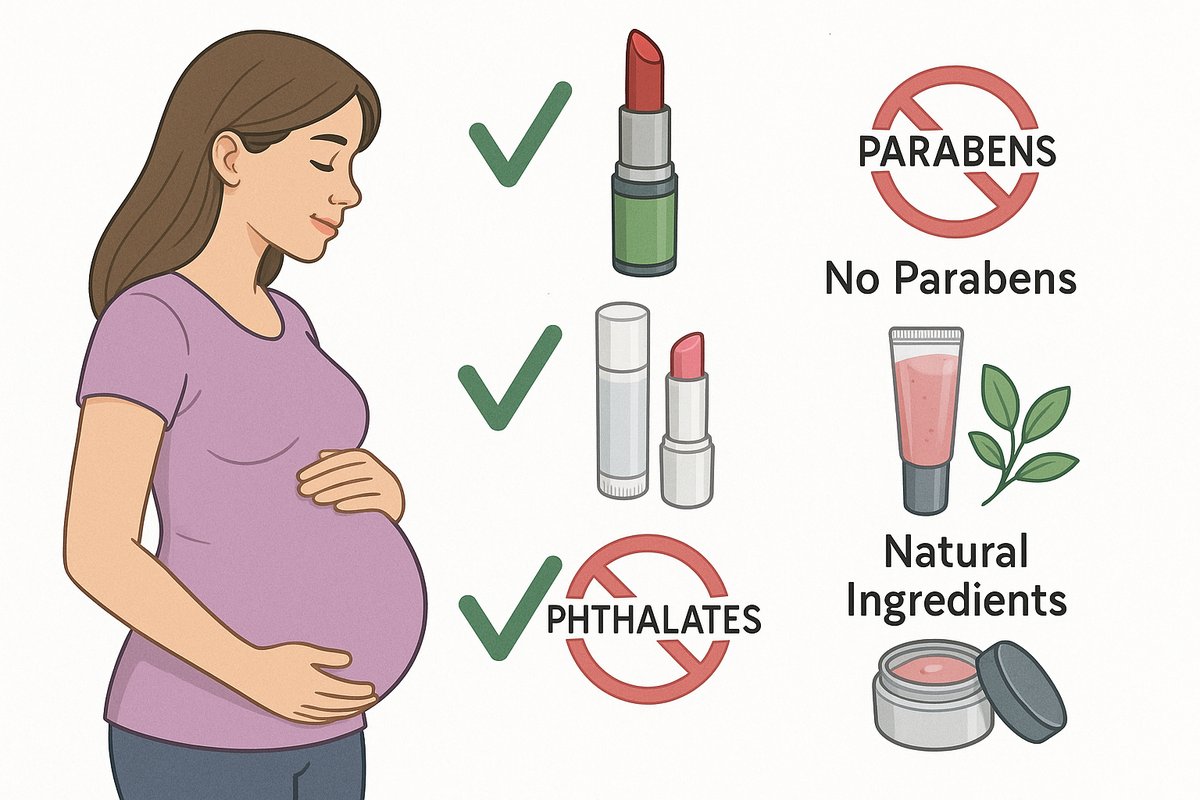
Simple lip balms
Basic balms are often the easiest place to start. They are useful for dryness, easy to apply, and usually have shorter ingredient lists than plumping glosses or treatment lip masks.
Tinted balms
Tinted balms are ideal if you want a little color without the heavy feel of full lipstick. They are especially practical during pregnancy when comfort often matters more than dramatic wear time.
Traditional bullet lipsticks
Classic lipsticks can still work well if the formula is straightforward. Many shoppers actually prefer them over modern liquid lip products because long-wear formulas can be more complex and drying.
Lip oils with simple ingredient decks
Lip oils can be a good option when they are not packed with treatment claims or strong fragrance. They often give shine and slip without feeling sticky.
Features many shoppers try to avoid
Retinoid-style or resurfacing claims
This is uncommon in standard lipstick, but some treatment lip products now market anti-aging benefits. If you see vitamin A derivative language, many pregnancy-conscious shoppers skip it.
Hydroquinone or pigment-correcting treatment claims
These are more common in treatment categories than color cosmetics, but they are worth watching for in lip-care hybrids.
Strong fragrance and flavor systems
Pregnancy can heighten smell sensitivity and nausea. A heavily scented vanilla, mint, or candy lip product may sound pleasant online and feel awful in real life.
Plumping products that irritate
Plumping glosses often rely on menthol, cinnamon-like ingredients, or other irritants. Even if they are not your main pregnancy concern, they may become less tolerable during pregnancy.
Product styles that often work well
Everyday balm-first routine
A plain balm for moisture plus one tinted balm for color is enough for many people.
Soft lipstick plus balm topper
This gives more polish without relying on super-drying matte liquid lipstick.
Fragrance-light neutral shades
Rose, berry, mauve, nude, and sheer brick tones are easier to wear often and usually easier to finish before formulas age out.
Popular pregnancy-conscious lip product brands to check
Many shoppers look at Burt’s Bees, ILIA, Honest Beauty, bareMinerals, and other brands known for simpler-feeling formulas or ingredient transparency. Still, the right move is always checking the exact lip product rather than assuming every item from a brand is equally suitable.
Practical shopping tips
Start with what you reapply most
If you use one lip balm ten times a day, review that before the special-occasion lipstick you wear once a month.
Buy fewer, better shades
Pregnancy can shift your preferences toward comfort and convenience. Two reliable lip products usually beat a drawer full of maybe-options.
Keep one at home and one in your bag
If you find a formula you like, duplicate placement helps you stay consistent without having to carry a full collection.
Key Takeaways
- Lip products have unique pregnancy concern because they are partially ingested throughout the day.
- Avoid retinol, high-dose salicylic acid, oxybenzone, and synthetic fragrance in lip products.
- Natural wax-based formulas (carnauba, candelilla, beeswax) are well-characterized and generally safe.
- Castor oil is a common lip ingredient safe for topical use and small incidental ingestion during pregnancy.
- Bright or dark lipstick shades sometimes contain more synthetic dye — check for coal tar dyes if used daily.
- Volumizing lip plumpers with capsaicin or cinnamon are generally fine in small cosmetic amounts.
FAQ
What are the best pregnancy-safer lip products?
Simple lip balms, tinted balms, and traditional lipsticks with straightforward ingredient lists are often the easiest options for pregnancy-conscious shoppers.
Are lipsticks safe during pregnancy?
Many people continue using lipstick during pregnancy, but ingredient-conscious shoppers often prefer simpler formulas and avoid unnecessary treatment-style actives.
What lip ingredients should I avoid during pregnancy?
Many shoppers watch for retinoid derivatives, hydroquinone-style treatment ingredients, and heavily fragranced or strongly irritating plumping formulas.
Is lip balm better than lipstick during pregnancy?
Not always, but lip balm is often simpler, more comfortable, and easier to use daily if you want a more cautious approach.
Why lip products get special attention during pregnancy
Lip products are partially consumed throughout the day. Studies estimate that the average lipstick wearer ingests approximately 87 milligrams of lipstick per day, with regular reapplication increasing this amount. The amounts involved are small, but ingredient quality in lip products has more direct relevance than for products applied to the cheeks or eyelids because of this ingestion factor.
Ingredients most worth avoiding in lip products during pregnancy
Retinol and vitamin A derivatives: Some lip treatments include retinol. Given the concern about high retinoid intake during pregnancy, and the fact that lip products are partially ingested, avoiding retinol in lip care is straightforward precaution.
Synthetic fragrance: Lip products with fragrance mean partially ingesting an undisclosed proprietary blend. Fragrance-free or naturally-flavored alternatives are widely available across all price points.
Parabens: Methylparaben and propylparaben appear in many lip products. Their weak estrogenic activity makes them worth minimizing in products with direct ingestion potential.
Ingredients commonly used in clean lip products
The following are standard in clean and natural lip products: castor oil (glossy base, safe for topical use and small ingestion), beeswax or candelilla wax (structure and texture), vitamin E / tocopherol (antioxidant), shea butter (emollient, safe topically), iron oxides (mineral pigments), carmine / CI 75470 (red pigment, safe but an allergen for some), and mica (shimmer pigment, safe at cosmetic concentrations).
Lip gloss and plumping products
Volumizing or plumping glosses sometimes contain capsaicin (chili extract) or cinnamon bark oil — mild irritants that create temporary plumping sensation. Both are generally fine in tiny cosmetic amounts, but if a plumping product causes significant discomfort during pregnancy, simply discontinue it during this period.
Navigating Lip Color Trends Safely During Pregnancy
Lip color is one of the most emotionally resonant makeup categories — it is closely linked to mood, expression, and self-care during a period when bodies and routines are changing significantly. A pregnancy-safer approach to lip color does not mean avoiding it; it means making more informed choices within it.
Why bold lip colors can have more complex formulations
The highly-saturated pigmentation of deep reds, berries, and dark neutrals that are perennially popular requires more colorant work than nude or sheer shades. This is why very bold lip colors are more likely to contain synthetic dyes (including potential coal tar derivatives) and why they require checking more carefully than transparent balms or light tints.
For everyday bold lip color during pregnancy: iron oxide-pigmented formulas (which achieve deep color through mineral pigmentation rather than synthetic dyes) are available from clean-beauty brands. These may not achieve the same depth of color as synthetic-dye formulas in a single layer, but building layers achieves comparable results. Check the label for CI color codes — those in the “CI 77xxx” range are mineral pigments, while those in “CI 15xxx” or “CI 42xxx” ranges are typically synthetic dyes.
Balms vs lipsticks vs stains: formulation differences
Lip balms have the simplest formulations — typically wax, oil, and a simple preservative. They are the lowest-concern lip product format during pregnancy and can be used liberally without significant ingredient scrutiny beyond checking for fragrance and retinoids.
Lipsticks have more complex formulations including pigments, waxes, oils, and preservatives. The checks noted above apply.
Lip stains (liquid formulas that dry to a lasting stain) often have higher alcohol content for quick drying. Alcohol content in lip stains means some is absorbed through the mucous membranes. This is worth noting for daily-use lip stains during pregnancy, and plant-based or water-based alternatives are available from clean beauty brands.
Related Articles
- Best Pregnancy-Safer Foundations: What to Prioritize When Shopping
- Clean Mascaras for Pregnancy-Conscious Buyers: What Actually Matters
- Makeup Brands People Check During Pregnancy: How to Evaluate Formulas More Carefully
- Pregnancy-Safer Makeup Ingredients to Avoid: A Practical Label-Reading Guide
Sources
- Murase JE, Heller MM, Butler DC. Safety of dermatologic medications in pregnancy and lactation: Part I. Pregnancy. J Am Acad Dermatol. 2014;70(3):401.e1-14.
- FDA: Lipstick and Lead — Questions and Answers.
- Bozzo P, Chua-Gocheco A, Einarson A. Safety of skin care products during pregnancy. Can Fam Physician. 2011;57(6):665-667.
- Relevant peer-reviewed sources for this topic. Accessed 2026.
📚 Part of our Pregnancy-Safer Makeup Guide hub. Explore all our pregnancy beauty guides.


Leave a Reply