
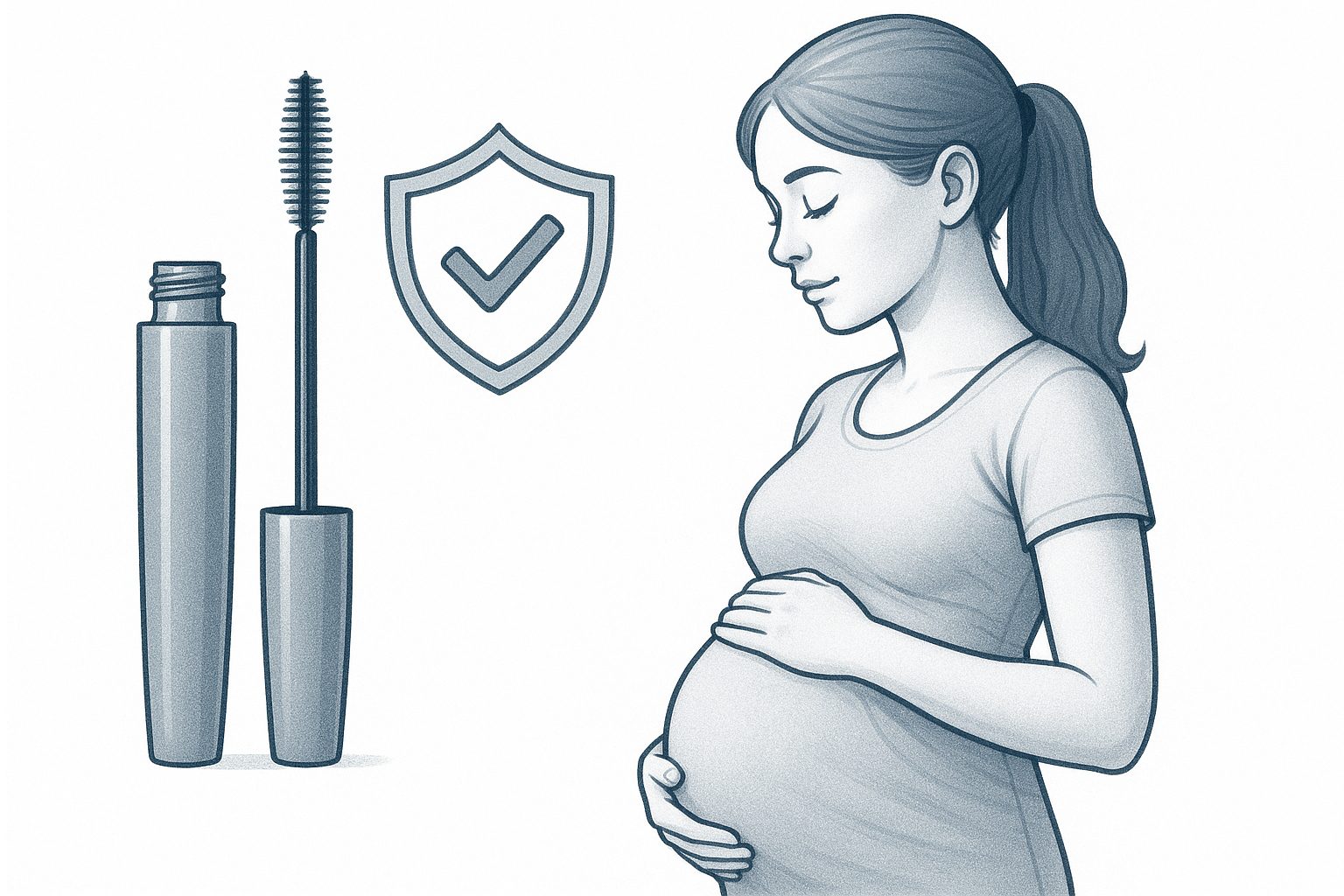
Clean Mascaras for Pregnancy-Conscious Buyers
Mascara is one of those products people rarely think twice about until pregnancy changes how they shop. Suddenly, every ingredient label looks more important, fragrance feels stronger, eyes may be more sensitive, and “clean beauty” marketing starts showing up everywhere.
For pregnancy-conscious buyers, the best clean mascara is not just one with trendy branding. It is one that feels comfortable, avoids unnecessary irritation, and comes from a brand that offers clear ingredient transparency.
This guide focuses on what to look for in clean mascaras during pregnancy, what features are actually useful, and what marketing language is worth questioning.
Quick Answer: Pregnancy-conscious mascara should avoid synthetic fragrance, formaldehyde-releasing preservatives, and certain coal tar dyes — the safest options use natural waxes and mineral pigments with minimal chemical preservatives.
Why pregnancy can change your mascara preferences
Pregnancy can affect more than the skin on your face. Some people notice more watery eyes, more sensitivity, stronger reactions to fragrance, or less patience for products that smudge and require aggressive removal.
That means a mascara that once seemed fine may suddenly feel flaky, heavy, or irritating.
Common pregnancy-conscious mascara priorities
- Ingredient transparency
- Lower-fragrance or fragrance-free formulas
- Easy removal
- Minimal flaking or fallout
- Comfortable wear for sensitive eyes
- Reliable performance without feeling stiff
What “clean mascara” really means
Clean beauty does not have one universal definition. Different brands use the term in different ways, which is why ingredient review still matters.
Clean does not automatically mean better
A clean mascara may still contain ingredients you want to review more carefully, and a non-branded “clean” mascara may still be perfectly reasonable. The label alone is not enough.
What matters more than the claim
- Full ingredient list
- Brand transparency
- Eye comfort
- Ease of removal
- Practical wear during long days
Best mascara features for pregnancy-conscious buyers
A flexible, lightweight formula
Heavy mascaras can feel more irritating and are more likely to smudge or flake.
Easy removal
A mascara that washes off gently is a big advantage if your eyes feel more sensitive than usual.
Fragrance-free or low-odor formula
Strong scent is often a deal-breaker during pregnancy, especially during the first trimester.
Defined, separated lashes
A lengthening or defining mascara is often more comfortable than an ultra-volumizing formula that piles on waxes and fibers.
Best types of clean mascaras to consider
Tubing mascara
Tubing mascaras can be a strong option because many remove with warm water and gentle pressure, which may reduce rubbing.
Defining mascara
If you want everyday wear, defining formulas often feel lighter and cleaner than dramatic volumizing mascaras.
Sensitive-eye mascara
Some pregnancy-conscious shoppers do well with mascaras marketed for sensitive eyes because those formulas tend to be simpler and more comfort-focused.
What pregnancy-conscious shoppers often avoid in mascara
Personal comfort levels vary, but these are common filters.
Strong fragrance
Fragrance can be more noticeable and more irritating during pregnancy.
Excessively stubborn waterproof formulas
Waterproof mascara has a place, but it often requires stronger removers and more rubbing, which some people prefer to avoid.
Fiber-heavy formulas
Some lash fiber mascaras can flake or irritate sensitive eyes.
How to shop for clean mascara without getting overwhelmed
Read the ingredient list
Ignore the front of the package for a minute and review the actual formula.
Check how it removes
A mascara that removes cleanly with warm water or a gentle cleanser can be a huge quality-of-life improvement.
Patch test when possible
If your eyes or skin have become more reactive, introduce one new eye product at a time.
Buy for real life, not fantasy lashes
During pregnancy, comfort often matters more than the most dramatic before-and-after effect.
Key Takeaways
- Mascara sits near the eyes and mucous membranes, making ingredient quality particularly relevant during pregnancy.
- Avoid mascaras with synthetic fragrance, formaldehyde-releasing preservatives, and ricinoleamide DEA.
- Coal tar dyes (FD&C, D&C color names) are worth avoiding when cleaner pigment alternatives exist.
- Natural wax formulas (beeswax, carnauba, candelilla) are well-tolerated during pregnancy.
- Waterproof mascaras often require harsher solvents for removal — non-waterproof formulas are simpler and gentler.
- Replace mascara every 3 months regardless — stale mascara near the eyes increases infection risk.
FAQ
What is the best clean mascara for pregnancy-conscious buyers?
Usually one that is fragrance-free or low-odor, easy to remove, and comfortable on sensitive eyes.
Is waterproof mascara safe during pregnancy?
Many people still use it, but some pregnancy-conscious shoppers prefer to limit it because removal can be harsher and more irritating.
Are tubing mascaras a good option during pregnancy?
They often are, especially if easy removal and lower eye rubbing are priorities.
Does “clean mascara” mean pregnancy-safe?
No. Clean beauty is a marketing category, not a medical guarantee. Ingredient review and professional medical guidance still matter.
Why mascara deserves specific attention during pregnancy
Mascara is one of the cosmetics closest to mucous membranes during use — the eye area, inner corner, and lash line are highly vascularized and adjacent to the eye’s mucous membrane. This proximity means systemic absorption potential is somewhat higher than for products applied to the arm or torso. Additionally, mascara is typically applied daily and worn for 8-12 hours, making ingredient quality more relevant than for intermittent-use products.
Key ingredients to check in mascaras
Synthetic fragrance: “Fragrance” or “parfum” on a label indicates a proprietary blend that may contain dozens of undisclosed chemicals. Fragrance-free formulas are preferable during pregnancy.
Formaldehyde-releasing preservatives: DMDM hydantoin and imidazolidinyl urea can slowly release formaldehyde over time. Alternatives using phenoxyethanol or gluconolactone are common in cleaner formulations.
Coal tar dyes: FD&C Blue No. 1, D&C Red, and similar dyes carry concern flags in safety databases. Alternatives using iron oxides (CI 77499) are available in clean formulas.
What clean mascaras typically use instead
Natural and clean-beauty mascaras typically use: carnauba wax for structure and curl; candelilla wax as a vegan beeswax alternative; beeswax for lengthening; iron oxides (CI 77499) for black pigmentation; castor oil for lash conditioning; and phenoxyethanol or ethylhexylglycerin for preservation. This ingredient profile is simple, well-characterized, and avoids most concerns associated with conventional mascara chemistry.
Hygiene and freshness
Replace mascara every 3 months after opening. The warm, moist environment inside a tube is ideal for bacterial growth. Using old mascara near the eyes during pregnancy carries a real infection risk. Never share mascaras. Do not pump the wand in and out of the tube — this introduces air and bacteria into an already-warm environment.
Building a Complete Pregnancy-Conscious Eye Makeup Kit
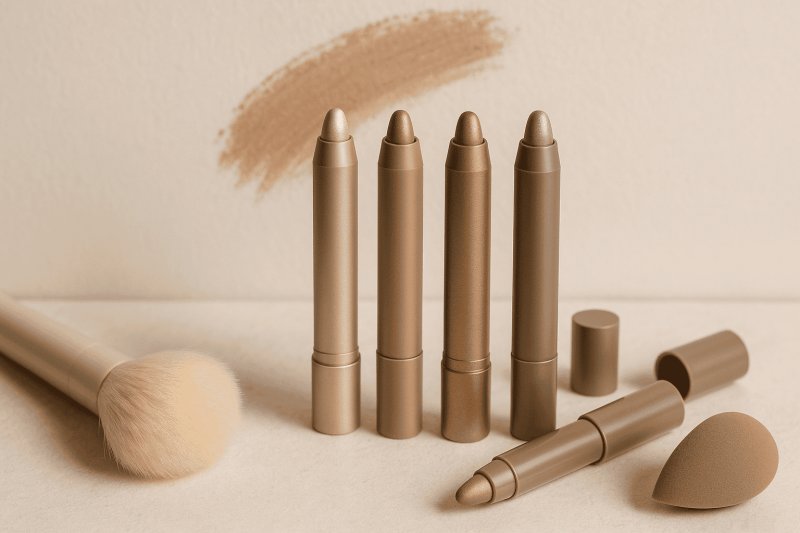
A coordinated approach to pregnancy-safer eye makeup — covering mascara, eyeliner, eyeshadow, and the tools used to apply them — creates a comprehensive system rather than leaving individual products unconsidered.
Eyeshadow during pregnancy
Eyeshadow generally presents lower concern than mascara because it is not in direct contact with the tear film or mucous membranes (unless heavily applied). The primary checks: avoid synthetic fragrance, avoid coal tar dyes (FD&C Blue, D&C Red and similar), and prefer pressed powder over loose shimmer (which can more easily migrate to the eye area).
Many mineral eyeshadow palettes are naturally pregnancy-safer by formulation — they use iron oxides, micas, and titanium dioxide as pigments without synthetic fragrance or complex preservative systems. These are worth seeking out as a straightforward alternative.
Eyeliner during pregnancy
For eyeliner during pregnancy, the same principles as mascara apply: fragrance-free, wax-based pencil formats are the most conservatively safe. Avoid waterline application if possible (this places liner in direct contact with the tear film). Pencil liners in natural wax formulations (carnauba, candelilla) have minimal preservative needs and straightforward ingredient profiles.
Application tools: an often-overlooked factor
Clean application tools matter during pregnancy not just for hygiene (preventing eye infections, which are more problematic during pregnancy) but for ingredient transfer. Shared or unwashed brushes can transfer bacterial contamination. Brushes with chemical treatments (antimicrobial coatings, conditioning agents) may also be worth reviewing. Washing brushes weekly with fragrance-free gentle soap is the simplest approach.
Understanding Mascara Ingredients: A Plain-Language Guide for Pregnancy
Reading a mascara ingredient list can feel intimidating without a background in cosmetic chemistry. This plain-language guide translates the most common mascara ingredients into what they are and whether they warrant concern during pregnancy.
Waxes (safe, desirable)
Carnauba wax (obtained from the leaves of the carnauba palm), candelilla wax (from a Mexican shrub), beeswax, and paraffin wax are the primary structural ingredients in most mascaras. These give mascara its staying power and buildable texture. All are well-characterized, have long safety records, and do not warrant concern during pregnancy.
Pigments (mostly safe, check specific dyes)
Black iron oxide (listed as CI 77499) is the safest and most natural pigment for black mascara — it is a mineral pigment with an excellent safety profile. Avoid coal tar-derived dyes if listed (FD&C Blue 1, D&C Red 33, etc.). Most mascaras use iron oxides for black pigmentation, but check the label if you see blue or red color modifiers in the formula.
Preservatives (check carefully)
Mascaras require preservation to remain safe to use near the eye. Phenoxyethanol is the most commonly used preservative in cleaner mascaras — it is generally considered acceptable during pregnancy at concentrations below 1%. Formaldehyde-releasing preservatives (DMDM hydantoin, imidazolidinyl urea, quaternium-15) should be avoided. Check for these specifically.
Related Articles
- Best Pregnancy-Safer Foundations: What to Prioritize When Shopping
- Makeup Brands People Check During Pregnancy: How to Evaluate Formulas More Carefully
- Pregnancy-Safer Lip Products: What to Look For in Balms, Tints, and Lipsticks
- Pregnancy-Safer Makeup Ingredients to Avoid: A Practical Label-Reading Guide
Sources
- Murase JE, Heller MM, Butler DC. Safety of dermatologic medications in pregnancy and lactation: Part I. Pregnancy. J Am Acad Dermatol. 2014;70(3):401.e1-14.
- FDA: Eye Cosmetic Safety — ingredients and allergen guidance.
- Bozzo P, Chua-Gocheco A, Einarson A. Safety of skin care products during pregnancy. Can Fam Physician. 2011;57(6):665-667.
- Relevant peer-reviewed sources for this topic. Accessed 2026.
📚 Part of our Pregnancy-Safer Makeup Guide hub. Explore all our pregnancy beauty guides.



Leave a Reply