
Loose Powder vs Pressed Powder
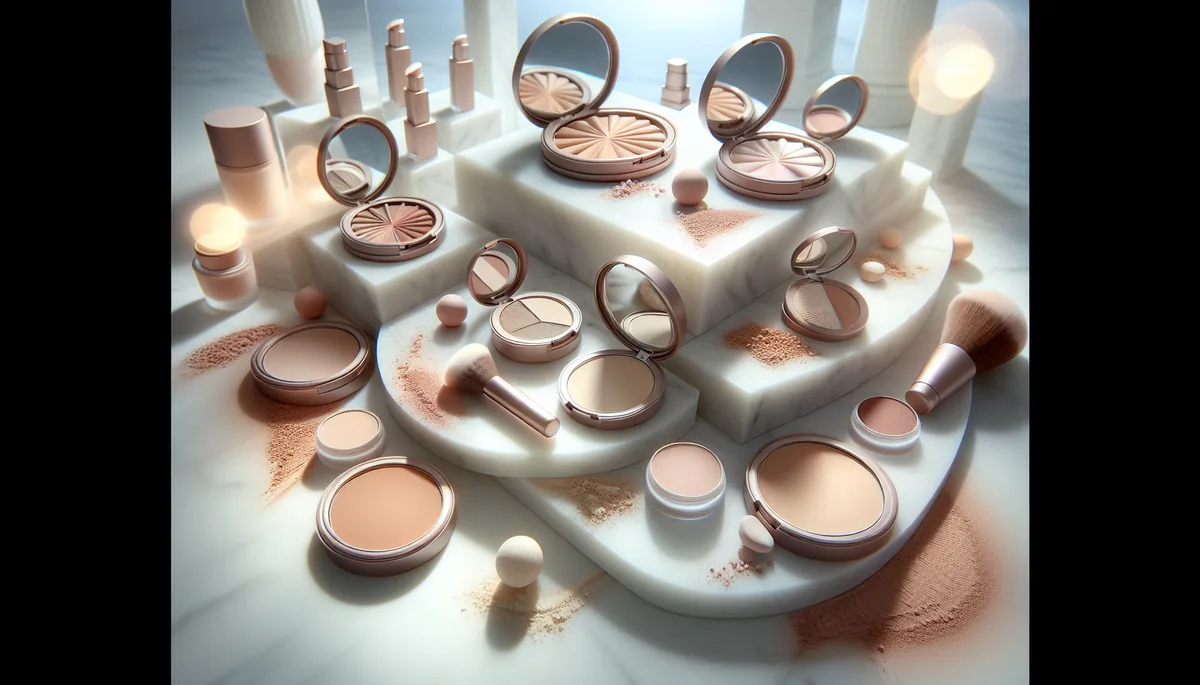
Quick Answer: Loose powder is better for lightweight setting and a blurred finish at home, while pressed powder is better for portability and midday touch-ups. For many routines, using both gives the best results.
Loose powder vs pressed powder comes down to finish, convenience, and how much control you want over product placement. In general, loose powder is better for lightweight setting and blurring, while pressed powder is better for portability, touch-ups, and controlled application. Neither is automatically better for everyone.
The right choice depends on your skin type, makeup style, and whether you need an everyday desk-to-dinner powder or a more refined home application product.
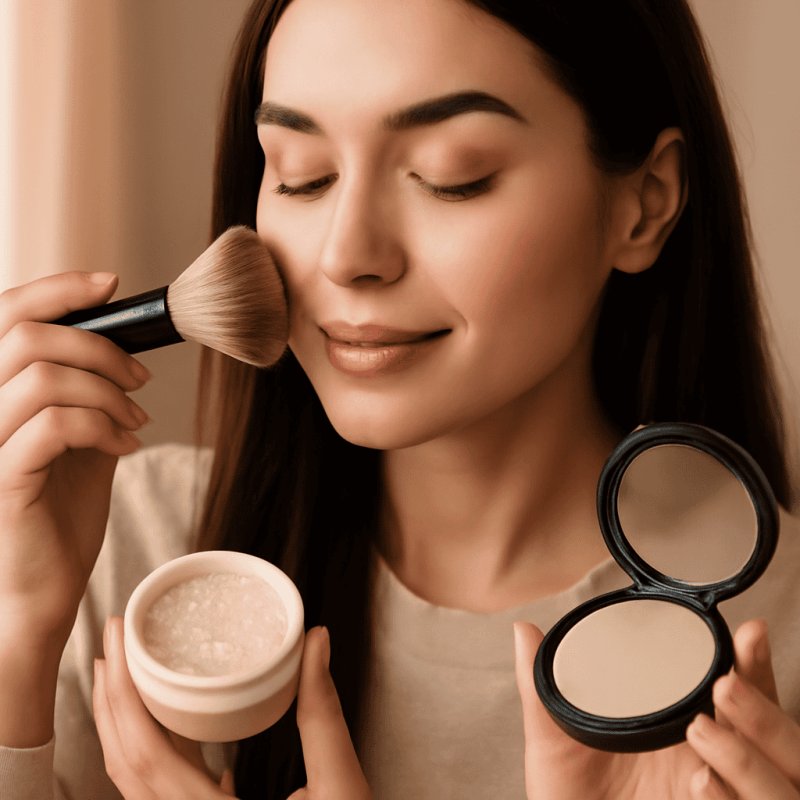
Quick Answer: What’s the Main Difference?
The biggest difference is texture and compression.
- Loose powder is free-flowing and usually more airy.
- Pressed powder is compacted into a pan and often contains binders to hold its shape.
That difference affects how each product performs on the skin.
Benefits of Loose Powder
Loose powder is often preferred when you want a smoother, softer finish.
Better for Light, Even Setting
Because loose powder is typically more finely dispersed, it can create a thin veil over foundation or concealer. That makes it a popular option for setting the under-eyes and center of the face.
Often More Blurring
Many loose powders give a filtered look, especially when used sparingly. They can soften pores and reduce shine without adding obvious buildup.
Great for Full Makeup Application at Home
If you are doing a more complete routine, loose powder gives you flexibility. You can use a puff for longer wear or a fluffy brush for a soft-focus finish.
Benefits of Pressed Powder
Pressed powder wins on practicality.
Easier to Carry and Use On the Go
A compact is far less messy than a loose jar. If you need powder in your bag, car, or office drawer, pressed powder is the obvious choice.
Better for Targeted Touch-Ups
Pressed powder is ideal when you want to mattify the nose, forehead, or chin without powdering your whole face again.
More Beginner-Friendly for Fast Application
Some people find pressed powder easier to control. It is simple to tap a brush or puff into the pan and apply exactly where needed.
Loose Powder vs Pressed Powder for Different Skin Types
Oily Skin
Both can work. Loose powder is excellent for setting makeup at the start of the day, while pressed powder is useful for midday shine control. Many oily-skin routines benefit from using both.
Dry Skin
Loose powder can look beautiful if the formula is finely milled and used lightly. Pressed powder can also work, but heavier formulas may cling to dry patches. Dry skin usually does best with minimal powder either way.
Combination Skin
Combination skin often benefits from mixing techniques: loose powder where makeup tends to crease, pressed powder for quick touch-ups on the T-zone.
Which Powder Looks Better?
This depends on finish and application.
Loose Powder Usually Looks More Seamless
If your goal is a soft, polished finish for photos or all-day wear, loose powder often has the edge.
Pressed Powder Can Look Slightly More Noticeable
Because pressed formulas may contain more binders, they can sit a little more visibly on the skin if overapplied. That does not make them bad. It just means a lighter hand matters.
Which Powder Lasts Longer?
Neither type is automatically longer-wearing. Formula matters more than packaging.
That said:
- Loose powder is often better for setting fresh makeup
- Pressed powder is often better for maintaining makeup during the day
So the “longer-lasting” winner depends on when you are using it.
Can You Use Both?
Yes, and that is often the smartest answer.
A practical routine might look like this:
At Home
Use loose powder to set foundation, concealer, and areas prone to creasing.
During the Day
Use pressed powder to reduce shine and refresh specific areas without overloading the face.
This approach gives you the best of both worlds.
Common Mistakes to Avoid
Using Too Much of Either
Over-powdering is the fastest way to get cakiness. Start small and build only if needed.
Choosing Based Only on Trend Language
“Blurring,” “airbrushed,” and “weightless” are useful clues, but they are not guarantees. Texture on your own skin matters more than marketing.
Ignoring the Tool
A puff, dense brush, or fluffy brush can make the same powder behave differently. Tools affect coverage, finish, and longevity.
Key Takeaways
- Loose powder applies more evenly and in thinner layers, making it ideal for initial setting of foundation and concealer at home.
- Pressed powder is compact and portable, making it the practical choice for midday touch-ups and travel.
- For oily skin, loose translucent powder at the start of the day followed by blotting and pressed powder touch-ups works better than either alone.
- Pressed powder can add coverage if it has pigment, while most loose powders are translucent and do not change coverage level.
- The formula (silica-based, finely milled) matters more than the form — loose or pressed — for final results.
What Makes Loose Powder Different
Loose powder is stored in a jar and applied with a fluffy brush or puff. Because the particles are not compressed, they apply very finely and evenly — it is genuinely difficult to over-apply a single layer. The downside is mess: loose powder scatters and is impractical to carry without a dedicated container.
What Makes Pressed Powder Different
Pressed powder contains the same ingredients as loose powder plus binders (waxes or polymers) that hold the cake together. Those binders mean powder is picked up more slowly from the compact, providing more control — but the formula is slightly heavier per layer than equivalent loose powder. Pressed powders in tinted versions blur the line between setting powder and light foundation.
When to Use Each Type
Use loose powder when: setting full makeup at home, wanting the lightest possible set, baking for longevity, or when you have oily skin and need the most absorbent formula.
Use pressed powder when: touching up midday oil, traveling, wanting light coverage without a full foundation, or when speed matters.
FAQ
Is loose powder better than pressed powder?
Loose powder is usually better for setting makeup with a light, blurred finish, while pressed powder is better for portability and touch-ups. The best option depends on how you use it.
Is pressed powder better for oily skin?
Pressed powder is excellent for oily-skin touch-ups, but loose powder is often better for the initial set. Many people with oily skin use both.
Which is better for under eyes, loose or pressed powder?
Loose powder is often better under the eyes because it tends to be lighter and more finely milled, though some smooth pressed powders also work well.
Can I use pressed powder instead of setting powder?
Yes, especially if the formula is lightweight and your makeup routine is simple. Just avoid overapplying to prevent a heavy finish.
Sources
- U.S. Food and Drug Administration. Cosmetics labeling guide.
- Environmental Working Group. Skin Deep cosmetic ingredient safety database.
- European Commission. CosIng: cosmetic ingredient database.
- Reviews on talc in cosmetics and safety considerations. PubMed search.
- Reviews on silica in cosmetic powders and safety. PubMed search.
Related Articles
- Best Setting Powder for Under Eyes
- Best Powders for Oily Skin Without Cakiness
- Baking vs Light Setting for Modern Makeup
- Face Sculpting for Round Faces
- Minimalist Makeup Routine Under 10 Minutes
📚 Part of our Best Setting Powders & Sculpting hub. Explore all our powder and sculpting guides.

Leave a Reply