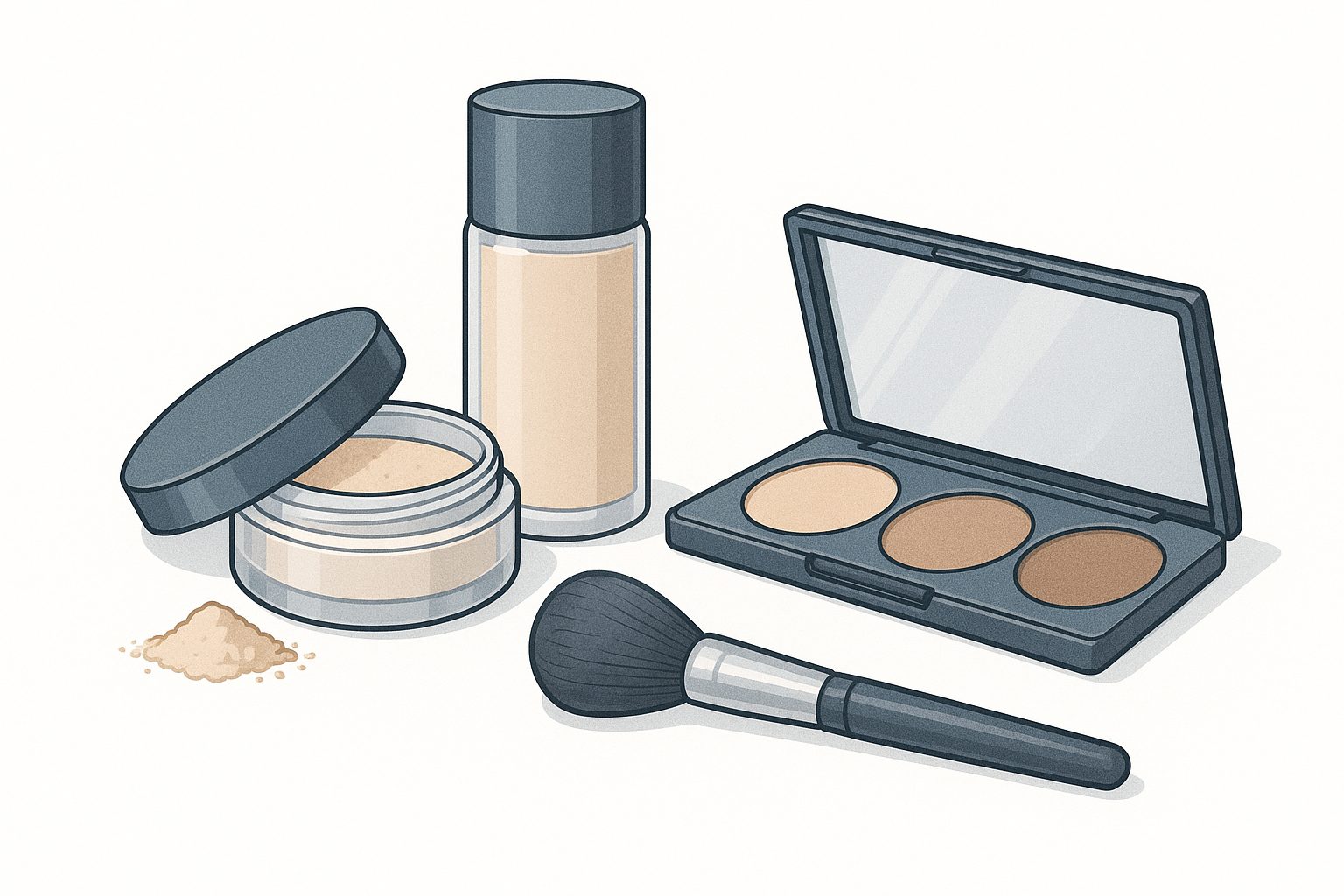
Best Setting Powders and Sculpting Products

Setting powders and sculpting products are no longer just backstage makeup artist tools. In 2026, they are everyday complexion essentials for people who want makeup to last longer while still looking soft, modern, and skin-like. The trend is less about harsh contour and more about strategic blur and believable shape.
Setting powders serve two distinct functions that require different formulas: loose translucent powders lock foundation and concealer without adding color or coverage; banana powders and color-correcting setting powders address specific tone issues while setting. For the 2026 soft-focus aesthetic, translucent finishing powders with diffusing silica microspheres (that scatter light to blur the appearance of pores and fine lines) are preferred over heavy coverage pressed powders that can appear cakey. Sculpting products have shifted toward softer application: cream contour versus powder contour produces a skin-like depth that photographs more naturally than the sharp powder edges of the contouring trend of earlier years.
- Silica microspheres in setting powders function as optical diffusers – they scatter light hitting the skin surface in multiple directions rather than reflecting it uniformly, creating a soft-focus blurring effect that minimizes the appearance of pore texture and fine lines; this is the science behind blurring powders.
- The amount of setting powder applied dramatically affects the look: translucent powders should be applied in light layers using a fluffy brush (not pressed firmly into the skin); baking technique (pressing powder into undereye for 5 minutes, then dusting off) is reserved for concealer-setting under the eyes, not the full face.
- Cream contour for the 2026 look: taupe or brown-undertoned cream products (not orange-toned bronzer) applied to the hollows of the cheeks, temples, and sides of the nose with a small brush or finger, then blended immediately – cream blends more seamlessly into skin than powder and does not create a visible product line.
- Bronzer versus contour distinction matters: bronzer adds warmth on the high points of the face (cheeks, forehead, nose, chin); contour adds shadow in the hollows (below the cheekbone, sides of the nose); using warm-orange bronzer in contouring placement creates an orange shadow, not structural definition.
- Translucent powders with high titanium dioxide content can leave a white flash in flash photography; blue-tinted HD powders reduce but do not eliminate this; for flash photography, taupe-tinted or skin-tone-matched setting powders photograph more naturally.
That shift matters because shoppers are getting more selective. They want powders that set without dryness and sculpting products that define without leaving obvious stripes. The best formulas today do both: they improve wear time and refine the face without making skin look flat.
Related: Baking vs Light Setting: What Works Now for Smooth, Modern Makeup?
Three beauty preferences are driving demand:
- longer makeup wear without heaviness
- soft-focus complexion instead of intense matte coverage
- subtle shaping rather than obvious contour stripes
Consumers also want products that work together. A finely milled powder plus a creamy sculpt stick creates a polished finish that still looks wearable in daylight.
How to choose the right setting powder
Pick the finish you actually want
- Translucent powders work well for setting without shifting foundation color
- Tinted setting powders can add a little extra coverage
- Luminous powders are better for dry or mature skin
- Soft matte powders are better for oily skin or humid weather
Focus on texture, not hype alone
A good setting powder should disappear into the skin. If it looks chalky on first application, it probably will not improve after several hours.
Consider where you will use it
You may not need to powder the whole face. Many people get a better result by setting only under the eyes, around the nose, and the center of the forehead or chin.
How to choose the best sculpting products
Cream for softness, powder for extra hold
Cream contours and bronzers usually look more skin-like. Powder sculpting products can intensify the effect and extend wear.
Go cooler for contour, warmer for bronzer
Contour should mimic natural shadow. Bronzers should add warmth. The mistake shoppers make most often is using one warm bronzer to do both jobs. For more on choosing the right bronzer finish, see our guide to suede bronzer and the soft matte trend.
Build gradually
A product with medium pigment is often better than one that deposits too much at once.
Product recommendations
Best setting powders
Laura Mercier Translucent Loose Setting Powder
A classic for a reason. It sets makeup well and offers a polished finish that works on many skin types.
Huda Beauty Easy Bake Loose Powder
Popular for under-eye setting and long wear. Better for people who like a more perfected finish.
Givenchy Prisme Libre Loose Powder
Excellent for those who want blur with a lighter, more refined look.
e.l.f. Halo Glow Setting Powder
A good affordable option if you want a softer, slightly more radiant finish.
Best sculpting products
Charlotte Tilbury Hollywood Contour Wand
Easy to blend and good for soft structure.
Makeup by Mario SoftSculpt Shaping Stick
One of the better choices for creamy, believable contour.
Fenty Beauty Match Stix Contour Skinstick
Great shade range and a reliable option for targeted sculpting.
Saie Sun Melt Natural Cream Bronzer
Ideal if you want more warmth and softness than strict contour.
How to use setting powder and sculpting products together
Step 1: Apply cream complexion products first
Let foundation, concealer, cream blush, and cream sculpt settle before you powder.
Step 2: Set strategically
Use a small amount of powder where makeup breaks down or creases most. Too much powder can flatten the sculpted effect.
Step 3: Add or refine dimension
If your cream contour softened during blending, you can lightly reinforce shape with a powder sculpt product.
Step 4: Finish with balance
A touch of blush or bronzer can make sculpting look more natural and less isolated.
FAQ
What is the best setting powder for mature skin?
A finely milled powder with a natural or slightly luminous finish is usually best. Heavy matte powders can emphasize texture or dryness.
Do you apply setting powder before contour?
Usually, you apply cream contour before powder. Then you use setting powder strategically and optionally add powder contour or bronzer afterward.
What is the difference between contour and bronzer?
Contour adds shadow and definition, so it should be cooler. Bronzer adds warmth and sun-kissed color, so it is usually warmer.
Can you use setting powder without looking cakey?
Yes. Use a small amount only where needed, press it in lightly, and avoid piling powder over dry or heavily textured areas.
For all-day wear strategies that go beyond powder setting, see our long-wear makeup guide for 2026.
If you want a skin-first base under powder sculpting, our guide to skincare makeup hybrids for natural radiant skin is a useful companion read.
Final takeaway
The best setting powders and sculpting products in 2026 are the ones that make skin look smoother and more dimensional without announcing themselves. That means lighter layers, better textures, and smarter shade choices. If you want makeup that lasts and still looks believable up close, invest in one blurring powder and one easy-to-blend sculpting product. That pairing does more than a crowded contour drawer ever will.
Related Articles
- Long-Wear Makeup Guide: All-Day Staying Power
- Best Sweat-Proof Foundation for Heat and Oil
- Baking vs Light Setting for Modern Makeup
- Suede Bronzer vs Cream Bronzer
- Sweat-Proof Makeup for Hot Climates