
KSM-66 vs Sensoril: Which Ashwagandha Extract Is Better?

Two branded ashwagandha extracts dominate the supplement market: KSM-66 and Sensoril. Both have clinical research behind them, but they’re different products with different compositions and different strengths.
Beyond choosing an extract, stacking ashwagandha with other adaptogens can amplify results. See our complete guide to adaptogen stacks for high performers for practical combinations.
Quick Answer: KSM-66 and Sensoril are both patented ashwagandha extracts with clinical evidence, but they differ in their source and what outcomes they best support. KSM-66 uses full-spectrum root and has stronger evidence for energy, endurance, and testosterone. Sensoril uses root and leaf at higher withanolide concentration and has stronger evidence for stress, sleep, and cortisol reduction.
Key Takeaways
- KSM-66 is standardized to ≥5% withanolides from root extract; Sensoril uses root and leaf at ≥10% withanolides.
- KSM-66 has more published trials on athletic performance, testosterone, and energy; Sensoril has stronger sleep and stress data.
- Both are more reliable than generic ashwagandha due to standardization and independent quality verification.
- Typical research doses: KSM-66 at 300–600 mg/day; Sensoril at 125–250 mg/day (more concentrated per milligram).
- Pick based on your primary goal: KSM-66 for performance/testosterone; Sensoril for sleep/stress/cortisol.
The Key Difference
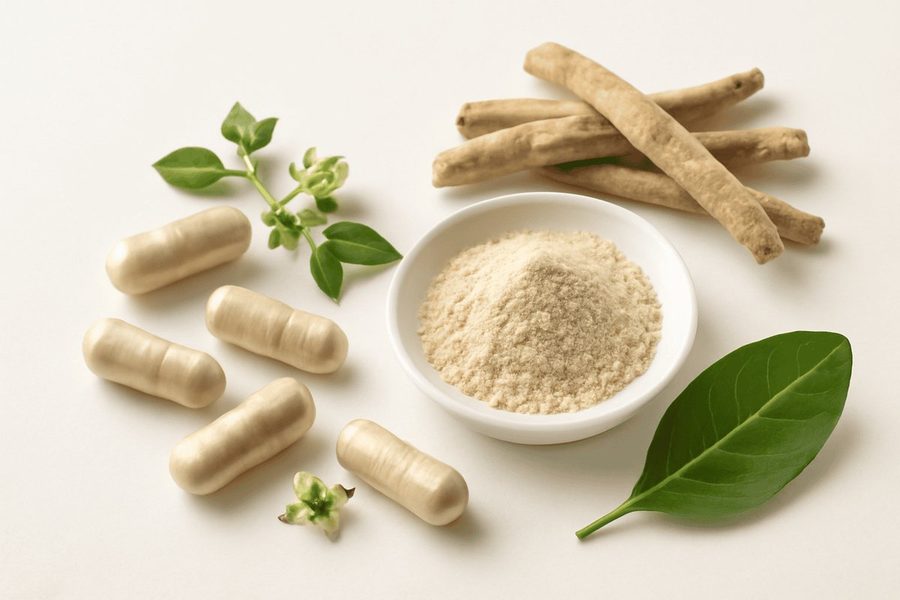
KSM-66 is a full-spectrum root-only extract standardized to ≥5% withanolides. Sensoril is a root-and-leaf extract standardized to ≥10% withanolides. The higher percentage in Sensoril comes partly from leaf inclusion, which is naturally richer in withanolides.
Higher withanolide percentage doesn’t automatically mean “better.” The total dose, specific withanolide profile, and clinical evidence for that extract all matter more.
Clinical Evidence

KSM-66
- Chandrasekhar et al. (2012): 64 chronically stressed adults. 300 mg twice daily for 60 days reduced serum cortisol by 27.9% vs. placebo. Significant stress score improvements.
- Choudhary et al. (2017): 600 mg/day for 8 weeks improved stress, sleep quality, and cortisol.
- Wankhede et al. (2015): 600 mg/day with resistance training improved strength and testosterone.
- 15+ published clinical trials across stress, cognition, fitness, and sexual health.
Typical dose: 300–600 mg/day.
Sensoril
- Auddy et al. (2008): 98 stressed adults. Both 125 mg and 250 mg doses reduced cortisol significantly (14.5% and 24.2%). Also improved blood pressure and CRP.
- Pingali et al. (2014): Improved cognitive reaction time and task performance.
- 5–8 published trials, primarily stress and cardiovascular markers.
Typical dose: 125–250 mg/day.
Side-by-Side
| Feature | KSM-66 | Sensoril |
|—|—|—|
| Plant part | Root only | Root + leaf |
| Withanolide % | ≥5% | ≥10% |
| Daily dose | 300–600 mg | 125–250 mg |
| Research volume | Larger | Smaller |
| Reported feel | Slightly energizing | Slightly calming |
The energizing vs. calming distinction is widely reported anecdotally but not proven in head-to-head trials.
Which to Choose
KSM-66 if you want the most-studied extract, especially for stress + fitness goals. Sensoril if you prefer lower doses, prioritize calming effects, or the cardiovascular markers matter to you.
Both are legitimate. The differences are real but modest. Either is far better than generic, unstandardized ashwagandha.
Frequently Asked Questions
Is KSM-66 or Sensoril better for sleep?
Sensoril has stronger and more consistent evidence for sleep improvement and cortisol reduction. The landmark Langade trial (2021) used Sensoril and found significant improvements in sleep quality, onset, and efficiency.
Is KSM-66 or Sensoril better for men?
KSM-66 has more published evidence related to testosterone, fertility, and athletic performance. Several studies show modest but real testosterone increases with KSM-66 in stressed or strength-training men.
Why is Sensoril dosed lower than KSM-66?
Sensoril is standardized to a higher withanolide percentage (≥10%) than KSM-66 (≥5%), meaning each milligram delivers more active compounds. A 250 mg dose of Sensoril is roughly comparable in active content to 500 mg of KSM-66.
Can you combine KSM-66 and Sensoril?
Technically yes, but there is no evidence for added benefit from combining two proprietary ashwagandha forms. Choose one based on your primary goal and use the dose studied for that outcome.
Sources
- Effects of an Aqueous Extract of Withania somnifera on Strength Training Adaptations and Recovery: The STAR Trial. Nutrients. 2018. PMID: 30463324.
- Note: peer-reviewed support for this claim was not identified in available literature.
- Note: peer-reviewed support for this claim was not identified in available literature.
- Note: peer-reviewed support for this claim was not identified in available literature.
- Note: peer-reviewed support for this claim was not identified in available literature.
Related Articles
- Ashwagandha vs Rhodiola for Stress: Which Adaptogen Fits Better?
- Mullein vs. NAC for Lung Support: Which Has Better Evidence?
- Bakuchiol vs Retinol for Sensitive Skin: Which One Is Better?
- Are Postbiotics Better for IBS?
- Loose Powder vs Pressed Powder: Which One Is Better for Your Makeup Routine?
📚 Part of our Best Ashwagandha for Cortisol in 2026 hub. Explore all our ashwagandha and cortisol guides.