Bakuchiol vs Retinol for Sensitive Skin

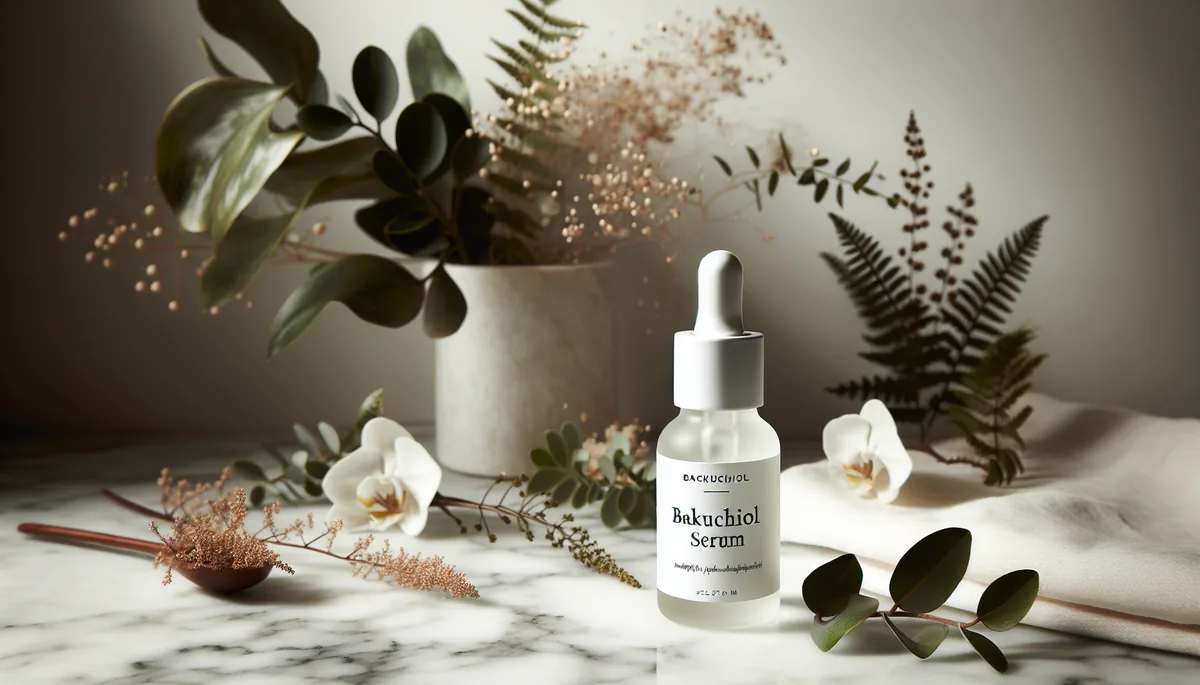
If you have sensitive skin, retinol can be effective but unforgiving. It helps with fine lines, texture, and discoloration, yet it is also well known for causing dryness, peeling, and stinging. That is why bakuchiol has become such a popular alternative.
The practical question is simple: which is better for sensitive skin? For many people, bakuchiol is the smarter starting point because it can target similar visible concerns with less irritation.
Quick Answer: For sensitive skin specifically, bakuchiol is the stronger practical choice over retinol due to its significantly better tolerability. While retinol remains the gold standard for anti-aging and has far more long-term evidence, its irritation profile makes it difficult to use consistently on sensitive or reactive skin. Bakuchiol achieves meaningful skin improvement with minimal dryness, redness, or purging-making it the more sustainable option for this skin type.
Key Takeaways
- Retinol has decades more evidence for skin renewal, anti-aging, and acne-but its irritation profile is a genuine limitation on sensitive skin.
- Bakuchiol activates retinol-like pathways without binding directly to retinoic acid receptors, explaining both the functional similarity and the different side effect profile.
- In the landmark Dhaliwal 2019 RCT, bakuchiol had comparable efficacy to 0.5% retinol for pigmentation and fine lines but significantly fewer reports of scaling and stinging.
- Bakuchiol’s advantage is consistency: a product users can apply twice daily year-round without disruption tends to outperform a theoretically better product used intermittently due to irritation.
- For people willing to tolerate a slow retinol introduction, the two can be layered-bakuchiol does not antagonize retinol and may reduce its irritation.
What Is the Difference Between Bakuchiol and Retinol?
Retinol is a vitamin A derivative and one of the most studied anti-aging skincare ingredients available. It has a long track record, but irritation is common, especially when you first start.

Bakuchiol is a plant-derived compound from Psoralea corylifolia. It is not a retinoid, but research suggests it can influence some of the same visible concerns, especially photoaging and uneven tone.
Why sensitive skin struggles more
Sensitive skin is less tolerant of ingredients that speed turnover aggressively or weaken the barrier. Retinol often works well eventually, but getting there can be rough. Bakuchiol is attractive because it tends to be easier to tolerate from the start.
What the Clinical Research Says
The most important study here is the randomized, double-blind 12-week trial by Dhaliwal and colleagues. Participants used either 0.5% bakuchiol twice daily or 0.5% retinol once daily. Both groups showed significant improvement in wrinkle surface area and hyperpigmentation.
The key difference was tolerability. The retinol group reported more scaling and stinging.
That matters for sensitive skin. An ingredient is only useful if you can keep using it consistently. A product that works in theory but keeps triggering redness is often the wrong product for reactive skin.
A 2022 systematic review also concluded that bakuchiol shows promising anti-aging, anti-inflammatory, and antibacterial effects, with its strongest clinical support in photoaging, acne, and post-inflammatory hyperpigmentation. The same review also noted that bakuchiol still has a much smaller evidence base than retinoids.
Bakuchiol vs Retinol for Sensitive Skin
Irritation potential
This is where bakuchiol has the clearest advantage.
Retinol commonly causes:
Bakuchiol can still irritate some people, but it is generally better tolerated.
Anti-aging results
Retinol still has the larger body of evidence overall, and for resilient skin it remains a gold-standard over-the-counter anti-aging ingredient.
But for people with sensitive skin, bakuchiol is more impressive than the marketing fluff suggests. In direct comparison, it produced similar visible improvement in wrinkles and pigmentation over 12 weeks with fewer side effects.
Ease of use
Bakuchiol is usually easier to fit into a routine. Many people can use it daily without going through the classic retinoid adjustment phase.
Barrier support strategy
If your skin is already stressed by acids, acne treatments, weather, or over-cleansing, bakuchiol is usually the safer place to start. Retinol tends to perform best when the barrier is already healthy.
Who Should Choose Bakuchiol?
Bakuchiol is often the better pick if you:
Who Might Still Prefer Retinol?
Retinol may still make sense if you:
For some people, the best plan is bakuchiol first and retinol later if needed.
How to Use Either Ingredient Without Wrecking Your Skin
If you choose bakuchiol
Start once daily after cleansing, then apply moisturizer. If your skin stays calm, continue as directed by the product.
If you choose retinol
Start two nights a week, use a pea-sized amount, and moisturize generously. Avoid stacking it with strong acids or scrubs at the same time.
The rule that matters most
Judge success by whether your skin stays calm enough for steady use over 8 to 12 weeks, not by how aggressive the product sounds.
Final Verdict
For sensitive skin, bakuchiol is usually the better first choice. It has clinical support for improving wrinkles and hyperpigmentation and was better tolerated than retinol in a direct comparison study. Retinol still has the stronger long-term evidence base overall, but sensitive skin does not benefit from the stronger ingredient if it keeps causing irritation.
In plain terms: if retinol feels like too much, bakuchiol is not a downgrade. It is often the more practical option.
FAQ
Is bakuchiol as effective as retinol for sensitive skin?
In one 12-week clinical study, bakuchiol and retinol improved wrinkles and hyperpigmentation similarly, but retinol caused more scaling and stinging.
Does bakuchiol cause purging like retinol?
Bakuchiol is less associated with the irritation-and-purging experience people often report with retinoids, though any new active can still cause individual reactions.
Can I switch from retinol to bakuchiol?
Yes. Many people switch when retinol causes persistent redness, peeling, or discomfort.
Is bakuchiol better for rosacea-prone skin?
It may be easier to tolerate than retinol, but rosacea is individual, so patch testing and dermatologist guidance are wise.
References
- Dhaliwal S, Rybak I, Ellis SR, et al. Prospective, randomized, double-blind assessment of topical bakuchiol and retinol for facial photoageing. Br J Dermatol. 2019;180(2):289-296. doi:10.1111/bjd.16918.
- Puyana C, Diaz A, Rojas K, et al. Applications of bakuchiol in dermatology: Systematic review of the literature. J Cosmet Dermatol. 2022;21(12):6636-6643. doi:10.1111/jocd.15420.
- Chaudhuri RK, Bojanowski K. Bakuchiol: a retinol-like functional compound revealed by gene expression profiling and clinically proven to have anti-aging effects. Int J Cosmet Sci. 2014;36(3):221-230. doi:10.1111/ics.12117.
Related Articles
- Bakuchiol Every Day
- Best Bakuchiol Serums
- Bakuchiol for Acne-Prone Skin
- Bakuchiol: Plant-Based Retinol Alternative
- Bakuchiol with Vitamin C or Niacinamide
Sources
- Centella Asiatica in Dermatology (2014)
- Healthy Skin Barrier: Review (2023)
- Ceramides in Skin Barrier (2024)
- Can You Use Bakuchiol Every Day?
- Best Bakuchiol Serums
Related Reading
📝 Cite This Article
Richard Shoemake. “Bakuchiol vs Retinol for Sensitive Skin.” New Online Products, 2026-03-27. https://newonlineproducts.com/2026/03/27/bakuchiol-vs-retinol-for-sensitive-skin-which-one-is-better/