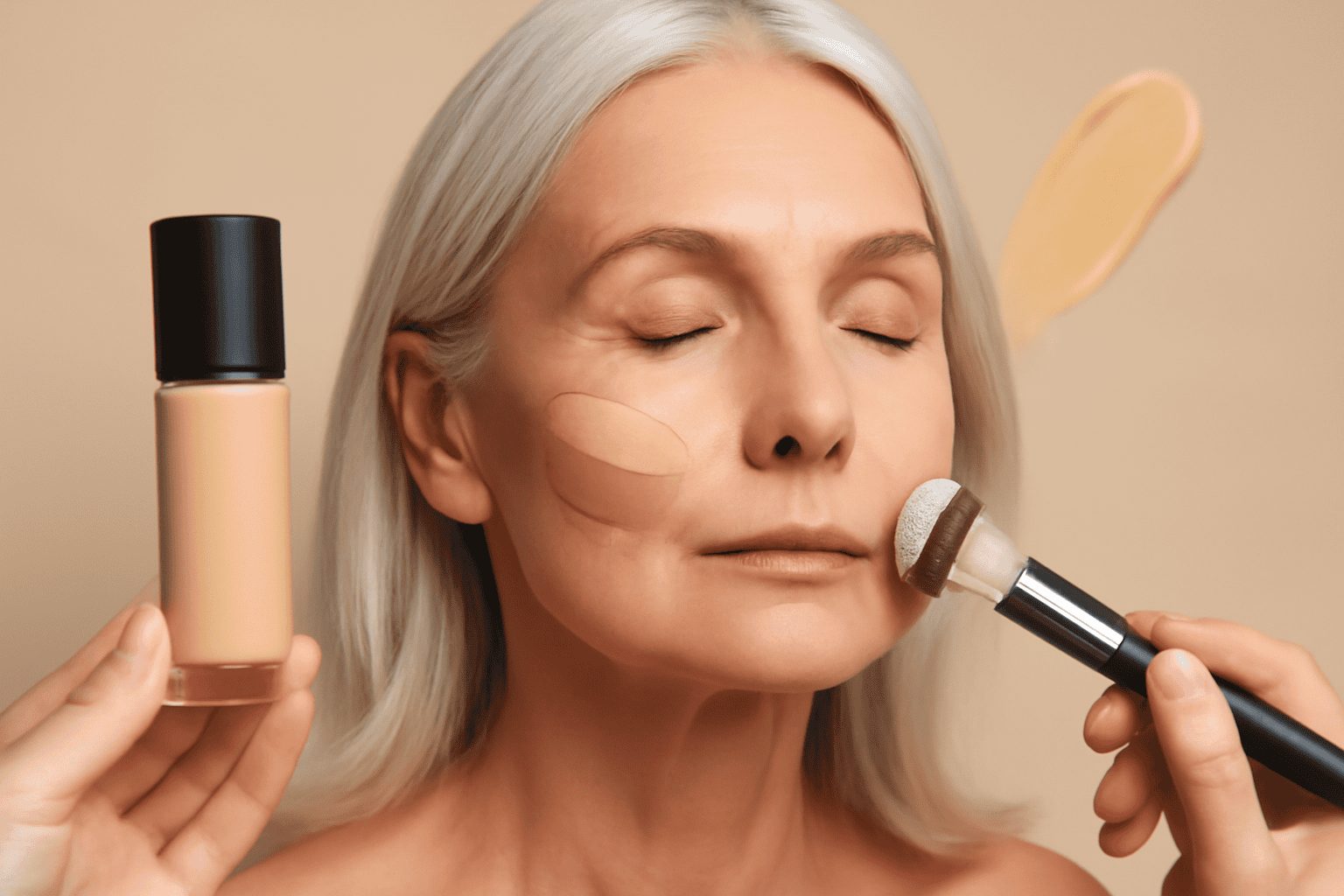
Best Foundation for Mature Skin
Quick Answer: The best foundation for mature skin provides light to medium buildable coverage, hydrating ingredients that prevent settling into fine lines, and a satin or skin-like finish rather than flat matte or overly dewy. Look for formulas with hyaluronic acid, glycerin, or serum-like bases. Top recommendations include Charlotte Tilbury Airbrush Flawless Foundation, NARS Natural Radiant Longwear, and Armani Luminous Silk.
Finding the best foundation for mature skin is less about covering everything and more about choosing a formula that works with your skin as it is now. What looked great at 30 may feel heavy, dry, or aging at 50, 60, or beyond. Skin changes over time, and foundation has to change with it.
Mature skin often has a combination of dryness, uneven tone, fine lines, texture, and some loss of firmness. That means the ideal foundation usually needs to be hydrating, flexible, and lightweight enough to move with the skin instead of sitting on top of it.
If you have been searching for a foundation that makes your skin look smoother, fresher, and more radiant instead of mask-like, here is what actually matters.
What mature skin needs from foundation
The best foundation for mature skin usually does three jobs well: it evens out tone, keeps the skin looking alive, and avoids settling into lines.
Features that help the most
- Light to medium buildable coverage
- Hydrating or skin-like finish
- Flexible texture that does not crack
- Smooth blending over texture and dryness
- Long wear without looking flat or tight
A foundation does not need to erase every spot. In fact, chasing full coverage often creates the exact heavy look many people are trying to avoid.
Best foundation finishes for mature skin
Finish can make or break the result.
Natural finish
A natural finish is usually the safest choice. It looks balanced, skin-like, and flattering in different lighting.
Satin finish
Satin formulas add a little radiance without tipping into shine. They often look especially beautiful on drier or duller skin.
Lightly luminous finish
A touch of glow can make mature skin look healthier and more awake, especially if the complexion has become flatter over time.
Finishes to approach carefully
Very matte foundation can emphasize dryness and fine lines. Extremely dewy foundation can slide, pool around texture, or look too reflective on enlarged pores. Balance wins.
Best foundation textures for older skin
Texture is just as important as finish.
Serum foundations
These are often lightweight and fluid, making them a strong choice for people who dislike feeling makeup on the skin.
Hydrating liquid foundations
These are the most versatile option for mature skin. They usually offer easy blending and adjustable coverage.
Tinted moisturizers and skin tints
If your main goal is evening out tone with the most natural look possible, these can be excellent.
Cream foundations
Some cream foundations are beautiful on mature skin, but only if they stay flexible and do not become thick or waxy.
How to pick the best shade for mature skin
The wrong shade can age the face just as fast as the wrong formula.
Match your neck and chest
Facial redness or pigmentation can trick you into choosing a shade that is too deep or too pink.
Avoid going too matte to “look younger”
People sometimes choose darker or flatter shades hoping for more coverage, but that can make the face look heavier.
Recheck undertone seasonally
Skin tone can shift slightly throughout the year, especially if your natural color changes with sun exposure.
Application tips that make foundation look better on mature skin
Good foundation is only half the equation. Technique matters.
Prep with hydration
Moisturized skin almost always makes foundation sit better.
Use less product than you think
Start thin and build only where needed. Most mature skin looks better with strategic coverage than a full layer everywhere.
Apply in light layers
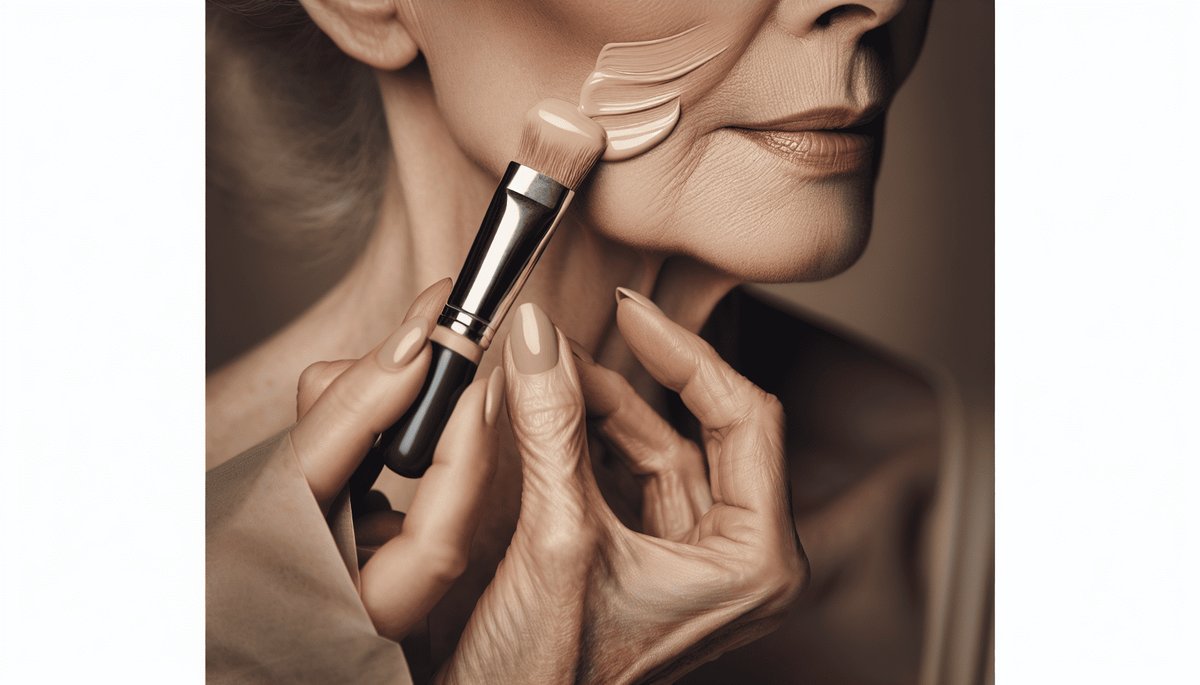
A damp sponge or soft brush can help foundation melt into the skin instead of streaking.
Spot-conceal instead of over-layering
Use concealer only where you need extra correction rather than applying heavy foundation across the whole face.
Common foundation mistakes that age mature skin
Using too much powder
Even a beautiful foundation can turn dry and older-looking when set too heavily.
Choosing full coverage by default
More coverage does not always equal a younger appearance. Often it does the opposite.
Ignoring primer and skincare compatibility
If your skincare is very rich and your foundation is not compatible, the finish may separate quickly.
Key Takeaways
- Avoid heavy full-coverage matte formulas—they emphasize texture and look thick on mature skin.
- Choose a foundation one shade lighter than your jawline to compensate for any darkness from formulation settling.
- Hydrating, serum-like bases blend more naturally and do not exaggerate lines the way powder-heavy formulas do.
- Finish foundation with a setting spray rather than powder to maintain a fresh, skin-like appearance.
- Application with a damp sponge (not a brush) produces the most natural finish on mature skin.
- Consider skin prep—a hydrating primer over moisturizer helps foundation move smoothly and last longer.
Why Foundation Choice Matters More on Mature Skin
Skin texture changes with age—pores may appear more prominent, fine lines develop around the mouth and eyes, and the skin surface may be drier with less even tone. Foundations that work well on younger skin can exaggerate these characteristics on mature skin, settling into lines, looking cakey after a few hours, or emphasizing dryness by pulling up the surface.
The right foundation for mature skin works with skin texture rather than trying to flatten it into a single uniform plane. Buildable formulas that allow you to apply coverage only where needed are almost always preferable to uniform full-coverage approaches.
Key Formula Characteristics
Look for hydrating ingredients in the formula: hyaluronic acid, glycerin, squalane, and plant oils all help foundation blend smoothly without grabbing on dry patches. Serum-foundation hybrids have become popular for exactly this reason—they carry active ingredients alongside pigment, treating skin while providing coverage. Silicone-based foundations fill fine lines temporarily but can feel heavy if over-applied. Water-based formulas feel lighter but may need a longer set time.
Finish Options Ranked for Mature Skin
The satin or natural finish is the most universally flattering on mature skin—it provides light diffusion without the flat, powdery look of matte or the potentially aging effect of very dewy formulas that emphasize pores. Luminous finishes work beautifully on dry mature skin. Full matte is generally least flattering—it flattens features and can make skin look dull rather than polished.
Top Foundation Recommendations
Charlotte Tilbury Airbrush Flawless Foundation: medium coverage with a soft-focus, skin-blurring finish that minimizes texture. NARS Natural Radiant Longwear Foundation: buildable from sheer to medium with a luminous finish and excellent longevity. Armani Luminous Silk Foundation: a long-standing classic for a reason—the ultra-light texture disappears into skin and adapts to the wearer’s natural luminosity. L’Oréal Paris True Match Nude Hyaluronic Tinted Serum: a budget option that delivers a sheer, skin-like finish with skincare benefits—excellent for mature skin that does not need heavy coverage.
Application Tips for Mature Skin
Prime with a hydrating primer (not a pore-filling silicone primer) to give foundation a smooth surface to adhere to. Apply foundation with a damp beauty sponge using a pressing or stippling motion rather than dragging—this applies product in thin layers that blend naturally. Start in the center of the face and blend outward, applying the least product where it is least needed (hairline, jawline). Set minimally or not at all—use a setting spray instead of powder to lock in the finish without drying or flattening the look.
Frequently Asked Questions
What type of foundation is best for mature skin?
A lightweight to medium-coverage liquid foundation with a natural or satin finish is usually the most flattering place to start.
Is matte foundation bad for mature skin?
Not always, but many matte formulas can emphasize dryness and fine lines. A soft natural or satin finish is often easier to wear.
Should mature skin use full-coverage foundation?
Only if the formula stays flexible and natural. Many people with mature skin look better in buildable coverage plus targeted concealer.
How can I stop foundation from settling into wrinkles?
Hydrate well, use less product, avoid heavy powder, and choose a formula that stays flexible on the skin.
Related Articles
- Makeup Mistakes That Age Mature Skin
- Best Concealer for Crepey Under Eyes
- Best Makeup for Women Over 50
- Best Cream Blush for Mature Skin
- Best Vegan Foundations for Mature Skin
Sources
- U.S. Food and Drug Administration. Cosmetics labeling guide.
- Environmental Working Group. Skin Deep cosmetic ingredient safety database.
- European Commission. CosIng: cosmetic ingredient database.
- Reviews on aging skin and cosmetic formulation considerations. PubMed search.
- Reviews on hypoallergenic cosmetics and contact dermatitis. PubMed search.
📚 Part of our Best Makeup for Women Over 40 hub. Explore all our mature skin makeup guides.