Quick Answer: Double cleansing on heavy makeup days involves using an oil-based cleanser or cleansing balm first to dissolve makeup and sunscreen, followed by a water-based cleanser to remove remaining residue. This two-step approach is more thorough than any single cleanser alone and prevents makeup residue from clogging pores or causing breakouts overnight.
Double cleansing is one of the most effective ways to remove heavy makeup without over-scrubbing your skin. On days when you wear full-coverage foundation, waterproof mascara, primer, setting spray, and sunscreen, one cleanser may not be enough. Double cleansing for heavy makeup days helps dissolve long-wear products first and then wash away leftover residue, sweat, and impurities.
This method is popular for a reason: it gives you a more complete cleanse while being surprisingly gentle when done correctly.
What Double Cleansing Means
Double cleansing involves two separate steps:
An oil-based cleanser, cleansing balm, or makeup remover to break down makeup and sunscreen
A water-based cleanser to remove remaining residue and leave skin fresh
The first cleanse targets oil-soluble buildup. The second cleanse focuses on what is left behind.
Why Double Cleansing Helps With Heavy Makeup
Heavy makeup often contains waxes, silicones, pigments, and film formers designed to stay put for hours. A single water-based cleanser may remove some of that, but it may also leave residue near the hairline, lashes, and around the nose.
Benefits of double cleansing
Removes long-wear makeup more thoroughly
Helps reduce rubbing and harsh wiping
Leaves less residue behind from sunscreen and setting products
Prepares skin better for serums and night care
Can reduce clogged-pore buildup when done gently
For many people, the biggest advantage is comfort. Instead of forcing one cleanser to do everything, each step handles the part it does best.
Best First Cleanse Options for Heavy Makeup
Cleansing balm
A balm is ideal if you want a rich texture that melts foundation, sunscreen, and waterproof eye makeup in one step. It is especially useful on glam days.
Cleansing oil
A cleansing oil gives a lighter feel while still dissolving makeup effectively. It works well for most skin types if it emulsifies cleanly.
Dedicated eye makeup remover
If you wear intense waterproof mascara or liner, you can start with a dedicated eye remover before using a cleansing balm or oil on the rest of the face.
Best Second Cleanse Options
The second cleanser should be gentle. After the first step has already removed makeup, there is no need for a harsh, drying wash.
Good choices include:
Low-foam gel cleansers
Cream cleansers
Gentle hydrating cleansers
Mild foaming cleansers for oily skin
The right second cleanse leaves skin clean but not tight.
How to Double Cleanse Correctly
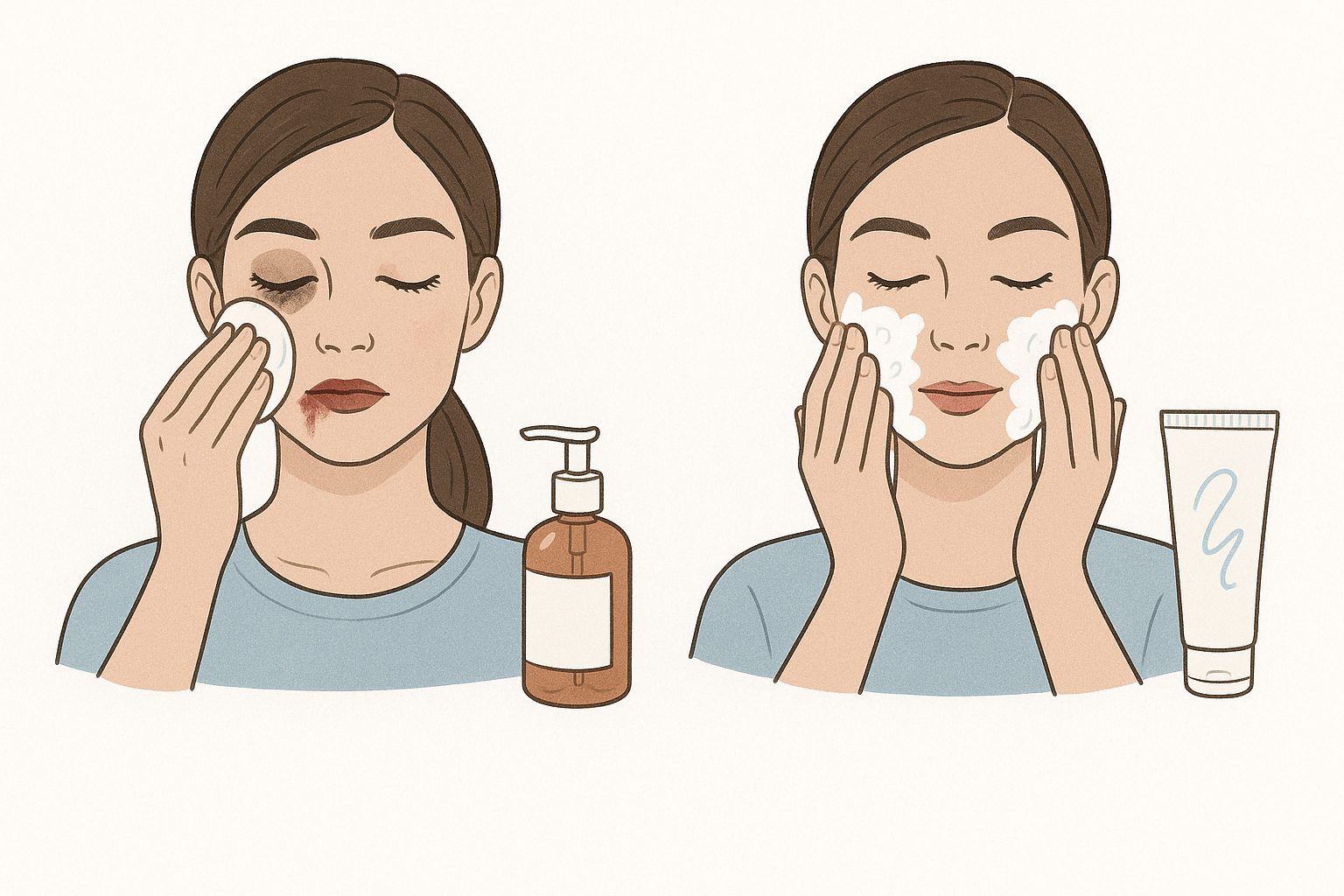
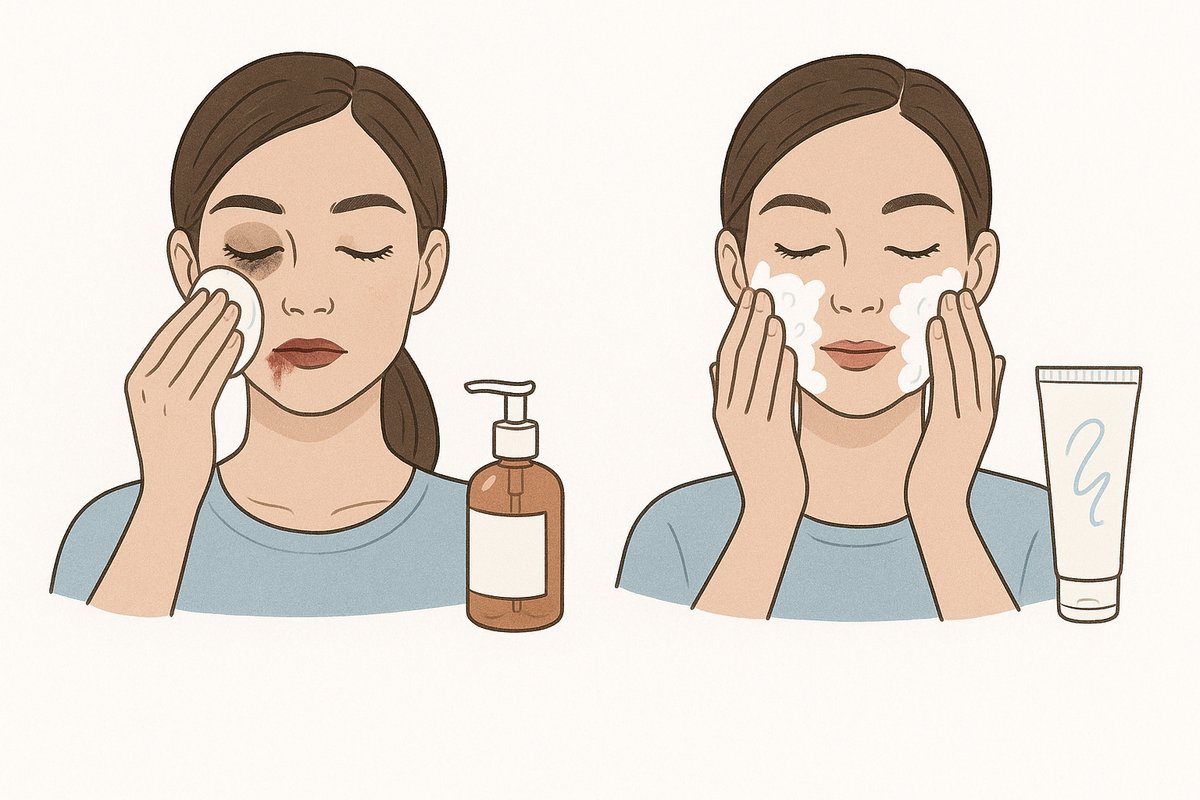
Step 1: Start with dry skin
Apply your cleansing balm or oil to dry skin and massage for 30 to 60 seconds. Focus on areas where makeup builds up most, such as around the nose, jawline, and lashes.
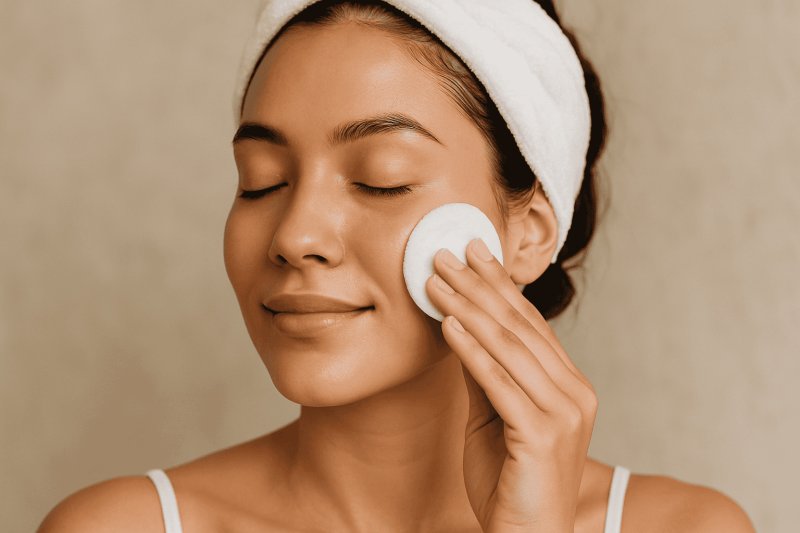
Step 2: Emulsify or wipe away
Add lukewarm water if the formula emulsifies, or remove with a soft damp cloth if directed.
Step 3: Use your water-based cleanser
Massage gently for another 20 to 30 seconds, then rinse.
Step 4: Pat dry and moisturize
Follow with hydrating skincare to support the skin barrier.
Who Should Double Cleanse?
Double cleansing is especially useful for:
People who wear full-face makeup regularly
Anyone using water-resistant sunscreen
Long-event, photo-shoot, wedding, or performance makeup wearers
Those who notice leftover residue after washing once
If you rarely wear makeup, double cleansing may not be necessary every night.
Common Double Cleansing Mistakes
One mistake is choosing a harsh second cleanser. If the first step already removed makeup, the second cleanser does not need to strip the skin. Another mistake is over-massaging, especially around the eyes.
Some people also double cleanse too often for their skin type. If your face feels tight, flaky, or irritated, reassess your formulas and frequency.
Key Takeaways
The first cleanse removes makeup, sunscreen, and excess oil using an oil-based formula.
The second cleanse removes any remaining residue with a water-based or gentle foaming cleanser.
Double cleansing is especially important on days with long-wear foundation, waterproof products, or heavy SPF.
Over-cleansing is a risk-use a gentle formula for the second step to avoid stripping the skin barrier.
For dry or sensitive skin, a balm-to-milk formula in the first step reduces the need for a heavy second cleanser.
The method takes 2-4 additional minutes-worthwhile on heavy makeup days, often unnecessary for minimal makeup.
Why One Cleanse Is Not Always Enough
Most cleansers are formulated for water-soluble dirt and surface oil. The main ingredients in modern makeup-silicones, waxes, film-forming polymers, and UV filters in sunscreen-are hydrophobic (water-repelling). A water-based cleanser cannot fully dissolve these without extended friction, which risks damaging the skin barrier. An oil-based first cleanse dissolves these compounds efficiently, leaving the skin genuinely clean rather than superficially clean with a waxy residue.
Step-by-Step Double Cleanse Protocol
Step 1 (Oil/Balm Cleanse, 2-3 minutes): Start with dry hands and a dry face. Apply 1-2 pumps of cleansing oil or a scoop of cleansing balm to dry skin. Massage gently for 60-90 seconds. Add a small amount of water to emulsify the formula until it turns milky. Rinse thoroughly with lukewarm water. Step 2 (Water-Based Cleanse, 60-90 seconds): Apply a small amount of gentle water-based cleanser to slightly damp skin. Massage for 30-60 seconds. Rinse with lukewarm water and pat skin dry-never rub.
Choosing Your Double Cleanse Products
For dry/sensitive skin: Cleansing balm with ceramides or botanical oils for the first step; cream or milk cleanser for the second step (CeraVe Hydrating Facial Cleanser, La Roche-Posay Toleriane). For oily/acne-prone: Lightweight cleansing oil (jojoba, grapeseed base) for the first step; gentle foaming cleanser for the second step (CeraVe Foaming Cleanser). For normal/combination: Any quality cleansing balm or oil; gel or mild foam second cleanser (Cetaphil, Vanicream).
Common Mistakes in Double Cleansing
Using a harsh second cleanser strips the skin and undoes the protective benefit of the oil-first approach. Not emulsifying the first step properly prevents full effectiveness-massage dry, then add water. Rushing the first step (under 60 seconds) leaves makeup residue. Double cleansing every day regardless of makeup level is unnecessary and may impair the skin barrier over time.
When Double Cleansing Matters Most
Double cleansing delivers the most value on days with full-coverage foundation, waterproof makeup, long-wear formulas, or mineral or chemical sunscreen. On days with no makeup or minimal coverage, a single gentle cleanser is completely adequate. Build the habit for heavy makeup days rather than making it a rigid daily routine.
FAQ About Double Cleansing
Is double cleansing necessary for heavy makeup?
Often, yes. It is one of the most reliable ways to remove long-wear makeup thoroughly and gently.
Can double cleansing dry out skin?
It can if you use harsh products. With a gentle balm or oil and a mild second cleanser, many people find it more comfortable than repeated scrubbing.
Do I need to double cleanse every night?
Not unless your routine calls for it. It is most useful on makeup-heavy or sunscreen-heavy days.
Is micellar water enough instead of a first cleanse?
Sometimes for light makeup, but for heavier makeup, a cleansing balm or oil usually performs better.
Final Takeaway
Double cleansing for heavy makeup days is less about adding an extra step and more about using the right tools in the right order. A good oil-based first cleanse followed by a gentle water-based second cleanse can leave skin cleaner, calmer, and less irritated than trying to scrub everything off at once.
Is double cleansing necessary?
Double cleansing is necessary on days with heavy SPF, full-coverage foundation, or waterproof products – a single water-based cleanser typically cannot fully remove these. It’s less necessary for minimal makeup days or days without sunscreen. The practical rule: if you’re wearing SPF + foundation regularly, double cleansing will make a noticeable difference in skin clarity over time compared to single-cleansing.
Can you double cleanse with the same cleanser?
Not effectively – the benefit of double cleansing comes from using an oil-based first step that dissolves lipophilic makeup and SPF, followed by a water-based second step that removes the residue. Using the same water-based cleanser twice doesn’t provide the oil-dissolution step and leaves the same residue as single cleansing. You need two different cleanser types (oil + water-based) for the method to work.
Does double cleansing dry out skin?
Double cleansing with appropriate products should not dry out skin – the key is using a gentle, non-stripping oil or balm for the first step and a hydrating or pH-balanced gel/cream cleanser for the second. Problems occur when people use harsh foam cleansers for both steps or over-cleanse with actives twice daily. A gentle double cleanse in the evening and a simple water rinse or single cleanse in the morning is a balanced approach.
[…] Removing long-wear formulas cleanly is half the battle. For a thorough removal strategy, see a double-cleansing approach designed specifically for removing heavy, long-wear makeup. […]
[…] wearing long-wear or layered products, a single cleanser often leaves residue behind. Our guide to double cleansing for heavy makeup days when a single wash isn’t enough walks through the method step by […]





Leave a Reply