Quick Answer: Cleansing balms dissolve heavy and waterproof makeup effectively through their oil base, then rinse off cleanly. Micellar water is lighter, faster, and better for everyday minimal makeup or quick touch-ups but struggles with waterproof formulas. Use a cleansing balm for full makeup days and micellar water for light days or as a step to remove eye makeup before a double cleanse.
Cleansing balm and micellar water are both popular makeup-removal options, but they work in very different ways. If you are trying to decide between cleansing balm vs micellar water, the best choice depends on how much makeup you wear, your skin type, and how thoroughly you want to cleanse.
Both can remove makeup, but they are not interchangeable in every routine. One is usually better for heavy, long-wear products, while the other shines when you want speed and simplicity.
What Is a Cleansing Balm?
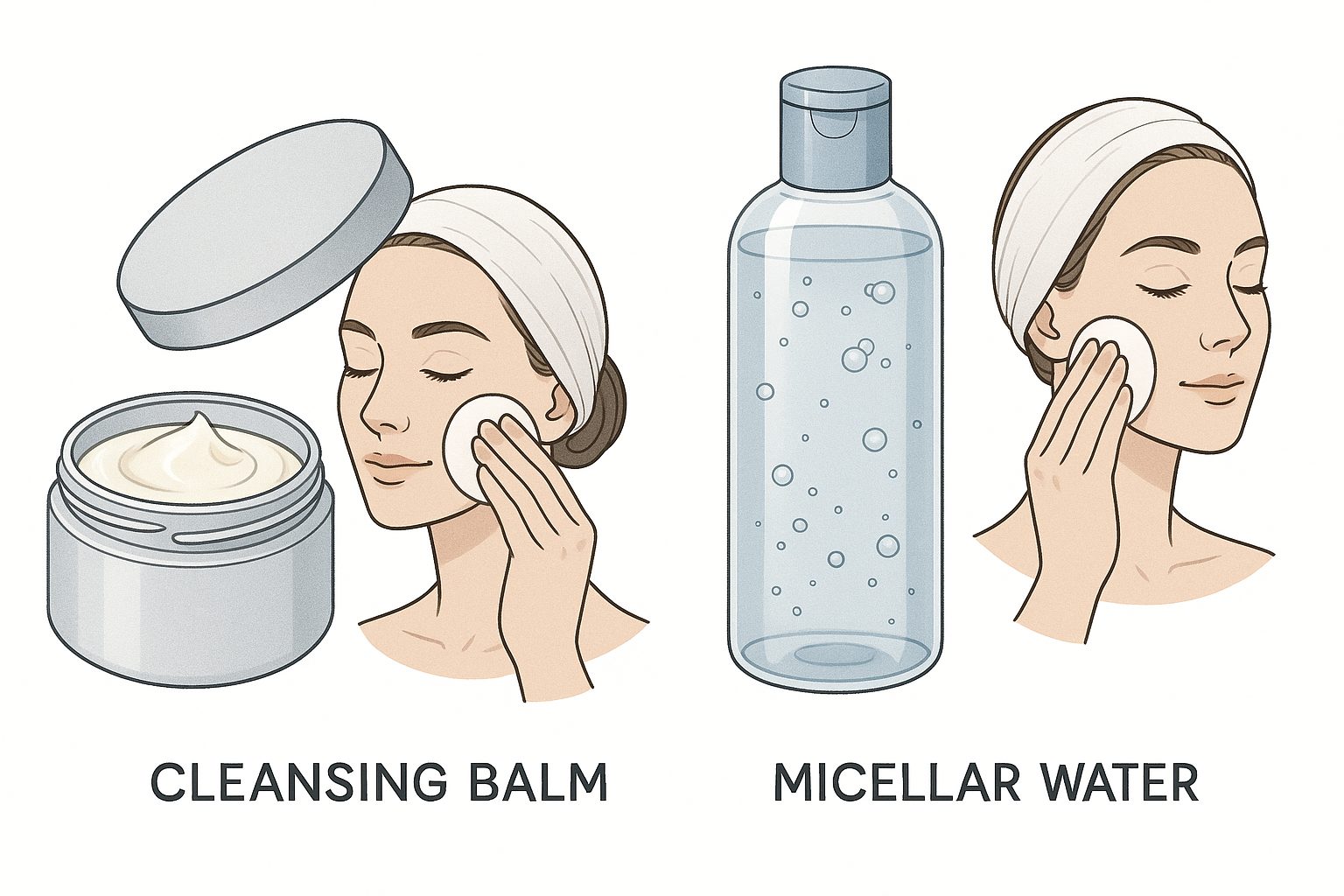
A cleansing balm is a solid or semi-solid oil-based cleanser that melts into the skin. It is designed to dissolve makeup, sunscreen, and excess oil. When water is added, most cleansing balms emulsify and rinse away more easily.
Best for:
Full-face makeup
Waterproof mascara and long-wear products
Double cleansing routines
Dry or dehydrated skin
Cleansing balms are especially popular for evening routines because they break down layers of product without aggressive rubbing.
What Is Micellar Water?
Micellar water is a water-based cleanser that contains tiny cleansing molecules called micelles. These micelles attract oil, dirt, and makeup so they can be lifted off the skin with a cotton pad.
Best for:
Light makeup removal
Quick cleansing on busy days
Morning refresh routines
People who prefer minimal-feel formulas
Micellar water is convenient, portable, and easy to use, but it may not be enough for heavy makeup or water-resistant products.
Cleansing Balm vs Micellar Water: Main Differences
Cleansing power
Cleansing balm usually wins for deep makeup removal. It handles long-wear foundation, sunscreen, and waterproof eye makeup much more effectively than most micellar waters.
Micellar water is better for lighter coverage days, quick corrections, or minimal makeup routines.
Skin feel
Cleansing balm tends to feel richer and more nourishing. Micellar water feels lighter and fresher but may leave some people wanting a more complete cleanse.
Ease of use
Micellar water is simpler if you want no-mess convenience. Just soak a pad and wipe. Cleansing balm takes a bit more effort because it involves massaging and rinsing.
Residue and follow-up cleansing
Most cleansing balms are designed to be rinsed, often followed by a second cleanser. Micellar water may leave surfactant residue on the skin, so many people still prefer to rinse after using it.
Which Is Better for Your Skin Type?
Dry skin
Cleansing balm is often the better choice because it feels more cushiony and less stripping.
Oily or acne-prone skin
Either can work, but a balm that emulsifies cleanly often removes sunscreen and makeup more thoroughly than micellar water alone.
Sensitive skin
This depends on the formula. Fragrance-free versions of either option can work well. Micellar water may be gentler for very light cleansing, while balm may require less rubbing for heavier makeup.
Sensitive eyes
Micellar water can be convenient, but cleansing balm is often better at loosening mascara so you do not have to tug.
When to Choose Cleansing Balm
Choose cleansing balm if you:
Wear full-coverage or long-wear makeup
Use waterproof mascara often
Prefer an evening double cleanse
Want makeup to melt away with less cotton-pad friction
Balms are excellent for heavier routines because they remove multiple layers in one step.
When to Choose Micellar Water
Choose micellar water if you:
Wear light makeup most days
Want a quick travel-friendly option
Need easy cleanup after gym sessions or long commutes
Prefer a lighter-feeling first step
Micellar water works best when expectations match its strength.
Can You Use Both?
Yes. Many routines benefit from both. For example, you might use micellar water for small corrections or morning cleansing and reach for a cleansing balm on full-glam or sunscreen-heavy days. Some people also use micellar water as a pre-cleanse around the eyes before a full cleansing routine.
Key Takeaways
Cleansing balms use an oil base that melts to liquid on skin-ideal for dissolving heavy or waterproof makeup.
Micellar water uses surfactant micelles to lift makeup without rinsing-convenient but limited for waterproof products.
Double cleansing (balm first, then water-based cleanser) is the most thorough approach for heavy makeup days.
For minimal or no makeup, micellar water is faster and equally effective.
Cleansing balms are generally more nourishing; micellar waters are lighter and better for oily skin types.
Both can be used together-micellar water for eyes, balm for face-without any incompatibility.
How Each Product Works
A cleansing balm is a solid or semi-solid oil-based formula that transforms into oil on contact with skin. It dissolves lipid-based components of makeup through the principle of like dissolving like. Most balms also contain an emulsifier that converts the oil to a milky consistency when water is added, allowing rinse-off without heavy residue. Micellar water is an aqueous formula containing surfactant molecules that form micelles-tiny clusters with oil-attracting interiors and water-attracting exteriors-trapping oil-based makeup without rinsing.
Which to Choose by Makeup Type
Waterproof mascara and eyeliner require a cleansing balm or biphasic micellar oil. Long-wear foundation and concealer require a cleansing balm. Lip liner and matte lipstick are best removed with a cleansing balm. Tinted moisturizer and light foundation can use either, with micellar water being faster. Non-waterproof mascara works well with micellar water. Blush and powder products lift easily with either formula.
Top Recommended Products
Best cleansing balms: Clinique Take the Day Off Cleansing Balm (a longtime classic, ophthalmologist-tested), DHC Deep Cleansing Oil (one of the most effective for heavy makeup), The Body Shop Camomile Sumptuous Cleansing Butter (nourishing for dry and sensitive skin), e.l.f. Holy Hydration! Makeup Melting Cleansing Balm (budget option with strong reviews). Best micellar waters: Bioderma Sensibio H2O (dermatologist-favorite for sensitive skin), Garnier SkinActive Micellar Cleansing Water (budget-accessible with good efficacy), La Roche-Posay Micellar Ultra Water (fragrance-free for reactive skin).
The Double Cleanse Method
The double cleanse approach uses a cleansing balm or oil as step one and a water-based cleanser as step two. The oil phase removes makeup and sunscreen; the water cleanser removes remaining oil and any water-soluble debris. This method ensures the most thorough cleansing without over-stripping the skin barrier. It is especially recommended on days when you wear sunscreen, heavy foundation, or waterproof makeup.
When to Skip the Double Cleanse
On no-makeup days with just light sunscreen or on very minimal makeup days, a single gentle cleanser is usually sufficient and does not risk over-cleansing. Twice-daily double cleansing on all days regardless of makeup level is unnecessary and may eventually impair the skin barrier in some people. Reserve it for when it is needed-heavy makeup days.
FAQ About Cleansing Balm vs Micellar Water
Is cleansing balm better than micellar water?
For heavy makeup, waterproof products, and sunscreen removal, yes. For quick light cleansing, micellar water may be more convenient.
Does micellar water replace face wash?
Not always. Many dermatologists and estheticians still recommend rinsing and following with a cleanser, especially after wearing makeup or sunscreen.
Is cleansing balm good for oily skin?
Yes, as long as the formula emulsifies and rinses clean. Oil cleansing does not automatically mean greasy skin.
Which is better for waterproof mascara?
Cleansing balm is usually more effective than standard micellar water.
Final Takeaway
In the cleansing balm vs micellar water debate, there is no single winner for everyone. Cleansing balm is usually better for thorough makeup removal and long-wear products. Micellar water is better for convenience, light makeup, and quick routines. If you wear makeup regularly, having both on hand can be the smartest setup.
Which is better, cleansing balm or micellar water?
It depends on your makeup and skin type. Cleansing balm is more effective for heavy makeup, full-coverage foundation, waterproof products, and SPF – it provides a thorough oil-cleanse that micellar water can’t match for these products. Micellar water is convenient for light makeup days, quick refreshes, or travel. Many people use both: micellar water for minimal days and cleansing balm for full-makeup days.
Can I use micellar water instead of face wash?
Micellar water can serve as a light cleanser for very minimal makeup or as a rinse-free morning cleanse if your skin is not oily. However, it’s not a substitute for a proper cleanser at the end of a full makeup + SPF day – it lacks the thoroughness to remove all sunscreen residue, heavy foundation, and sebum buildup. For most people with active skin + makeup routines, micellar water works best as a step within a double-cleanse rather than as a standalone face wash.
Do I need to rinse off cleansing balm?
Yes – cleansing balm should always be rinsed off. When massaged onto skin and emulsified with a small amount of water, the formula breaks down into a milky consistency that is meant to be rinsed away along with dissolved makeup and residue. Not rinsing leaves a residue of waxes and emulsifiers on skin that can clog pores over time. Most cleansing balm routines involve rinsing with warm water after massaging for 60-90 seconds.