

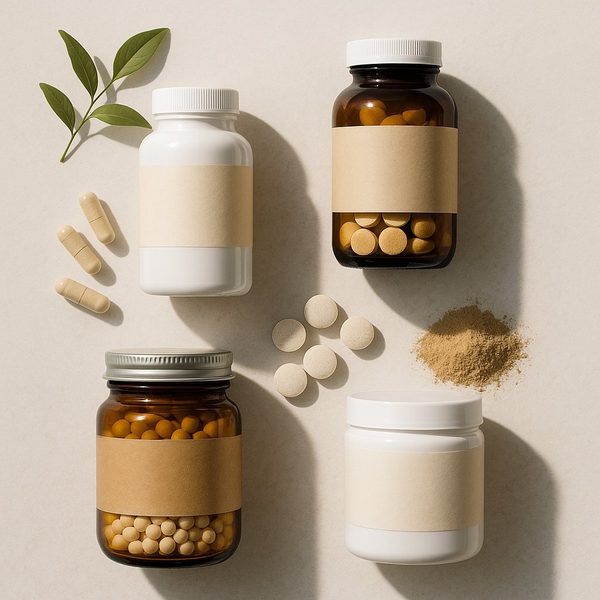

The best postbiotic supplements in 2026 are not the ones with the loudest marketing. They are the ones that tell you what the ingredient is, how much you are getting, and why that form matters.
Quick Answer
The postbiotic supplement category is growing rapidly but remains largely unregulated, with wide variation in product quality and clinical evidence backing. The most evidence-supported postbiotic preparations in 2026 include: Immuse (heat-killed Lactobacillus paracasei MCC1849) for immune support, EpiCor (Saccharomyces cerevisiae fermentate) for immune modulation, GlucaPure (beta-glucan fractions) for gut barrier and immune function, and postbiotic butyrate products (tributyrin, sodium butyrate) for colonocyte health. Urolithin A (postbiotic from pomegranate ellagitannin fermentation by gut bacteria) is emerging for mitochondrial health and muscle function.
Key Takeaways
- Immuse (Kirin Holdings’ heat-killed L. paracasei MCC1849) is the most clinically supported immune-targeted postbiotic, with multiple Japanese RCTs showing NK cell activity enhancement, reduced cold and flu symptom duration, and improved influenza vaccine response in older adults.
- EpiCor (Embria Health Sciences) is a whole-food fermentate from Saccharomyces cerevisiae with multiple RCTs showing secretory IgA increases, reduced seasonal allergy symptoms, and gut barrier improvement — it operates via a different mechanism than probiotic-class products.
- Urolithin A (Mitopure, Timeline Nutrition) is a postbiotic metabolite produced when gut bacteria process ellagitannins from pomegranate — it activates mitophagy (cellular cleanup of damaged mitochondria), with human RCTs showing improved muscle endurance, mitochondrial function markers, and reduced inflammatory markers in aging adults.
- Postbiotic butyrate (tributyrin form preferred) is relevant for colonocyte fuel supply and gut barrier integrity — Kailos Genetics and several European supplement lines offer tributyrin at 500-1000 mg/day, the most clinically studied dose range for intestinal permeability support.
- When evaluating postbiotic products: verify the specific organism or metabolite, check that clinical evidence exists for the bioactive component you are paying for (not just the parent organism), look for third-party testing for purity and potency, and be cautious of marketing claims that exceed the available trial evidence.
That is important because “postbiotic” is still a messy supplement category. Some products are basically butyrate formulas. Some use heat-treated microbial ingredients. Some are transparent and useful. Others hide behind proprietary blends and trendy language.
If you want a smart buying rule, start here: pick clarity over hype.
What counts as a postbiotic supplement?
The International Scientific Association for Probiotics and Prebiotics defines postbiotics as preparations of inanimate microorganisms and or their components that confer a health benefit on the host (Salminen et al., Nat Rev Gastroenterol Hepatol, 2021).
In consumer supplements, that usually means:
- Butyrate products
- Tributyrin formulas
- Heat-treated or inactivated microbial ingredients
For most buyers, the strongest and most practical category is still butyrate-focused supplementation.
`r`n`r`n
What to look for in the best postbiotic supplements
1. A named ingredient
If the label says “advanced postbiotic complex” but never clearly identifies the active material, move on.
Look for:
- Tributyrin
- Sodium, calcium, or magnesium butyrate
- Named heat-treated microbial ingredients
- Clear mg amounts per serving
2. A form that matches your goal
For gut-lining or barrier support
Standard butyrate products are often the best first stop.
For premium butyrate delivery
Tributyrin is worth considering if you want a different delivery form.
For non-living microbial signaling
Heat-treated products may appeal if you want something more “probiotic-like” without live organisms.
`r`n`r`n
3. Transparent manufacturing and sensible claims
A good postbiotic should feel simpler than a probiotic, not more confusing.
`r`n`r`n
Best postbiotic categories in 2026
1. Best for straightforward support: butyrate salts
Butyrate is the best-known postbiotic compound for colonocyte energy and intestinal barrier support (Canani et al., World J Gastroenterol, 2011). It also has mechanistic evidence for helping tight-junction function (Peng et al., J Nutr Biochem, 2009).
`r`n`r`n
Best fit
- General gut support
- Sensitive digestion
- First-time postbiotic buyers
2. Best premium option: tributyrin
Tributyrin is a triglyceride form used to deliver butyrate in a different format.
`r`n`r`n
Best fit
- Users comparing premium butyrate products
- People who want a more specialized delivery approach
- Buyers comfortable paying more for formulation nuance
3. Best for travel and convenience: heat-treated postbiotics
These products use inactivated microbial materials rather than live strains.
`r`n`r`n
Best fit
- Frequent travelers
- People who do poorly with probiotics
- Users who prioritize stability and simplicity
How to evaluate a postbiotic label fast
Ask five questions:
- What is the ingredient?
- Is the dose disclosed?
- Is it mainly butyrate, tributyrin, or a heat-treated microbial product?
- Does the claim match the ingredient?
- Would the product still look convincing without the marketing copy?

If the answer to number five is no, that usually tells you plenty.
`r`n`r`n
Product direction, not fake certainty
A practical way to shop is this:
- Best budget option: a straightforward butyrate salt product
- Best premium format: a transparent tributyrin formula
- Best travel-friendly category: a disclosed heat-treated postbiotic product
Examples often discussed in this space include BodyBio Butyrate for direct butyrate support and CoreBiome-based tributyrin products for users specifically seeking tributyrin.
`r`n`r`n
Bottom line
The best postbiotic supplements in 2026 are the ones that are clear, evidence-aware, and matched to the job.
For most people that means starting with one of these:
- A transparent butyrate product
- A premium tributyrin formula if you want that delivery form
- A disclosed heat-treated postbiotic if stability is the main priority
The label should tell you what you are buying without making you decode a marketing puzzle.
`r`n`r`n
FAQ
What is the best postbiotic supplement right now?
There is no single winner for everyone. Butyrate products are usually the best starting point, while tributyrin is a premium option.
`r`n`r`n
Is tributyrin better than sodium butyrate?
Not automatically. Tributyrin may offer a different delivery profile, but sodium butyrate is often simpler and more budget friendly.
`r`n`r`n
Are postbiotic supplements worth it?
They can be, especially for people who want shelf stability, dislike probiotics, or want direct butyrate support.
`r`n`r`n
What should I avoid when buying postbiotics?
Avoid vague proprietary blends, unclear ingredient identity, and broad claims without dose transparency.
`r`n`r`n
Related Articles
- Postbiotics Dedicated Guide: Benefits, Butyrate, Safety, and Best Uses
- Are Postbiotics Better for IBS?
- Are Postbiotics Safer Than Probiotics?
- Postbiotics vs Probiotics vs Prebiotics: What’s the Difference?
- Butyrate Supplements for Gut Lining Support
Sources
- Salminen S, Collado MC, Endo A, et al. The International Scientific Association of Probiotics and Prebiotics (ISAPP) consensus statement on the definition and scope of postbiotics. Nat Rev Gastroenterol Hepatol. 2021;18(9):649-667.
- Wegh CAM, Geerlings SY, Knol J, et al. Postbiotics and their potential applications in early life nutrition and beyond. Int J Mol Sci. 2019.
- Hamer HM, Jonkers D, Venema K, et al. Review article: the role of butyrate on colonic function. Aliment Pharmacol Ther. 2008.
- Cryan JF, O’Mahony SM. The microbiome-gut-brain axis: from bowel to behavior. Neurogastroenterol Motil. 2011;23(3):187-192.
- Liu RT, Walsh RFL, Sheehan AE. Prebiotics and probiotics for depression and anxiety: a systematic review and meta-analysis. BMJ Nutr Prev Health. 2019;2(2):81-89.
📚 Part of our Postbiotics Dedicated Guide hub. Explore all our postbiotic and butyrate guides.


Leave a Reply