

Quick Answer: Probiotics are live microorganisms, while prebiotics are the fibers and compounds that feed beneficial microbes. If you want help deciding which to take, probiotics usually make more sense when you want a direct supplemental strain approach, while prebiotics make more sense when you want to support the microbes already living in your gut. Many people eventually use both—but not for the same reason.

The keyword prebiotics vs probiotics sounds like a definitions question, but it is really a decision question. People are usually asking which is better for bloating, antibiotics, constipation, daily gut health, or whether they need both. That makes an existing comparison page the right target—provided the article answers the practical decision rule fast instead of burying it under vocabulary.
Key Takeaways
- Probiotics add live microbes.
- Prebiotics feed existing microbes.
- They are not interchangeable. The better choice depends on the goal.
- Using both can make sense, but only when the combination fits the symptom and tolerance pattern.
Prebiotics vs probiotics at a glance
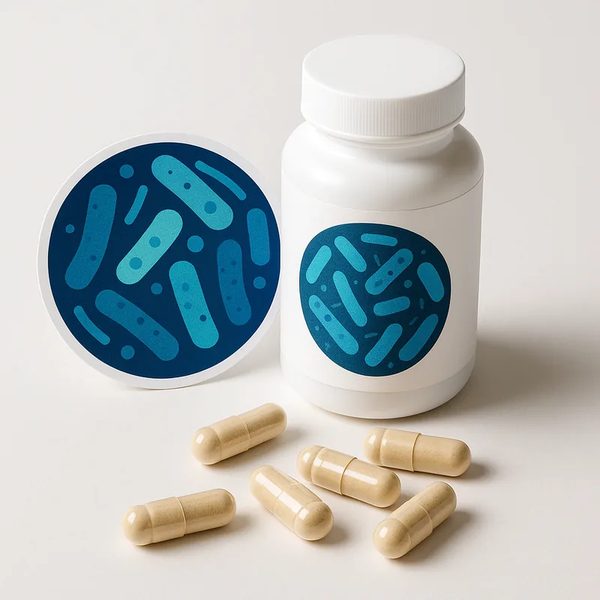
| Question | Prebiotics | Probiotics |
|---|---|---|
| What are they? | Fibers or compounds that feed beneficial microbes | Live microorganisms used as supplements or foods |
| Best for | Supporting the ecosystem already present | Targeted supplemental strain support |
| Main downside | Can worsen gas or bloating in some people | Formula quality and strain mismatch matter a lot |
| Do you need both? | Sometimes | Sometimes |
When prebiotics make more sense
Prebiotics usually make more sense when the main goal is feeding beneficial bacteria already present in the gut rather than adding outside strains. They can be useful, but they are not always comfortable; some people get more gas or bloating from prebiotic fibers than they expected.
When probiotics make more sense
Probiotics make more sense when you want a direct supplemental strain approach. That can be the cleaner path after antibiotics, during a focused digestive-support trial, or when the formula has strain-specific logic instead of vague microbiome branding.
Can you take prebiotics and probiotics together?
Yes, sometimes that makes sense. The question is not whether the combo is allowed; the question is whether it fits your tolerance and goal. Someone who already gets major bloating from fiber-heavy products may not love a prebiotic-heavy formula right away.
FAQ
What is the difference between prebiotics and probiotics?
Prebiotics feed beneficial microbes already living in the gut, while probiotics are live microorganisms added through supplements or fermented foods.
Which is better, prebiotics or probiotics?
Neither is universally better. Probiotics are often better for a targeted supplement trial, while prebiotics are often better for feeding the existing ecosystem. The goal decides the better tool.
Can prebiotics and probiotics help with bloating?
Sometimes, but they can also make bloating worse if the product or dose is a poor fit. Starting with the gentler, more goal-matched option usually works better than adding everything at once.
Should I take both prebiotics and probiotics?
Some people benefit from both, but they do different jobs. Taking both only makes sense when your symptoms, tolerance, and product choice support that strategy.
Sources
- Hill C, Guarner F, Reid G, et al. Expert consensus document. The International Scientific Association for Probiotics and Prebiotics consensus statement on the scope and appropriate use of the term probiotic. Nat Rev Gastroenterol Hepatol. 2014;11(8):506-514.
- Gibson GR, Hutkins R, Sanders ME, et al. Expert consensus document: The International Scientific Association for Probiotics and Prebiotics (ISAPP) consensus statement on the definition and scope of prebiotics. Nat Rev Gastroenterol Hepatol. 2017;14(8):491-502.
- Sanders ME, Merenstein DJ, Reid G, Gibson GR, Rastall RA. Probiotics and prebiotics in intestinal health and disease: from biology to the clinic. Nat Rev Gastroenterol Hepatol. 2019;16(10):605-616.
- Salminen S, Collado MC, Endo A, et al. The International Scientific Association of Probiotics and Prebiotics (ISAPP) consensus statement on the definition and scope of postbiotics. Nat Rev Gastroenterol Hepatol. 2021;18(9):649-667.
- McFarland LV, Evans CT, Goldstein EJC. Prebiotics and Probiotics in Digestive Health. Clin Gastroenterol Hepatol. 2018.
Related Articles
- Best Gut Health Supplements in 2026
- How to Choose a Probiotic
- Best Probiotics in 2026
- Psychobiotics vs Regular Probiotics
- Are Postbiotics Safer Than Probiotics?
📚 Part of our Best Gut Health Supplements in 2026 hub. Explore all our probiotic, prebiotic, and postbiotic guides.



Leave a Reply