
Everything You Actually Need to Know About Ashwagandha Supplements
You’ve seen it on shelves, heard it mentioned in podcasts, and maybe you’ve tried it yourself. Ashwagandha has gone from obscure Ayurvedic root to one of the best-selling herbal supplements in the U.S. — and unlike a lot of wellness trends, the science behind it is more than just marketing copy. But the details matter. Which extract form holds up to scrutiny? What does the evidence actually say about cortisol, sleep, and testosterone? And who probably shouldn’t take it at all?
This guide covers all of it — the research, the gaps, the practical dosing, and the honest caveats.

Quick Answer: Ashwagandha (Withania somnifera) is an adaptogenic herb with solid clinical evidence for reducing cortisol, lowering perceived stress, improving sleep quality, and modestly supporting testosterone in men. Standardized extracts — especially KSM-66 and Sensoril — consistently outperform generic root powders. Standard dosing is 300–600 mg/day. It’s generally well-tolerated, but people with thyroid conditions, autoimmune disease, or who are pregnant should consult a doctor before using it.
What Is Ashwagandha, Really?

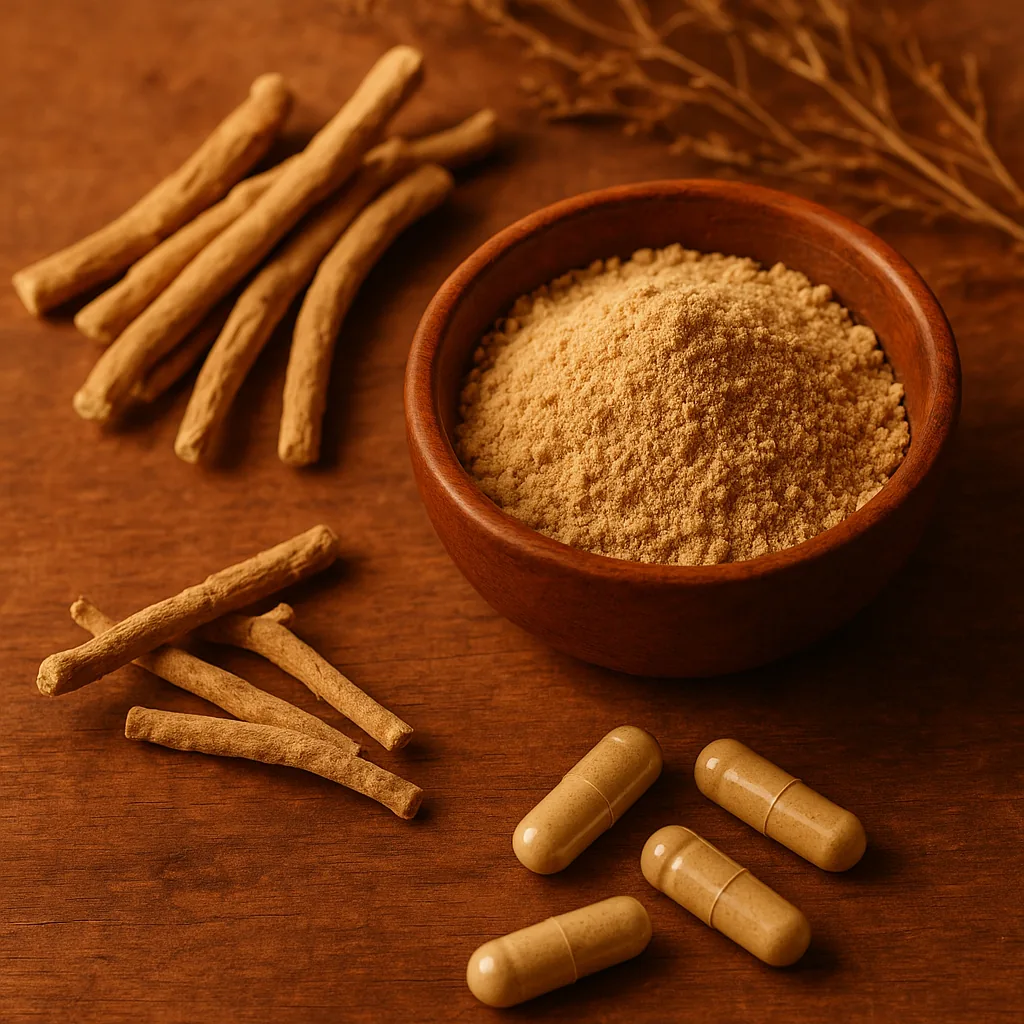
Ashwagandha (Withania somnifera) is a small shrub native to India, North Africa, and parts of the Mediterranean. The name means “smell of horse” in Sanskrit — a reference to both its distinctive odor and the traditional belief that it imparts the strength and vitality of a horse.
It belongs to the Solanaceae (nightshade) family and has been used in Ayurvedic medicine for over 3,000 years, primarily as a rasayana — a rejuvenating tonic meant to promote longevity, mental clarity, and physical resilience.
The primary bioactive compounds are withanolides, a class of steroidal lactones concentrated mainly in the root. Modern standardized extracts are calibrated to specific withanolide percentages, which is why they perform more consistently in clinical trials than raw root powder.
The word “adaptogen” gets thrown around loosely, but it has a specific meaning: a substance that helps the body resist physical and psychological stressors without disrupting normal physiological function. Ashwagandha fits the clinical definition reasonably well — it modulates the HPA (hypothalamic-pituitary-adrenal) axis, which governs cortisol release and stress response, rather than simply suppressing or stimulating it.
KSM-66 vs Sensoril vs Generic Extracts: What the Difference Actually Is
This is where most people buying ashwagandha go wrong. Not all extracts are equal, and the difference isn’t just branding.
KSM-66
KSM-66 is produced by Ixoreal Biomed and is the most clinically studied ashwagandha extract on the market. It’s made exclusively from root (not leaf), standardized to at least 5% withanolides, and processed using a proprietary milk-based extraction method that mirrors traditional Ayurvedic preparation.
Most of the high-quality clinical trials you’ll read about — including the widely cited Chandrasekhar et al. study — use KSM-66 or a comparable root-only extract. The 2012 Indian Journal of Psychological Medicine study found that 300 mg twice daily of KSM-66 reduced serum cortisol by 27.9% compared to placebo over 60 days (Chandrasekhar et al., 2012).
Sensoril
Sensoril, produced by Natreon Inc., is a different formulation. It uses both root and leaf, is standardized to a higher withanolide content (8–10%), and uses an aqueous extraction process. Lower doses tend to be used in products featuring Sensoril — typically 125–250 mg — because of its higher concentration.
Both KSM-66 and Sensoril are legitimate, well-studied options. The difference is primarily in sourcing preference (root-only vs. root-and-leaf) and the clinical context for each.
Generic Root Powder and Extracts
Generic ashwagandha products — labeled simply “root extract” or “root powder” without a branded extract name — vary widely in withanolide content and bioavailability. Some are fine. Many are not. Without third-party testing or standardization data, you’re guessing.
If a product doesn’t specify KSM-66, Sensoril, Shoden (another standardized extract), or at minimum a stated withanolide percentage confirmed by a COA (certificate of analysis), treat it as an unknown quantity.
What the Clinical Evidence Actually Shows
Cortisol and Stress
This is ashwagandha’s strongest area of evidence. The mechanism involves the HPA axis: ashwagandha appears to buffer the cortisol spike that follows stress exposure, reducing the overall cortisol load without completely suppressing the stress response (which would be counterproductive).
The Chandrasekhar et al. (2012) trial is the landmark study here: 64 adults with chronic stress received 300 mg KSM-66 twice daily or placebo for 60 days. The ashwagandha group saw a 27.9% reduction in serum cortisol, significant reductions on all stress-assessment scales, and improvements in quality of life scores.
A 2019 study by Choudhary et al. in Medicine confirmed similar results: 240 mg/day of ashwagandha extract (Shoden, standardized to 35% withanolide glycosides) significantly reduced morning cortisol compared to placebo over 60 days.
The effect size is real but context-dependent. These studies enrolled people under genuine chronic stress, not healthy individuals with normal cortisol levels. If your cortisol is already in range, the effect may be smaller.
Anxiety
The stress and anxiety evidence overlap considerably. A systematic review by Pratte et al. (2014) in the Journal of Alternative and Complementary Medicine found significant reductions in anxiety and depression scores with 300 mg KSM-66 twice daily versus placebo, alongside the cortisol reductions.
A 2019 study by Langade et al. published in Cureus examined 600 mg/day and found improvements in both anxiety scores and sleep parameters. The anxiety data is reasonably consistent across trials, though most studies are small (60–80 participants) and short-duration (8–12 weeks).
Sleep Quality
Sleep is an emerging area with solid early data. The same Langade et al. (2019) trial found that 300 mg twice daily improved Pittsburgh Sleep Quality Index scores significantly versus placebo, with participants reporting better sleep onset, fewer nighttime awakenings, and improved morning alertness.
A follow-up study by Langade et al. (2021) in PLOS ONE replicated these findings in a larger cohort, with particularly strong effects in people who also had anxiety or stress as a confounding factor — which makes sense, since cortisol dysregulation directly disrupts sleep architecture.
For a direct comparison of ashwagandha versus other sleep-supporting supplements, see our article on Ashwagandha vs Reishi for Sleep.
Testosterone and Male Hormones
This one has more nuance than the supplement industry often acknowledges. Multiple studies have shown ashwagandha can modestly increase testosterone in men — but the mechanism appears to be primarily indirect.
The 2015 Wankhede et al. study in the Journal of the International Society of Sports Nutrition found that men who took 300 mg KSM-66 twice daily during resistance training had significantly higher testosterone levels (testosterone increased by about 15%) and greater gains in muscle strength compared to placebo — but this was in men doing active resistance training, not sedentary controls.
The proposed mechanism: by reducing cortisol (which competes with testosterone in a compensatory relationship), ashwagandha may allow testosterone to rise to its natural ceiling. This is fundamentally different from a direct androgen or anabolic effect. Don’t expect ashwagandha to function like a hormone replacement protocol.
A 2013 study by Ambiye et al. in Evidence-Based Complementary and Alternative Medicine found improvements in sperm quality and testosterone in infertile men taking 675 mg/day of ashwagandha root extract for 90 days.
Thyroid Function
Ashwagandha’s potential effect on thyroid hormones is real but often misrepresented. A 2017 study by Sharma et al. in the Journal of Alternative and Complementary Medicine found that 600 mg/day of ashwagandha root extract significantly increased T3 and T4 levels in people with subclinical hypothyroidism over eight weeks.
This is clinically meaningful but cuts both ways: it may benefit people with sluggish thyroid function, but it also means people with hyperthyroidism or those on thyroid medications need to approach this herb carefully and consult their doctor first.
Dosing and Timing: What Actually Works
Standard clinical dosing ranges from 300 mg to 600 mg per day, usually divided into two doses or taken as a single dose. Here’s how the evidence maps to practice:
For stress and cortisol reduction: 300 mg twice daily (600 mg total) of a standardized extract like KSM-66 or Sensoril. Most trials showing significant cortisol reduction used this dose range over 8–12 weeks.
For sleep: 300 mg taken 30–60 minutes before bed, based on the Langade et al. protocol. Some users combine a smaller morning dose with an evening dose.
For exercise performance and testosterone: The Wankhede et al. protocol used 300 mg twice daily, taken consistently over several weeks rather than acutely.
For lower-dose products using Sensoril: 125–250 mg is the typical range, because Sensoril is standardized to a higher withanolide concentration.
Timing matters somewhat but isn’t rigid. Taking ashwagandha with food reduces the risk of GI discomfort. Some users prefer morning dosing for cortisol management; others prefer evening for sleep support. Split dosing (morning and evening) is a reasonable approach for most purposes.
For a detailed breakdown of timing protocols, see our full guide on Ashwagandha Dosage and Timing for Cortisol Reduction.
Side Effects and Who Should Avoid Ashwagandha
Ashwagandha is generally well-tolerated in healthy adults at clinical doses, but “generally well-tolerated” is not the same as “universally safe.” The reported side effects and contraindications are real.
Common Side Effects
GI discomfort — nausea, loose stools, or stomach cramping — is the most frequently reported side effect, especially at higher doses or when taken on an empty stomach. Taking it with food resolves this for most people.
Drowsiness is also reported at higher doses, which is either a side effect or a feature depending on your goal. If you’re taking it for sleep, that’s useful; if you’re taking it in the morning for energy, it may not be.
Who Should Be Cautious or Avoid It
Pregnant women: Ashwagandha has traditional use as an abortifacient in high doses, and there is no safety data for pregnancy. Avoid it.
People with autoimmune conditions: Because ashwagandha has immunomodulatory properties, it may stimulate immune activity in ways that could worsen autoimmune diseases (rheumatoid arthritis, lupus, Hashimoto’s thyroiditis, multiple sclerosis). People with these conditions should consult their physician before use.
People with hyperthyroidism or on thyroid medication: As discussed above, ashwagandha can increase thyroid hormone levels. Those already managing elevated thyroid function or taking levothyroxine or similar medications need to account for this.
People scheduled for surgery: Ashwagandha may affect CNS depression when combined with anesthesia. Standard advice is to stop use at least two weeks before any surgery.
People on sedatives, anxiolytics, or immunosuppressants: Potential for additive effects or interactions. Consult a physician.
For a comprehensive safety review, see our full article on Ashwagandha Side Effects and Safety: What You Should Know.
Should You Cycle Ashwagandha?
Cycling — taking a supplement for a defined period, then stopping before resuming — is commonly recommended for ashwagandha, though the scientific evidence for a specific protocol is limited. Most clinical trials run 8–12 weeks, so we don’t have strong long-term safety data beyond that window.
A practical approach that’s widely used: take ashwagandha for 8–12 weeks, then take a 4-week break before resuming. This mirrors trial durations and gives your body a reset period. Whether tolerance or reduced efficacy actually develops during continuous use hasn’t been formally studied, but the conservative approach is to cycle.
Some users find they don’t need it indefinitely — they use it during high-stress periods (a demanding work quarter, a difficult sleep phase) and stop when the situation resolves.
Stacking Ashwagandha with Other Adaptogens
Ashwagandha pairs well with several other adaptogens, though most combination research is theoretical or based on small trials.
Ashwagandha + Rhodiola
This is one of the more popular and well-reasoned stacks. Rhodiola rosea tends to be more activating and stimulating, supporting mental energy and cognitive performance under stress. Ashwagandha is more calming and cortisol-modulating. The two address different ends of the stress response and don’t compete mechanistically.
See our detailed comparison: Ashwagandha vs Rhodiola for Stress.
Ashwagandha + Magnesium
Magnesium glycinate or magnesium threonate stacked with ashwagandha for sleep and anxiety is one of the most common combinations reported in clinical contexts. Both support GABA activity and parasympathetic tone. The combination is generally well-tolerated and logical.
Ashwagandha + Phosphatidylserine
Phosphatidylserine (PS) also has cortisol-blunting evidence, particularly in response to acute exercise-induced stress. Stacking PS with ashwagandha is a reasonable approach for people managing high physical and psychological stress loads simultaneously.
What to Avoid
Be cautious stacking ashwagandha with other thyroid-affecting herbs (like bugleweed or motherwort) or with sedative herbs at doses that might compound CNS depression. If you’re managing a complex supplement stack, having a knowledgeable pharmacist or integrative physician review it is worthwhile.
How to Choose a Quality Ashwagandha Supplement
The supplement market is crowded and inconsistently regulated. Here’s what to actually look for:
Branded extract: KSM-66 or Sensoril are the gold standards. Shoden (standardized to 35% withanolide glycosides) is a newer option with growing evidence.
Third-party testing: Look for NSF Certified for Sport, USP Verified, or Informed Sport certifications. These verify label accuracy and absence of contaminants.
Stated withanolide percentage: At minimum, the label should state withanolide content. Look for at least 5% for root-only extracts.
Root vs. leaf: Root-only extracts have the longer evidence base. Leaf or whole-plant extracts aren’t necessarily inferior, but they have a shorter research track record.
Dose on the label: A serving size of 300–600 mg is in the clinical range. Products with dramatically lower doses (under 100 mg) are unlikely to deliver meaningful effects.
For our curated recommendations based on these criteria, see Best Ashwagandha for Cortisol in 2026 and our updated Best Ashwagandha Supplements for Cortisol in 2026.
For a deep dive into the most studied extract, see KSM-66 Ashwagandha: The Most Studied Extract Explained and KSM-66 vs Sensoril: Which Ashwagandha Extract Is Better?.
If you’re managing stress and cortisol through a broader supplement strategy, our article on Cortisol Modulation Supplements Beyond Ashwagandha covers the wider landscape.
Frequently Asked Questions
How long does it take for ashwagandha to work?
Most clinical trials show meaningful results at 4–8 weeks of consistent daily use. Cortisol reduction and stress scores tend to improve earlier (around 4 weeks); sleep improvements often take 4–6 weeks to stabilize. Don’t expect overnight results — this is a root extract, not a pharmaceutical.
Can I take ashwagandha every day?
Yes, within an 8–12 week cycle. Daily dosing is how clinical trials are structured. After a cycle, a 4-week break is a reasonable precaution given the limited long-term safety data.
Does ashwagandha work for women?
Yes. Most of the cortisol, stress, and sleep evidence is from mixed-sex trials or applies to women without distinction. The testosterone research is predominantly in men, but ashwagandha’s primary mechanisms (cortisol modulation, HPA axis support) are relevant regardless of sex.
Can ashwagandha help with weight loss?
Indirectly, possibly. Elevated chronic cortisol is associated with increased visceral fat and cravings for high-calorie foods. By reducing cortisol, ashwagandha may support more favorable body composition in chronically stressed individuals — but it isn’t a weight-loss supplement in any direct sense. A 2016 study by Choudhary et al. in the Journal of Evidence-Based Complementary and Alternative Medicine did find reduced food cravings and body weight in chronically stressed adults, but the effect was modest.
Is ashwagandha safe with antidepressants or anti-anxiety medications?
This requires physician input. Ashwagandha has CNS-modulating effects, and combining it with SSRIs, benzodiazepines, or other psychoactive medications without medical supervision carries risk of interaction. Don’t self-stack.
What does KSM-66 actually mean?
KSM-66 is the brand name of a specific ashwagandha root extract manufactured by Ixoreal Biomed. The “66” refers to an internal development designation, not a withanolide percentage. It’s standardized to at least 5% withanolides and has the most extensive clinical research behind it of any ashwagandha extract on the market.
Can ashwagandha cause liver damage?
There have been rare case reports of ashwagandha-associated liver injury in the medical literature. These cases appear to involve idiosyncratic reactions rather than dose-dependent toxicity, and most resolved after stopping the supplement. The risk appears low but is not zero, especially with very high doses or unregulated products. Stick to clinical doses and third-party tested products.
Sources
- Chandrasekhar, K., Kapoor, J., & Anishetty, S. (2012). A prospective, randomized double-blind, placebo-controlled study of safety and efficacy of a high-concentration full-spectrum extract of Ashwagandha root in reducing stress and anxiety in adults. Indian Journal of Psychological Medicine, 34(3), 255–262.
- Pratte, M. A., Nanavati, K. B., Young, V., & Morley, C. P. (2014). An alternative treatment for anxiety: a systematic review of human trial results reported for the Ayurvedic herb ashwagandha (Withania somnifera). Journal of Alternative and Complementary Medicine, 20(12), 901–908.
- Langade, D., Kanchi, S., Salve, J., Debnath, K., & Ambegaokar, D. (2019). Efficacy and Safety of Ashwagandha (Withania somnifera) Root Extract in Insomnia and Anxiety: A Double-blind, Randomized, Placebo-controlled Study. Cureus, 11(9), e5797.
- Wankhede, S., Langade, D., Joshi, K., Sinha, S. R., & Bhattacharyya, S. (2015). Examining the effect of Withania somnifera supplementation on muscle strength and recovery: a randomized controlled trial. Journal of the International Society of Sports Nutrition, 12, 43.
- Choudhary, D., Bhattacharyya, S., & Bose, S. (2017). Efficacy and Safety of Ashwagandha (Withania somnifera (L.) Dunal) Root Extract in Improving Memory and Cognitive Functions. Journal of Dietary Supplements, 14(6), 599–612.
- Choudhary, D., Bhattacharyya, S., & Joshi, K. (2016). Body Weight Management in Adults Under Chronic Stress Through Treatment With Ashwagandha Root Extract. Journal of Evidence-Based Complementary & Alternative Medicine, 22(1), 96–106.
- Choudhary D, Bhattacharyya S, Joshi K, et al. (2019). An investigation into the stress-relieving and pharmacological actions of an ashwagandha (Withania somnifera) extract: A randomized, double-blind, placebo-controlled study. Medicine (Baltimore), 98(37), e17186.
- Sharma, A. K., Basu, I., & Singh, S. (2017). Efficacy and Safety of Ashwagandha Root Extract in Subclinical Hypothyroid Patients: A Double-Blind, Randomized Placebo-Controlled Trial. Journal of Alternative and Complementary Medicine, 24(3), 243–248.
- Ambiye, V. R., Langade, D., Dongre, S., Aptikar, P., Kulkarni, M., & Dongre, A. (2013). Clinical Evaluation of the Spermatogenic Activity of the Root Extract of Ashwagandha (Withania somnifera) in Oligospermic Males. Evidence-Based Complementary and Alternative Medicine, 2013, 571420.
- Langade, D., Thakare, V., Kanchi, S., & Kelgane, S. (2021). Clinical evaluation of the pharmacological impact of ashwagandha root extract on sleep in healthy volunteers and insomnia patients. PLOS ONE, 16(2), e0257843.
- Choudhary, B., Shetty, A., & Langade, D. G. (2015). Efficacy of Ashwagandha (Withania somnifera [L.] Dunal) in improving cardiorespiratory endurance in healthy athletic adults. Ayu, 36(1), 63–68.
Related Articles
- Best Ashwagandha for Cortisol in 2026
- Ashwagandha vs Reishi for Sleep
- Ashwagandha Dosage and Timing for Cortisol Reduction
- Ashwagandha Side Effects and Safety: What You Should Know
- Ashwagandha vs Rhodiola for Stress
- KSM-66 vs Sensoril: Which Ashwagandha Extract Is Better?
- Cortisol Modulation Supplements Beyond Ashwagandha
- Best Ashwagandha Supplements for Cortisol in 2026
- KSM-66 Ashwagandha: The Most Studied Extract Explained



Leave a Reply