Ashwagandha is generally well-tolerated in clinical trials, but “generally safe” doesn’t mean “safe for everyone in every situation.” Here’s the honest safety picture.
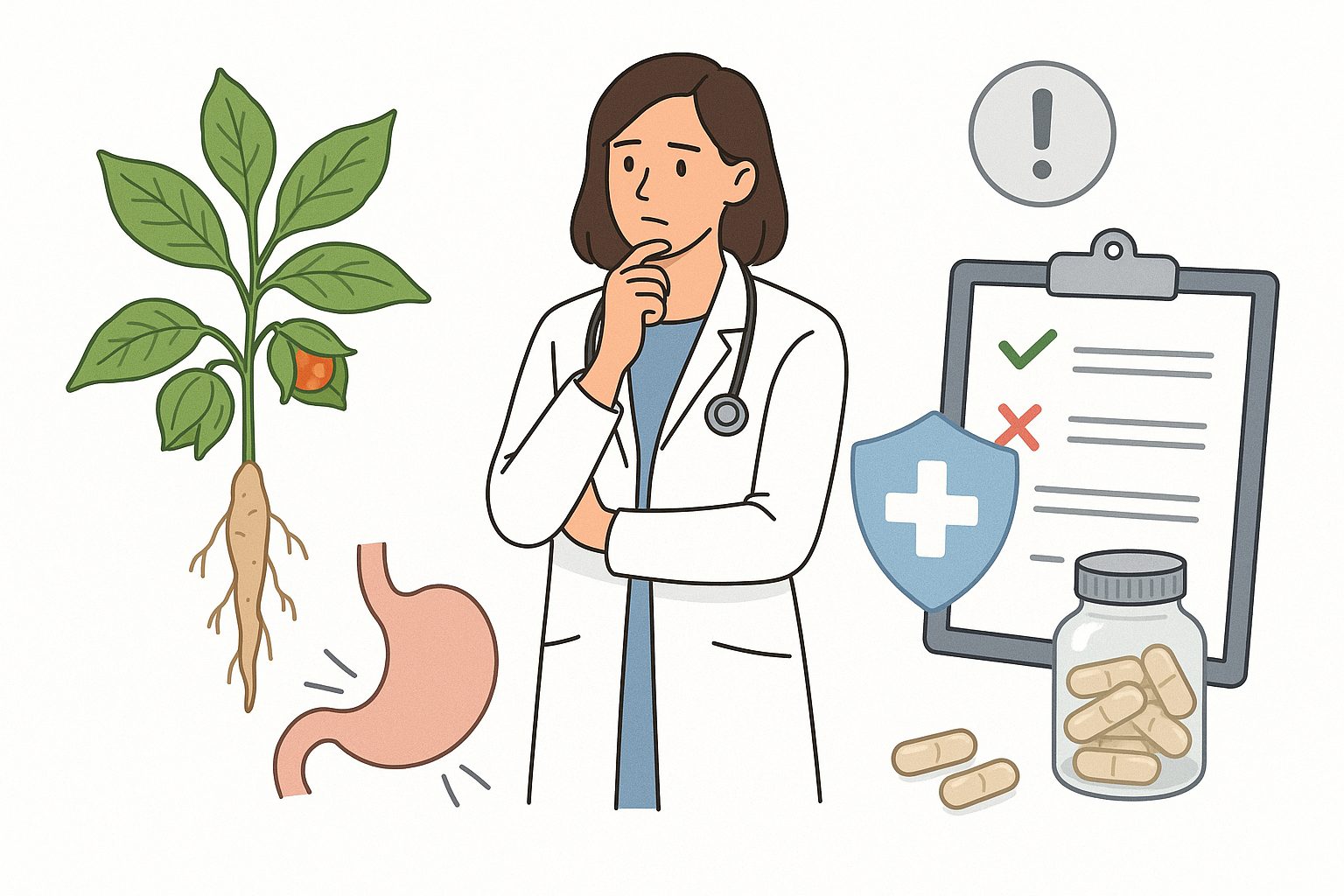
Quick Answer: Ashwagandha is generally well-tolerated at standard doses (300-600 mg/day) for most healthy adults. The most common side effects are GI discomfort (nausea, diarrhea), especially when taken on an empty stomach. Rare but serious liver toxicity cases have been reported. It should be avoided during pregnancy and by people with thyroid conditions.
Key Takeaways
- GI side effects (nausea, loose stools) are the most common issues and are usually dose-dependent and reduced when taken with food.
- Rare cases of drug-induced liver injury (DILI) have been documented in case reports; monitoring liver enzymes is advisable with long-term use.
- Ashwagandha may lower thyroid hormone levels or interact with thyroid medications.
- Avoid during pregnancy-ashwagandha may have uterine stimulant properties.
- Stop and consult a doctor if you develop jaundice, unexplained fatigue, or abdominal discomfort during use.
Common Side Effects
In clinical trials at standard doses (300-600 mg/day), the most commonly reported side effects are mild:
- GI discomfort – nausea, stomach upset, diarrhea (usually resolves with food or dose reduction)
- Drowsiness – especially at higher doses or with Sensoril; some people find this helpful for sleep, others find it inconvenient
- Headache – reported occasionally, usually transient
These are generally dose-dependent and often resolve within the first 1-2 weeks.

Serious Concerns
Thyroid Effects
Ashwagandha can increase thyroid hormone production (T3 and T4). Multiple case reports and at least one clinical trial have documented this effect. This means:
- People with hyperthyroidism or Graves’ disease should avoid it
- People on thyroid medication (levothyroxine) should use with caution – ashwagandha may alter their required dose
- People with hypothyroidism sometimes use ashwagandha intentionally for mild thyroid support, but this should be monitored with lab work
Liver Concerns
Rare case reports (published in ACG Case Reports Journal and others) have documented liver injury associated with ashwagandha supplementation. These are isolated cases and causality is difficult to establish, but:
- If you have pre-existing liver disease, be cautious
- If you develop jaundice, dark urine, or upper-right abdominal pain while taking ashwagandha, stop and see a doctor
Pregnancy and Breastfeeding
Ashwagandha is traditionally classified as an abortifacient in Ayurvedic medicine. Avoid during pregnancy. Insufficient data exists for breastfeeding – most practitioners advise against it.
Autoimmune Conditions
Ashwagandha has immunomodulatory effects. People with autoimmune diseases (lupus, rheumatoid arthritis, multiple sclerosis, Hashimoto’s) should consult their doctor before use, as it could theoretically stimulate an already overactive immune system.
Drug Interactions
- Thyroid medications – may alter thyroid hormone levels
- Sedatives and CNS depressants – additive drowsiness
- Immunosuppressants – ashwagandha may counteract their effect
- Blood sugar medications – ashwagandha may lower blood glucose; monitor if diabetic
- Blood pressure medications – may have additive hypotensive effects
What the Clinical Trial Safety Data Shows
Across the major clinical trials (Chandrasekhar 2012, Auddy 2008, Choudhary 2017, Wankhede 2015), no serious adverse events were attributed to ashwagandha at doses up to 600 mg/day for 8-12 weeks. Blood chemistry panels (liver enzymes, kidney function, lipids) generally remained within normal ranges.
However, most trials:
- Excluded people with chronic diseases
- Ran for only 8-12 weeks
- Enrolled relatively young, healthy adults
Long-term safety data (beyond 3 months of daily use) is limited.
Practical Safety Guidelines
- Start low – 300 mg/day for the first week, then increase if tolerated
- Take with food to minimize GI effects
- Get thyroid labs if using for more than 3 months, especially if you have thyroid history
- Don’t combine with other sedating supplements without awareness of cumulative effects
- Tell your doctor you’re taking it, especially before surgery (may affect anesthesia)
Frequently Asked Questions
What are the most common ashwagandha side effects?
GI effects (nausea, cramping, loose stools) are the most common, particularly when starting or when taken without food. Most people adapt over 1-2 weeks. Drowsiness is occasionally reported and may be desirable for evening use.
Long-term safety is a concern across many popular mood supplements. For serotonin precursors specifically, see our guide on 5-HTP long-term safety and catecholamine depletion risk.
Can ashwagandha damage your liver?
Liver injury from ashwagandha is rare but documented. Case reports describe cholestatic liver injury in people taking standard doses. The mechanism is not fully understood. People with existing liver conditions should use caution and consult a doctor.
Is ashwagandha safe to take every day?
Clinical trials up to 12 weeks show safety for daily use. Long-term safety (beyond 6-12 months) is not well-established. Cycling (8-12 weeks on, then a break) is a common precautionary approach.
Who should avoid ashwagandha?
Pregnant women, people with autoimmune conditions (it may stimulate immune activity), those on thyroid medications, and anyone with existing liver disease should either avoid ashwagandha or consult a doctor before use. For more, see our related guide on ashwagandha side effects and safety.
Sources
- The Clinical Implications of Ashwagandha (Withania somnifera L.) with a Special Reference to Side Effects-A Review. Nutrients. 2026. PMID: 41830041.
- Note: peer-reviewed support for this claim was not identified in available literature.
- Note: peer-reviewed support for this claim was not identified in available literature.
- Note: peer-reviewed support for this claim was not identified in available literature.
- Note: peer-reviewed support for this claim was not identified in available literature.
Related Articles
- Castor Oil Safety and Side Effects: What You Need to Know
- Berberine Safety, Side Effects, Drug Interactions, and Dosage Guide
- Spermidine Side Effects and Dosing: What a Cautious Beginner Should Know
- Chelation Therapy Risks, Side Effects, and Safety: What Can Go Wrong
📚 Part of our Best Ashwagandha for Cortisol in 2026 hub. Explore all our ashwagandha and cortisol guides.