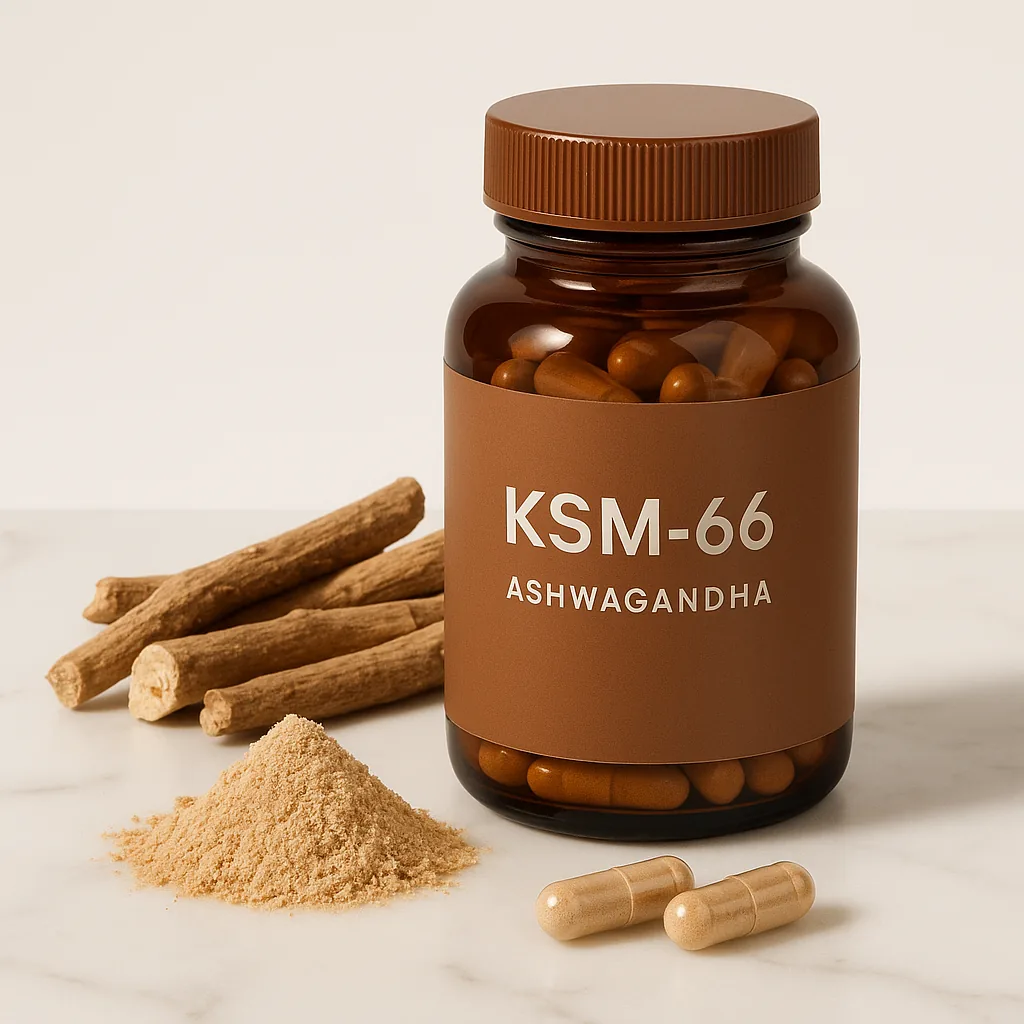
Quick Answer: KSM-66 is a full-spectrum ashwagandha root extract standardized to ≥5% withanolides, produced by Ixoreal Biomed using a proprietary milk-based extraction process. With over 24 human clinical trials and more than a decade of research, it’s the most studied ashwagandha extract in existence. Clinical evidence supports meaningful benefits for stress, cortisol, sleep quality, testosterone, thyroid function, and cognitive performance. Effective dose: 300–600 mg/day.
Ashwagandha is one of the best-supported adaptogens in modern clinical literature — and within the ashwagandha market, KSM-66 sits at the top of the evidence hierarchy. That’s not marketing language; it’s a reflection of the actual research investment that Ixoreal Biomed and third-party researchers have made in this particular extract.
But not all ashwagandha is KSM-66, and not all ashwagandha research applies to all products. Understanding why KSM-66 specifically has earned its standing — and what it can realistically do for you — requires understanding both the plant itself and the extraction science.
What Makes KSM-66 Different from Generic Ashwagandha?
Ashwagandha (Withania somnifera) contains over 35 known withanolides — the primary bioactive compounds, along with alkaloids, saponins, and iron. The plant’s active profile varies considerably based on the part used (root vs. leaf), geographic origin, growing conditions, and extraction method.
KSM-66 specific attributes:
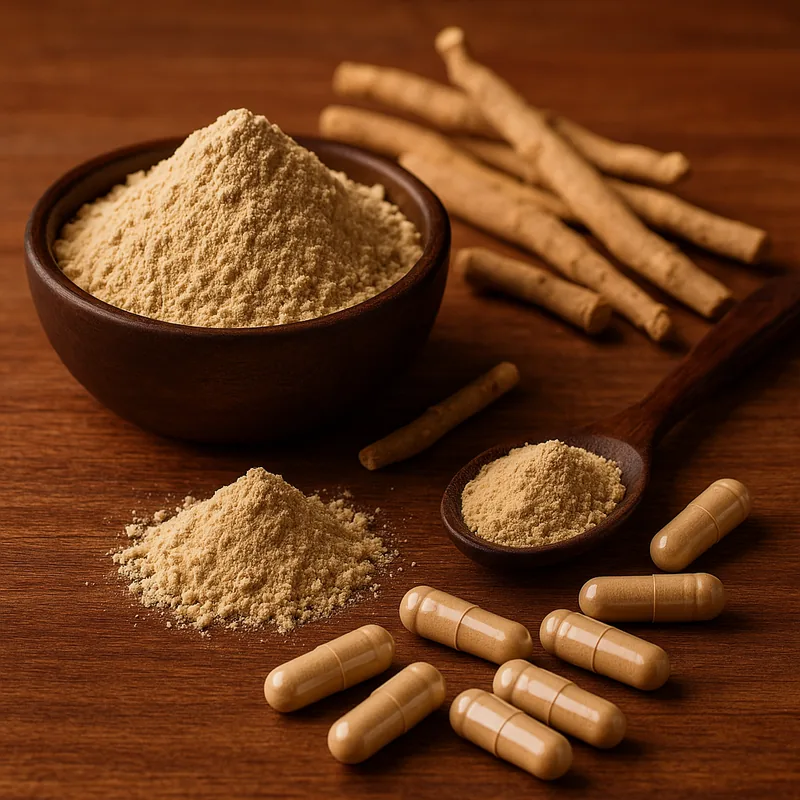
Made exclusively from the root of Withania somnifera (not leaf)
Standardized to ≥5% withanolides by weight
Full-spectrum extract — preserves the natural ratio of withanolides rather than isolating single compounds
Uses a proprietary aqueous-alcoholic extraction with a milk “adjuvant” process (reflecting the Ayurvedic tradition of preparing ashwagandha in milk)
Non-GMO, certified organic, GRAS-affirmed, free of artificial ingredients
The root-versus-leaf distinction matters. Leaf extracts can contain higher absolute withanolide concentrations, but withaferin A — a withanolide found predominantly in the leaves — has demonstrated cytotoxic properties at high doses and is associated with some adverse effects observed in leaf-heavy extracts. Root extracts are considered safer and are more aligned with Ayurvedic tradition.
The “full spectrum” approach also matters. Some cheaper products extract and standardize to a single withanolide (often withanolide D) while discarding the rest of the plant’s chemistry. Whether the synergistic effects of the full withanolide profile are clinically meaningful is debated, but the clinical trials showing benefit have used full-spectrum extracts.
The Research Base: What Has Actually Been Studied
As of 2026, KSM-66 has 24+ completed human clinical trials, covering:
Stress and anxiety
Cortisol levels
Sleep quality
Testosterone and reproductive health
Thyroid function
Cognitive performance
Cardiorespiratory endurance
Body composition
This is an unusually rich evidence base for a botanical supplement. Here are the headline findings from the most methodologically rigorous trials.
Stress and Cortisol
The most robust finding across multiple KSM-66 trials is cortisol reduction in stressed adults.
Chandrasekhar et al. (2012) — Indian Journal of Psychological Medicine: 64 adults with chronic stress were randomized to 300 mg KSM-66 twice daily (600 mg/day) or placebo for 60 days. The KSM-66 group showed a 27.9% reduction in serum cortisol, significant improvements on the Perceived Stress Scale (PSS), and reductions in depression and anxiety subscores. This is a well-designed RCT with validated outcome measures.
Pratte et al. (2014) — Journal of the American Nutraceutical Association: Replicated cortisol reduction at 300 mg/day with self-reported improvements in stress, memory, and energy.
The cortisol data is genuinely meaningful. Chronically elevated cortisol (from HPA axis dysregulation) drives many downstream problems: poor sleep, weight gain, reduced testosterone, impaired immunity, and accelerated aging. Reducing cortisol by ~28% through an adaptogen with a good safety profile is clinically significant.
Sleep Quality
Langade et al. (2019) — Cureus: 60 subjects with insomnia complaints were randomized to 300 mg KSM-66 twice daily or placebo for 10 weeks. The KSM-66 group showed significant improvements in sleep onset latency, sleep quality (PSQI score), morning alertness, and total sleep time. Improvements were seen in both healthy subjects and those with diagnosed insomnia.
The sleep benefit likely operates through multiple mechanisms: cortisol reduction (which otherwise disrupts sleep), triethylene glycol content (a naturally occurring sedative compound in ashwagandha root), and indirect effects on sleep through anxiety reduction.
Testosterone and Male Reproductive Health
Wankhede et al. (2015) — Journal of the International Society of Sports Nutrition: 57 young male athletes were randomized to 300 mg KSM-66 twice daily or placebo for 8 weeks while undergoing resistance training. The KSM-66 group showed significantly greater increases in testosterone (↑15.7%), muscle strength, muscle recovery, and reduction in exercise-induced muscle damage markers.
Ambiye et al. (2013) — Evidence-Based Complementary and Alternative Medicine: 46 infertile men received 675 mg of KSM-66 root powder daily for 90 days. Significant improvements were seen in sperm count (167% increase), sperm motility (57% increase), and serum testosterone. This was a small trial, but the effect sizes are remarkable for an herbal intervention.
The testosterone mechanism likely involves HPA-gonadal axis cross-talk — when cortisol is chronically high, it suppresses LH and therefore testosterone. Reducing cortisol with KSM-66 may allow the HPG axis to function more freely. There may also be direct effects on Leydig cell function.
Outcome Measured
Effect Size
Trial Reference
Serum cortisol
↓ 27.9%
Chandrasekhar et al. (2012)
Perceived stress
Significant improvement
Multiple trials
Sleep quality (PSQI)
Significant improvement
Langade et al. (2019)
Testosterone (athletes)
↑ 15.7%
Wankhede et al. (2015)
Sperm count (infertile men)
↑ 167%
Ambiye et al. (2013)
Thyroid (T3, T4)
Significant ↑ in subclinical hypothyroid
Sharma et al. (2018)
VO2 max
Significant ↑
Shenoy et al. (2012)
Thyroid Function
Sharma et al. (2018) — Journal of Alternative and Complementary Medicine: 50 subjects with subclinical hypothyroidism received 600 mg KSM-66 or placebo for 8 weeks. The KSM-66 group showed significant increases in serum T3 and T4 levels and a reduction in TSH — all moving toward normalization. This is a clinically important finding for the large number of people with borderline thyroid function who don’t yet meet criteria for pharmaceutical treatment.
Cognitive Performance
Choudhary et al. (2017) — Journal of Dietary Supplements: 50 adults received 300 mg KSM-66 twice daily for 8 weeks. Significant improvements were found on multiple cognitive assessments including immediate memory, general memory, executive function, sustained attention, and information processing speed.
Dosing: What the Research Supports
The trials consistently use one of two dosing approaches:
300 mg once daily (morning, or evening for sleep optimization) — effective for anxiety and stress
300 mg twice daily (600 mg/day) — used in the strongest cortisol and testosterone trials
There’s no compelling evidence that doses above 600 mg/day produce proportionally greater benefit, and the therapeutic window appears well-established at 300–600 mg/day.
Timing considerations:
For stress and cortisol: morning with breakfast
For sleep: 300 mg about 1 hour before bed (or split doses)
For athletic performance: with breakfast or pre-workout
Cycling: KSM-66 can be used continuously without the tolerance concerns associated with stimulants. Some practitioners cycle it (8–12 weeks on, 2–4 weeks off) as a precautionary measure, but there’s no evidence of downregulation with continuous use. The Chandrasekhar trial ran 60 days; the sperm study ran 90 days — both without diminishing returns.
Safety Profile and Who Should Avoid It
KSM-66 has an excellent overall safety profile based on the clinical trial data. Adverse events in trials are generally equivalent to placebo, and spontaneous adverse event reports are rare and typically mild (GI upset, drowsiness).
Contraindications:
Pregnancy: ashwagandha has traditional use as an abortifacient and is contraindicated in pregnancy
Thyroid conditions: while KSM-66 appears beneficial for hypothyroid individuals, those on thyroid medication should monitor levels carefully, as it may alter thyroid hormone status
Autoimmune conditions: ashwagandha is an immune modulator and could theoretically exacerbate certain autoimmune conditions
Surgery: withanolides may interact with anesthetic agents; discontinue 2 weeks before scheduled procedures
Drug interactions: may potentiate the effects of sedatives, thyroid medications, and immunosuppressants. Inform prescribing physicians if you’re on any of these.
FAQ
Is KSM-66 the same as regular ashwagandha?
No. KSM-66 is a specific branded extract with a defined production process, standardized to ≥5% withanolides, made exclusively from root, and backed by over 24 published human trials. Generic ashwagandha capsules may contain root powder with unknown withanolide content, or leaf extracts, or blends. The clinical evidence for KSM-66 does not automatically transfer to generic products.
How long does KSM-66 take to work?
Some effects (stress reduction, improved mood) may be noticeable within 1–2 weeks. The more robust outcomes in clinical trials — cortisol normalization, sleep improvements, testosterone changes — typically become measurable at 4–8 weeks of consistent use. Don’t evaluate at less than 4 weeks.
Can women take KSM-66?
Yes. Multiple trials have included women, and KSM-66 is well-suited for women dealing with stress, cortisol dysregulation, poor sleep, and related symptoms. The thyroid benefits are particularly relevant given that women are far more likely to develop hypothyroid conditions. Avoid during pregnancy.
What’s the difference between KSM-66 and Sensoril?
Sensoril (Natreon Inc.) is another branded ashwagandha extract, but made from a combination of root and leaf, standardized to 10% withanolides and 32% oligosaccharides. It has its own clinical trials showing benefits for stress and sleep. KSM-66 is generally preferred by practitioners who prioritize safety (root-only, lower withaferin A) and by those seeking athletic performance benefits, which are more studied in KSM-66.
Will KSM-66 help with anxiety?
Yes — this is one of the best-supported applications. The 2012 Chandrasekhar trial, the PSS reductions across multiple trials, and the cortisol data all support meaningful anxiolytic effects in chronically stressed adults. It’s not a replacement for clinical treatment of anxiety disorders, but for stress-related anxiety without clinical pathology, the evidence is strong.
Sources
Note: peer-reviewed support for this claim was not identified in available literature.
Wankhede, S., Langade, D., Joshi, K., Sinha, S.R., & Bhattacharyya, S. (2015). Examining the effect of Withania somnifera supplementation on muscle strength and recovery. Journal of the International Society of Sports Nutrition, 12, 43. PMC: PMC4658772.
Langade, D., Kanchi, S., Salve, J., Debnath, K., & Ambegaokar, D. (2019). Efficacy and safety of Ashwagandha root extract in insomnia and anxiety. Cureus, 11(9), e5797. PMC: PMC6827862.
[…] context, if you’re exploring adaptogens alongside mushrooms, our articles on Ashwagandha and KSM-66 Ashwagandha cover the best-studied plant-based nootropic/adaptogen. Mushrooms and ashwagandha are often stacked […]
[…] The mechanism behind ashwagandha’s cortisol-lowering effects involves several pathways: modulation of the HPA axis at the hypothalamic level, reduction of inflammatory cytokines that can drive cortisol secretion, and direct antagonism of stress-induced neurological changes. For a deeper dive into ashwagandha and cortisol, see our detailed guide at ashwagandha for cortisol and KSM-66 ashwagandha. […]





Leave a Reply