Fisetin Supplements: Senolytic, Longevity, and How It Compares to Quercetin
Quick Answer: Fisetin is a flavonoid with powerful senolytic activity — it clears senescent “zombie” cells that drive aging and chronic inflammation. Animal studies show remarkable life-extension results; early human data is promising. It’s considered more potent than quercetin as a standalone senolytic. Intermittent high-dose use (rather than daily) is the current protocol approach.
Fisetin may be the most underappreciated supplement in the longevity space right now. While NMN, NAD+, and resveratrol have captured mainstream attention, fisetin has been quietly accumulating some of the most striking preclinical longevity data of any supplement — including a 2018 EBioMedicine paper showing fisetin extended lifespan in old mice by 10% when started late in life. For a supplement that costs a few dollars a month, that’s a remarkable finding.
This guide covers what fisetin is, how it works as a senolytic, what the evidence shows for longevity and specific conditions, and how it compares to quercetin.
What Is Fisetin?
Fisetin is a naturally occurring flavonoid (specifically a flavonol, like quercetin) found in strawberries (highest concentration), apples, persimmons, onions, grapes, kiwi, and cucumbers. Strawberries contain approximately 160 mcg/g of fisetin — making them by far the richest dietary source, but still far below the doses used in research (typical human-equivalent doses are 20–100 mg/kg for senolytic protocols).
Fisetin has been studied for antioxidant, anti-inflammatory, neuroprotective, and anti-cancer properties, but its most exciting modern application is as a senolytic — a compound that selectively eliminates senescent cells.
Senolytics: The Aging Mechanism That Matters
To understand why fisetin is exciting, you need to understand senescent cells:
What are senescent cells? Cells that have stopped dividing (often due to DNA damage, oxidative stress, or telomere shortening) but haven’t been cleared by the immune system. They enter a state called the senescence-associated secretory phenotype (SASP) — essentially becoming pro-inflammatory “zombie” cells that secrete cytokines (IL-6, IL-8, MMP-3) that damage neighboring cells.
Why they matter for aging: Senescent cells accumulate with age. They contribute to:
Chronic low-grade inflammation (“inflammaging”)
Tissue dysfunction and fibrosis
Stem cell depletion
Accelerated aging in surrounding healthy cells
Senolytics remove them: Unlike senomorphics (which suppress SASP without killing the cells), senolytics selectively induce apoptosis in senescent cells. The theory is that periodically clearing the senescent cell burden could slow aging and age-related disease.
Why Fisetin Is a Potent Senolytic
The 2018 paper by Kirkland and colleagues at the Mayo Clinic (EBioMedicine, Yousefzadeh et al.) screened 10 flavonoids for senolytic activity and found that fisetin was the most potent natural senolytic tested — more potent than quercetin, kaempferol, and several others on key metrics.
Key findings:
Fisetin reduced senescent cell burden in multiple tissues in old mice
Treatment of old mice with fisetin (late in life, not lifelong supplementation) extended median lifespan by 10% and increased maximum lifespan
Improved health span: treated mice showed better locomotor activity, grip strength, and cognition
Reduced inflammatory cytokines and oxidative stress markers
This study essentially put fisetin on the map for longevity researchers and has driven significant subsequent interest.
BCL-2 family anti-apoptotic proteins (BCL-2, BCL-XL, BCL-W)
PI3K/AKT survival signaling
Fisetin inhibits these pathways, restoring senescent cells’ sensitivity to apoptotic signals. Unlike normal cells, which have redundant survival mechanisms, senescent cells rely more heavily on these specific pathways — making senolytics selectively toxic to senescent cells while sparing normal healthy cells.
Human Evidence for Fisetin
The preclinical data is strong; human trials are beginning to emerge:
Mayo Clinic pilot trial (2019): An open-label pilot study (AFFIRM-LITE trial, NCT03675724) in adults with osteoarthritis found that oral fisetin (20 mg/kg/day for 2 consecutive days per month) was safe and tolerable. Exploratory biomarker data suggested reduction in senescent cell markers.
Fisetin in COVID-19 Long Haulers: Several trials are examining fisetin for post-COVID syndrome (long COVID), where senescent cell accumulation is proposed as a contributing mechanism.
Alzheimer’s prevention: The Mayo Clinic is conducting trials of fisetin in early Alzheimer’s disease (NCT03675724) and mild cognitive impairment, based on neuroprotective and senolytic mechanisms.
SToMP-AD trial: A Mayo Clinic-sponsored RCT of fisetin in older adults at risk for Alzheimer’s is completed or near completion; results expected in 2025-2026.
The human clinical trial base is small but growing rapidly, and the compounds being tested use the same dosing patterns (high-dose intermittent) as preclinical models.
Fisetin vs. Quercetin: Which Is Better for Senolysis?
Both fisetin and quercetin are flavonols with senolytic activity. Their comparison:
Parameter
Fisetin
Quercetin
Senolytic potency (animal data)
Higher
Moderate
Human RCT evidence
Early stage
More available (Q+D combination)
Standalone senolytic
More potent alone
Better studied with dasatinib
Anti-allergy effects
Less studied
Strong evidence (mast cell stabilization)
Zinc ionophore activity
Less data
Documented
Bioavailability
Poor (similar issues)
Poor; phytosome form helps
Antioxidant
High
High
Dietary sources
Strawberries
Onions, apples, capers
Cost
Similar
Similar
Bottom line: For standalone senolytic supplementation, fisetin appears more potent than quercetin based on the 2018 comparative study. For broader immune support, allergy relief, and zinc synergy, quercetin has more direct evidence. Many longevity-focused protocols combine both.
The Quercetin-Dasatinib Comparison
The quercetin + dasatinib (Q+D) combination from the Mayo Clinic is the most clinically studied senolytic protocol. The results in diabetic kidney disease and pulmonary fibrosis are promising. However, dasatinib is a prescription cancer drug with significant side effects — not a general wellness supplement.
Fisetin as a standalone is more practical for healthy people pursuing senolytic supplementation without prescription drug involvement. It lacks the head-to-head trial comparison with Q+D in full clinical studies, but based on mechanism and preclinical data, fisetin may be the superior accessible senolytic.
Dosing: The Intermittent Protocol
Key insight: Senolytics work best used intermittently rather than daily. The rationale:
Senolytics clear senescent cells over 2-3 days
Continuous daily dosing adds unnecessary drug exposure without additional benefit
Cells accumulate new senescence over weeks/months before the next “clearing” is needed
Current protocols used in research and by longevity practitioners:
Fisetin 20 mg/kg body weight × 2 consecutive days per month (this is the dose from the Mayo pilot; for a 70 kg person, ~1,400 mg/day × 2 days)
More conservative: 500–1000 mg/day × 2-3 days per month
Some biohackers use 500 mg/day for 3-5 days, quarterly
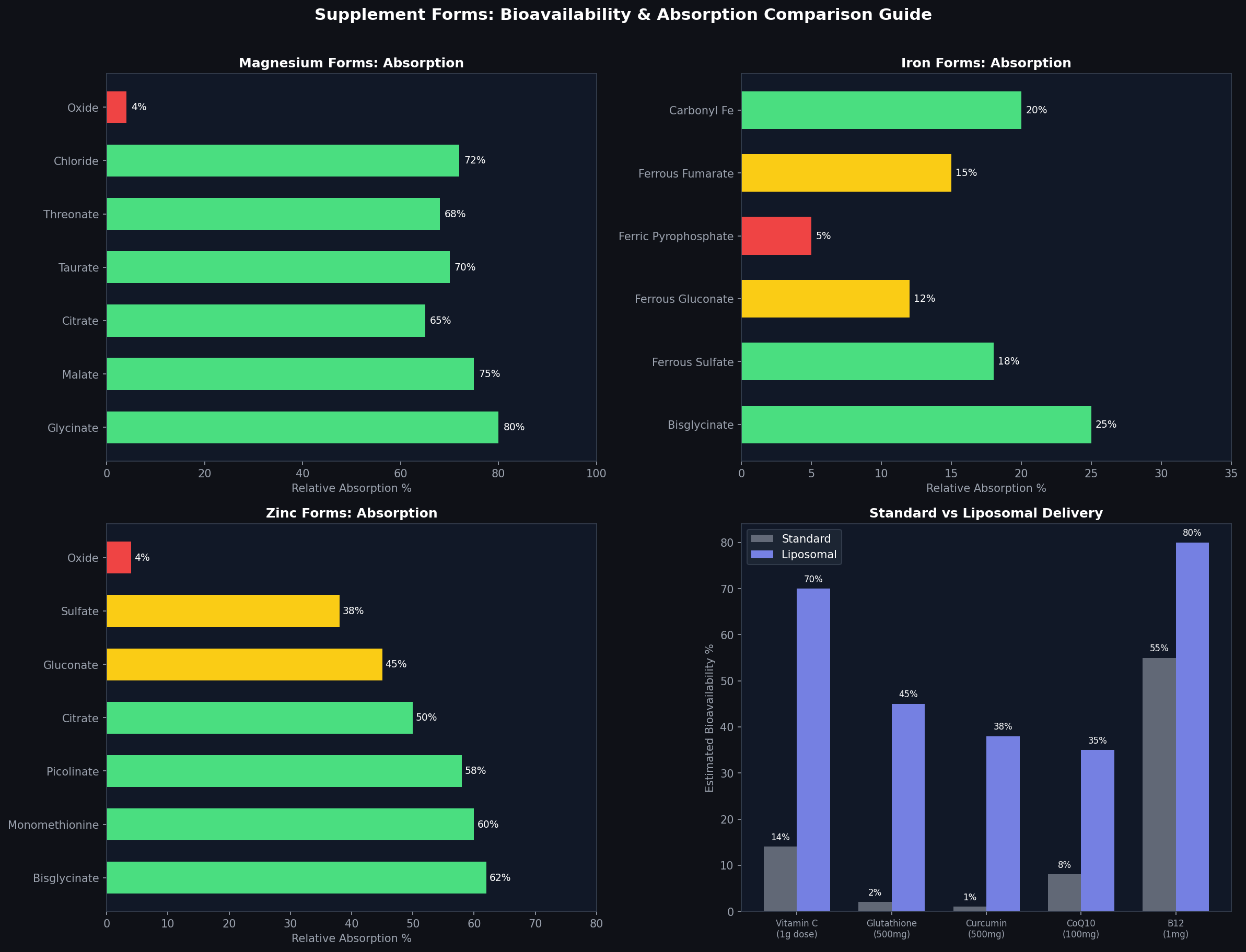
Bioavailability note: Like quercetin, standard fisetin has poor oral bioavailability. Fisetin taken with fatty food significantly improves absorption (it’s highly lipophilic). Formulations with cyclodextrin or liposomal delivery are being explored. Currently, taking standard fisetin with a meal containing fat is the practical recommendation.
Safety Profile
Fisetin has an excellent preclinical safety profile. Human trial data to date shows no significant adverse effects at doses up to 20 mg/kg (for 2 days). As a flavonoid, it has similar theoretical safety considerations as quercetin:
Possible mild CYP enzyme inhibition (drug interactions possible — check with physician if on multiple medications)
Antiplatelet effects (caution with blood thinners)
The intermittent dosing limits cumulative exposure
No significant toxicity has been observed in human trials to date. Long-term safety data (years of use) is not yet available — this is a relatively new clinical research area.
Key Takeaways
Fisetin is the most potent natural senolytic identified in the Mayo Clinic’s screening, outperforming quercetin on senescent cell clearance metrics
The 2018 EBioMedicine paper showed fisetin extended lifespan in old mice by ~10% — one of the most striking longevity findings for a plant compound
Human trials are in early stage but promising; Mayo Clinic is conducting multiple trials including for Alzheimer’s prevention
Intermittent dosing protocol (high-dose 1-3 days per month) is the research-supported approach, not daily low-dose use
For senolytic purposes, fisetin appears superior to quercetin as a standalone; quercetin has broader evidence for allergy and immune support
Take with a fatty meal for best absorption
Combine with other longevity strategies: exercise, caloric restriction, good sleep — these support natural senescent cell clearance pathways as well
Frequently Asked Questions
How much fisetin should I take per day?
For senolytic use, the evidence supports high-dose intermittent dosing rather than daily use. 500–1500 mg/day for 2–3 consecutive days, 1-2 times per month is the approach used in research-adjacent protocols. For general antioxidant/neuroprotective supplementation, lower daily doses (100–200 mg) are used, though the senolytic evidence primarily supports intermittent high-dose.
Can fisetin and quercetin be taken together?
Yes — combining them is rational. They have complementary mechanisms and additive senolytic activity. The combination also provides broader flavonoid coverage (fisetin for senolysis, quercetin for allergy/immune support and zinc ionophore activity). Some longevity stacks include both.
Is fisetin being studied for Alzheimer’s?
Yes. Multiple ongoing Mayo Clinic trials are examining fisetin in older adults with mild cognitive impairment and early Alzheimer’s disease. The mechanisms — senolytic clearing of pro-inflammatory cells in the brain, direct neuroprotection via PI3K/Akt and SIRT1 pathways — are compelling. Results from the SToMP-AD trial are anticipated.
What are natural food sources of fisetin?
Strawberries are by far the richest source (~160 mcg/g). You’d need to eat roughly 2–3 kg of strawberries to approximate a 300 mg supplement dose — making concentrated supplements necessary for any therapeutic intent. Other sources include apples, persimmons, and onions in smaller amounts.
Does fisetin require cycling or can it be taken continuously?
Senolytics are specifically designed for intermittent use. Daily continuous senolytic dosing isn’t more effective because senescent cell accumulation happens slowly over weeks/months. The intermittent protocol — clearing cells over 2-3 days, then pausing for weeks — mirrors the biological timeline of senescence accumulation.