
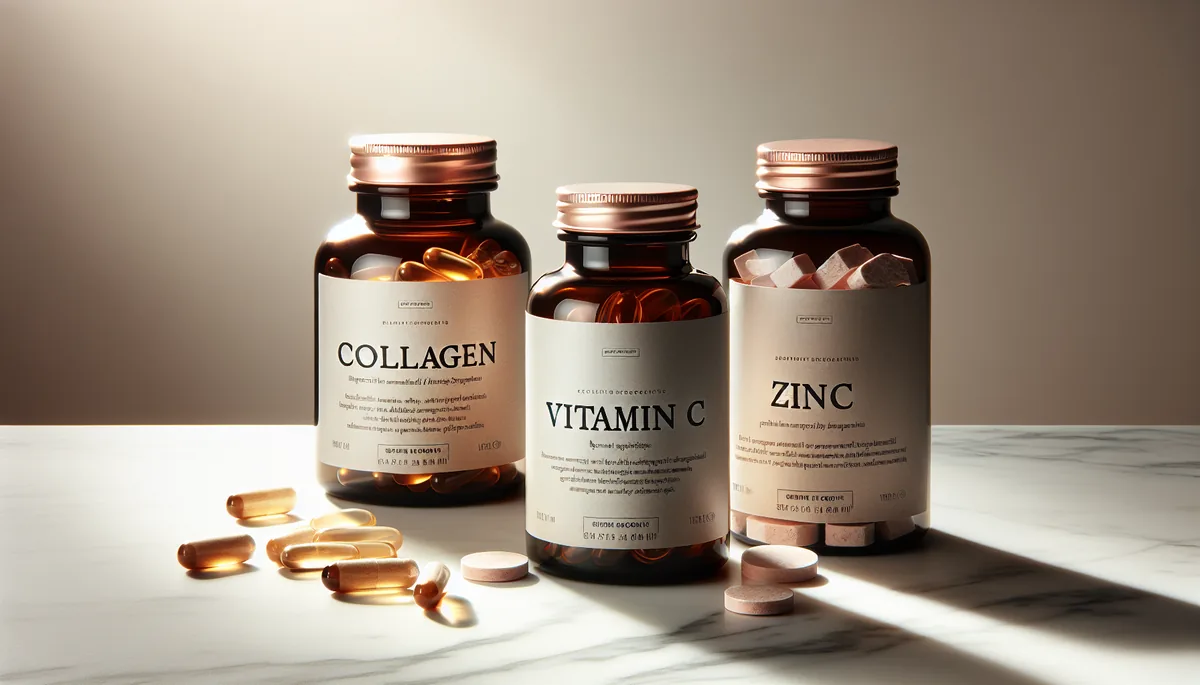
Best Supplements for Skin Health in 2026: Collagen, Ceramides, Omega-3s, and More
Topical skincare gets all the attention, but your skin is built from the inside. Every 27 days, your body replaces the entire outer layer of skin using nutrients from your bloodstream — not from your serum.

The most effective skin health strategy combines topical care and internal supplementation. Here are the compounds with real clinical evidence for visible skin improvements.

How Skin Aging Works (And Where Supplements Help)
Skin aging involves:
- Collagen degradation — 1% loss per year after age 20
- Reduced hyaluronic acid — Skin holds less moisture
- Oxidative damage — UV exposure and free radicals degrade structural proteins
- Glycation — Sugar molecules crosslink with collagen, causing stiffness
- Inflammation — Chronic low-grade inflammation accelerates all of the above
Effective skin supplements target one or more of these mechanisms.
Best Supplements for Skin Health

🏆 Best Overall: Collagen Peptides (Types I & III)
The most clinically validated skin supplement. A meta-analysis of 19 RCTs found hydrolyzed collagen significantly improved skin hydration, elasticity, and wrinkle depth (de Miranda et al., International Journal of Dermatology, 2021).
- Dose: 10–15g hydrolyzed collagen peptides daily
- Onset: 4–8 weeks for visible improvements
- Best sources: Marine collagen (highest bioavailability) or bovine (most studied)
Best for: Anti-aging, skin elasticity, wrinkle reduction
Top Pick: Vital Proteins Marine Collagen or Great Lakes Bovine Collagen
Best Antioxidant: Astaxanthin
The most powerful carotenoid antioxidant — 6,000x stronger than vitamin C against singlet oxygen. Clinical trials show astaxanthin reduces wrinkle depth, age spot size, and improves skin moisture (Tominaga et al., Acta Biochimica Polonica, 2012).
- Dose: 4–12mg daily
- Bonus: Natural UV protection from within (not a sunscreen replacement)
Best for: Sun damage repair, anti-aging, hyperpigmentation
Top Pick: BioAstin Hawaiian Astaxanthin 12mg
Best for Hydration: Hyaluronic Acid (Oral)
Oral hyaluronic acid supplementation improved skin moisture and reduced wrinkles in a double-blind study (Oe et al., Nutrition Journal, 2017). The mechanism involves stimulating endogenous HA production rather than direct absorption.
- Dose: 120–240mg daily
- Onset: 4–6 weeks
Best for: Dry skin, dehydration lines, overall skin plumpness
Best for Acne: Zinc + Omega-3
Zinc (particularly zinc picolinate) reduces inflammatory acne by modulating immune response and reducing androgen activity. Omega-3s lower systemic inflammation driving breakouts (Cervantes et al., Dermatology and Therapy, 2018).
- Dose: 30mg zinc picolinate + 2g EPA/DHA daily
- Caution: Supplement zinc with copper (2mg) to prevent depletion
Best for: Hormonal and inflammatory acne
Best for Dark Circles & Brightening: Vitamin C + Iron
Dark circles often indicate iron deficiency, poor circulation, or thin under-eye skin. Internal vitamin C (500–1000mg) supports collagen synthesis and iron absorption, brightening from within.
Best for: Under-eye darkness, dull complexion, slow wound healing
Best for Skin Barrier: Ceramides (Phytoceramides)
Ceramides compose 50% of your skin barrier. Oral phytoceramides (from wheat or rice) improved skin hydration and reduced trans-epidermal water loss in clinical trials (Guillou et al., Journal of Cosmetic Dermatology, 2011).
- Dose: 350mg phytoceramides daily
Best for: Eczema-prone skin, chronic dryness, damaged skin barrier
The Complete Skin Health Stack
Daily:
- Collagen peptides — 10g (in coffee or smoothie)
- Astaxanthin — 12mg (with fat for absorption)
- Vitamin C — 500mg (cofactor for collagen synthesis)
- Omega-3 fish oil — 2g EPA/DHA
- Zinc picolinate — 30mg (if acne-prone)
Optional additions:
- Hyaluronic acid — 120mg
- Phytoceramides — 350mg
- Vitamin E (mixed tocopherols) — 200 IU
Lifestyle Amplifiers
Supplements work best when you’re also:
- Wearing SPF daily — UV is responsible for 80% of visible facial aging
- Sleeping 7–9 hours — Growth hormone during sleep drives skin repair
- Staying hydrated — 2–3 liters of water daily
- Managing blood sugar — Glycation from high sugar intake damages collagen
- Not smoking — Smoking accelerates collagen breakdown by 4x
What Doesn’t Work
- Biotin for skin — Evidence is weak unless you’re actually deficient (rare)
- Collagen creams — Collagen molecules are too large for topical absorption (internal supplementation is the route)
- Generic “beauty blends” — Usually underdosed across too many ingredients
- High-dose vitamin A — Toxic at supplemental megadoses; get retinoids topically instead
FAQ
Do collagen supplements actually work for skin?
Yes. Multiple randomized controlled trials and a 2021 meta-analysis of 19 studies confirm that hydrolyzed collagen peptides (10–15g daily) significantly improve skin hydration, elasticity, and wrinkle depth. Marine and bovine collagen peptides are both effective.
What is the best supplement for anti-aging skin?
Collagen peptides combined with astaxanthin is the strongest evidence-based anti-aging combination. Collagen rebuilds structural protein while astaxanthin protects existing collagen from oxidative damage. Add vitamin C as a collagen synthesis cofactor.
How long do skin supplements take to show results?
Most people notice skin hydration improvements within 4–6 weeks and wrinkle/elasticity changes within 8–12 weeks. Acne improvements from zinc and omega-3s typically appear within 6–8 weeks. Consistency is critical.
Can supplements help with eczema or dry skin?
Oral phytoceramides, omega-3 fatty acids, and vitamin D can all support skin barrier function. Ceramides specifically address the lipid layer deficiency common in eczema. These complement but don’t replace topical treatments prescribed by your dermatologist.
Should I take collagen or hyaluronic acid?
Both, if budget allows. They serve different functions — collagen provides structural support (firmness, wrinkle reduction) while hyaluronic acid addresses hydration and plumpness. Collagen has more clinical evidence and should be prioritized if choosing one.
This article is for informational purposes only and does not constitute medical advice. Consult your healthcare provider or dermatologist before starting any new supplement regimen.
Sources
- Ceramides and Skin Health: New Insights. [PMID 39912256]
- Ceramides and Skin Health: New Insights. [PMID 39912256]
- Midazolam versus midazolam-promethazine combination for oral sedation in third molar surgery: A randomized split-mouth trial. [PMID 42001488]
- Stacking Guide 2026: What Combines Well, What Conflicts, and Timing Best Longevity Supplements in 2026 GlyNAC (Glycine + NAC): The Glutathione-Boosting Longevity Stack Best Anti-Inflammato [PMID 39912256]

Leave a Reply