Quick Answer: Turkesterone is an ecdysteroid found in the plant Ajuga turkestanica that has shown significant anabolic effects in animal and in-vitro studies. However, as of 2026, no peer-reviewed human clinical trials confirm muscle-building effects in people. It’s a fascinating compound with legitimate scientific interest — but the marketing has significantly outpaced the evidence.
Walk into any gym or scroll any fitness forum and you’ll hear about turkesterone. The claims are bold: “natural anabolic,” “up to 400% more anabolic than testosterone in some studies,” “no side effects, no PCT needed.” The reality, as usual, is considerably more nuanced.
That doesn’t mean turkesterone is a scam. There’s real biochemistry here, and the rodent data is genuinely interesting. But understanding what the science actually shows — versus what the supplement industry wants you to believe — is essential before you spend $60–$100 a month on a plant extract.
What Is Turkesterone?
Turkesterone is a phytoecdysteroid — a class of compounds that structurally resemble the insect molting hormone ecdysone. Plants produce ecdysteroids as a natural defense mechanism against insects: when an insect consumes these compounds, they disrupt the insect’s own hormonal signaling and interfere with molting, making the plant unpalatable.
In vertebrates, however, the insect ecdysone receptors don’t exist. So when humans consume ecdysteroids, they can’t activate the same pathways. This is actually part of why early researchers thought ecdysteroids would be inert in mammals — and why the anabolic effects observed in animals came as a genuine surprise to the scientific community.
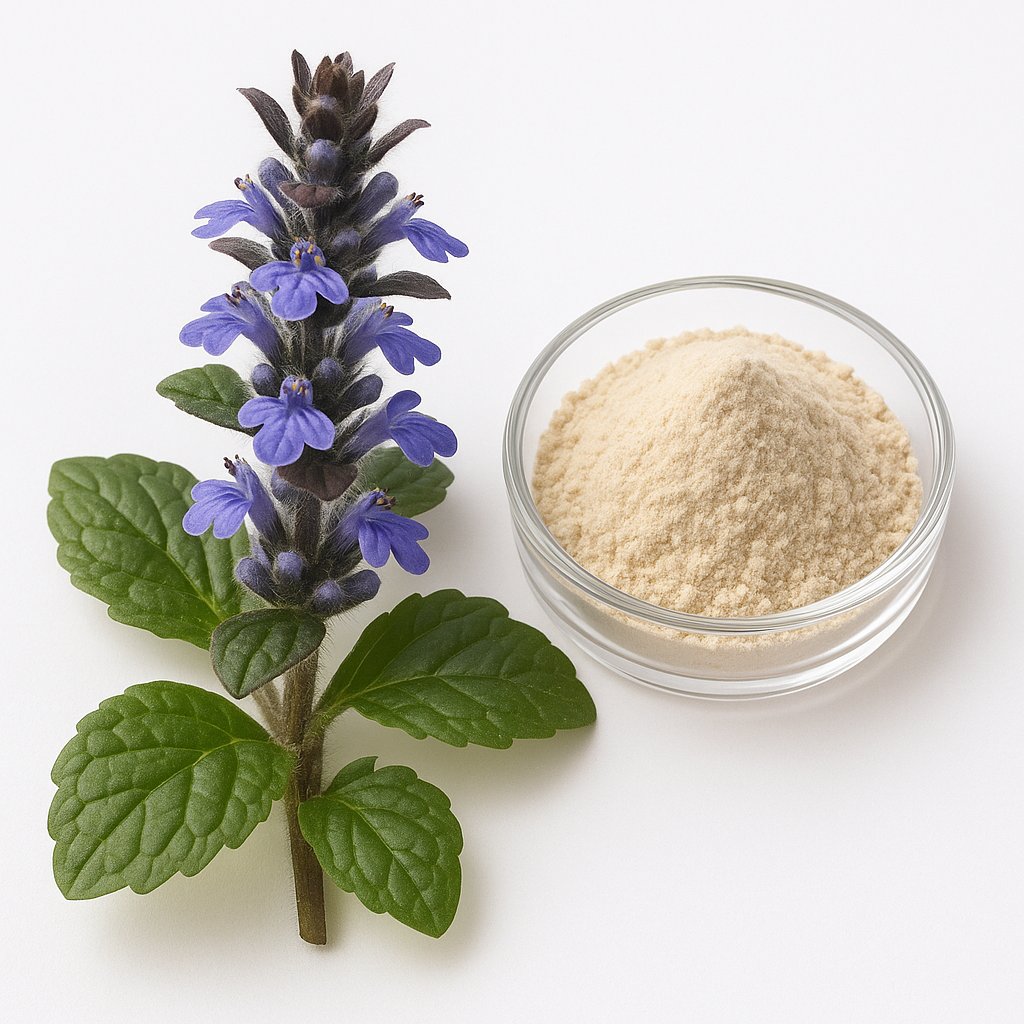
Turkesterone is found in highest concentrations in Ajuga turkestanica, a plant native to Central Asia and used in traditional Uzbek medicine. Other sources include Leuzea carthamoides (which contains 20-hydroxyecdysone, a related compound that has slightly more human research behind it).
The Science: What Studies Have Actually Been Done?
Animal and In-Vitro Studies
The most-cited “400% more anabolic than testosterone” figure comes from a 1988 Soviet-era study by Syrov and Kurmukov published in Farmakologiya i Toksikologiya. In this study, ecdysterone (not exactly turkesterone, but closely related) showed greater anabolic effects than methandrostenolone (Dianabol) in rats when measured by nitrogen retention and muscle weight.
More recently, a 2019 study by Isenmann and colleagues, published in the Archives of Toxicology, gave ecdysterone to 46 trained male athletes over 10 weeks. This is one of the only quasi-human trials, though it used ecdysterone rather than turkesterone specifically. The ecdysterone group showed statistically significant gains in muscle mass compared to placebo — a genuinely encouraging result, though the study was small and the dose extrapolation to turkesterone isn’t direct.
A 2021 paper by Parr et al. in Scientific Reports examined the mechanism in human muscle cells in vitro, finding that ecdysterone activated the estrogen receptor beta (ERβ) pathway, a mechanism that differs from androgenic pathways and could explain anabolic effects without testosterone-like side effects.
The Human Trial Problem
Here’s the honest assessment: as of early 2026, there are no published randomized controlled trials specifically testing turkesterone in humans for muscle hypertrophy or strength. The studies that do exist either:
Use ecdysterone (a related but distinct compound)
Are animal studies
Are in-vitro (cell culture) experiments
Are observational or anecdotal
This is a significant gap. The physiology in rodents differs enough from humans that direct translation is unreliable — rodents convert ecdysteroids differently and may have different receptor affinities. Until human RCTs are published with appropriate controls and dosing protocols, turkesterone’s anabolic potential in people remains plausible but unconfirmed.
Study Type
Compound Tested
Result
Applicability to Humans
Rodent (Syrov & Kurmukov, 1988)
Ecdysterone/Turkesterone mix
Significant anabolic effect
Low — rodent physiology differs
Human RCT (Isenmann et al., 2019)
Ecdysterone
Significant lean mass gains
Moderate — different compound, small n
In vitro (Parr et al., 2021)
Ecdysterone
ERβ activation, protein synthesis ↑
Mechanistic insight only
Human trial (Turkesterone-specific)
Turkesterone
No published trials yet
N/A
How Is Turkesterone Supposed to Work?
The leading hypothesis for how ecdysteroids produce anabolic effects in mammals involves the estrogen receptor beta pathway — not testosterone or DHT. Specifically, ecdysterone and related compounds appear to bind ERβ and stimulate downstream protein synthesis signaling, including the PI3K/Akt/mTOR pathway that’s central to muscle growth.
This is mechanistically interesting because ERβ agonism doesn’t produce the masculinizing effects of testosterone receptor agonism, and doesn’t suppress the hypothalamic-pituitary-gonadal (HPG) axis the way anabolic steroids do. If the mechanism holds in humans, it would represent a genuinely novel and safer pathway for anabolic support.
Some proponents also point to ecdysteroid effects on nitrogen retention, creatine uptake into muscle cells, and glycogen synthesis — all of which could contribute to better recovery and performance even if direct hypertrophy effects are modest.
Dosing: What Are People Actually Taking?
Most turkesterone supplements on the market are dosed at 500–1,000 mg per day, often divided into two doses with food. Dosing is complicated by the fact that extract standardization varies wildly — a “500 mg turkesterone supplement” might contain anywhere from 2% to 10% actual turkesterone by weight, meaning the true active dose ranges from 10 mg to 50 mg.
The Isenmann ecdysterone study used 800 mg/day of ecdysterone, which is one of the few benchmarks available. Whether this translates linearly to turkesterone potency is unknown.
Bioavailability is also an issue. Ecdysteroids have poor water solubility, and some brands use cyclodextrin complexation (like Hydroxypropyl-β-cyclodextrin) to improve absorption. These “complexed” or “encapsulated” products may be more effective than raw extract, though direct comparative data is thin.
Practical dosing guidance (based on available evidence):
500–1,000 mg/day of standardized extract (look for ≥10% turkesterone)
Take with food for better absorption
Cycle: 8–12 weeks on, then a break (precautionary; no clear evidence this is required)
Combine with adequate protein (1.6–2.2g/kg body weight) for any anabolic strategy to matter
Is Turkesterone Safe?
Toxicological studies in animals have used very high doses without significant adverse effects. The EFSA (European Food Safety Authority) reviewed ecdysteroids and found no concerning toxicity signals at doses plausible in human supplementation.
Unlike anabolic-androgenic steroids, ecdysteroids do not appear to suppress natural testosterone production, cause liver toxicity (in the hepatotoxic sense associated with 17-alpha-alkylated steroids), or produce hormonal imbalances. There are no widely reported serious adverse events from turkesterone supplementation in the published literature.
The caveats: because human trials don’t exist, long-term safety data in humans is limited. Pregnant and breastfeeding women should avoid it. People on hormone-sensitive medications (given the ERβ mechanism) should consult a physician.
The Supplement Quality Problem
Even if turkesterone works exactly as claimed, the market is a mess. Third-party testing by organizations like Labdoor and independent researchers has found that many turkesterone supplements contain far less active compound than claimed on the label. A 2021 German analysis found significant discrepancies between label claims and actual ecdysteroid content in commercial products.
If you’re going to try turkesterone, look for:
Third-party tested products (Informed Sport, NSF, or independent COA available)
Standardized extract with a stated percentage of turkesterone
Manufacturer transparency about the source plant and extraction method
Who Should (and Shouldn’t) Try Turkesterone?
Consider trying if:
You’re an experienced lifter who has plateaued and wants to explore natural options
You understand the current evidence limitations and treat it as an experiment
You’ve addressed the basics (protein, sleep, progressive overload) and are looking for marginal gains
You’re willing to track metrics before and after to evaluate your personal response
Skip it if:
You’re a beginner — fundamentals will produce far better results
You’re expecting steroid-like effects; you’ll be disappointed
Budget is tight — the evidence doesn’t justify premium pricing yet
You have hormone-sensitive conditions without physician clearance
FAQ
Is turkesterone legal?
Yes. Turkesterone is a naturally occurring plant compound and is not on any banned substance list in most countries. However, the World Anti-Doping Agency (WADA) added ecdysterone to its monitoring list in 2021, which means it’s under observation but not yet banned for athletes. Check with your specific sport’s governing body.
Does turkesterone increase testosterone?
No evidence suggests turkesterone raises testosterone levels. Its proposed mechanism (ERβ pathway) is distinct from the HPG axis that governs testosterone production. This is why it doesn’t require post-cycle therapy — it doesn’t suppress natural testosterone to begin with.
How does turkesterone compare to creatine?
This is an unfair comparison. Creatine is one of the most studied supplements in existence with robust evidence for improving strength and power output. Turkesterone has minimal human data. If you had to choose, creatine wins decisively on evidence strength. Many people stack both.
Can women take turkesterone?
Theoretically yes — the ERβ mechanism is sex-nonspecific, and women have ERβ receptors in muscle tissue. There’s no specific women’s safety or efficacy data, and the marketing skews heavily male. Caution is warranted for women who are pregnant, breastfeeding, or have estrogen-sensitive conditions.
What’s the difference between turkesterone and ecdysterone?
Both are phytoecdysteroids with similar mechanisms. Ecdysterone (also called 20-hydroxyecdysone) has somewhat more human research, including the Isenmann 2019 RCT. Turkesterone is found specifically in Ajuga turkestanica and is considered by some researchers to have stronger activity — but this is based on animal studies. They’re often stacked together.
Parr, M.K., Botrè, F., Naß, A., Hengevoss, J., Diel, P., & Wolber, G. (2015). Ecdysteroids: A novel class of anabolic agents? Biology of Sport, 32(2), 169-173. PMC: PMC4447503.
Dinan, L., & Lafont, R. (2006). Effects and applications of arthropod steroid hormones (ecdysteroids) in mammals, including humans. Journal of Endocrinology, 191(1), 1-8. DOI: 10.1677/joe.1.06902.
Syrov, V.N., & Kurmukov, A.G. (1976). Experimental study of the anabolic activity of 6-ketoderivatives of certain natural sapogenins. Farmakologiya i Toksikologiya (translated). Cited in multiple subsequent reviews.




Leave a Reply