Beef Liver Supplements in 2026: Ancestral Nutrition or Overhyped?
Quick Answer: Beef liver is genuinely the most nutrient-dense food per calorie on the planet, delivering extraordinary amounts of B12, heme iron, vitamin A, copper, CoQ10, and riboflavin. Desiccated liver capsules capture most of this in a convenient supplement form. They’re worth considering for B12 and iron support, particularly for people who won’t eat liver fresh. The main caution: vitamin A toxicity at very high doses, and quality varies significantly by product.
“Eat nose to tail.” “Liver is nature’s multivitamin.” If you’ve spent any time in carnivore diet, ancestral nutrition, or biohacking communities, you’ve heard these claims. And while the culture around organ meats can sometimes shade into overclaiming, the nutritional case for beef liver specifically is genuinely hard to argue with.
The question for most people is practical: fresh beef liver is an acquired taste, has a short shelf life, and requires knowing how to prepare it. Enter desiccated beef liver capsules — dehydrated, concentrated liver in pill form. But do they actually deliver the same benefits? And what are the real risks?
The Nutrition Profile: What Makes Liver Extraordinary
Let’s start with the data. Here is what 3 ounces (85g) of cooked beef liver provides compared to a standard multivitamin:
Nutrient
Beef Liver (85g cooked)
% Daily Value
Typical Multi
Vitamin B12
70.7 mcg
2,946%
100%
Vitamin A (Retinol)
6,582 mcg RAE
731%
100%
Riboflavin (B2)
2.9 mg
223%
100%
Copper
12.4 mg
1,378%
Varies
Folate
212 mcg
53%
100%
Heme Iron
5.2 mg
29% (women)
Varies
Zinc
4.5 mg
41%
100%
CoQ10
~40 mg
N/A
Absent in most
Choline
333 mg
61%
Often absent
Selenium
28 mcg
51%
100%
The difference from a standard multivitamin isn’t just the quantities — it’s the forms. Beef liver provides:
Preformed vitamin A (retinol), not beta-carotene (which many people convert poorly)
Methylcobalamin and adenosylcobalamin forms of B12, not just cyanocobalamin
Heme iron, which is absorbed at 15–35% efficiency versus 2–20% for non-heme iron
Actual CoQ10, which most multivitamins don’t contain at all
This is why the “nature’s multivitamin” label isn’t pure hype — in terms of nutrient density per calorie, liver genuinely is exceptional.
What Is Desiccated Liver?
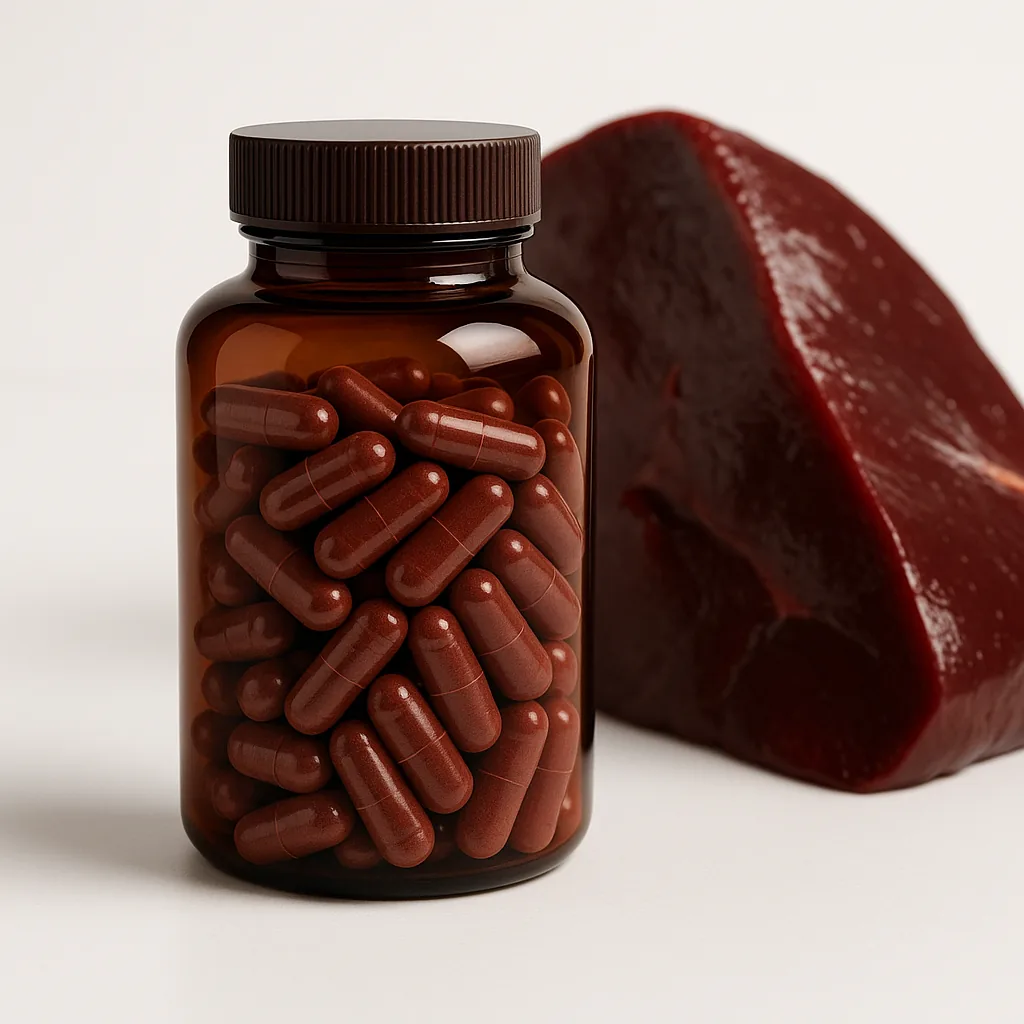
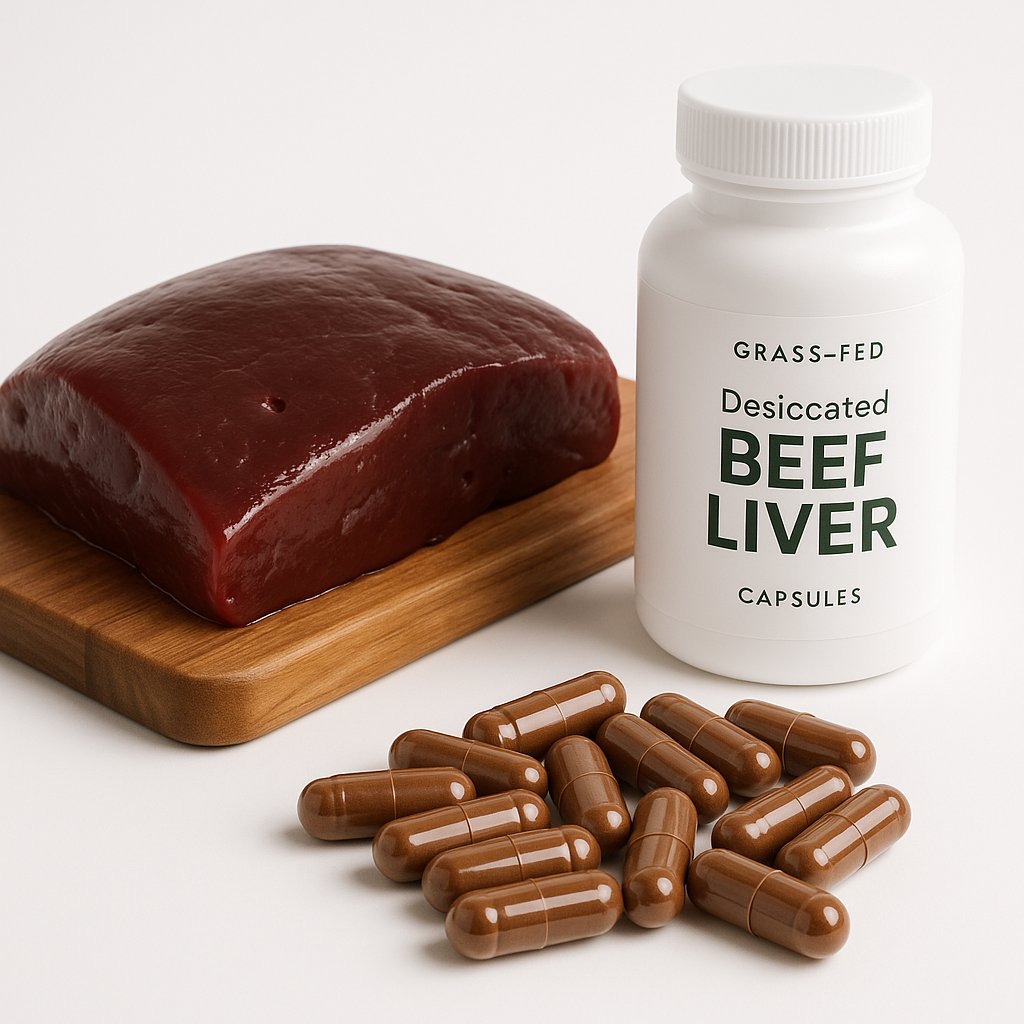
Desiccated liver is beef liver that has been freeze-dried or gently dehydrated at low temperatures, then ground into powder and encapsulated. The low-temperature process is critical — it preserves heat-sensitive B vitamins and enzymes that would be degraded at cooking temperatures.
A typical serving of desiccated liver capsules is 3–6 capsules (1,500–3,000 mg of dried liver), which represents approximately 7–15 grams of fresh liver equivalent (assuming roughly 4:1 fresh-to-dried ratio by weight, accounting for water removal).
This means a serving of desiccated liver supplements delivers substantially less nutrition than a 3-oz serving of fresh liver — roughly 1/6 to 1/10 the nutrient content. This matters when evaluating whether capsule supplementation can replicate the whole food experience.
Grass-Fed Matters More Here Than Almost Anywhere
Beef liver from grass-finished, pasture-raised cattle has measurably better nutrient content than conventionally raised liver. Specifically:
Higher omega-3 fatty acids (particularly DHA and EPA)
Higher CoQ10 (pastured animals tend to have more mitochondrially active muscle and organ tissue)
Higher CLA (conjugated linoleic acid with anti-inflammatory properties)
Higher vitamin K2 (menaquinone-4, produced when animals eat green vegetation)
Lower risk of heavy metal contamination from industrial feedlot environments
The liver is also a detoxifying organ — a common concern raised about organ supplements. However, the liver doesn’t store toxins; it processes them for elimination. What the liver stores are nutrients: glycogen, fat-soluble vitamins, and minerals. A clean animal raised without hormones and antibiotics in a low-chemical environment produces liver that’s as clean as any other meat.
That said, sourcing from verified grass-finished suppliers is important for both nutrient content and peace of mind. Look for products that explicitly state “grass-fed, grass-finished” and “pasture-raised.”
The Case For Desiccated Liver Capsules
Several groups stand to benefit meaningfully from desiccated liver:
B12 for vegans and vegetarians who eat liver: This sounds contradictory, but liver is one of the few animal products with essentially zero risk of B12 deficiency — a concern for plant-forward eaters who might add modest amounts of liver supplements without fully abandoning their diet pattern.
Heme iron for women with heavy periods: Premenopausal women losing iron monthly have significantly higher iron needs (18 mg/day RDA versus 8 mg for men), and the heme iron in liver is absorbed far more efficiently than plant-source iron. For women who’ve struggled with iron-deficiency anemia, a few liver capsules daily can meaningfully contribute to iron status.
Athletes needing CoQ10 and B vitamins: CoQ10 supports mitochondrial efficiency and is particularly relevant for endurance athletes. The riboflavin, niacin, and B6 in liver participate in energy metabolism pathways. Fresh liver before training is a time-honored practice in some strength sports communities.
People who can’t stomach liver’s taste: Freeze-dried capsules are odorless and tasteless — they’re essentially the nutritional benefits of liver without the liver experience. For people who have tried and failed to incorporate fresh liver, this is a legitimate workaround.
The Vitamin A Concern: Is Toxicity a Real Risk?
Vitamin A toxicity (hypervitaminosis A) is the most legitimate safety concern with regular liver supplementation. The tolerable upper intake level (UL) for preformed vitamin A is 3,000 mcg RAE per day for adults. Three ounces of beef liver provides 6,582 mcg — more than double the UL in a single serving.
This doesn’t mean you’ll get vitamin A toxicity from eating liver occasionally. Acute toxicity requires much higher doses, and the body can handle short-term surpluses. But chronic daily consumption of large amounts — whether fresh or supplement form — can lead to accumulation in the liver tissue and symptoms including:
Headache, dizziness
Skin changes (dryness, peeling)
Joint pain
Liver damage (in extreme cases)
For desiccated supplements: At typical capsule doses (equivalent to 7–15 g fresh liver), you’re consuming roughly 700–1,500 mcg of retinol — well below the 3,000 mcg UL. Even accounting for concurrent dietary vitamin A intake, moderate supplementation is generally safe for healthy adults.
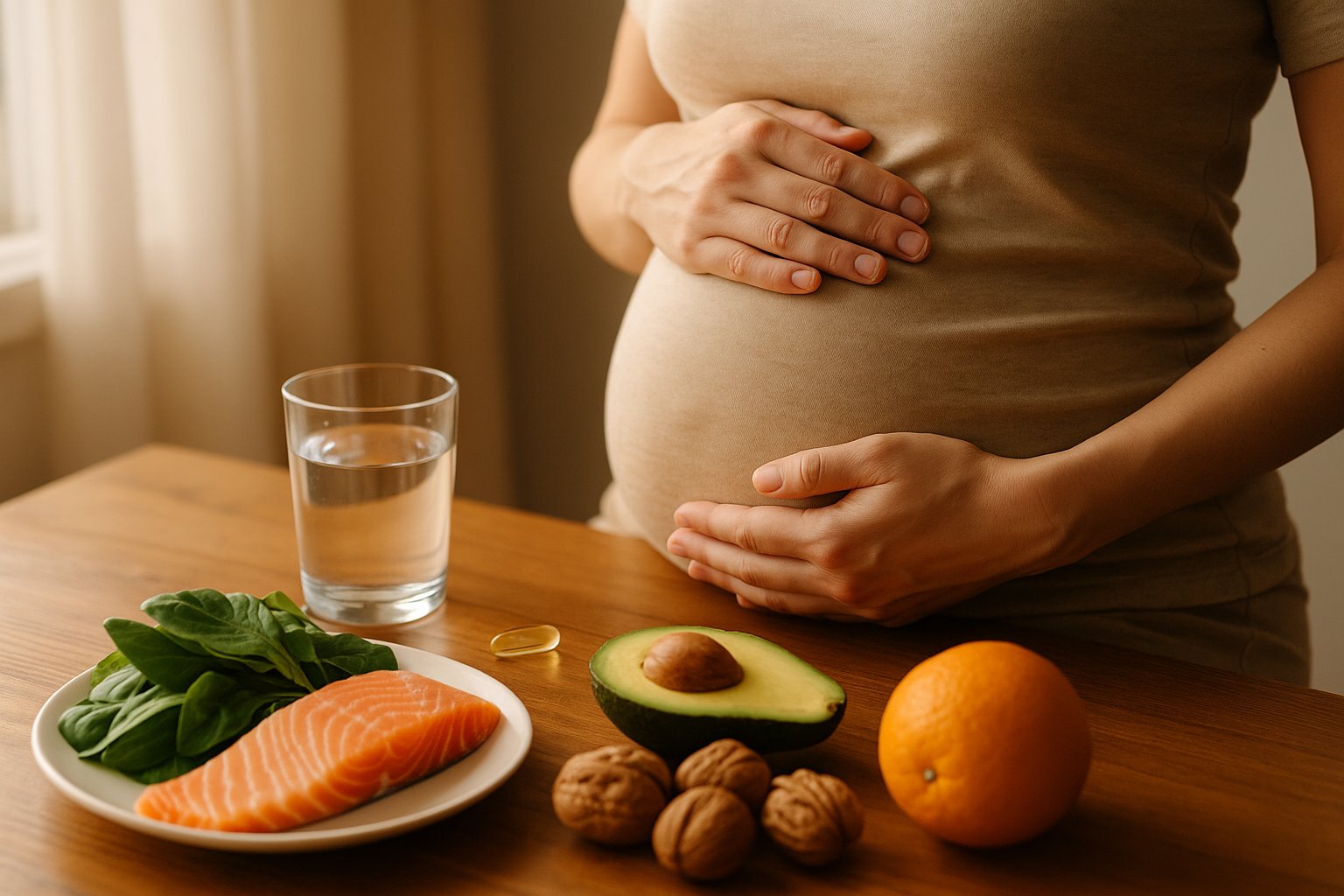
Pregnant women: Vitamin A teratogenicity at high doses is well-documented. Pregnant women should be cautious with liver supplements and discuss with their OB — the nutrient needs of pregnancy are real, but the risks of excess retinol are also real.
Comparing Liver Capsules to a Standard Multivitamin
Here’s the honest scorecard:
Where liver wins:
Heme iron (vastly more bioavailable)
B12 forms (methyl/adenosyl forms vs. cyanocobalamin)
CoQ10 (absent in most multis)
Choline (absent in most multis)
Preformed vitamin A vs. beta-carotene
Whole food matrix with cofactors
Where multivitamins win:
Consistent, measured doses
Added vitamins D3, K2, iodine (often in liver)
No risk of vitamin A excess from standardized formulations
Often cheaper per micronutrient delivered
The conclusion: Desiccated liver isn’t a multivitamin replacement — it’s an excellent complement, particularly for the nutrients where whole food forms matter most (B12, iron, CoQ10, choline). Many practitioners recommend using both.
FAQ
How many liver capsules should I take per day?
Most manufacturers suggest 3–6 capsules daily, which delivers roughly the equivalent of 7–15g of fresh liver. This is well below vitamin A toxicity thresholds for healthy adults. Start with the lower end and assess tolerance.
Can liver capsules help with fatigue?
If your fatigue is related to iron deficiency or B12 deficiency — two common and often overlooked causes — then yes, liver capsules can genuinely help. If fatigue has other causes (thyroid dysfunction, sleep disorders, adrenal issues), they’ll provide less benefit. Getting blood work done before supplementing is always a good idea.
Are liver capsules safe for long-term use?
At recommended doses from grass-fed sources, long-term safety is generally good for healthy adults without kidney disease or vitamin A sensitivity. Regular blood work (CBC, iron studies, liver function) is advisable if using them daily for months or years.
How do desiccated liver capsules compare to liver in tablet form?
“Desiccated” specifically refers to the dehydration/freeze-dry process. Liver tablets are usually compressed liver powder, which is essentially the same product. Look for freeze-dried specifically, as it better preserves heat-sensitive B vitamins.
Do liver capsules taste or smell like liver?
Quality freeze-dried liver capsules are essentially odorless and tasteless when taken whole. Some people can detect a faint meaty smell, but this varies by product. If taste is a concern, swallowing with food and a glass of water is effective.


Leave a Reply