
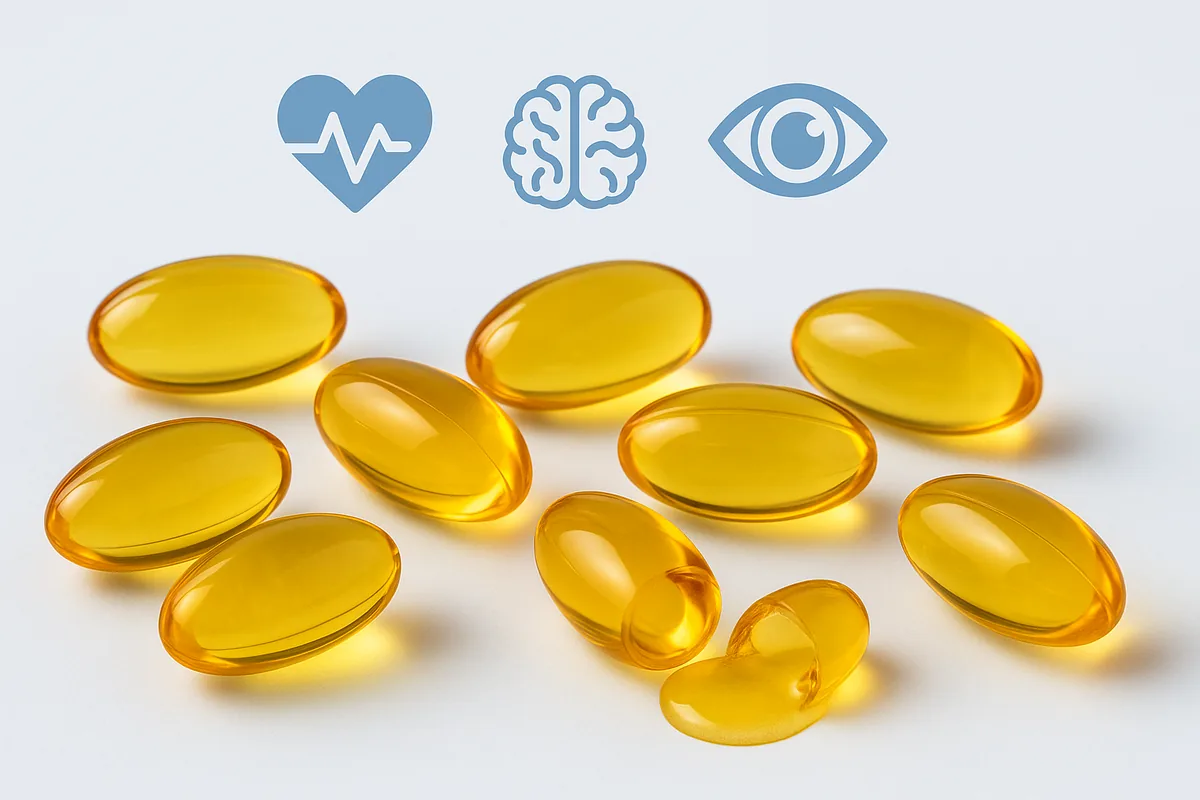
- Omega-3 benefits are highly condition-specific and dose-dependent.
- A plausible mechanism does not automatically mean clinically meaningful results.
- For many overhyped uses, effect sizes are either tiny, inconsistent, or not clinically important.
- If your baseline intake/status is already good, extra supplementation often provides little additional benefit.
- High-quality evidence supports omega-3s most clearly for triglycerides and selected cardiovascular risk scenarios.
- “Natural” does not mean no-risk: higher doses may affect bleeding risk, GI symptoms, and medication planning.
Why the Hype Gap Happens
Omega-3 science is complicated, but marketing is simple. Brands often take one true statement—such as “DHA is important in brain tissue”—and stretch it into a stronger claim like “this will improve memory in everyone.” That leap is where consumers get misled.
A few recurring problems drive inflated claims:
- Observational vs interventional confusion: People who eat more fish often have healthier lifestyles overall. That does not prove a supplement capsule creates the same effect.
- Surrogate endpoint inflation: Lowering inflammatory markers or changing a lab number does not always translate into better long-term outcomes.
- Subgroup cherry-picking: A small benefit in a narrow subgroup gets marketed as universal.
- Dose mismatch: Ads cite high-dose trial data while the product contains a much lower EPA+DHA amount.
If you keep those four issues in mind, omega-3 claims become easier to evaluate.
Overhyped Use #1: Weight Loss
The promise that fish oil “boosts fat burning” sounds attractive, especially for people already exercising and trying to improve body composition. But across randomized trials, clinically meaningful weight loss from omega-3 alone is not a reliable finding.
Some meta-analyses show tiny changes in waist circumference or body fat percentage, but these changes are usually too small to matter in real-world decision-making. In practice, no one meaningfully changes their obesity risk, medication needs, or long-term outcomes from omega-3 alone.
When modest improvements are seen, they often occur in structured programs that also include calorie control and exercise. In those settings, omega-3 may be a minor adjunct—not the driver.
Reality check: If your goal is fat loss, prioritize calorie balance, resistance training, sleep quality, and dietary protein/fiber strategy. Omega-3 can support overall health but is not a weight-loss tool.
Overhyped Use #2: Cognitive Enhancement in Healthy Adults
DHA is structurally important for the brain, so people understandably assume “more DHA = better cognition.” In healthy adults without cognitive impairment and without clear omega-3 deficiency, that conclusion is not consistently supported.
Large reviews generally find little to no meaningful improvement in memory, attention, or executive function in healthy populations taking omega-3 supplements. This does not contradict DHA’s biological importance. It simply means that once adequacy is reached, adding more does not necessarily create a nootropic effect.
Where benefits may be more plausible:
- Individuals with low baseline omega-3 intake/status
- Specific populations with clinical mood issues (especially EPA-forward protocols)
- Some age-related or disease-specific settings where nutritional deficits coexist
Reality check: Omega-3 helps fix insufficiency; it does not reliably upgrade a healthy brain into a “high-performance mode.”
Overhyped Use #3: Broad Cancer Prevention
You will sometimes see fish oil marketed as anti-cancer. The evidence is not strong enough for that claim. Large trials in generally healthy adults have not shown a robust reduction in total cancer incidence from standard-dose omega-3 supplementation.
Some studies explore mortality trends or subgroup findings, but these are not equivalent to proving broad prevention. Cancer is heterogeneous; one pathway intervention rarely gives a universal preventive effect.
Also, nutritional epidemiology around cancer is vulnerable to confounding and reverse causality. Health-conscious individuals may eat more fish and also do many other protective behaviors. That does not isolate the supplement as the causal factor.
Reality check: Omega-3 should not be sold as a cancer prevention strategy. Follow established prevention fundamentals: smoking avoidance, healthy body composition, activity, alcohol moderation, screening, and diet quality.
Overhyped Use #4: Standalone ADHD Treatment
Meta-analyses in ADHD often show a small statistical signal for omega-3s, but the effect is usually modest and much smaller than first-line treatments. That matters clinically.
For families trying to reduce symptom burden quickly and meaningfully, fish oil alone is unlikely to replicate medication-level impact. In some children with low omega-3 status, adding omega-3 may be a reasonable adjunct. But positioning it as a replacement is misleading.
Reality check: Omega-3 can be part of a broader treatment plan, not the whole plan.
Overhyped Use #5: “Anti-Aging Skin” Fix
Skin claims are everywhere: fewer wrinkles, stronger barrier, “glow,” calmer inflammation. There is some plausibility and some low-to-moderate quality evidence for small improvements in dryness and barrier function in select groups. But this is far from a guaranteed anti-aging intervention.
Important context:
- Many skin studies are small and short.
- Outcomes are often subjective.
- Effects are modest relative to core interventions (sun protection, retinoids, sleep, smoking cessation, hydration routine, barrier-friendly skincare).
If someone is truly low in essential fatty acid intake, correcting that can improve skin symptoms. That is a deficiency correction effect, not a universal rejuvenation effect.
Reality check: Omega-3 may offer mild support for some skin concerns, but anti-aging headlines are exaggerated.
Overhyped Use #6: “Universal Anxiety Relief”
Some pooled analyses suggest omega-3s can modestly reduce anxiety symptoms, especially in clinically significant anxiety contexts and often at higher doses. That does not mean a standard low-dose fish oil softgel is a broad anti-anxiety solution for everyone.
Daily stress, sleep debt, stimulant overload, psychosocial strain, and untreated mental health conditions do not disappear from fish oil alone. Effects, when present, are generally incremental.
Reality check: Omega-3 may be a supportive layer in selected cases, not a replacement for evidence-based mental health care.
Claims That Are Better Supported (for Balance)
To avoid overcorrection, it is worth stating where omega-3 is genuinely useful:
- Triglyceride reduction: consistent and clinically meaningful, especially at higher EPA+DHA doses.
- Selected cardiovascular risk contexts: strongest evidence in specific high-risk populations with EPA-focused protocols.
- Pregnancy support (especially DHA adequacy): stronger rationale and better consensus support than many wellness claims.
- Some inflammatory symptom contexts: potentially helpful adjunct effects, usually modest and dose-dependent.
If you want a practical primer on dose and formulation before buying, read How Much EPA and DHA Do You Need Daily and Omega-3 Dosing, Safety, and Drug Interactions.
How to Use Omega-3 Without Falling for Hype
A simple framework:
- Define one target outcome (for example, triglycerides, not “everything”).
- Match product to evidence (EPA-heavy vs balanced EPA+DHA, dose adequacy, quality testing).
- Set a trial window (often 8–12 weeks).
- Track meaningful metrics (labs, symptom scale, clinician feedback), not vague feelings alone.
- Stop if no benefit after a fair trial unless there is another clear reason to continue.
And always keep base habits in place: diet quality, activity, sleep, stress management, and medication adherence if prescribed.
Related Reading in This Omega-3 Cluster
- Omega-3 Parent Guide
- Fish Oil vs Krill Oil vs Algae Oil
- Best Omega-3 for Brain Health
- Omega-3s for Dry Eyes
- Omega-3s for Heart Health: REDUCE-IT and Beyond
- Omega-3s for Joint Pain and Inflammation
- Omega-3s in Pregnancy and Infant Development
FAQ
Are omega-3 supplements mostly a scam?
No. Omega-3s have legitimate, evidence-supported uses. The issue is over-generalized marketing, not total ineffectiveness.
If a claim sounds biologically plausible, is that enough?
No. Biological plausibility is a starting point. You still need clinical trial evidence showing meaningful real-world outcomes.
Is fish oil worth taking if I already eat fatty fish regularly?
It depends on your goal. If intake is already high and biomarkers are adequate, incremental benefit from supplements may be small for many outcomes.
Do higher doses always work better?
Not always. Some outcomes are dose-responsive, but higher dose can also raise side-effect risk and medication interaction concerns.
Should I choose EPA-only or mixed EPA+DHA?
That depends on the target. Some cardiovascular scenarios emphasize EPA-forward strategies, while other use cases prefer balanced formulas.
What is the biggest practical mistake people make?
Buying a low-potency product and expecting high-dose trial outcomes—or using omega-3 as a substitute for foundational health habits.
Sources
- National Institutes of Health Office of Dietary Supplements. Omega-3 Fatty Acids fact sheet.
- Reviews on omega-3 overhyped or unsupported claims. PubMed search.
- Meta-analyses on omega-3 and depression outcomes. PubMed search.
- Systematic reviews on omega-3 and cognitive decline. PubMed search.
- Abdelhamid AS, et al. Omega-3 fatty acids for prevention of cardiovascular disease. Cochrane Database Syst Rev. 2020.




Leave a Reply