Quick Answer: Apigenin is a flavonoid found in chamomile, parsley, and celery that has gained significant attention for three main applications: sleep improvement (via GABAergic activity), NAD+ preservation (via CD38 inhibition), and anxiolytic effects. The sleep dose is 50mg; the CD38/NAD+ dose used experimentally is higher (100–200mg+). It’s bioavailable from chamomile tea but inconsistently dosed—supplemental forms are more reliable for therapeutic intent. Andrew Huberman’s public discussion of it has significantly amplified interest in its NAD+ connection.
Most people’s first encounter with apigenin is chamomile tea, where it’s the primary active compound responsible for that mild calming effect you feel before bed. For most of history, chamomile was the story, and apigenin was just the molecule in it. But the research picture that’s emerged over the last decade makes apigenin considerably more interesting than its tea-cup reputation suggests.
What’s made apigenin a genuine topic in longevity and performance circles isn’t the sleep benefit (though that’s real)—it’s the discovery that apigenin is a potent inhibitor of CD38, an enzyme that consumes NAD+. In a world where NAD+ supplementation with NMN and NR has become a major interest area, a compound that slows NAD+ degradation rather than trying to replenish it represents a meaningfully different approach. We’ll get to that. But let’s build the full picture first.
What Apigenin Is and Where It Comes From
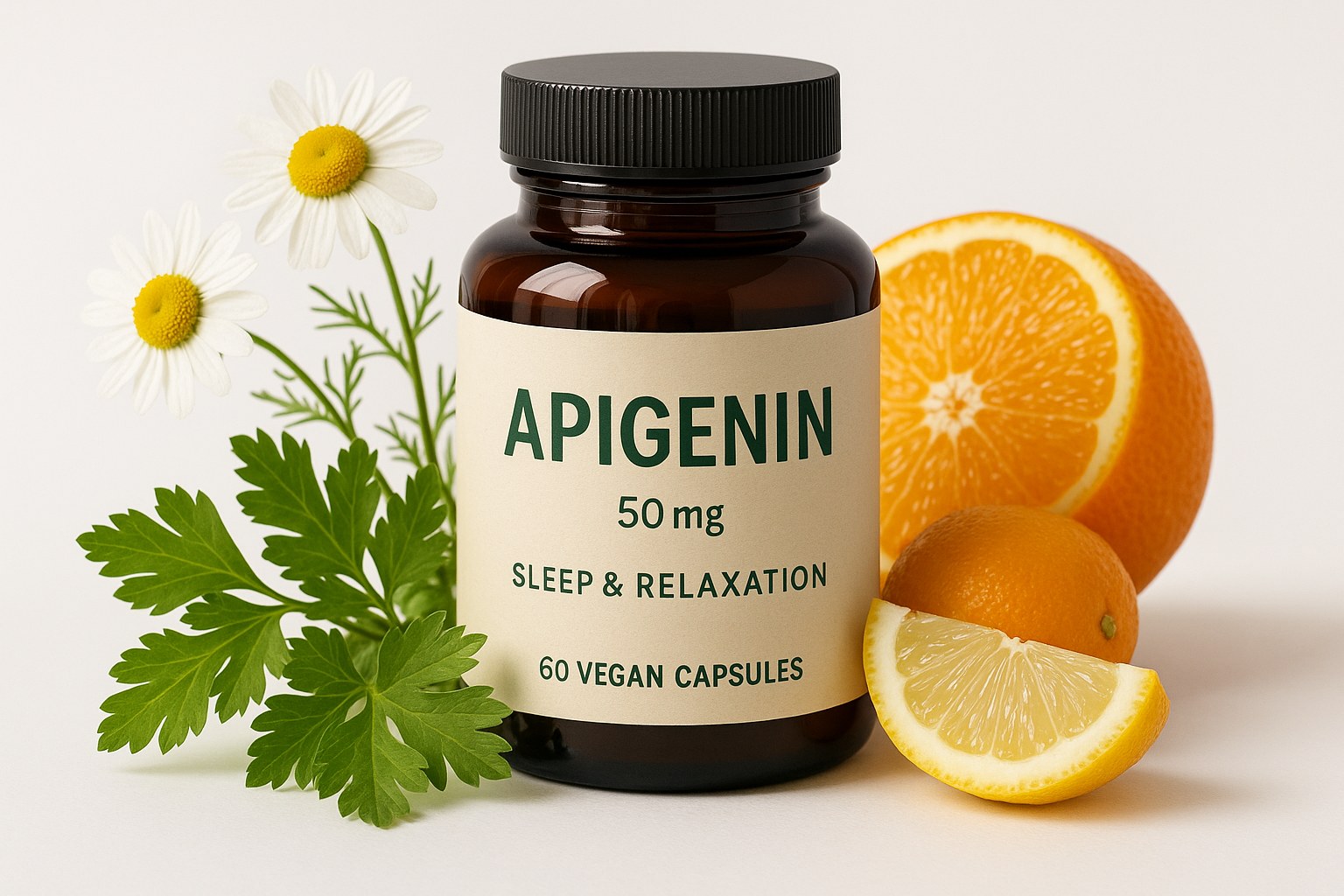
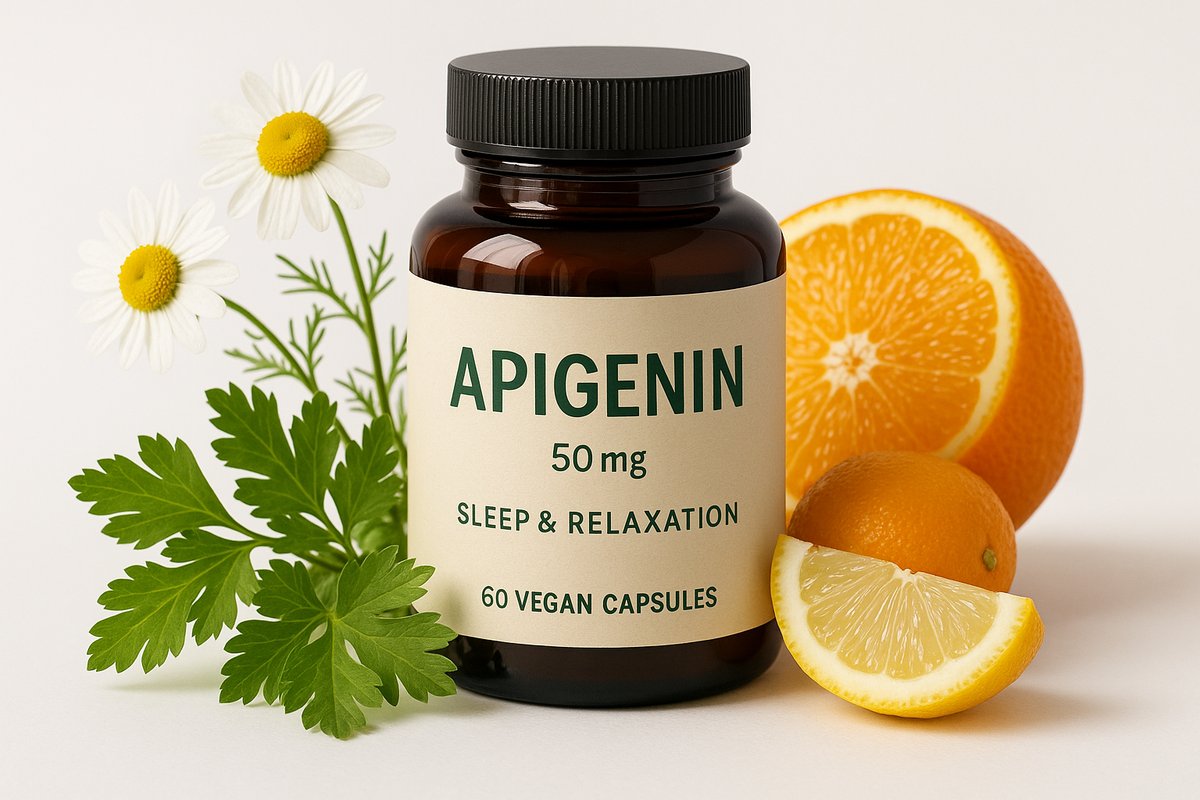
Apigenin (4′,5,7-trihydroxyflavone) is a flavone—a specific class of flavonoid—found in high concentrations in chamomile flowers (Matricaria chamomilla), with meaningful amounts also in parsley, celery, artichokes, oregano, and thyme. It’s been present in the human diet throughout history, which matters because compounds with long evolutionary dietary exposure tend to have more predictable safety profiles than novel molecules.
The concentration in chamomile varies considerably by preparation. Chamomile tea brewed from flowers contains roughly 3–5mg of apigenin per 240ml cup under typical conditions, though commercial tea bags vary widely—some studies have measured as little as 0.3mg and as much as 10mg per cup depending on brewing time, flower quality, and whether whole flowers or powdered material is used. For consistent therapeutic dosing, supplements are more reliable.
Apigenin has reasonable oral bioavailability for a polyphenol, though like most flavonoids it undergoes significant first-pass metabolism. It’s absorbed in the small intestine, undergoes conjugation in the liver, and circulates primarily as glucuronide and sulfate conjugates. Peak plasma concentrations occur within 2–4 hours of ingestion. It’s fat-soluble to a meaningful degree, so taking it with a fat-containing meal improves absorption.
The reason chamomile makes you sleepy—and the reason apigenin is increasingly popular as a standalone sleep supplement—comes down to GABA. GABA (gamma-aminobutyric acid) is the primary inhibitory neurotransmitter in the brain, and GABA-A receptors, when activated, reduce neuronal excitability and promote sedation, anxiolysis, and sleep onset. Benzodiazepines and Z-drugs like zolpidem work by binding to a different site on the same GABA-A receptor and dramatically amplifying its response.
Apigenin binds to the benzodiazepine-binding site on GABA-A receptors—a partial agonist at a subset of receptor subtypes, not a full agonist like diazepam. This is why the effect is gentle rather than sedating in a pharmaceutical sense. It’s a nudge toward calm rather than a chemical blackout.
A 2017 study by Hossain et al. in PLOS ONE demonstrated apigenin’s benzodiazepine site binding in rat hippocampal neurons and confirmed anxiolytic and sedative effects at doses translatable to human supplementation ranges. The partial agonist character means it’s unlikely to produce the tolerance, dependence, or rebound anxiety associated with benzodiazepines, though the long-term use data in humans is limited.
For sleep quality specifically: apigenin at 50mg appears to reduce sleep latency (the time it takes to fall asleep) and increase subjective sleep quality in human users, particularly those whose difficulty sleeping is anxiety- or rumination-related. It doesn’t knock you out the way pharmaceutical sleep aids do—it quiets the mental noise that keeps you awake.
The anxiolytic effect at lower doses (25–50mg during the day) follows the same GABAergic logic but at a level that doesn’t cause sedation. Some users find it useful for managing daytime anxiety without the fogginess associated with other calming supplements.
CD38 Inhibition and NAD+: Why the Longevity Community Got Interested
This is the mechanism that catapulted apigenin from “chamomile compound” to “supplement serious people talk about.” To understand it, you need a quick primer on CD38 and NAD+.
NAD+ (nicotinamide adenine dinucleotide) is a coenzyme involved in cellular energy metabolism, DNA repair, and sirtuins—a family of proteins linked to longevity. NAD+ levels decline with age; by the time you’re 50, you may have half the NAD+ you had at 20. This has driven enormous interest in NAD+ precursors like NMN (nicotinamide mononucleotide) and NR (nicotinamide riboside), which boost NAD+ levels by increasing synthesis.
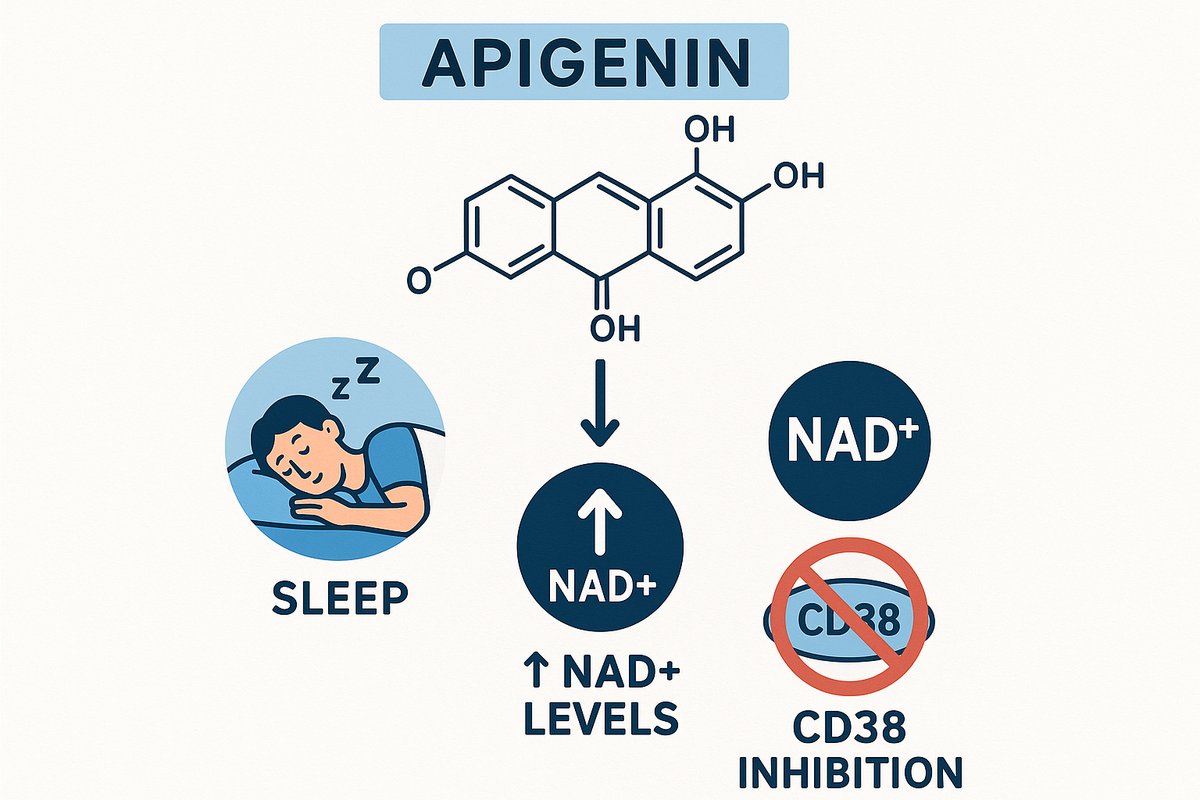
CD38 is an NAD+ glycohydrolase—an enzyme that degrades NAD+. And here’s the problem: CD38 activity increases with age and with chronic inflammation, becoming one of the primary drivers of age-related NAD+ decline. Studies in mice show that CD38 is responsible for the majority of NAD+ degradation in many tissues, and that CD38 knockout mice have dramatically elevated tissue NAD+ levels compared to wild-type controls.
The logical corollary: inhibiting CD38 should preserve NAD+, potentially working synergistically with supplemental NMN or NR. This is exactly what apigenin was found to do. A 2013 study by Escande et al. in Diabetes identified apigenin as one of the most potent natural CD38 inhibitors known, with an IC50 in the nanomolar range. Other flavonoids (including quercetin and luteolin) also inhibit CD38 but generally less potently.
Andrew Huberman prominently discussed apigenin in this context on his podcast, citing the Escande research, which drove a significant wave of consumer interest. This is worth acknowledging because Huberman’s influence on supplement adoption is real, and it’s fair to evaluate whether the hype is warranted.
The honest assessment: the CD38-inhibition data is solid in vitro and in animal models. Human clinical trials showing that supplemental apigenin raises blood NAD+ levels or produces longevity-related outcomes are largely absent—this is frontier territory. The hypothesis is mechanistically plausible and supported by preclinical data. Whether it translates meaningfully in humans at supplement doses remains to be rigorously established. That said, apigenin’s safety profile is excellent, the sleep and anxiolytic benefits are reasonably well-supported, and the NAD+ connection represents a meaningful theoretical bonus if it pans out.
The Cancer Research (Held With Appropriate Caveats)
Apigenin has been studied fairly extensively in cancer research—there are hundreds of published in vitro and animal studies showing anti-proliferative, pro-apoptotic, and anti-angiogenic effects against cancer cell lines. The mechanisms include NF-κB inhibition, inhibition of PI3K/Akt/mTOR pathways, cell cycle arrest, and others.
This body of research needs to be held carefully. In vitro cancer cell studies are extremely poor predictors of clinical outcomes—many compounds kill cancer cells in a dish and fail in human trials. The question is always whether sufficient concentrations reach tumors in humans after oral dosing and normal metabolism.
There are no completed phase 3 human clinical trials establishing apigenin as a cancer treatment. It should not be presented as such. What can fairly be said is that the preclinical evidence is extensive enough to generate legitimate research interest, and that apigenin may contribute to a cancer-protective dietary pattern when consumed through food sources—consistent with the epidemiological data showing that flavonoid-rich diets are associated with reduced cancer risk.
Testosterone and Aromatase Inhibition: Separating Signal From Noise
One claim that circulates in men’s health forums is that apigenin inhibits aromatase—the enzyme that converts testosterone to estrogen—and therefore raises testosterone or prevents its conversion. This would be relevant for men concerned about testosterone optimization.
The evidence here is primarily in vitro, and the picture is mixed. Some studies show apigenin inhibiting aromatase activity in cell lines; others show complex modulation rather than simple inhibition. The doses required for meaningful aromatase inhibition in vitro are often higher than what typical supplemental doses would achieve in plasma.
A more measured view: apigenin’s phytoestrogenic activity is actually quite low compared to other flavonoids like genistein (from soy). It’s unlikely to have significant hormonal effects at typical supplemental doses. The testosterone claims appear to be extrapolations from weak in vitro data and should be treated skeptically. This doesn’t detract from apigenin’s legitimate applications—it just means the “testosterone booster” framing isn’t well-supported.
Chamomile Tea vs. Supplements: Making the Right Choice
Chamomile tea is a perfectly valid delivery vehicle for apigenin at moderate, food-level doses with real but gentle effects. A strong cup of chamomile tea made from whole flowers, steeped for 10 minutes, provides roughly 3–7mg of apigenin. This is great for an evening ritual, probably has genuine mild sleep-improving and anxiolytic effects, and comes with the additional benefits of warmth and ritual (which have their own genuine effects on relaxation).
Supplemental apigenin—typically sold as 50mg capsules standardized from chamomile extract—provides a dose roughly 7–15x higher than a strong cup of tea, consistently delivered. If you want reliable sleep effects or are exploring the CD38 angle, supplements make more sense than tea.
Some people prefer taking chamomile extract in a form that preserves the full-spectrum compounds (apigenin alongside apigenin-7-glucoside, which has its own pharmacological activity, and the essential oils). In this case, a high-quality chamomile extract standardized to 1–2% apigenin is preferable to an isolated apigenin compound. Others prefer isolated apigenin for precise dosing.
Stacking With NMN or NR
If you’re taking NMN or NR for NAD+ support, adding apigenin makes theoretical sense—it addresses the degradation side of the equation while the precursors address the synthesis side. This is one of the more coherent supplement stacking rationales you’ll encounter, even if human clinical data on the combination is thin.
In practice, the timing would be: apigenin taken once or twice daily (at doses of 100–200mg if you’re specifically targeting CD38, or 50mg if focused on sleep); NMN or NR taken in the morning with or without food. There’s no known interaction between these compounds, and the mechanisms are complementary.
Some longevity-focused protocols also add quercetin and pterostilbene (another natural CD38 inhibitor with distinct bioavailability advantages) for broader pathway coverage. This is getting into the territory of biohacking stacks where the evidence base for human benefit becomes quite thin—not dangerous, but informed speculation rather than established practice.
Dosing Summary
| Use Case | Dose | Timing | Notes | |—|—|—|—| | Sleep improvement | 50mg | 30–60 min before bed | Most studied dose; reduces sleep latency and anxiety-driven wakefulness via GABA-A partial agonism | | Daytime anxiety support | 25–50mg | Morning or midday | Start with 25mg; some find 50mg mildly sedating during daytime | | CD38 inhibition / NAD+ support | 100–200mg | Once or twice daily | Experimental in humans; combine with NMN or NR for complementary NAD+ support | | General wellness / food-level dose | ~3–7mg per cup chamomile tea | Evening | 1–2 strong cups; real but gentle effects; insufficient for therapeutic protocols |
Safety Profile
Apigenin has an excellent safety profile with a long history of human consumption through food sources. Clinical adverse events from supplemental apigenin are not well-documented, which reflects both limited clinical trial data and generally mild tolerability.
Theoretical concerns: Very high doses in animal studies have shown pro-oxidant effects—the flip side of the polyphenol antioxidant story that appears in many flavonoids at supraphysiological concentrations. At supplemental doses in humans (50–200mg), this is not a practical concern.
Drug interactions: Apigenin inhibits CYP1A2 and CYP3A4 liver enzymes to a modest degree. If you’re on medications metabolized by these enzymes (including many statins, blood thinners, and certain psychiatric medications), check with a pharmacist or physician.
Pregnancy and nursing: Insufficient human data; best avoided.
The Bottom Line
Apigenin deserves more serious attention than its chamomile-tea origins imply. For sleep quality and mild anxiety, it’s one of the better-supported natural options with a clear mechanism (GABA-A modulation) and practical clinical translations. The CD38/NAD+ story is mechanistically compelling and well-supported in animal models—interesting enough to make a rational case for adding it to an NAD+ supplement protocol even before human clinical trials confirm the benefit.
The cancer claims require appropriate scientific skepticism. The testosterone claims are largely unsupported at supplemental doses.
At 50mg per day from a quality source, apigenin is a low-risk supplement with plausible and meaningful benefits—and if the NAD+ hypothesis bears out in human data, the upside is considerably larger.
Frequently Asked Questions
What dose of apigenin should I take for sleep?
50mg of apigenin taken 30–60 minutes before bed is the most widely used dose and aligns with the experimental data on its GABAergic activity. It works by partially binding the benzodiazepine site on GABA-A receptors, reducing neuronal excitability and quieting anxious mental activity rather than causing pharmaceutical-grade sedation. It’s particularly effective for sleep difficulty driven by anxiety or rumination, rather than as a blunt sedative.
Does apigenin actually raise NAD+ levels in humans?
Apigenin is a potent CD38 inhibitor in vitro and in animal models, and CD38 is a primary driver of age-related NAD+ decline. However, human clinical trials confirming that supplemental apigenin meaningfully raises blood or tissue NAD+ levels are still largely absent. The theoretical rationale is mechanistically solid — inhibiting NAD+ degradation while taking NMN or NR addresses both sides of the NAD+ equation — but this remains plausible and evidence-informed rather than human-confirmed.
Can I take apigenin with NMN or NR?
Yes — combining apigenin with NMN or NR is mechanistically logical and has no known adverse interactions. NMN and NR increase NAD+ through synthesis pathways; apigenin inhibits CD38-driven NAD+ degradation. A common protocol is apigenin once or twice daily (50–200mg depending on goals) alongside morning NMN or NR. This is a reasonable evidence-informed biohacking approach, though combined human clinical trial data is not yet available.
Is chamomile tea a good substitute for apigenin supplements?
Chamomile tea provides roughly 3–7mg of apigenin per cup under typical brewing conditions, which delivers real but gentle, food-level effects. For reliable therapeutic sleep improvement or meaningful CD38 inhibition, you would need 7–15 cups per day to approach supplement doses — clearly impractical. Chamomile tea is excellent for an evening ritual and provides consistent mild relaxation benefits. For consistent therapeutic dosing (50–200mg), standardized apigenin capsules are the appropriate choice.
Are there any drug interactions with apigenin?
Apigenin modestly inhibits CYP1A2 and CYP3A4 liver enzymes, which metabolize many common medications including statins, blood thinners like warfarin, certain antidepressants, and antiepileptics. If you take any prescription medications processed through these pathways, check with a pharmacist before adding apigenin. The inhibition at typical supplement doses (50–200mg/day) is generally mild, but the interaction is worth flagging — particularly for narrow therapeutic window drugs like warfarin.
Escande C, et al. “Flavonoid Apigenin Is an Inhibitor of the NAD+-ase CD38: Implications for Cellular NAD+ Metabolism, Protein Acetylation, and Treatment of Metabolic Syndrome.” Diabetes. 2013;62(4):1084–1093. https://pubmed.ncbi.nlm.nih.gov/23349493/
Viola H, et al. “Apigenin, a component of Matricaria recutita flowers, is a central benzodiazepine receptor ligand with anxiolytic effects.” Planta Medica. 1995;61(3):213–216. https://pubmed.ncbi.nlm.nih.gov/7617761/
Gupta S, et al. “Zyflamend, a polyherbal preparation, inhibits invasion, suppresses osteoclastogenesis, and potentiates apoptosis through down-regulation of NF-kB activation.” Cancer Research. 2010;70(2):684–692. https://pubmed.ncbi.nlm.nih.gov/20068176/
Xu M, et al. “Anti-inflammatory and analgesic effects of apigenin in formalin-induced nociception in rats.” Drug Development Research. 2014;75(8):530–536. https://doi.org/10.1002/ddr.21198
Zhu Y, et al. “Identification of a human intestinal NAD+ glycohydrolase (CD38) inhibitor apigenin: implications for cancer metabolism.” FEBS Letters. 2011;585(19):3087–3091. https://pubmed.ncbi.nlm.nih.gov/21889499/




Leave a Reply