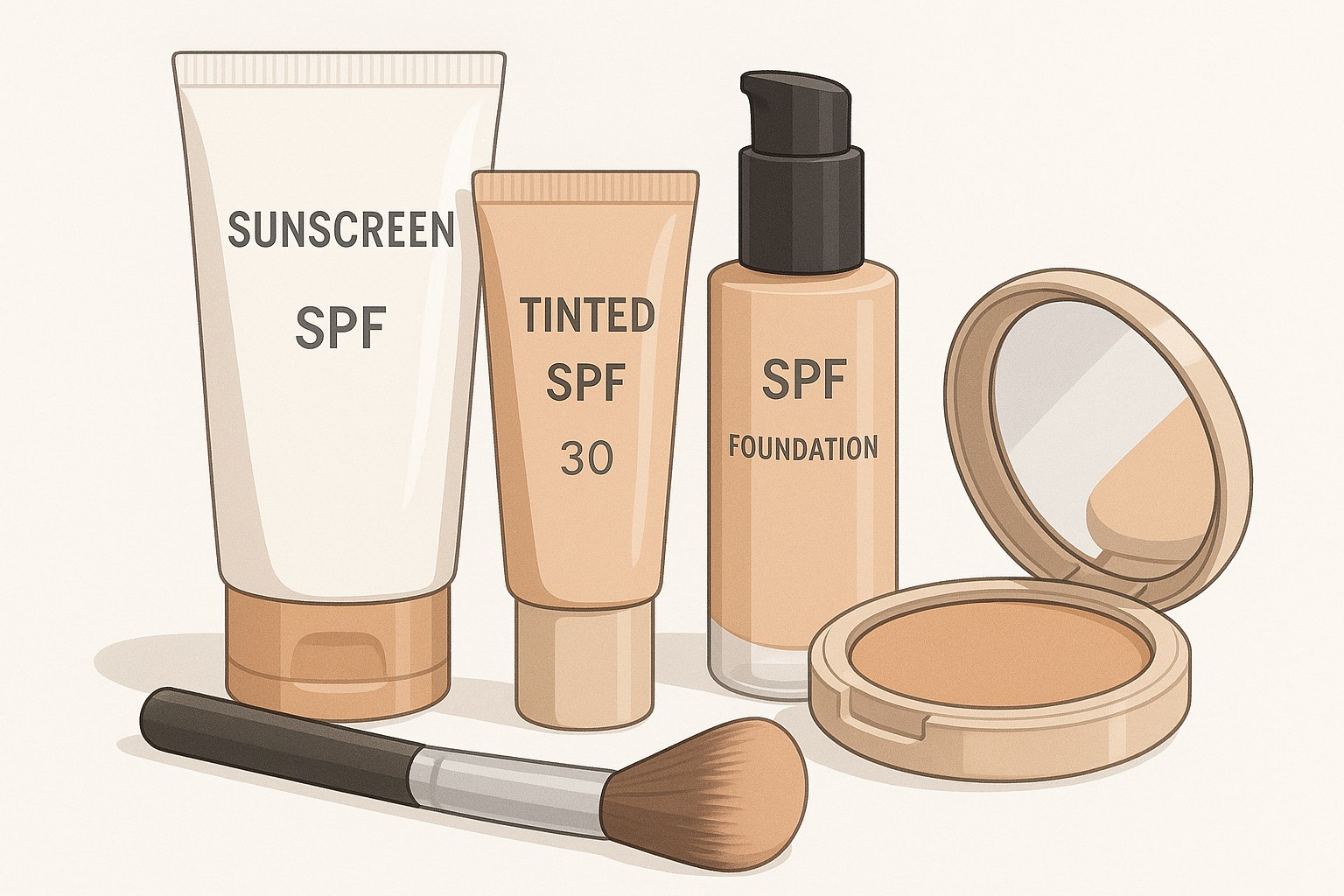
Quick Answer: The best tinted SPF products in 2026 combine real sun protection (SPF 30–50) with skin-evening coverage. EltaMD UV Elements Tinted, Supergoop Unseen Sunscreen, and Colorescience Sunforgettable are dermatologist favorites for face. For everyday multi-taskers, Aveeno Positively Radiant BB Cream SPF 30 and IT Cosmetics CC+ Cream with SPF 50+ lead the drugstore and prestige categories respectively. Mineral sunscreens (zinc oxide/titanium dioxide) are the most reliable for sensitive skin and darker tones.
Why Tinted SPF Is the Most Important Multi-Tasker in Your Bag
Dermatologists are unanimous: daily sunscreen use is the single most effective anti-aging intervention available. UV radiation causes 80–90% of visible skin aging, plus it drives hyperpigmentation, uneven skin tone, and increases skin cancer risk. Yet compliance remains low — people skip sunscreen because it adds a step, feels heavy, leaves a white cast, or breaks up their makeup.
Tinted SPF products solve the compliance problem by combining protection with cosmetic benefit. In 2026, the category has matured enormously: formulas are lightweight, sheer, or full-coverage depending on your needs; mineral filters no longer automatically cast white; and options span drugstore to prestige.
Mineral vs. Chemical Sunscreen: What’s the Difference?
Mineral Sunscreens (Physical Filters)
Mineral sunscreens use zinc oxide and/or titanium dioxide as active ingredients. They work by sitting on top of the skin and physically deflecting UV rays.
Pros:
Reef-safe (zinc oxide especially)
Generally better tolerated by sensitive skin
Effective immediately upon application (no activation wait time)
Less likely to cause allergic reactions
Better option for hormonal skin conditions (chemical filters can trigger melasma)
Cons:
Traditional formulas leave a white cast — especially on deeper skin tones
Can feel heavier or chalkier on skin
2026 update: Micronized zinc oxide and tinted formulas have largely resolved the white cast issue in modern products
Chemical Sunscreens (Organic Filters)
Chemical filters (avobenzone, octinoxate, oxybenzone, homosalate) absorb UV radiation and convert it to heat energy released from the skin.
Pros:
More cosmetically elegant — lightweight, invisible, no white cast
Easier to formulate with makeup products
Higher SPF ratings more achievable
Cons:
Some ingredients (oxybenzone, octinoxate) are restricted in reef-protection zones
Some chemical filters (oxybenzone) have endocrine disruption concerns at high concentrations — though current evidence is not conclusive at typical use levels
Require 15–20 minutes to fully activate
More likely to cause sensitivity reactions in reactive skin
What to Choose
Sensitive or reactive skin: Mineral only.
Darker skin tones: Tinted mineral or modern micronized zinc (look for “no white cast” or tinted mineral).
Everyday makeup use: Chemical or hybrid (mineral + chemical) — cosmetically lighter, mixes well with coverage products.
Environmental preference: Mineral, especially zinc oxide.
BB Creams: Everything You Need to Know
What Is a BB Cream?
BB cream stands for “blemish balm” or “beauty balm.” Originally a German medical product for post-procedure skin, it became a K-beauty staple before going global. A BB cream combines:
Lightweight coverage (sheer to light-medium)
Moisturizing base
SPF protection
Sometimes additional skincare actives (antioxidants, niacinamide)
Best BB Creams in 2026
Best Overall: Aveeno Positively Radiant BB Cream SPF 30 ($13)
A genuine multi-tasker — SPF 30, a moisturizing soy-based formula, and sheer coverage. Non-comedogenic, fragrance-free. One of the few drugstore BB creams where SPF is reliably protective.
Best for Oily Skin: Garnier SkinActive BB Cream Pore-Minimizing SPF 15 ($9)
Note: SPF 15 is below the dermatologist-recommended minimum of SPF 30 for daily use. Ideal as a light coverage base when paired with a higher-SPF separate sunscreen.
Best Prestige: Bobbi Brown Skin Long-Wear Fluid Powder Foundation SPF 20 ($50)
This hybrid formula applies like a liquid and sets to a powder finish, offering better control than traditional BB creams. SPF 20 is on the low side; supplement with a serum SPF underneath.
Best for Mature Skin: Laura Mercier Tinted Moisturizer Natural Skin Perfector SPF 30 ($47)
A beloved skin-tint/BB hybrid that has been a bestseller for 20 years. Sheer, hydrating, SPF 30, and available in 30 shades — including excellent options for deeper skin tones.
CC Creams: Color-Correcting Coverage
What Is a CC Cream?
CC creams add “color correction” to the BB formula — addressing redness, uneven skin tone, sallowness, or hyperpigmentation with color-correcting pigments. They typically offer:
Light to medium coverage with color-correcting actives
Best Overall: IT Cosmetics Your Skin But Better CC+ Cream with SPF 50+ ($40)
The undisputed bestseller in the CC cream category. Full-coverage with SPF 50+, anti-aging actives (collagen, niacinamide, hyaluronic acid, and vitamins A, C, E). The formula provides genuine protection at the level dermatologists recommend. Available in extensive shade range including deeper tones.
Best for Sensitive Skin: Dr. Jart+ Cicapair Tiger Grass Color Correcting Treatment SPF 30 ($52)
The iconic green-to-skin formula that activates on contact and neutralizes redness. SPF 30 mineral-hybrid. Beloved by rosacea and reactive skin users.
Note the same SPF caveat — supplement with additional SPF if used as a daily UV shield. Solid for coverage and anti-aging claims at the price.
Best for Oily/Acne Skin: Clinique Moisture Surge CC Cream Hydrating Colour Corrector SPF 30 ($38)
Oil-free, hydrating without heaviness. The SPF 30 provides appropriate protection. Lightweight finish that doesn’t emphasize pores.
Tinted Mineral Sunscreens (The Professional’s Choice)
The beauty-medicine intersection has produced a category of tinted mineral sunscreens that function as hybrid makeup/skincare/SPF products. These are increasingly recommended by dermatologists as a first-layer product.
Best Tinted Mineral Sunscreens
EltaMD UV Elements Tinted Broad-Spectrum SPF 44 ($39)
A dermatologist-office staple. Zinc oxide + titanium dioxide at adequate concentrations for real broad-spectrum protection. Tinted to eliminate white cast and even skin tone. Water-resistant, fragrance-free.
Supergoop Unseen Sunscreen SPF 40 ($38)
Technically a chemical sunscreen, not mineral, but beloved for its invisible formula that works under or over makeup. No cast, no scent. A great choice for those who prioritize cosmetic elegance over mineral preference.
SkinMedica Total Defense + Repair Tinted SPF 34+ ($73)
A luxury-tier tinted SPF with antioxidant DNA-repair technology (Photoceutical Complex). Used in dermatology practices as a post-procedure daily product. Pricier but exceptional formulation.
Colorescience Sunforgettable Total Protection Brush-On Shield SPF 50 ($65)
A unique powder-format mineral SPF brush — can be reapplied over makeup throughout the day without disturbing foundation. A valuable tool for anyone who needs midday SPF reapplication without ruining their look.
La Roche-Posay Anthelios Tinted Mineral Sunscreen SPF 50 ($35)
Excellent European-formula mineral tinted SPF. The French pharmacy line is trusted by dermatologists globally. Available in a light-sheer tint; works on most light-to-medium skin tones.
Black Girl Sunscreen Make It Glow SPF 30 ($16)
Specifically formulated with deeper skin tones in mind — no white cast, subtle shimmer, moisturizing formula. An important option in a category where many tinted products don’t perform well on deeper complexions.
How to Properly Apply Tinted SPF Products
Application Amount
Most people under-apply sunscreen, reducing its effectiveness. The standard recommendation is 1/4 teaspoon (about 1.5mL) for the face and neck. For CC creams and tinted SPFs used as coverage products, this may feel like a lot — but diluted application gives diluted protection.
Practical approach: Apply your tinted SPF first, as a generous skin-prep step. Then add targeted coverage (concealer, spot coverage) over it. This ensures adequate SPF coverage without expecting the tinted product to also provide sufficient pigment coverage on its own.
Layering Order
The most sunscreen-effective layering order:
Skincare (serum, moisturizer) → allow to dry
Tinted SPF / mineral sunscreen → full coverage application
Spot concealer where needed
Setting powder (light; heavy powder can dilute SPF)
Blush, bronzer
Setting spray
Note: physical mixing of SPF products with other products can reduce their UV filter concentration. Apply SPF as a dedicated layer, not mixed into foundation on the back of your hand.
Reapplication Over Makeup
Sunscreen should technically be reapplied every 2 hours for continued UV protection. Over makeup, this is challenging with standard liquid formulas. Solutions:
Powder SPF (Colorescience Sunforgettable, Brush-On Block): Apply over any makeup; doesn’t disturb coverage.
Setting spray with SPF (Supergoop (re)setting 100% Mineral Powder SPF 35): Mist or press on throughout the day.
SPF mists (Avène SPF 50 Water Spray, Coola Refreshing Water Mist SPF 18): Best for light reapplication; SPF is lower and coverage inconsistent.
SPF Myths Debunked
“SPF in foundation is enough.”
Foundation is typically applied in amounts too thin to provide label-SPF protection. A true SPF 30 foundation applied at the density required for SPF efficacy would look extremely heavy. Foundation SPF is a bonus, not a substitute.
“I don’t need SPF on cloudy days.”
Up to 80% of UV rays penetrate cloud cover. Daily SPF is necessary regardless of weather.
“Darker skin tones don’t need SPF.”
Melanin offers some natural UV protection (roughly equivalent to SPF 13), but not enough to prevent skin cancer, hyperpigmentation worsening, or premature aging. All skin tones benefit from daily SPF.
“Mineral sunscreen always looks white.”
Modern micronized zinc oxide in tinted formulas eliminates the white cast. Black Girl Sunscreen, EltaMD UV Elements, and many other products are designed explicitly to perform on deeper skin tones without cast.
Key Takeaways
IT Cosmetics CC+ Cream SPF 50+ is the best overall multi-tasking tinted SPF for coverage + protection.
EltaMD UV Elements Tinted is the top dermatologist-recommended tinted mineral sunscreen.
Mineral filters (zinc oxide, titanium dioxide) are best for sensitive skin, hormonal conditions, and reef safety.
Apply the full recommended amount of tinted SPF — under-application drastically reduces SPF effectiveness.
Reapply midday with a powder SPF (Colorescience Sunforgettable) over makeup without disturbing coverage.
Foundation SPF alone is not sufficient — use a dedicated SPF step.
Frequently Asked Questions
What’s the difference between a BB cream and a tinted moisturizer?
BB creams typically have more coverage and more defined SPF claims. Tinted moisturizers are sheerer, more hydrating, and act more like a coverage-infused skincare product. Both can be excellent daily-wear options.
Can I use a tinted SPF as my only makeup?
Yes — many people use a tinted SPF (or CC cream) alone with a swipe of mascara and tinted lip balm for a complete natural look. IT Cosmetics CC+ provides enough coverage to even skin tone without additional foundation for most people.
Is chemical or mineral sunscreen better under makeup?
Chemical sunscreens are cosmetically lighter and blend more seamlessly under makeup. Mineral sunscreens are better for sensitive skin and don’t require activation time. Modern tinted mineral formulas now blend as elegantly as chemical sunscreens.
Does setting powder over sunscreen reduce its effectiveness?
Heavy powder application can physically reduce the concentration of UV filters on the skin surface. A light application for setting is generally fine; avoid applying thick layers of pressed powder over your SPF product.
Which tinted SPF works best on darker skin tones?
Black Girl Sunscreen Make It Glow SPF 30, EltaMD UV Elements (tinted), and IT Cosmetics CC+ Cream (wider shade range, including deeper tones) are consistently recommended for medium-deep to deep skin tones without cast.
How much tinted SPF do I need to apply for it to work?
About 1/4 teaspoon for face and neck. This is more than most people apply when using tinted products for coverage. The SPF stated on the label assumes the standard application amount.