
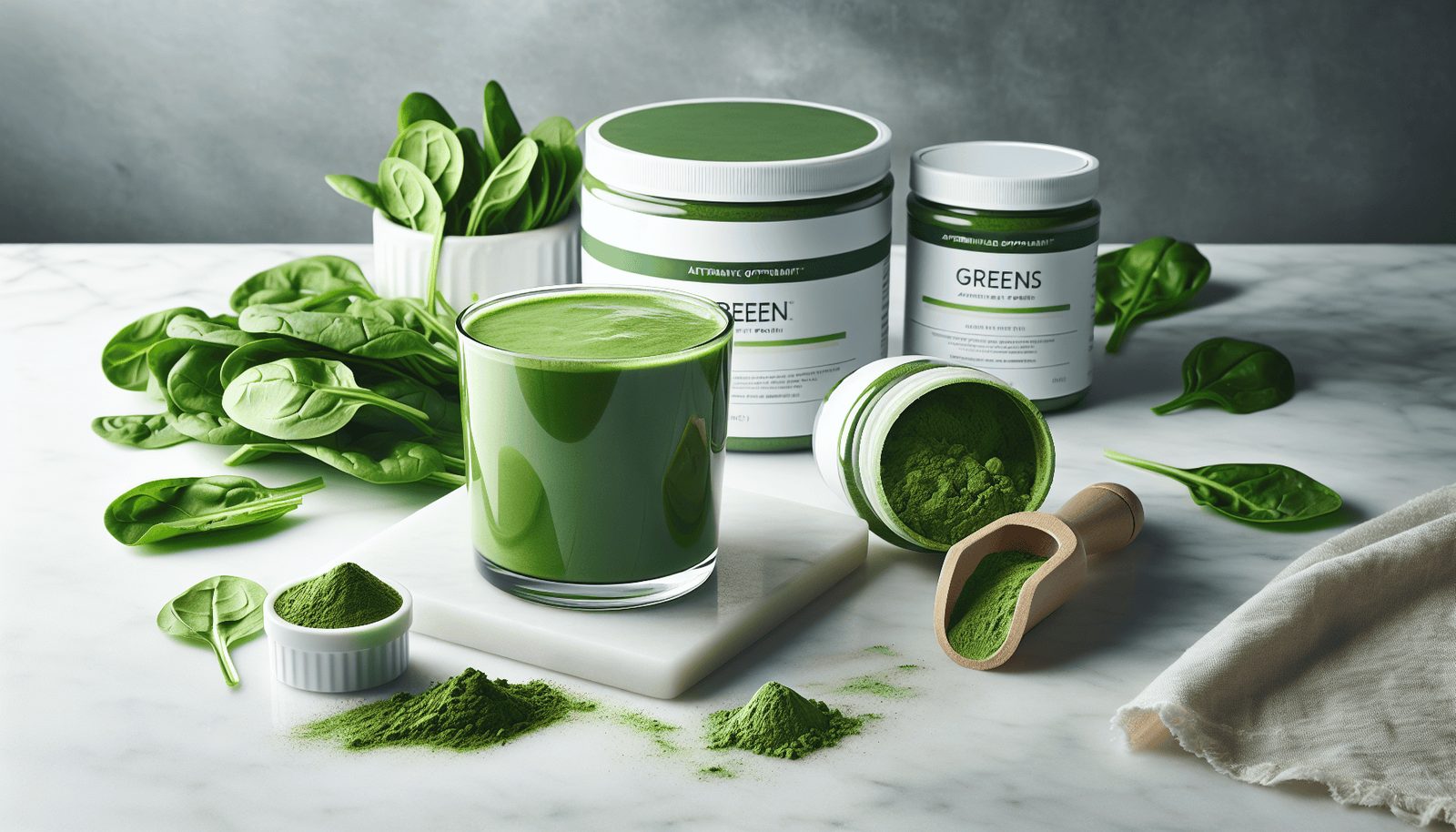
Best Greens Powders in 2026: AG1 Alternatives
Quick Answer: Greens powders can contribute micronutrients and antioxidants but don’t replicate whole vegetables. AG1 is over-marketed at /month – there are better-value alternatives. They’re most useful as insurance for poor vegetable eaters, not as a vegetable replacement.
Greens powders promise to compress a day’s worth of vegetables into a scoop you mix with water every morning. Athletic Greens (AG1) became the dominant brand through aggressive influencer marketing, building a devoted following and charging $99/month for a subscription product. But do greens powders actually work? Are they worth the premium? And what should you actually look for?
This guide breaks down the evidence, analyzes what’s in these products, and helps you decide whether a greens powder belongs in your routine.
What Are Greens Powders?
Greens powders are concentrated blends of dried and powdered plant ingredients — typically including:
- Leafy greens and vegetables: Spirulina, chlorella, spinach, kale, broccoli, beet root
- Grass juices: Wheatgrass, barley grass
- Algae: Spirulina, chlorella
- Adaptogens/herbs: Ashwagandha, rhodiola, astragalus
- Probiotics: Various Lactobacillus and Bifidobacterium strains
- Digestive enzymes: Amylase, protease, lipase
- Fruits and antioxidants: Acai, goji berry, blueberry, pomegranate
- Prebiotic fiber: Inulin, FOS
- Vitamins and minerals: Variable
The marketing pitch: take one scoop daily and get the nutritional equivalent of eating large quantities of vegetables and superfoods.
The Honest Evidence Review
There are almost no randomized controlled trials specifically on greens powder products. This is the central issue. Most of the claims rest on:
- Individual ingredient research (spirulina has studied benefits; therefore the powder with spirulina does too)
- The manufacturer’s proprietary research (often unpublished or in-house funded)
- A small number of industry-funded trials on specific products
What we know from individual ingredient research:
Spirulina: Well-studied. Has genuine evidence for modest LDL cholesterol reduction, blood pressure, and antioxidant effects. The dose in most greens powders is below the therapeutic amounts used in trials (studies typically use 1-8g/day of spirulina).
Chlorella: Some evidence for heavy metal chelation (binds mercury, cadmium), immune support, and modest lipid effects. Again, dose matters.
Beet root: Nitrate-rich; evidence for blood pressure reduction and exercise performance. Meaningful doses are 1-2g of nitrates — greens powders typically contain far less.
Ashwagandha: Good evidence for stress, cortisol reduction, testosterone. Typically needs 300-600 mg KSM-66 or 500-600 mg Sensoril extract. Often underdosed in greens powders.
Probiotics in greens powders: Effectiveness requires viable organisms at sufficient doses (10-50 billion CFU for most clinical effects). Many greens powders add probiotics at doses that may not survive manufacturing/storage or may not meet efficacy thresholds.
The AG1 Analysis
AG1 (Athletic Greens) is the market leader. Let’s look at what $99/month gets you:
Contents per serving (12g scoop):
- Contains 75 ingredients including vitamins, minerals, plant compounds, adaptogens, probiotics, and enzymes
- Vitamins and minerals: Reasonably dosed (C, E, B vitamins, zinc, magnesium, etc.)
- Proprietary blends: Multiple “complexes” with total weights given but individual ingredient amounts hidden
- Probiotic: 7.2 billion CFU (modest but some evidence)
- Adaptogens: Listed but doses within proprietary blend unclear
What AG1 does well:
- Comprehensive vitamin/mineral profile that works as a multivitamin replacement
- Genuinely high-quality ingredients from documented sources
- Tested for heavy metals and contaminants
- NSF Certified for Sport
- Probiotic survives manufacturing (verified independently)
What AG1 doesn’t justify:
- The $99/month price vs. alternatives
- Many ingredient doses are likely sub-therapeutic for claimed benefits
- Proprietary blends hide actual amounts of key ingredients
- No independent clinical trial of the specific product
The honest AG1 verdict: It’s probably a good daily “nutritional insurance” product if you have the budget. The vitamins and minerals alone might justify a lower price point. Whether the superfoods, adaptogens, and probiotics at the concentrations in the blend provide meaningful additional benefit is unclear.
AG1 Alternatives Worth Considering
Organifi Green Juice:
- Similar price point
- More conservative claims
- USDA organic certified
- Contains ashwagandha, spirulina, chlorella, moringa
Bloom Greens:
- Lower price (~$40-50/month)
- Good prebiotic/probiotic content
- Simpler ingredient list
- Popular for digestive support
Thorne Daily Greens Plus:
- Thorne is a premium supplement brand with strong quality standards
- More transparent ingredient dosing
- Higher price but Thorne-quality manufacturing
Nested Naturals Super Greens:
- Budget option (~$30/month)
- Certified organic
- NSF certified
- Simpler but effective ingredient profile
Macro Greens by Macro Life Naturals:
- Long-established product
- Good nutrient density per dollar
What to Look For (and Avoid) in Greens Powders
Look for:
✓… Third-party testing (NSF, Informed Sport, USP)
✓… Heavy metals testing (greens powders can concentrate heavy metals; this is critical)
✓… Transparent ingredient dosing (not entirely proprietary blends)
✓… Documented probiotic viability
✓… Organic certification (reduces pesticide exposure concentrated in greens powders)
Avoid:
❌ No third-party testing
❌ Proprietary “blends” that hide all individual doses
❌ Unverified heavy metals status (chlorella, spirulina can accumulate arsenic, mercury)
❌ Claims that you can skip eating vegetables entirely
❌ Products relying solely on influencer marketing without any independent validation
Who Benefits Most From Greens Powders?
People most likely to benefit:
- Those with consistently poor vegetable intake who won’t change their diet
- People with digestive sensitivities who struggle to eat raw vegetables
- Athletes looking for nutritional insurance
- Travelers who can’t maintain dietary consistency
- People who want a comprehensive multivitamin-plus-extras in one product
People less likely to benefit:
- Those already eating diverse, vegetable-rich diets
- People looking for specific therapeutic benefits (the doses typically aren’t high enough)
- Budget-conscious individuals (a quality multivitamin + targeted supplements costs less)
Can Greens Powders Replace Vegetables?
No. This is the most important nuance. Whole vegetables provide:
- Intact fiber that survives processing
- Phytonutrients that may degrade in powdering/processing
- Water and volume that supports satiety and gut health
- Chewing-stimulated digestive processes
- Synergistic nutrient combinations in their natural matrix
Greens powders concentrate some phytonutrients while losing others. The heat and mechanical processing involved in most powdering alters the phytonutrient profile. They are not equivalent to eating broccoli.
Think of them as nutritional “top-dressing” — supplementing an already reasonable diet, not replacing the vegetables you’re not eating. The ideal scenario is using a greens powder alongside consistent whole-food vegetable intake, not instead of it; the two approaches complement each other rather than compete. If you are already hitting five or more servings of whole vegetables daily, the incremental benefit of adding a greens powder diminishes significantly compared to someone whose diet is consistently low in plant foods.
The Cost-Effectiveness Analysis
AG1 at $99/month vs. alternatives:
What you could buy for $99/month instead:
- Quality comprehensive multivitamin + minerals ($20-30)
- Spirulina powder 3g/day ($15)
- Ashwagandha 600 mg KSM-66 ($20)
- Quality probiotic 30 billion CFU ($20)
- And still have $14 left over
The DIY approach at $75/month gives you higher doses of each individual ingredient than most greens powders. The tradeoff: convenience (one scoop vs. multiple products).
Frequently Asked Questions
Does AG1 replace a multivitamin?
Yes, essentially. The vitamin and mineral profile is comprehensive enough that you don’t need a separate multivitamin. This is arguably AG1’s strongest value proposition.
Can greens powders improve energy?
Potentially — through several mechanisms: correcting nutritional deficiencies, adaptogen effects on cortisol, probiotic effects on gut-brain axis, and the psychological effect of a healthy morning routine. Direct clinical evidence for energy specifically from greens powders is limited.
Are greens powders safe?
Generally yes. Main concerns: heavy metals in algae-based products (testing matters), vitamin/mineral over-supplementation in those already taking a multivitamin, and interactions of herbal ingredients with medications. Check third-party testing for heavy metals.
Why do greens powders taste bad?
The characteristic “green” taste comes primarily from chlorophyll compounds in the plant concentrates. Brands add stevia, natural flavors, and other taste-masking ingredients with varying success. If taste is an issue, mint-flavored versions or blending with fruit juice/smoothies helps.
How long before I notice effects from greens powders?
Most users report some digestive improvements within 1-2 weeks (likely probiotic/prebiotic effects). Energy and general “feeling better” reports are common at 3-4 weeks, though placebo effects contribute. For tangible health metrics (lipid panel, inflammation markers), 2-3 months of consistent use would be the minimum evaluation period.
Should I take greens powder on an empty stomach?
Most brands recommend with water in the morning. Some people prefer with a small amount of food to reduce potential GI discomfort from concentrated plant compounds. AG1 specifically markets morning use.
Key Takeaways
- Greens powders provide concentrated plant nutrients but lack the fiber, volume, and food matrix benefits of whole vegetables.
- Most proprietary blends use underdosed ingredients hidden behind ‘blend’ labels – you can’t verify effective doses.
- AG1 (Athletic Greens) has no published RCTs on its complete formula; individual ingredients have evidence but the combined product is unproven.
- Cost-effective alternatives exist for -60/month compared to AG1’s +/month subscription model.
- Best use case: people who consistently eat fewer than 3 servings of vegetables/day and want a daily nutritional safety net.
Conclusion
Greens powders can be a useful nutritional tool for specific users — primarily those with poor vegetable intake seeking convenient coverage and those wanting an all-in-one multivitamin-plus-greens product. They are not equivalent to eating vegetables and don’t have strong independent clinical evidence for most of their marketing claims.
If you choose a greens powder, prioritize third-party testing (especially heavy metals), organic certification, and transparent ingredient dosing. AG1 is a reasonable premium product for those who can afford it; several alternatives offer comparable or better value at lower price points. And remember: no powder substitute replaces the real thing — eat your vegetables.
Sources
- Reviews on greens powder supplements. PubMed search.
- Reviews on fruit/vegetable concentrate supplements. PubMed search.
- Reviews on spirulina and chlorella. PubMed search.
- Reviews on third-party testing of supplements. PubMed search.
- NIH ODS. Dietary supplement fact sheets.



Leave a Reply