Quick Answer
Dietary patterns profoundly influence skin quality through multiple mechanisms: antioxidant status, collagen substrate availability, inflammatory tone, hydration, and microbiome composition. The most evidence-supported foods for skin luminosity and health include: fatty fish (EPA+DHA omega-3s for anti-inflammatory and membrane fluidity support), colorful fruits and vegetables (carotenoids, vitamin C, polyphenols), olive oil (oleocanthal anti-inflammatory properties), and fermented foods (microbiome diversity supporting gut-skin axis). Individual ‘superfoods’ get outsized attention, but the overall dietary pattern matters more than any single food.
Key Takeaways
- Dietary carotenoids (beta-carotene, lycopene, lutein) deposit in skin tissue and measurably alter skin color toward golden-yellow tones perceived as healthier and more attractive – studies show carotenoid skin tone changes are detectable within 8-12 weeks of increased consumption and are rated as more attractive than equivalent sun-tanning color changes.
- Omega-3 fatty acids (EPA+DHA from fatty fish – salmon, mackerel, sardines) reduce the leukotriene B4 and prostaglandin E2 that drive sebaceous gland inflammation, and DHA is a critical structural component of cell membranes throughout the epidermis and dermis. The omega-3:omega-6 ratio is more important than total omega-3 intake.
- Vitamin C from food sources (bell peppers, strawberries, kiwi, citrus) is the rate-limiting cofactor for collagen synthesis – prolyl and lysyl hydroxylase enzymes require vitamin C to properly crosslink collagen fibrils. Subclinical vitamin C deficiency produces perceptible skin quality decline well before clinical scurvy signs appear.
- Fermented foods (yogurt, kefir, kimchi, miso, sauerkraut) support microbiome diversity that influences the gut-skin axis – emerging research links dysbiosis to rosacea, psoriasis, and acne via immune modulation and systemic inflammation pathways. Regular fermented food consumption is one of the most evidence-supported microbiome-modulating dietary habits.
- Hydration from food matters as much as beverage intake – approximately 20% of total water intake comes from food, and high-water-content foods (cucumber, celery, lettuce, watermelon) contribute meaningfully to skin hydration status independent of drinking water alone. Combined with adequate electrolytes, food-sourced hydration supports transepidermal water balance.
“Eat your way to glowing skin” is plastered across every wellness blog, but most lists recycle the same claims without checking whether they hold up. Here’s what the research actually says about food and skin health.
Diet is just one piece of the puzzle. For the supplement side, see our guide to the best supplements for glowing skin.
The Short Version
The foods with the strongest evidence for skin benefits are fatty fish (omega-3s), colorful vegetables (carotenoids), and fermented foods (gut-skin axis). Everything else is either weakly supported or extrapolated from test-tube studies.
Fatty Fish: The Strongest Case
Omega-3 fatty acids – specifically EPA – have the most robust evidence for skin benefits.
What the research shows:
– A 2020 systematic review in Marine Drugs found that omega-3 supplementation (and by extension, dietary intake) reduced UV-induced inflammation and improved skin hydration
– EPA specifically reduces prostaglandin E2 production, dampening inflammatory skin responses
– A diet rich in fatty fish is consistently associated with slower photoaging in population studies
Best sources: Wild salmon, mackerel, sardines, herring. Aim for 2-3 servings per week.
Honest caveat: Most studies use supplement doses (1-3g EPA/DHA daily), which is more than you’d get from casual fish consumption. Eating fish helps, but don’t expect miracles from one salmon fillet a week.
Carotenoid-Rich Vegetables: The “Golden Glow” Effect
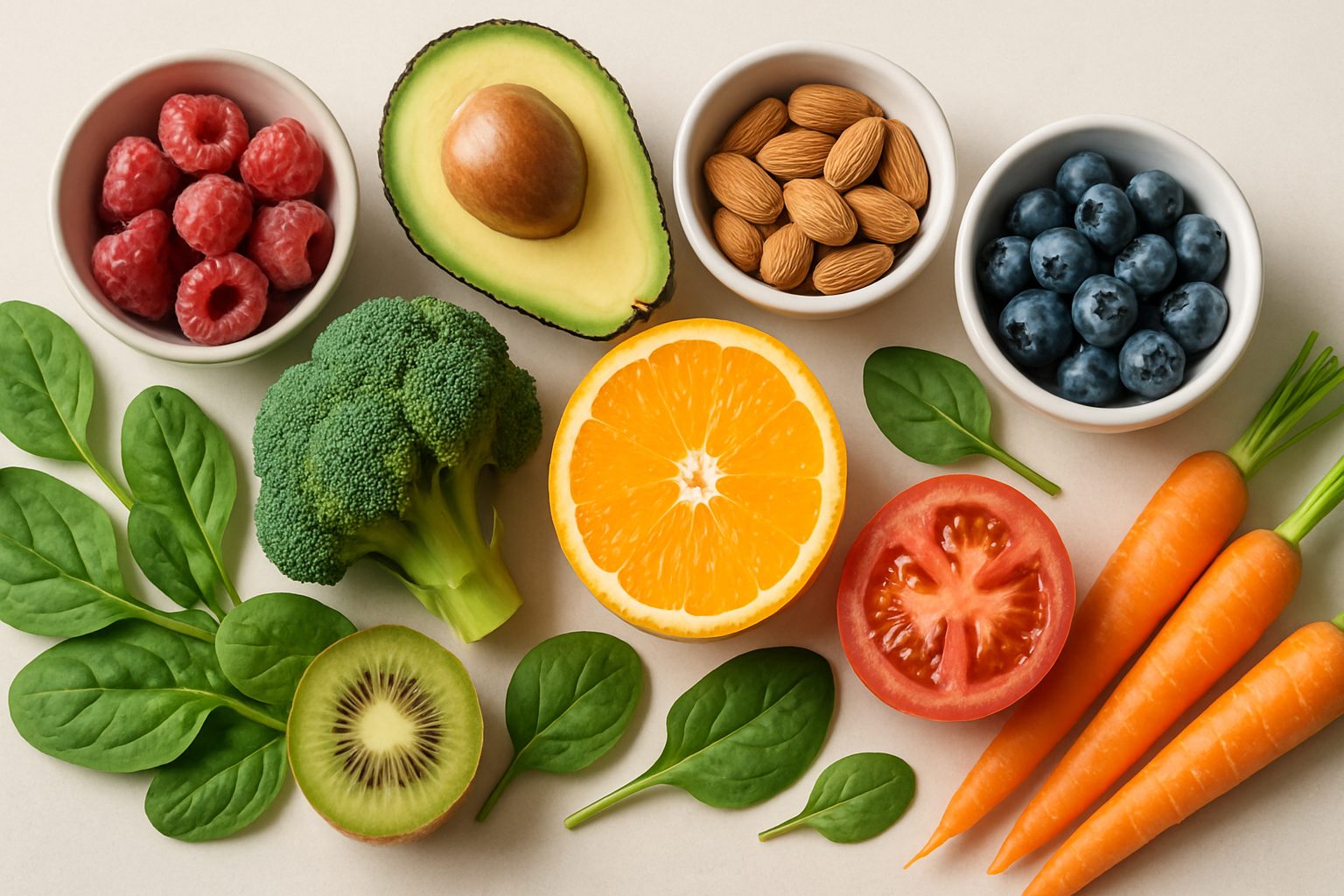
This one has surprisingly solid evidence. Carotenoids – the pigments in orange, red, and dark green vegetables – actually deposit in your skin and change its appearance.
What the research shows:
– Multiple studies from the University of St Andrews found that increased fruit and vegetable intake measurably changed skin color within 6 weeks, producing a “golden glow” that participants rated as more attractive than a tan
– Beta-carotene and lycopene function as mild internal sunscreens (SPF ~2-4), reducing UV erythema
– A 2012 study in Evolution and Human Behaviour found carotenoid-driven skin color was preferred over melanin-driven color
Best sources: Sweet potatoes, carrots, tomatoes (cooked – lycopene is better absorbed with heat and fat), red bell peppers, spinach, kale.
Honest caveat: The “internal sunscreen” effect is real but weak. It’s supplementary protection, not a replacement for actual sunscreen.
Fermented Foods: The Gut-Skin Connection
The gut-skin axis is one of the more exciting areas of dermatological research, and fermented foods are the most accessible way to influence it.
What the research shows:
– A 2021 Stanford study found that a high-fermented-food diet (6+ servings/day for 10 weeks) increased microbial diversity and reduced inflammatory markers – both relevant to skin conditions like acne and eczema
– Specific strains in fermented foods (Lactobacillus, Bifidobacterium) have shown benefits for atopic dermatitis in multiple RCTs
– Gut dysbiosis is increasingly linked to acne, rosacea, and psoriasis
Best sources: Yogurt (with live cultures), kefir, sauerkraut, kimchi, miso, kombucha.
Honest caveat: Most probiotic-skin studies use specific supplement strains, not fermented foods directly. The Stanford study showed general immune modulation, not skin-specific outcomes. The connection is plausible and promising, but not airtight.
Green Tea: Decent Evidence, Modest Effects
Epigallocatechin gallate (EGCG), green tea’s main polyphenol, has been studied for skin protection.
What the research shows:
– A 2011 study in The Journal of Nutrition found that women who drank green tea with specific catechin levels daily for 12 weeks had 25% less UV-induced skin reddening
– EGCG has anti-inflammatory and antioxidant properties relevant to skin aging
– Population studies associate green tea consumption with lower rates of skin cancer (though confounders are significant)
Best practice: 2-3 cups daily. Quality matters – loose-leaf tends to have higher catechin content than bagged tea.
Vitamin C-Rich Foods: Important but Overhyped
Vitamin C is essential for collagen synthesis. Deficiency (scurvy) causes obvious skin breakdown. But does extra vitamin C beyond adequacy improve skin?
What the research shows:
– Dietary vitamin C intake correlates with better skin appearance in population studies (notably a 2007 AJCN study of 4,000+ women)
– However, the correlation likely reflects overall diet quality – people who eat more vitamin C also eat more vegetables generally
– Topical vitamin C has much stronger evidence for skin benefits than oral intake
Best sources: Bell peppers, kiwi, strawberries, citrus, broccoli.
Honest caveat: If you’re not deficient, eating more vitamin C-rich food probably won’t transform your skin. The real benefit is the overall dietary pattern these foods represent.
Foods That Probably Hurt Your Skin
The evidence for “bad” foods is actually stronger than for most “good” foods:
– High-glycemic foods: Multiple meta-analyses link high-glycemic diets to acne severity. The mechanism (IGF-1 and insulin spikes ? increased sebum production ? acne) is well-characterized
– Dairy (specifically skim milk): Several large cohort studies associate dairy intake – particularly skim milk – with increased acne. The mechanism may involve IGF-1 or hormones naturally present in milk
– Alcohol: Reduces skin hydration, impairs barrier function, worsens rosacea. The evidence here is strong and consistent
What Doesn’t Have Good Evidence
– Bone broth for skin – collagen peptides from supplements have some evidence; drinking bone broth is a different delivery mechanism with no direct skin studies
– ”Superfoods” like acai, goji berries, spirulina – antioxidant content is real, but no quality human skin studies
– Celery juice – no credible evidence for any skin benefit
– Avoiding gluten (unless celiac) – no evidence that gluten affects skin in non-celiac individuals, despite widespread claims
Spirulina and chlorella are staples in greens powders and show up frequently in skin nutrition research. Our guide breaks down greens powders and spirulina as part of a nutrition-forward skin and health routine.
The Practical Takeaway
The best “skin diet” looks a lot like any healthy diet:
1. Eat fatty fish 2-3x/week (or supplement omega-3s)
2. Load up on colorful vegetables – especially orange and red ones
3. Include fermented foods daily – yogurt, kimchi, sauerkraut
4. Drink green tea instead of sugary drinks
5. Reduce high-glycemic processed foods – this probably matters more than adding any specific “skin food”
6. Stay hydrated – simple but genuinely relevant for skin turgor
There’s no single miracle food. But the cumulative effect of a nutrient-dense, anti-inflammatory diet on skin health is well-supported. The irony is that the advice for “glowing skin” is the same as the advice for everything else: eat mostly plants, include omega-3s, cut the processed stuff.
—
Related reading:
– [Holistic Skin Nutrition: How Diet, Supplements, and Gut Health Transform Your Skin](/skincare/holistic-skin-nutrition/)
– [Gut Health and Acne Connection](/skincare/holistic-skin-nutrition/gut-health-and-acne-connection/)
– [Skin Supplements That Actually Help Dryness](/skincare/holistic-skin-nutrition/skin-supplements-that-actually-help-dryness/)
FAQ
What foods make your skin glow?
Foods with the strongest evidence for skin luminosity and glow: fatty fish (salmon, mackerel – omega-3s), colorful orange and red vegetables (beta-carotene and lycopene deposit in skin for golden tone), berries and citrus (vitamin C for collagen synthesis), extra virgin olive oil (oleocanthal and vitamin E), and green tea (EGCG for photo-protection and anti-aging). These work cumulatively over weeks to months – not overnight.
How long does diet take to affect skin?
Dietary changes begin affecting skin within 4-8 weeks. Carotenoid skin color changes are measurable at 4-6 weeks of consistent increased intake. Collagen-related improvements (from vitamin C-rich diets) show up in skin texture at 8-12 weeks. Acne improvements from low-glycemic diets emerge within 4-8 weeks. Skin is constantly regenerating (approximately 28-day turnover cycle), so dietary changes impact new skin quickly but manifest visually with a delay.
Is olive oil good for skin?
Yes, both internally and externally. Dietary olive oil (especially extra virgin) contains oleocanthal (natural COX inhibitor comparable to ibuprofen), hydroxytyrosol (potent antioxidant), squalene (lubricating skin lipid), and vitamin E. Mediterranean diet adherence studies consistently show reduced skin aging markers, lower inflammatory skin condition incidence, and improved skin barrier integrity – attributed partly to olive oil’s anti-inflammatory compound profile.
Does drinking water improve skin?
Adequate hydration is necessary but not sufficient for skin glow – severely dehydrated skin looks dull and loses elasticity, but drinking excess water beyond hydration needs does not visibly improve already-hydrated skin. The evidence for ‘drink more water for glowing skin’ is weak in well-hydrated individuals. Focus instead on electrolyte balance, limiting alcohol and caffeine, and getting water from both food and beverages. For more on this topic, see our related guide on aged garlic extract for blood pressure.
Related Articles
- Best Foods for Glowing Skin: What the Evidence Actually Supports
- Best Binder Supplements in 2026: Charcoal, Clay, Chlorella, and What the Evidence Actually Supports
- Best Biotin Supplements in 2026: Hair, Skin, Nails, Metabolism, and What the Evidence Actually Shows
- Best Supplements for Blood Pressure in 2026: What the Evidence Actually Supports
- Best Supplements for Anxiety in 2026: What the Evidence Actually Supports
Sources
- Swanson D, Block R, Mousa SA. Omega-3 fatty acids EPA and DHA: health benefits throughout life. Adv Nutr. 2012;3(1):1-7.
- Grosso G, Pajak A, Marventano S, et al. Role of omega-3 fatty acids in the treatment of depressive disorders: a comprehensive meta-analysis. PLoS One. 2014;9(5):e96905.
- Calder PC. Omega-3 fatty acids and inflammatory processes: from molecules to man. Biochem Soc Trans. 2017;45(5):1105-1115.
- Innes JK, Calder PC. Marine omega-3 (N-3) fatty acids for cardiovascular health: an update for 2020. Int J Mol Sci. 2020;21(4):1362.
- Bowe WP, Logan AC. Acne vulgaris, probiotics and the gut-brain-skin axis: from anecdote to translational medicine. Benef Microbes. 2014;5(2):185-199.
📚 Part of our Best Supplements for Skin Health hub. Explore all our skin supplement guides.