
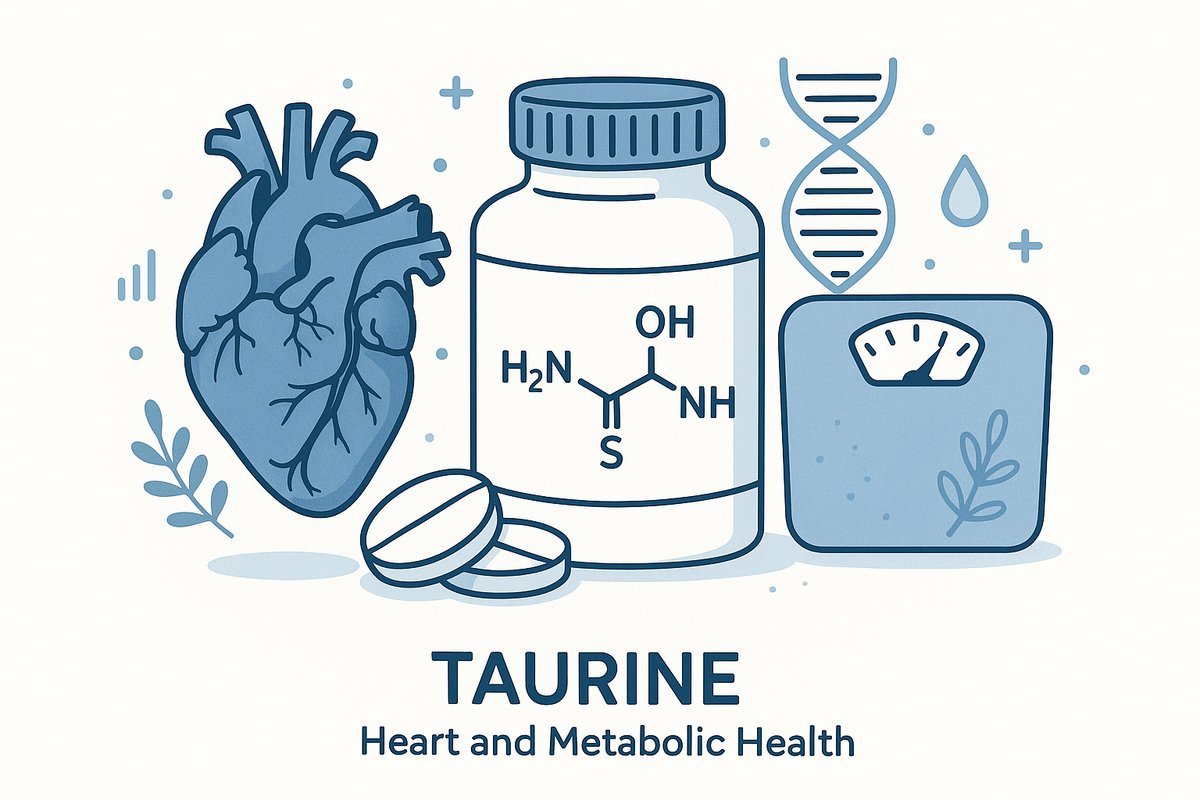
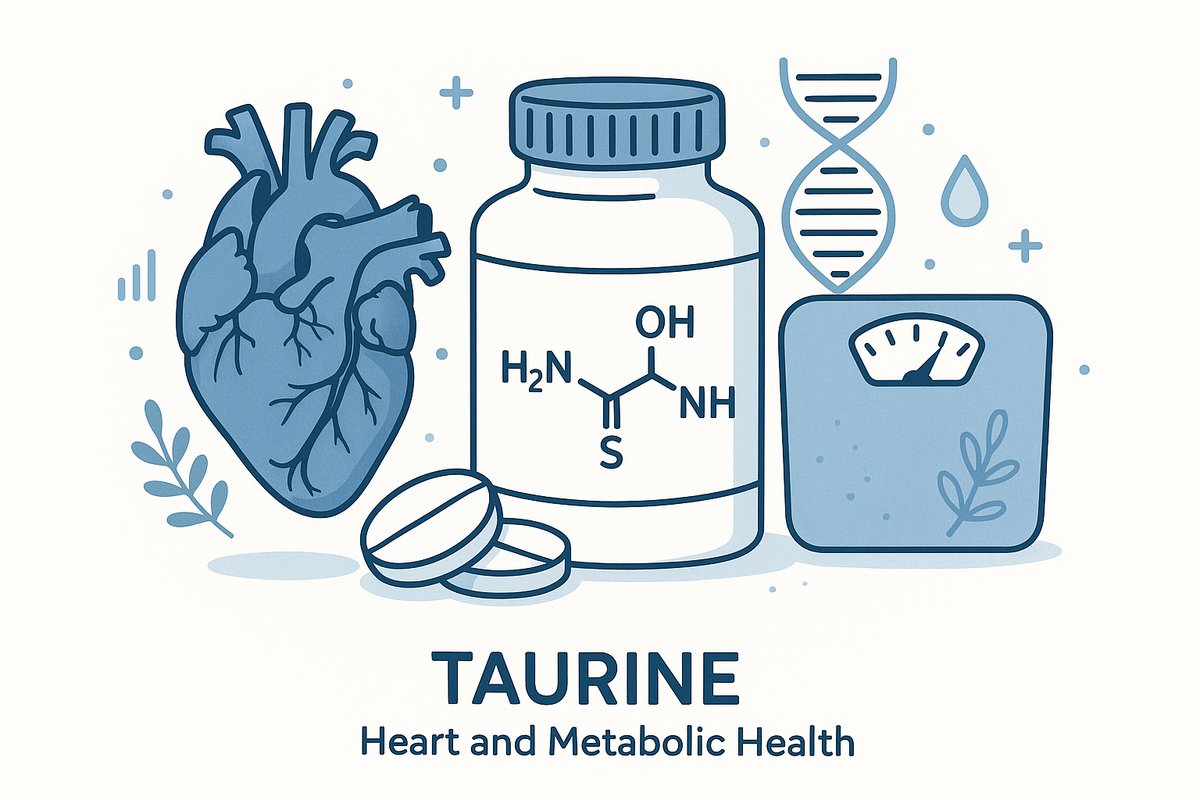
Taurine is quietly one of the most cardiometabolically interesting supplements around. It does not get the flashy attention of berberine, coenzyme Q10, or magnesium, but it probably deserves more respect than it gets.
Quick Answer
Taurine is among the most abundant amino acids in the heart – cardiac muscle concentrations are approximately 50 mM, roughly 10 times plasma concentration – and its role in cardiovascular function is multifaceted: membrane calcium flux stabilization, antioxidant activity in mitochondria, blood pressure modulation, and regulation of cardiac contractility. Multiple RCTs and meta-analyses support taurine supplementation for reducing blood pressure (approximately 3-4 mmHg systolic at 1.5-6 g/day), improving heart failure outcomes, and improving multiple cardiovascular risk biomarkers in metabolic syndrome and T2D.
Key Takeaways
- A 2016 meta-analysis (Xu et al., Food and Chemical Toxicology) of seven RCTs found taurine supplementation (1.5-6 g/day) produced a mean reduction of 3.4 mmHg systolic and 3.2 mmHg diastolic blood pressure compared to placebo – a clinically meaningful reduction comparable to a first-line antihypertensive drug class at lower end of dosing.
- In the heart, taurine modulates intracellular calcium handling – it reduces the calcium overload that causes arrhythmias and myocardial injury under ischemic conditions. This property has made taurine investigation particularly relevant in heart failure (HF) patients, who show chronically low cardiac taurine levels.
- A Japanese RCT in chronic heart failure patients (CHF) found taurine (3 g/day for 6 weeks) significantly improved exercise capacity (NYHA functional class, VO2max), left ventricular ejection fraction, and BNP levels vs. placebo – the biological plausibility is strong given the heart’s extraordinary taurine concentration and dependence.
- In metabolic syndrome and T2D populations, taurine reduces fasting blood glucose, HbA1c, triglycerides, and LDL cholesterol while improving insulin sensitivity – multiple RCTs confirm these effects at 1.5-3 g/day over 8-12 weeks, suggesting systemic metabolic benefits beyond pure cardiovascular effects.
- The 2023 Science paper on taurine and aging identified reduced taurine as a cause (not just marker) of mitochondrial dysfunction, impaired energy metabolism, and elevated oxidative stress in aging cardiovascular tissue – framing taurine repletion as potentially preventive for age-related cardiovascular decline.
That is because taurine is highly concentrated in the heart and appears to influence several systems that matter for healthy aging: vascular tone, calcium handling, oxidative stress, insulin action, and cellular membrane stability.
If your goals include better long-term heart and metabolic resilience, taurine is worth understanding.
Why taurine matters to the heart
The heart is metabolically expensive tissue. It beats continuously, depends on tightly controlled calcium signaling, and is vulnerable to oxidative stress and energy disruption. Taurine helps support:
- Normal calcium movement in heart cells
- Cell membrane stability
- Osmoregulation and electrolyte balance
- Mitochondrial function
- Protection from oxidative stress
Those mechanisms are why taurine has been studied in blood pressure regulation, heart failure, and broader cardiovascular protection.
Potential taurine benefits for heart health
1. Blood pressure support
Some human research suggests taurine supplementation may modestly reduce blood pressure, possibly through effects on sympathetic nervous activity, endothelial function, and vascular tone. That does not make it a replacement for medication, but it is relevant.
2. Better vascular function
Healthy blood vessels need good nitric oxide signaling, low oxidative stress, and flexible endothelial function. Taurine may help support those conditions indirectly, especially in people under metabolic strain.
3. Cardiac stress protection
Because taurine is abundant in the heart, deficiency or lower tissue availability may matter more than people assume. Taurine has been studied for supportive roles in congestive heart failure and other cardiac stress states, though this should be clinician-guided territory.
Potential taurine benefits for metabolic health
1. Insulin sensitivity and glucose control
Taurine may help improve insulin signaling and reduce some of the oxidative stress linked to metabolic dysfunction. This is one reason it attracts interest among people dealing with insulin resistance or trying to age with better glucose control.
2. Lipid metabolism
Some data suggest taurine may support healthier triglyceride and cholesterol patterns, though results vary by population and study design.
3. Inflammation and oxidative balance
Cardiometabolic disease is not just about calories. It is also about chronic low-grade inflammation and cellular damage. Taurine appears to help moderate both.
Who may want to consider taurine for cardiometabolic support?
Taurine is especially interesting for adults who:
- Are over 40
- Have a family history of cardiometabolic disease
- Eat little seafood or animal protein
- Are focused on longevity and low-cost foundational supplements
- Want an add-on to diet, exercise, sleep, and physician-guided treatment
Practical dosing for heart and metabolic support
A common range is:
- 1 to 3 grams daily for general support
- Split dosing can be useful if taking the higher end of the range
Taurine is not usually stimulating, and many people find it easy to tolerate.
Important reality check
Taurine can support a better plan. It cannot replace the actual plan.
If blood pressure is high, fasting glucose is rising, waist circumference is expanding, and sleep is a disaster, taurine is not the hero. The hero is fixing diet quality, resistance training, walking, sleep, and medical follow-through.
But if you want a cheap supplement with a plausible role across multiple cardiometabolic pathways, taurine is one of the better candidates.
FAQ
Is taurine good for the heart?
It may be. Taurine is highly concentrated in heart tissue and appears to support calcium handling, vascular function, and oxidative balance. That is why it has been studied for blood pressure and broader cardiac support.
Can taurine help blood sugar control?
Possibly. Some research suggests taurine may support insulin sensitivity and reduce metabolic stress, though it should be viewed as supportive rather than curative.
How much taurine should I take for heart and metabolic health?
A practical starting range is 1 to 3 grams daily. Lower doses can still make sense if you are stacking it with other cardiometabolic interventions.
Can taurine replace blood pressure or diabetes medication?
No. Taurine is a supportive supplement, not a substitute for physician-guided treatment.
Sources
- Singh R, et al. Taurine deficiency as a driver of aging. Science. 2023;380(6649):eabn9257.
- Militante JD, Lombardini JB. Treatment of hypertension with oral taurine: experimental and clinical studies. Amino Acids. 2002;23(4):381-393.
- Kim KS, et al. Taurine and glucose metabolism: a review. Adv Exp Med Biol. 2013;776:299-306.
- Jong CJ, et al. Role of taurine in mitochondria health. Amino Acids. 2012;42(6):2223-2232.
This article is for informational purposes only and does not constitute medical advice. Anyone with established heart disease, kidney disease, diabetes, or blood pressure medication use should review supplement plans with a healthcare professional.
Related Articles
- Taurine for Heart and Metabolic Health: Why It Gets So Much Respect
- Best Vitamin D3 + K2 Supplements for Bone and Heart Health in 2026: What the Evidence Actually Shows
- Fiber Blends for Metabolic Health: Why This Category Deserves More Attention
- CoQ10 for Heart Health Support: Benefits, Limits, and Best Use Cases
- Myo-Inositol for PCOS and Insulin Resistance: The Strongest Supplement Evidence in Womens Metabolic Health
📚 Part of our Taurine for Aging hub. Explore all our taurine guides.