
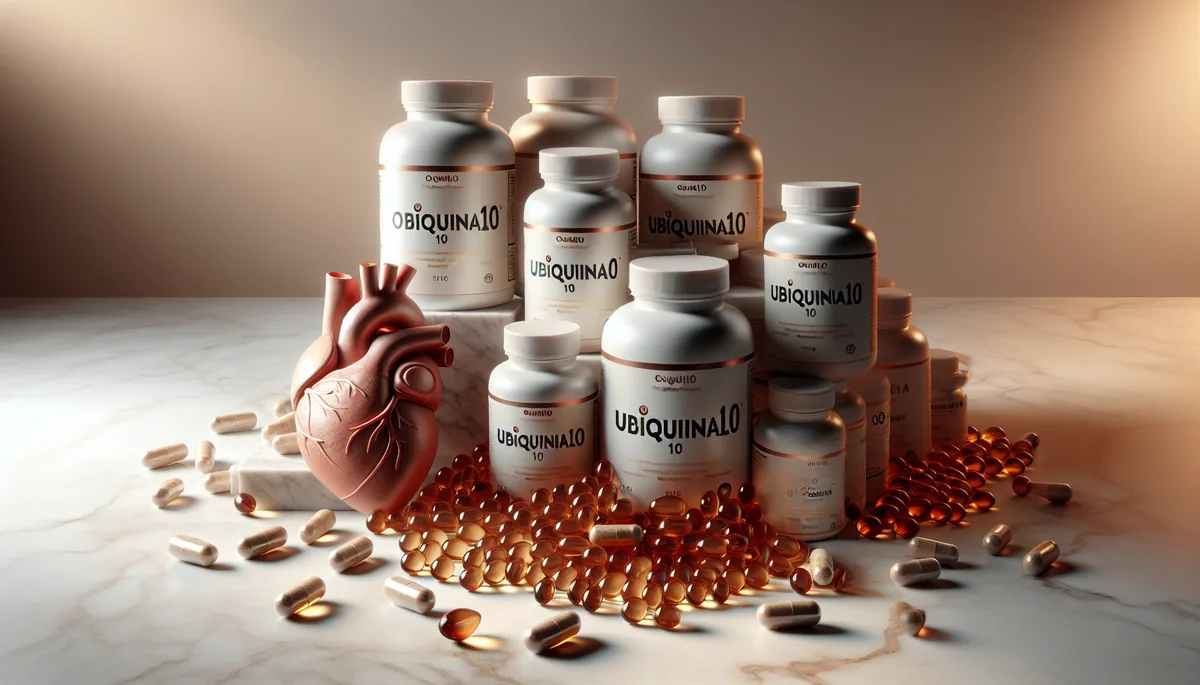
CoQ10 has earned a strong reputation in cardiovascular wellness circles, and unlike many trendy supplements, there is at least a plausible biological reason for the interest. Coenzyme Q10 is concentrated in energy-demanding tissues, including the heart, where it supports mitochondrial ATP production and antioxidant activity. If you are researching CoQ10 for heart health support, the key question is not whether CoQ10 is important in the body—it is. The better question is when supplementation is actually useful.
CoQ10 has the most compelling clinical evidence in heart failure, where multiple trials and meta-analyses show improvements in ejection fraction, symptoms, and in the Q-SYMBIO trial, reduced mortality. Evidence for CoQ10 in other cardiovascular conditions (hypertension, atherosclerosis prevention) is weaker and more mixed. CoQ10 is generally considered a supportive adjunct in heart failure management, not a replacement for established medications.
- The Q-SYMBIO trial (420 mg/day CoQ10 for 2 years) showed significant reduction in major adverse cardiovascular events and mortality in heart failure patients.
- Multiple meta-analyses support CoQ10 improving ejection fraction by 3-4% in systolic heart failure; a clinically meaningful improvement.
- CoQ10 for hypertension shows modest blood pressure reduction (~11/7 mmHg) in some meta-analyses, but study quality is variable.
- CoQ10 does not prevent cardiovascular events in healthy people; its role is as a supportive supplement in people with established heart conditions.
- Heart failure patients should not modify their medication regimens without physician guidance; CoQ10 should be added to, not substituted for, proven heart failure therapies.
Why the heart uses so much CoQ10
The heart is an energy-hungry muscle. CoQ10 helps shuttle electrons in the mitochondrial respiratory chain, which is central to energy production. Levels may decline with age and in some chronic conditions, and statin therapy can lower circulating CoQ10 as well.[1][2]
If you take a statin, CoQ10 depletion is a real concern. We cover CoQ10 for statin side effects and what the research supports.
That has made CoQ10 one of the most studied supplements in cardiovascular support.

What the evidence says

Heart failure
The strongest supplemental evidence is in heart failure, where some studies suggest CoQ10 may improve symptoms or functional status when used alongside standard care. The Q-SYMBIO trial reported improved major adverse cardiovascular outcomes with CoQ10 supplementation in chronic heart failure patients, though this area still needs more high-quality confirmation.[3]
Blood pressure and endothelial support
Some meta-analyses suggest CoQ10 may have a modest blood-pressure-lowering effect in certain groups, but results are inconsistent and not strong enough to replace medical treatment.[4]
General heart wellness
For people without diagnosed cardiovascular disease, CoQ10 is better viewed as a supportive nutrient than a proven prevention tool. It may make the most sense for older adults, statin users, and those interested in mitochondrial support.
Best CoQ10 forms for heart health
Ubiquinone
Ubiquinone is the standard form and appears in much of the clinical literature. It is usually the better budget option.
Ubiquinol
Ubiquinol may be absorbed better in some older adults or those with reduced conversion efficiency.[5] If cost is not a major issue, ubiquinol is a strong choice for people over 50.
How much CoQ10 should you take?
Many heart-health-focused supplements land between 100 and 200 mg daily, usually with food. Higher amounts are sometimes used in research settings, but that should not be the default assumption for everyday use.
Because CoQ10 is fat soluble, an oil-based softgel taken with a meal improves absorption.
Important cautions
CoQ10 is not a substitute for statins, blood-pressure medication, or heart-failure treatment. It is an add-on discussion, not a replacement strategy.
It may also interact with anticoagulants such as warfarin, so medication review matters.[6]
Bottom line
CoQ10 for heart health support makes the most sense in three scenarios:
- You take statins and want to discuss supportive use.
- You are older and interested in mitochondrial aging support.
- You have a clinician-guided plan for heart failure or related cardiovascular care.
The evidence is strongest in selected clinical contexts, weaker for broad prevention claims, and not strong enough to justify miracle language.
FAQ
Is CoQ10 good for the heart?
It is biologically relevant to heart function, and supplementation may be useful in some settings, especially heart failure and statin use, but it is not a standalone heart treatment.
Can CoQ10 lower blood pressure?
It may have a modest effect in some studies, but results are inconsistent and it should not replace prescribed treatment.[4]
What is the best form of CoQ10 for heart health?
Either ubiquinone or ubiquinol can work. Ubiquinol is often preferred for older adults or those wanting a premium absorption-focused option.
When should you take CoQ10?
Take it with a meal containing fat for better absorption.
References
- Cross-Sectional and Longitudinal Analyses of the Association Between Statin Use and Age-Related Hearing Loss. Drugs & aging. 2026. PMID: 41335365.
- Littarru GP, Tiano L. Clinical aspects of coenzyme Q10: an update. Nutrition. 2010;26(3):250-254.
- Mortensen SA, et al. The effect of coenzyme Q10 on morbidity and mortality in chronic heart failure: results from Q-SYMBIO. JACC Heart Fail. 2014;2(6):641-649.
- Ho MJ, et al. Coenzyme Q10 supplementation and blood pressure: a meta-analysis of randomized controlled trials. J Hum Hypertens. 2016;30:191-196.
- Langsjoen PH, Langsjoen AM. Comparison study of plasma CoQ10 levels in healthy subjects supplemented with ubiquinol versus ubiquinone. Clin Pharmacol Drug Dev. 2014.
- Memorial Sloan Kettering Cancer Center. Coenzyme Q10. https://www.mskcc.org/cancer-care/integrative-medicine/herbs/coenzyme-q10
Related Articles
- Bakuchiol for Acne-Prone Skin: Benefits, Limits, and How to Use It
- Best Vitamin D3 + K2 Supplements for Bone and Heart Health in 2026: What the Evidence Actually Shows
- Best PQQ Supplements in 2026: Mitochondrial Support, Brain Benefits, and the Reality Behind the Hype



Leave a Reply