
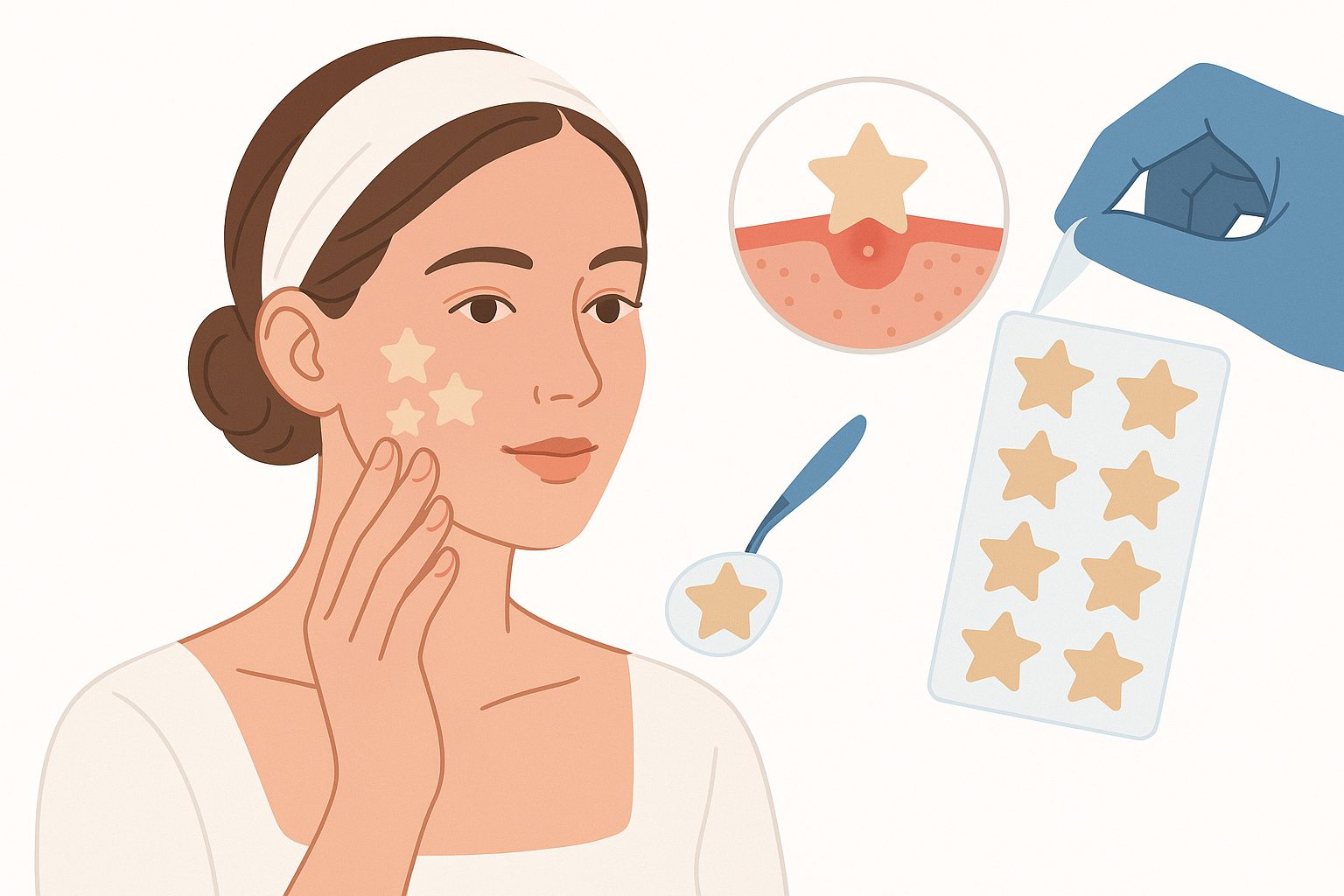
Star-Shaped Acne Patches: The Trend Explained
The star shaped acne patches trend has exploded because it makes blemish care feel less clinical and more fun. Instead of hiding pimple treatment in plain circles, brands turned acne patches into colorful stars, hearts, flowers, and other playful shapes that show up all over TikTok, Instagram, and makeup routines.
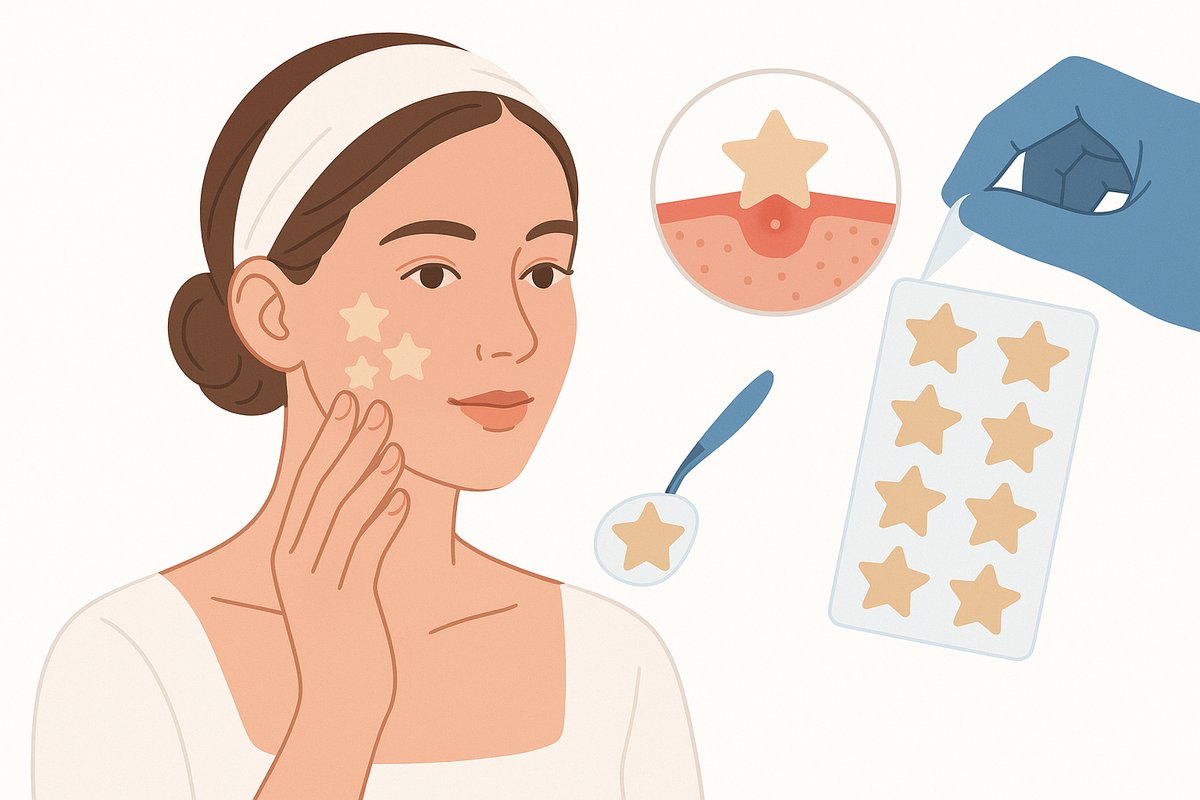
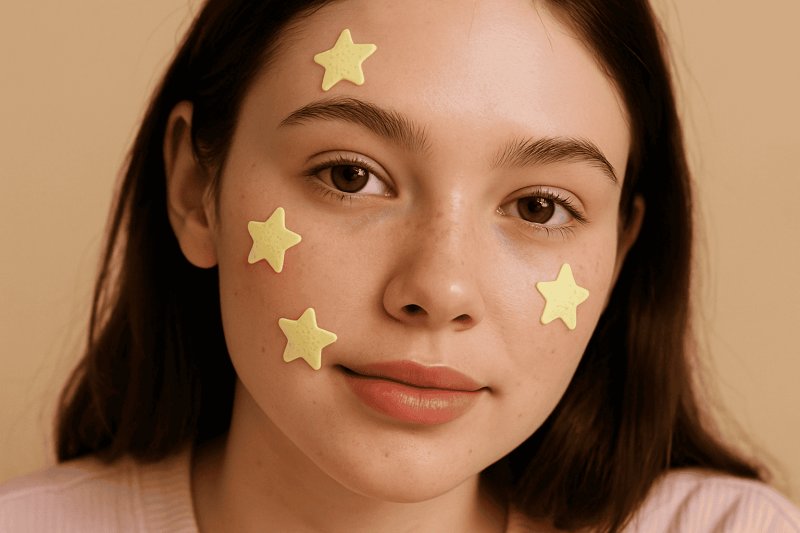
But are star shaped acne patches just cute, or do they actually work? The answer is both. Many of them do work, as long as the patch is made with effective material like hydrocolloid. The shape changes the look, but the treatment benefit still depends on the formula, thickness, and how you use it.
Quick Answer: Star-shaped acne patches are both cute skincare and actual treatment — the hydrocolloid material works regardless of shape, so star and heart patches are effective as long as the adhesive fully covers the pimple.
Why Star Shaped Acne Patches Became So Popular
The trend took off because it blends skincare, self-expression, and social-media-friendly design.
Reasons people love them
- They make acne care feel less embarrassing
- They look intentional instead of medical
- They are fun enough to wear in public
- They can discourage picking by covering the blemish
- They photograph well for beauty content
That mix of function and style made them appealing, especially for teens and younger skincare shoppers.
Do Star Shaped Acne Patches Actually Work?
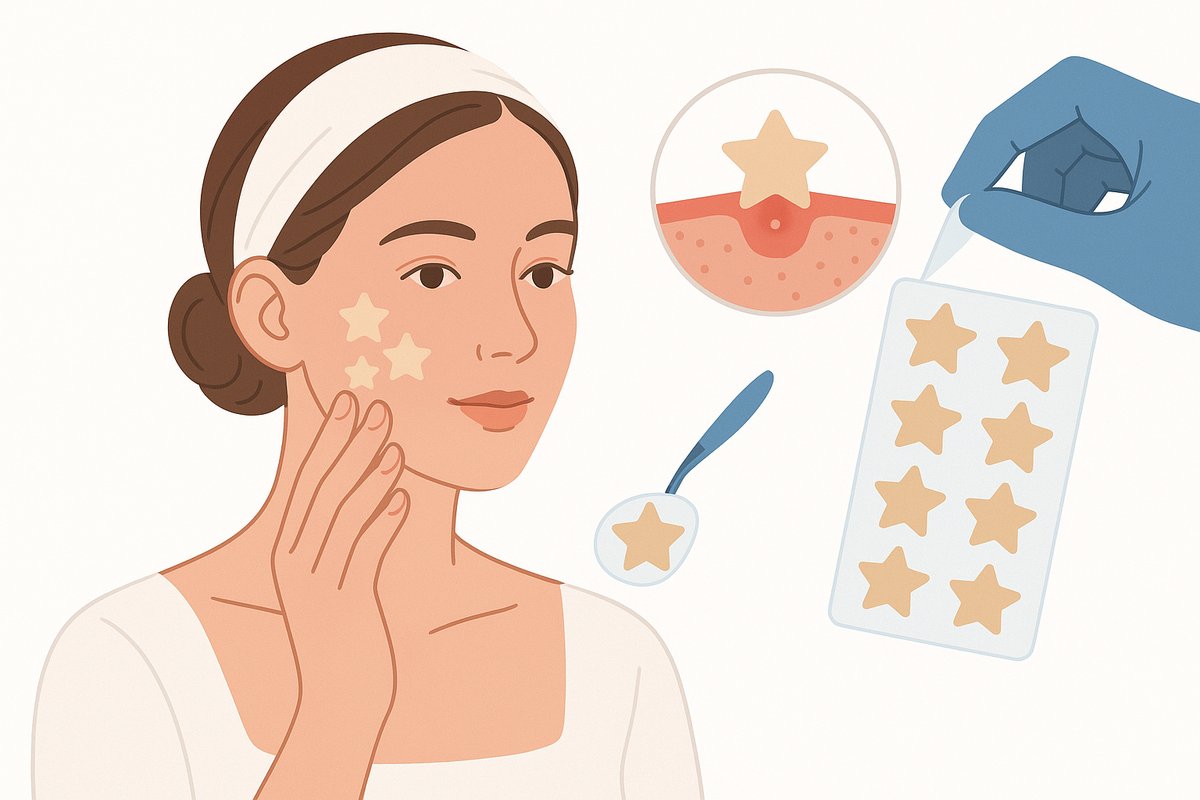
Yes, many do, but only if the patch itself is well made.
What matters more than the shape
- Whether it uses hydrocolloid
- Whether it sticks well to clean dry skin
- Whether it is thin enough for the area
- Whether it is suited to the type of blemish
If the patch is just decorative sticker material, it will not give the same benefit as a real acne patch. A true star-shaped acne patch should still function like a standard hydrocolloid patch.
Best Types of Blemishes for Star Patches
Star patches work best on surface pimples.
They are usually good for:
- Whiteheads
- Small visible pimples
- Healing blemishes you keep touching
- Daytime protection on a breakout
They are less ideal for:
- Deep cystic acne
- Large clusters of acne
- Blemishes in areas where the star points lift easily
Shape can affect performance. On curved or mobile parts of the face, the pointed edges may lift faster than a plain circle.
Are Star Patches Better Than Regular Patches?
Not necessarily. They are not automatically more effective. A regular circular hydrocolloid patch may sometimes seal better because it has fewer edges.
However, star patches offer something regular patches do not always provide: visibility that feels intentional. If a person is more willing to wear and keep on a cute patch, that can make it more useful in real life.
When the Trend Is Actually Helpful
The trend can be genuinely helpful when it encourages healthier behavior.
Real benefits beyond aesthetics
- Reduces skin picking
- Makes teens more open to using acne care
- Protects blemishes from hands and makeup
- Can create a social confidence boost compared with exposed acne
For some people, a patch they enjoy wearing is better than a more clinical product they avoid.
Downsides to Know Before Buying
Not every trendy patch is worth the hype.
Potential drawbacks
- Decorative versions may be less effective
- Thicker shapes can be more visible under makeup
- Pointed edges may lift early
- Some are priced higher mainly because of packaging and trend appeal
If your goal is treatment first, read the product details and make sure it is more than a novelty item.
How to Use Star Shaped Acne Patches Correctly
- Clean and completely dry the skin.
- Place the patch directly over the blemish.
- Press gently so all edges adhere.
- Leave it on for several hours or overnight.
- Replace it if it turns opaque or lifts.
If you are wearing one in public, choose a time when you do not also need heavy makeup over the same spot. Star patches are usually meant to be seen, not hidden.
Who Should Try Them?
Star shaped acne patches are a good fit for people who want acne care to feel lighter, more approachable, or more expressive. They can be especially helpful for teens, habitual skin pickers, and anyone who is more likely to leave a blemish alone when it is covered.
If you want maximum discretion, though, a thin clear patch may still be the better option.
FAQ: Star Shaped Acne Patches Trend
Do star shaped acne patches work?
Yes, they can work if they are made with hydrocolloid or another real acne-treatment patch material rather than just decorative sticker material.
Are star acne patches just for looks?
Not always. Many are both cute and functional, but effectiveness depends on the material and design.
Are star patches better than regular pimple patches?
Not necessarily. Regular round patches may stick better, but star patches can be more fun and may help people leave their skin alone.
Can you wear star shaped acne patches during the day?
Yes. That is one reason they are popular. Many people wear them during the day as visible acne care.
Do star patches work on cystic acne?
Usually not very well. Like standard patches, they are best for surface blemishes rather than deep under-the-skin acne.
Key Takeaways
- Shaped patches (stars, hearts, clouds) use the same hydrocolloid material as round clinical patches.
- Treatment effectiveness depends on coverage and adhesion quality — the shape is cosmetically irrelevant.
- Decorative patches are often designed to be visible, reframing acne spot treatment as a fashion statement.
- Most shaped patches are thicker than ultra-thin patches — check thickness if under-makeup wearability matters.
- The trend emerged on TikTok and social media around 2021-2022, peaking with Korean beauty brand collaborations.
- For maximum treatment effect, full coverage of the pimple is more important than any specific patch shape.
The science behind the trend
Hydrocolloid wound dressings have been used in clinical settings since the 1980s. Their translation into consumer acne spot patches became popular in the mid-2010s through Korean beauty brands. The shaped variant emerged when brands discovered that visual appeal to functional skincare products generated significantly more social media engagement — a star-shaped patch that looked intentional performed much better in social content than a plain round one.
Does patch shape affect effectiveness?
No — with one minor caveat. The hydrocolloid material is identical regardless of shape. The caveat: irregular shapes with deep indentations can leave uncovered sections of skin around the perimeter of a pimple if not centered precisely. For maximum coverage, place the patch so the pimple is at the center of the shape’s largest dimension.
Decorative vs invisible shaped patches
Decorative patches designed to be seen: Brightly colored, opaque, or patterned. Designed as a fashion statement normalizing visible acne care. They still work as hydrocolloid treatment.
Invisible patches in novelty shapes: Thin, translucent shaped patches meant to be worn under or without makeup. These prioritize discretion while maintaining the fun shape aesthetic.
The social normalization function
Shaped patches have contributed to reducing stigma around visible acne care. When patches are a deliberate aesthetic choice — a star or lightning bolt on the face — they reframe acne treatment from something to hide into something to display proudly. This shift has been notable in Gen Z communities where frank discussions of acne and treatment are common on social media.
Best practices regardless of shape
Apply to clean, completely dry skin. Press the center first, then smooth edges down. Wear for 6-12 hours minimum. Change when visibly white or filled. Do not force off a tightly-adhered patch — wet it with micellar water to soften the adhesive first.
The Future of Acne Patch Technology
The acne patch market is evolving rapidly, with new technologies moving beyond simple hydrocolloid toward active delivery, biomonitoring, and smart materials. Understanding where the technology is going helps consumers make better choices now and anticipate what is coming.
Dissolving microneedle patches
Microneedle patches represent the most significant recent advance in acne patch technology. Instead of just absorbing from the surface, these patches use tiny dissolving spikes (typically 200-500 micrometers long) made from hyaluronic acid, sodium carboxymethyl cellulose, or similar dissolvable polymers. The spikes penetrate the outermost layers of the skin (the stratum corneum) and deliver encapsulated actives into the dermis, bypassing the barrier that limits surface-applied treatments.
Current microneedle acne patches include actives like salicylic acid, niacinamide, centella asiatica, and peptides. The key advantage: these actives are delivered significantly closer to the site of inflammation than any surface-applied product can reach. Early consumer and clinical studies show faster visible improvement compared to plain hydrocolloid.
Color-changing diagnostic patches
Emerging research (primarily from academic labs and some startups) is working on patches that change color based on the chemical composition of wound fluid. This would allow a patch to indicate whether a pimple is primarily bacterial (versus inflammatory) — potentially guiding whether an antibacterial treatment is indicated or whether anti-inflammatory approaches would be more effective.
What to look for when buying shaped patches with current technology
For shaped patches available now, the most meaningful differentiating factors are: thickness (thinner is better for makeup wearability), hydrocolloid quality (higher-grade materials absorb more effectively), active ingredient presence (for overnight treatment), and adhesive durability (especially relevant for daytime wear). Shape is entirely cosmetic — prioritize these functional factors over visual appeal when purchasing for treatment effectiveness.
Do star-shaped pimple patches work?
Yes – star-shaped pimple patches use the same hydrocolloid technology as regular patches and work identically for absorbing wound fluid and protecting spots from picking. The shape has no therapeutic advantage or disadvantage; it is a design choice that makes the patches more visible and reduces stigma. The function is the same as any round hydrocolloid patch.
Why do people wear pimple patches on their face?
People wear pimple patches to absorb fluid from active spots, prevent picking (which causes scarring), and increasingly as a visible self-care statement that normalizes acne treatment. The trend toward decorative shapes and colors has reduced the stigma of visible acne treatment. Functionally, wearing a patch is better than picking or doing nothing.
Are pimple patches safe?
Yes – pimple patches are safe for regular use. Hydrocolloid is a medical-grade wound dressing material used in bandages and wound care; it is hypoallergenic and suitable for sensitive skin. Remove gently after 8-12 hours of wear to avoid adhesive irritation from prolonged contact.
Related Articles
- Best Acne-Safe Concealers
- Best Blush and Bronzer for Acne-Prone Skin
- Best Non-Comedogenic Foundations
- Best Primers for Breakout-Prone Skin
Sources
- Eco-friendly synthesis of star-shaped Zn nanoparticles using Beta vulgaris peel extract and evaluation of their antibacterial, photocatalytic, and cytotoxic activities. Scientific reports. 2026. PMID: 41656316.
- Leung AKC, Barankin B, Lam JM, et al. Acne vulgaris: an updated review. Curr Pediatr Rev. 2024;20(2):137-152.
- American Academy of Dermatology: Acne — tips for managing.
- Bowe WP, Logan AC. Acne vulgaris, probiotics and the gut-brain-skin axis: from anecdote to translational medicine. Benef Microbes. 2014;5(2):185-199.
- Kucharska A, Szmurło A, Sińska B. Significance of diet in treated and untreated acne vulgaris. Postepy Dermatol Alergol. 2016;33(2):81-86.
- Bowe WP, Joshi SS, Shalita AR. Diet and acne. J Am Acad Dermatol. 2010;63(1):124-141.
- Dreno B, Martin R, Moyal D, et al. Skin microbiome and acne vulgaris: Staphylococcus, a new actor in acne. Exp Dermatol. 2017;26(9):798-803.
📚 Part of our Best Acne-Safe Makeup in 2026 hub. Explore all our acne-safe makeup guides.



Leave a Reply