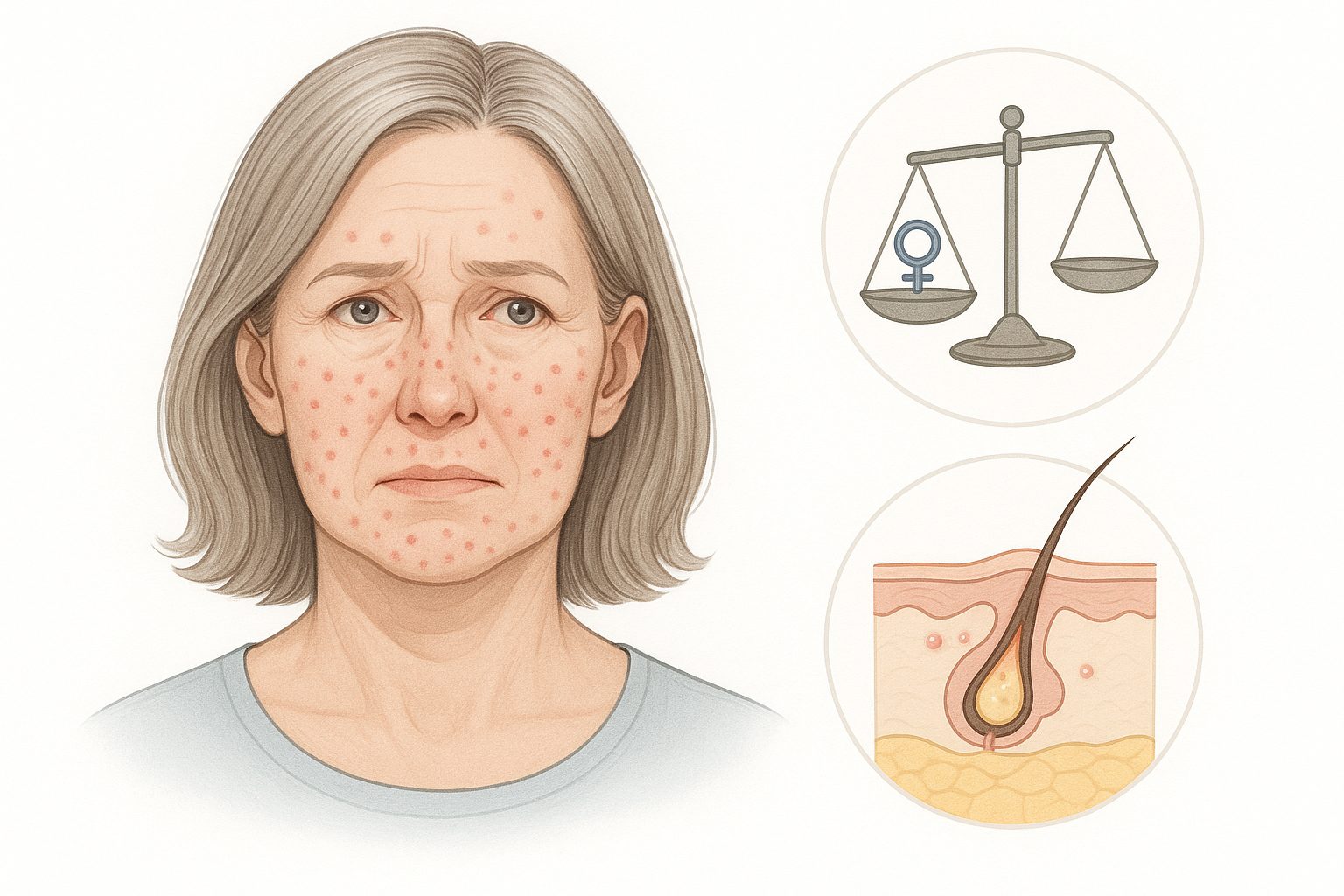
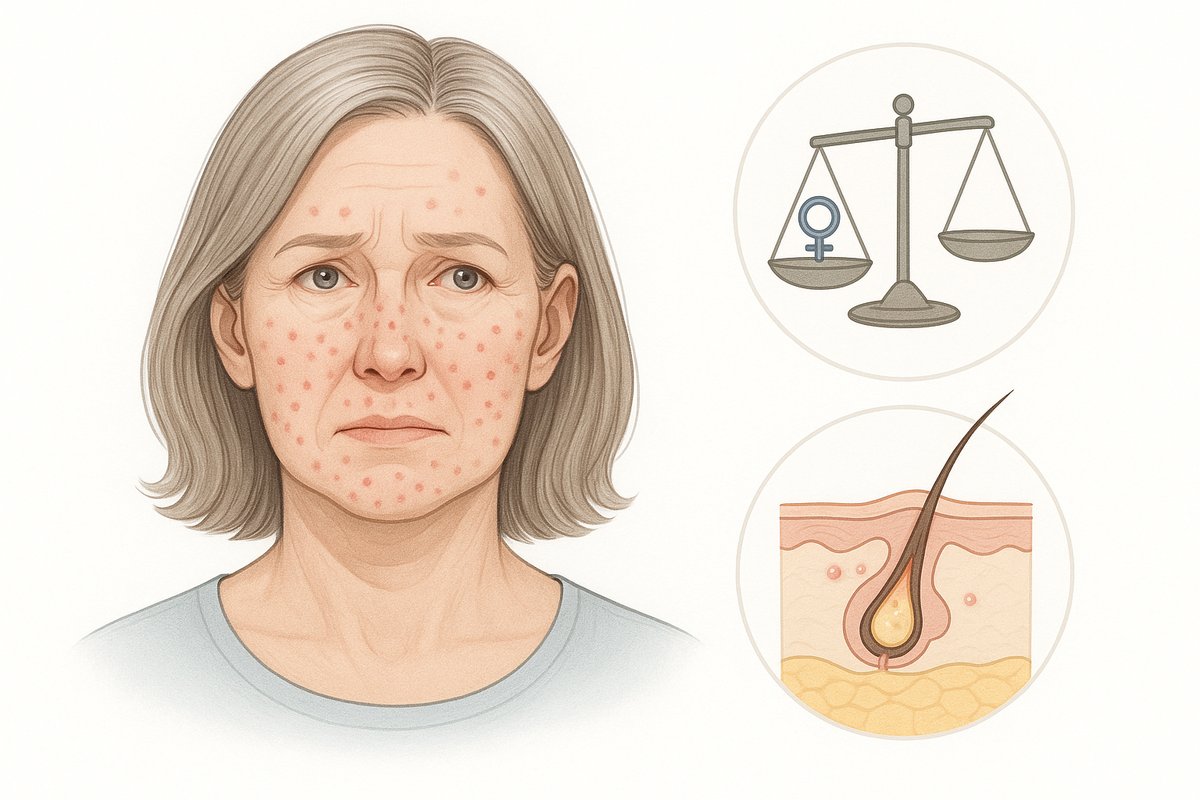
Menopause acne is primarily driven by the relative androgen excess that occurs as estrogen declines – estrogen normally tempers androgen signaling in sebaceous glands, so as estrogen falls, androgens (which remain relatively stable) become disproportionately influential, stimulating sebaceous glands to produce more sebum and promoting follicular hyperkeratinization. The pattern differs from teenage acne: it tends to be concentrated along the jawline and chin (androgen-sensitive sebaceous areas), appears as inflamed cysts rather than whiteheads, and is less responsive to benzoyl peroxide (which targets surface bacteria) than to hormonal management. Effective treatments include topical retinoids, niacinamide (sebum regulation), low-androgen HRT, and in persistent cases, spironolactone (anti-androgen, prescription).
- The estrogen-to-androgen ratio is the key mechanism of menopausal acne: testosterone and DHEA-S don’t necessarily increase in menopause but their relative signaling strength does as estrogen’s counterbalancing effect disappears – sebaceous gland AR (androgen receptor) activity increases in the lower-estrogen environment.
- Jawline and chin distribution is diagnostically useful: sebaceous glands in this region (mandibular and chin area) have higher androgen receptor density than forehead or nose – hormonal acne characteristically presents here, distinguishing it from comedonal (clogged pore) acne which is more diffuse.
- Spironolactone (50-200 mg/day, prescription only) is the most effective non-antibiotic pharmacological treatment for hormonal acne – it works by blocking androgen receptors in sebaceous glands, reducing sebum production at the source; it’s particularly relevant for perimenopausal women for whom antibiotics are not appropriate long-term management.
- Niacinamide (4-10% topical) is the highest-evidence over-the-counter sebum regulation ingredient: it reduces sebaceous lipid synthesis, has anti-inflammatory properties that reduce inflammatory acne severity, and is non-irritating for mature skin that’s often simultaneously dry and acne-prone – this combination is challenging for most traditional acne treatments.
- HRT composition matters for acne outcomes: estrogen-only HRT (for women who’ve had hysterectomy) or combined HRT using low-androgenic progestins (micronized progesterone, drospirenone) have less acne-exacerbating potential than synthetic progestins with androgenic activity (levonorgestrel, norgestrel); discussing HRT type with a prescriber is relevant for women experiencing both menopause symptoms and acne.
Menopause is supposed to mean the end of monthly hormonal drama. Instead, many women get hit with a frustrating surprise: acne in midlife.
Menopause acne is real, and it often appears alongside the exact opposite problem people expect at this age-dryness, thinning skin, and sensitivity. That combination can make old acne advice useless. The goal is not to blast skin with harsh products. It is to calm inflammation, manage oil and hormones, and protect a barrier that may already be weakened by estrogen decline.
Why Menopause Can Cause Acne
Menopausal acne is usually driven by hormonal imbalance, especially a relative increase in androgen influence as estrogen declines. A clinical review on menopausal acne describes relative hyperandrogenism as a major factor, even when lab values are not dramatically abnormal.
In simple terms: estrogen falls, androgens may have a stronger visible effect, and the skin can respond with increased oil production, clogged pores, and inflammatory breakouts.
Other factors that can make menopause acne worse
– Stress and poor sleep
– Insulin resistance or metabolic issues
– Heavy, occlusive cosmetics
– Picking or over-cleansing
– Steroid or hormone-related medications
– Genetics and long-standing adult acne tendencies
What Menopause Acne Looks Like
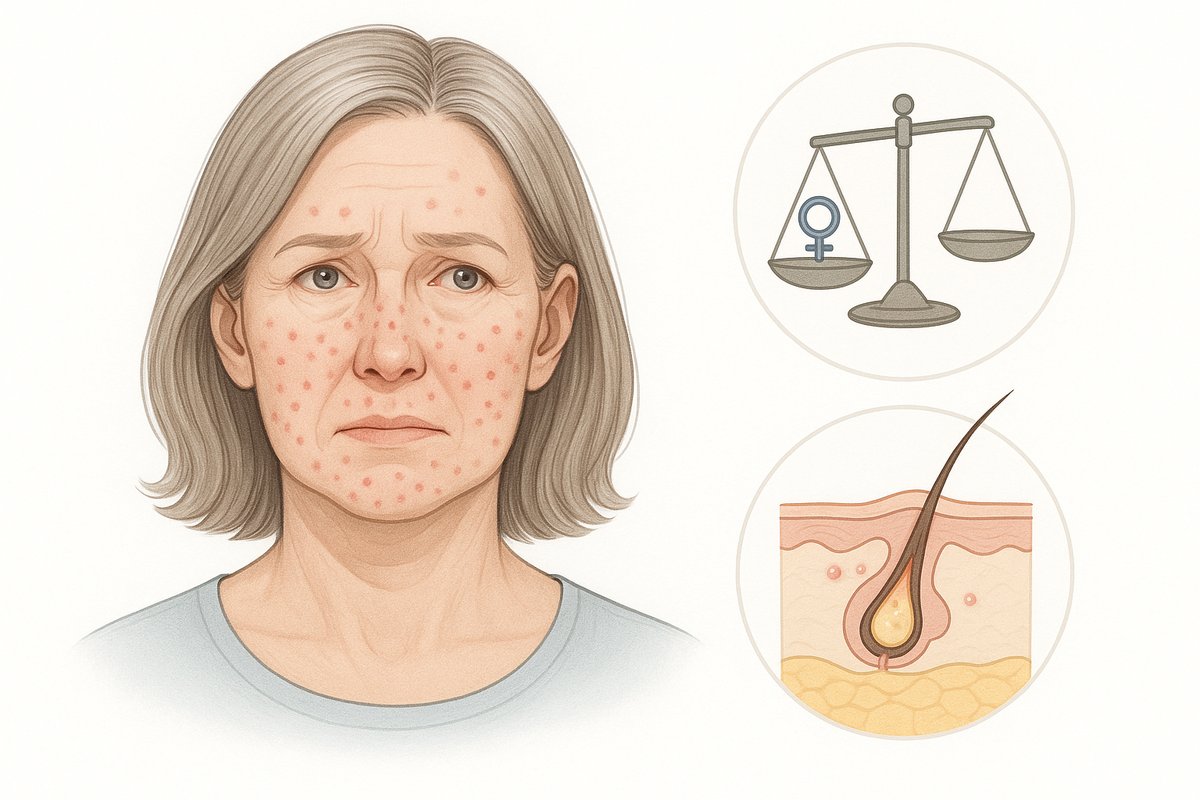
It does not always look like teenage acne.
Common features
– Breakouts along the chin, jawline, and lower face
– Deep, tender papules or cysts
– Flares that seem cyclical in perimenopause
– Acne plus dryness at the same time
– Post-acne marks that linger longer than they used to
Some women have persistent acne from younger years, while others develop true new-onset acne after 45.
How Hormonal Skin Changes Affect Treatment
This is the trap: skin may be acne-prone but also drier, thinner, and more reactive because of menopause. So aggressive acne routines can backfire.
Menopausal skin may also have:
– Reduced barrier function
– Increased transepidermal water loss
– Lower collagen support
– Greater irritation from acids and retinoids
– Slower recovery after inflammation
That means successful treatment has to balance acne control with barrier repair.
Best Skincare Routine for Menopause Acne
1. Use a gentle cleanser
Skip harsh foaming cleansers and scrubs. A mild cleanser helps reduce oil, sunscreen, and makeup buildup without stripping the skin.
2. Add a treatment active carefully
Good options include:
– Salicylic acid: helps unclog pores
– Azelaic acid: useful for acne, redness, and post-inflammatory discoloration
– Adapalene or retinoids: helpful for comedones and aging concerns, but start slowly
– Benzoyl peroxide: can work well, but lower strengths are often easier to tolerate in mature skin
For many women, azelaic acid is one of the most menopause-friendly options because it treats acne without being as drying as some alternatives.
3. Moisturize anyway
This part gets skipped too often. Acne-prone mature skin still needs moisturizer. Look for a non-comedogenic cream with ceramides, glycerin, and niacinamide.
4. Wear sunscreen daily
Acne marks and melasma-like discoloration can worsen with sun exposure. Daily SPF also protects against collagen breakdown.
When to See a Doctor
Some menopause acne needs more than topical skincare.
Seek evaluation if you have:
– Sudden severe acne after years of clear skin
– Acne with excess facial hair or scalp hair thinning
– Irregular bleeding in perimenopause plus major breakouts
– Painful cysts or scarring
– Signs of insulin resistance or rapid weight changes
The menopausal acne review notes that baseline evaluation may include total testosterone and consideration of comorbidities such as obesity, diabetes, hypertension, and dyslipidemia when the history suggests more than straightforward mild acne.
Prescription Options That May Help
Spironolactone
Spironolactone is commonly used for hormonally influenced acne in adult women and is often considered when breakouts are persistent or lower-face predominant.
Topical retinoids
These remain a strong option for both acne and photoaging, but they must be introduced gradually in menopausal skin.
Other options
Depending on the situation, a clinician might discuss topical antibiotics, oral antibiotics for limited use, or menopause-related hormone decisions in the broader context of symptoms.
What Not to Do
Many women accidentally make menopause acne worse by treating it like teenage oily skin.
Avoid:
– Scrubs and cleansing brushes
– Alcohol-heavy toners
– Using multiple acids at once
– Skipping moisturizer
– Picking at deeper lesions
– Constantly changing products every week
Consistency beats intensity.
Can You Have Acne and Dry Skin at the Same Time?
Yes, and this is extremely common in perimenopause and menopause. Hormonal shifts can trigger acne while estrogen decline weakens hydration and barrier function. That is why a balanced routine matters more than a harsh one.
FAQ
Is acne common during menopause?
Yes. Acne can persist, recur, or even begin during perimenopause and menopause, often due to relative androgen effects and other lifestyle or metabolic factors.
Why am I breaking out on my jawline after 45?
Jawline and chin breakouts are classic for hormonally influenced acne, which becomes more common during perimenopause and menopause.
What is the best treatment for menopause acne?
A gentle routine with targeted actives such as azelaic acid, salicylic acid, or a retinoid, plus barrier-supporting moisturizer, works well for many women. Persistent acne may need prescription treatment.
Can menopause acne be caused by hormone imbalance?
Yes. Relative hyperandrogenism is a major factor described in the medical literature on menopausal acne.
Should I stop using moisturizer if I have acne?
No. Mature acne-prone skin still needs hydration and barrier support, especially during menopause.
References
– Khunger et al., 2019, Int J Womens Health
– Merzel Sabovic et al., 2024, Skin Health and Disease
– Zaenglein et al., 2016, JAAD
– Thiboutot et al., 2018, JAAD
Related Articles
- Estrogen Decline and Collagen Loss Explained
- Ceramides vs Peptides in Menopause Skincare
- Longevity Skincare Routine for Women Over 40
- Best Ceramide Creams for Barrier Repair
- Do Teenagers Really Need Retinol?