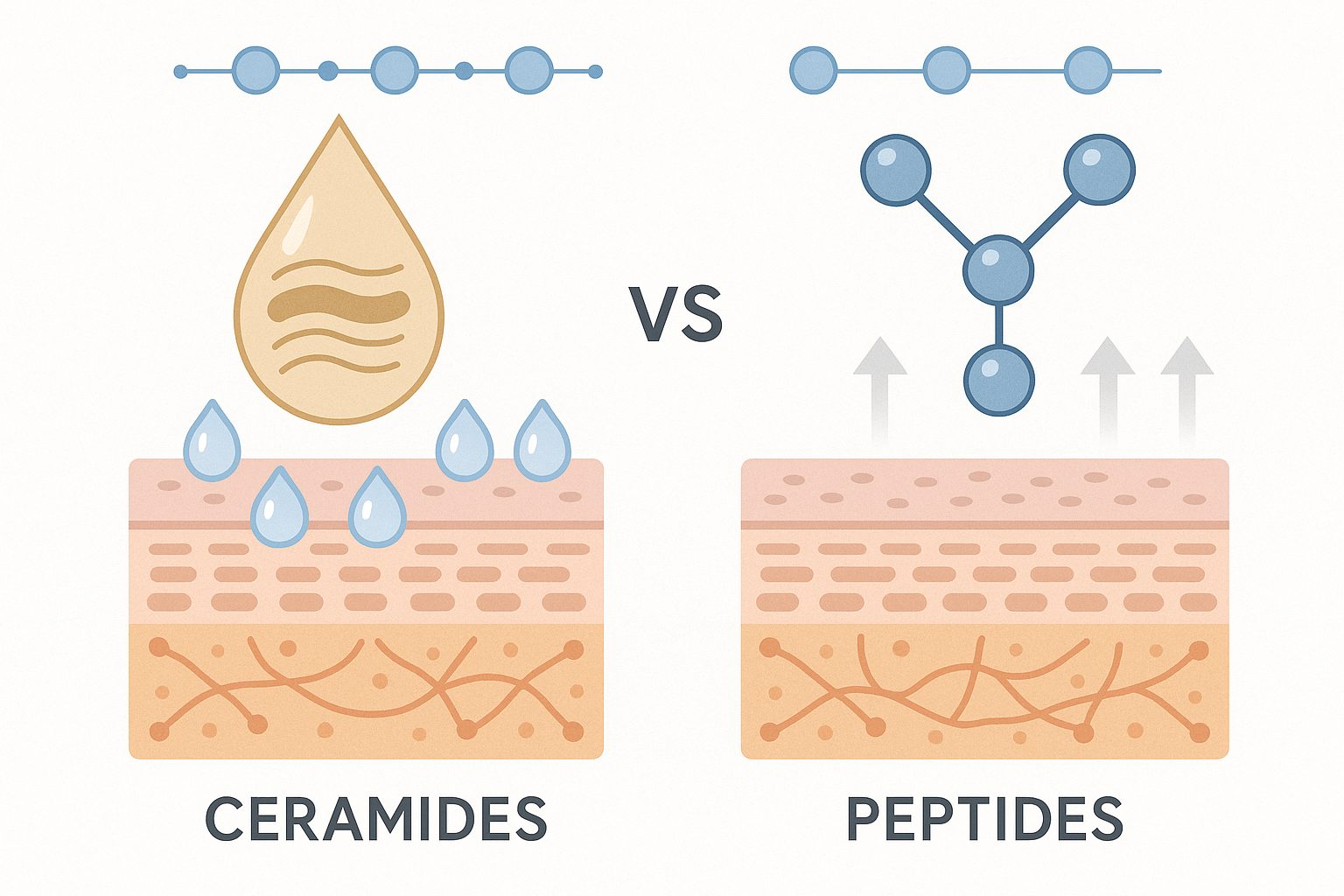
In menopause skincare, ceramides and peptides address different problems and work best together rather than as either/or choices. Ceramides (specifically ceramide NP, AP, EOP) are barrier-repair lipids – they replenish the lamellar structure of the stratum corneum that declines with estrogen loss, directly reducing TEWL and improving skin comfort and hydration. Peptides (signal peptides, carrier peptides, neurotransmitter-inhibiting peptides) work in the dermis – they signal fibroblasts to produce collagen and hyaluronic acid, partially compensating for the direct fibroblast-stimulating role of estrogen. The practical answer: ceramides for the surface barrier (foundation); peptides for dermal regeneration support (enhancement). Most menopausal skin benefits from both.
- The ceramide deficit in menopause is structural and measurable – studies using skin tape-stripping show postmenopausal women have lower ceramide 1, 2, and 3 content in the stratum corneum than premenopausal women; restoring these with topical ceramides has a direct biochemical rationale.
- Signal peptides work via growth factor-like signaling: palmitoyl tripeptide-1 (a collagen-stimulating peptide) and palmitoyl tetrapeptide-7 (an IL-6-suppressing anti-inflammatory peptide) have the strongest clinical evidence at concentrations ?2 mg/100 g in formulation; lower concentrations in most ‘peptide-containing’ products may not reach the threshold for fibroblast stimulation.
- Matrixyl 3000 (palmitoyl tripeptide-1 + palmitoyl tetrapeptide-7 combination) is the most clinically studied peptide complex for skin aging – it was evaluated in a manufacturer-sponsored double-blind study showing reduced wrinkle volume and improved collagen synthesis markers; independent replication is limited but the mechanism is credible.
- Ceramides should be applied first in a layering routine (as moisturizer), then peptide serums layer on top – ceramides occlude the barrier and support hydration, while peptides in a lighter serum vehicle can penetrate through an already-moisturized barrier to reach fibroblasts.
- For menopausal skin specifically, the ceramide + peptide combination is superior to retinoid monotherapy for women who cannot tolerate retinoids: ceramides provide the barrier support needed to counteract retinoid barrier disruption, while peptides provide a parallel collagen-stimulating pathway; together they’re synergistic.
If you are building a menopause skincare routine, you will keep seeing two ingredient categories: ceramides and peptides. Both are useful, but they do very different jobs.
Here is the short version: ceramides help repair the skin barrier and reduce moisture loss, while peptides are used to support smoother, firmer-looking skin by signaling repair processes linked to collagen and the extracellular matrix. In menopause, many women benefit from both-but if you have to choose, the better first choice is usually ceramides.
Why Menopausal Skin Has Different Needs
During perimenopause and menopause, declining estrogen affects hydration, barrier integrity, elasticity, and collagen support. Reviews on menopausal skin describe increased dryness, thinning, wrinkling, and sensitivity during this stage.
That is why ingredient priorities shift. Skin often becomes less tolerant of aggressive routines and more dependent on products that support function before chasing visible anti-aging results.
What Ceramides Do
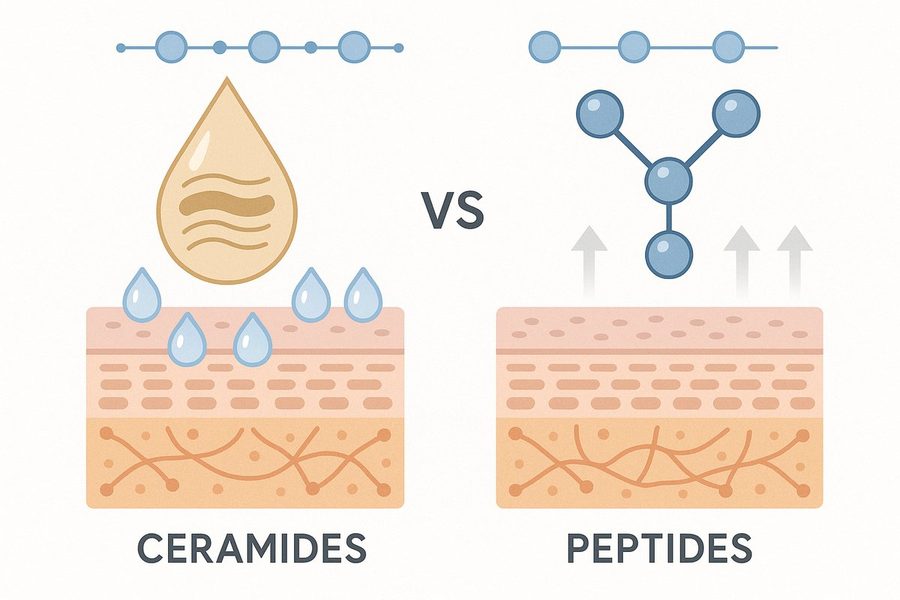
Ceramides are lipids naturally found in the outermost layer of skin. They help form the barrier that keeps moisture in and irritants out.
Benefits of ceramides in menopause skincare
– Reduce transepidermal water loss
– Support barrier repair
– Improve hydration and comfort
– Help calm tight, flaky, reactive skin
– Pair well with nearly every other skincare ingredient
Ceramide-containing moisturizers are widely used in dry and barrier-impaired skin because they reinforce the skin’s lipid structure. For menopausal skin that feels fragile or chronically dry, this is a big deal.
What Peptides Do
Peptides are short chains of amino acids used in skincare as signaling molecules. Depending on the peptide, they may be marketed to support collagen synthesis, improve firmness, soften expression lines, or help skin recover.
Potential peptide benefits
– Improve the look of fine lines
– Support firmer-looking skin
– Complement retinoids and antioxidants
– Offer anti-aging support with less irritation than some stronger actives
The catch is that peptide performance depends heavily on formulation, concentration, and delivery. Reviews of cosmetic peptides are promising, but they also note a key limitation: peptides often struggle with skin penetration.
Ceramides vs Peptides: The Biggest Difference
Ceramides are best for:
– Dryness
– Sensitivity
– Flaking
– Barrier damage
– Tightness after cleansing
– Skin that suddenly feels older and more reactive
Peptides are best for:
– Fine lines
– Loss of firmness
– Crepey texture
– Preventive anti-aging routines
– Skin that cannot tolerate stronger actives well
If your face feels uncomfortable, irritated, or dehydrated, barrier repair should come first.
Which Is Better for Menopausal Dry Skin?
Ceramides win this category easily.
Menopausal dry skin is usually a barrier problem as much as a hydration problem. Ceramides directly address that barrier weakness, especially when paired with cholesterol, fatty acids, glycerin, and squalane.
Peptides may improve the appearance of aging over time, but they usually do not provide the immediate comfort and resilience that ceramides do.
Which Is Better for Wrinkles and Firmness?
Peptides have the edge here, at least in theory and in many cosmetic formulations. If your main goal is smoother, firmer-looking skin, peptides are the more targeted option.
Dehydrated skin always looks more wrinkled. Sometimes a ceramide-rich moisturizer makes skin look younger faster because the barrier is repaired and the surface is better hydrated.
Do You Need Both?
Usually, yes.
A smart menopause skincare routine often uses ceramides in the moisturizer and peptides in a serum or treatment cream.
Best order to use them
Morning
– Gentle cleanser
– Peptide serum if using one
– Ceramide moisturizer
– Sunscreen
Evening
– Gentle cleanser
– Retinoid or peptide product, depending on tolerance
– Ceramide-rich moisturizer
What About Retinoids?
Retinoids still have stronger evidence for photoaging than most peptide products. But menopausal skin is often more reactive, so some women do better starting with ceramides and then adding either peptides or a low-strength retinoid later.
How to Choose Between Them
Choose ceramides first if:
– Your skin feels dry, itchy, or tight
– You are reacting to products more than before
– You want a safe daily basic
– Your barrier is damaged from over-exfoliation or retinoids
Choose peptides first if:
– Your barrier is already stable
– Your biggest concern is firmness or fine lines
– You want a gentler anti-aging ingredient than retinoids
– You already use a solid ceramide moisturizer
Bottom Line
In menopause skincare, ceramides are usually the foundation and peptides are the upgrade. If you have limited budget, buy the ceramide moisturizer first. Once your skin feels calm and hydrated, add peptides if firmness and wrinkles are still a major concern.
FAQ
Are ceramides or peptides better for menopausal skin?
Ceramides are usually the better starting point because menopausal skin commonly struggles with dryness and barrier weakness.
Can I use ceramides and peptides together?
Yes. They complement each other well and are often used in the same routine.
Are peptides worth it in menopause skincare?
They can be, especially for fine lines and firmness, but they are usually secondary to barrier repair.
Do ceramides help wrinkles?
Indirectly, yes. By improving hydration and barrier function, ceramides can make fine lines look less obvious.
What if I can only afford one product?
Buy a fragrance-free ceramide-rich moisturizer first. It will usually provide the biggest practical benefit.
References
– Merzel Sabovic et al., 2024, Skin Health and Disease
– Thornton, 2013, Dermato-Endocrinology
– Yong et al., 2025, Experimental Dermatology
– Lynde et al., 2023, Dermatology and Therapy
– Lupu et al., 2025, IJMS
Related Articles
- Estrogen Decline and Collagen Loss Explained
- Menopause Acne and Hormonal Skin Changes
- Longevity Skincare Routine for Women Over 40
- Best Ceramide Creams for Barrier Repair
- Peptides for Fine Lines: Do They Work?