

Ergothioneine and glutathione are both cellular antioxidants but with distinct mechanisms, tissue distributions, and supplemental characteristics. Glutathione is the cell’s primary intracellular antioxidant – synthesized in every cell, present in millimolar concentrations, broadly protective. Ergothioneine is a specialized dietary antioxidant with a dedicated import transporter (OCTN1), concentrated in high-oxidative-stress tissues, and not synthesized by humans. Both have roles in aging biology; they are complementary rather than competing. Oral glutathione has poor bioavailability; its precursors (NAC, glycine) are better supplementation strategies. Ergothioneine supplements and mushroom intake directly raise ET blood levels.
If you want to boost glutathione levels more directly, see our guide to glutathione supplement options in 2026.
- Glutathione (GSH) is synthesized de novo in every human cell from glycine, cysteine, and glutamate; it is the most abundant intracellular antioxidant (1-10 mM concentration in cells) and central to detoxification.
- Ergothioneine (ET) is not synthesized by humans and must be obtained from the diet (primarily mushrooms and some bacteria-fermented foods); it is transported into cells via the OCTN1 transporter and accumulates in specific high-stress tissues.
- Oral glutathione (reduced) has poor bioavailability due to GI degradation; acetylated glutathione (S-acetyl-glutathione) and liposomal formulations have modestly better evidence for systemic uptake.
- NAC (N-acetylcysteine) is the most effective oral glutathione-boosting strategy – it provides cysteine, the rate-limiting amino acid for GSH synthesis, and has extensive clinical evidence for raising intracellular GSH.
- ET and GSH are believed to have complementary roles: GSH handles broad cellular redox balance; ET provides specialized protection in mitochondria, red blood cells, and tissues where its OCTN1 transporter is concentrated.
Ergothioneine and glutathione both show up in conversations about antioxidants, cellular stress, and healthy aging. But they are not interchangeable. They work in different ways, behave differently in the body, and make sense in different contexts.
If you are choosing between them, the right question is usually not “Which one wins?” It is “What problem am I trying to solve?”
What Ergothioneine Does
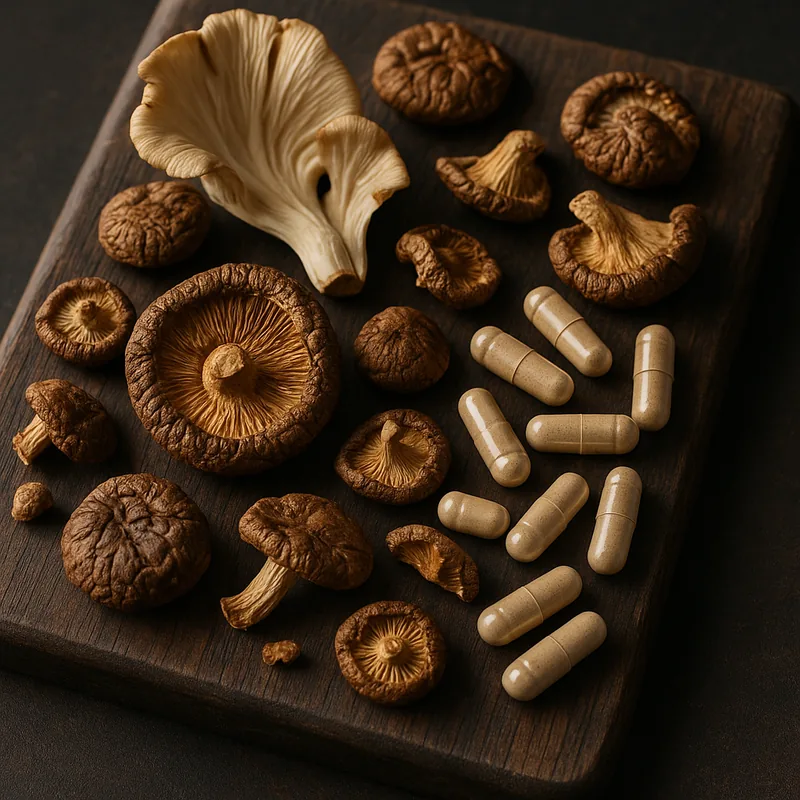
Ergothioneine is a sulfur-containing dietary compound made mainly by fungi and some microbes. Humans rely on food intake to get it, especially mushrooms. What makes it unique is the body has a dedicated transporter, OCTN1, that helps move it into tissues where oxidative stress is high.
This makes ergothioneine especially interesting for:
- healthy aging support
- long-term cellular protection
- brain and eye health discussions
- antioxidant coverage in people who do not eat mushrooms
What Glutathione Does
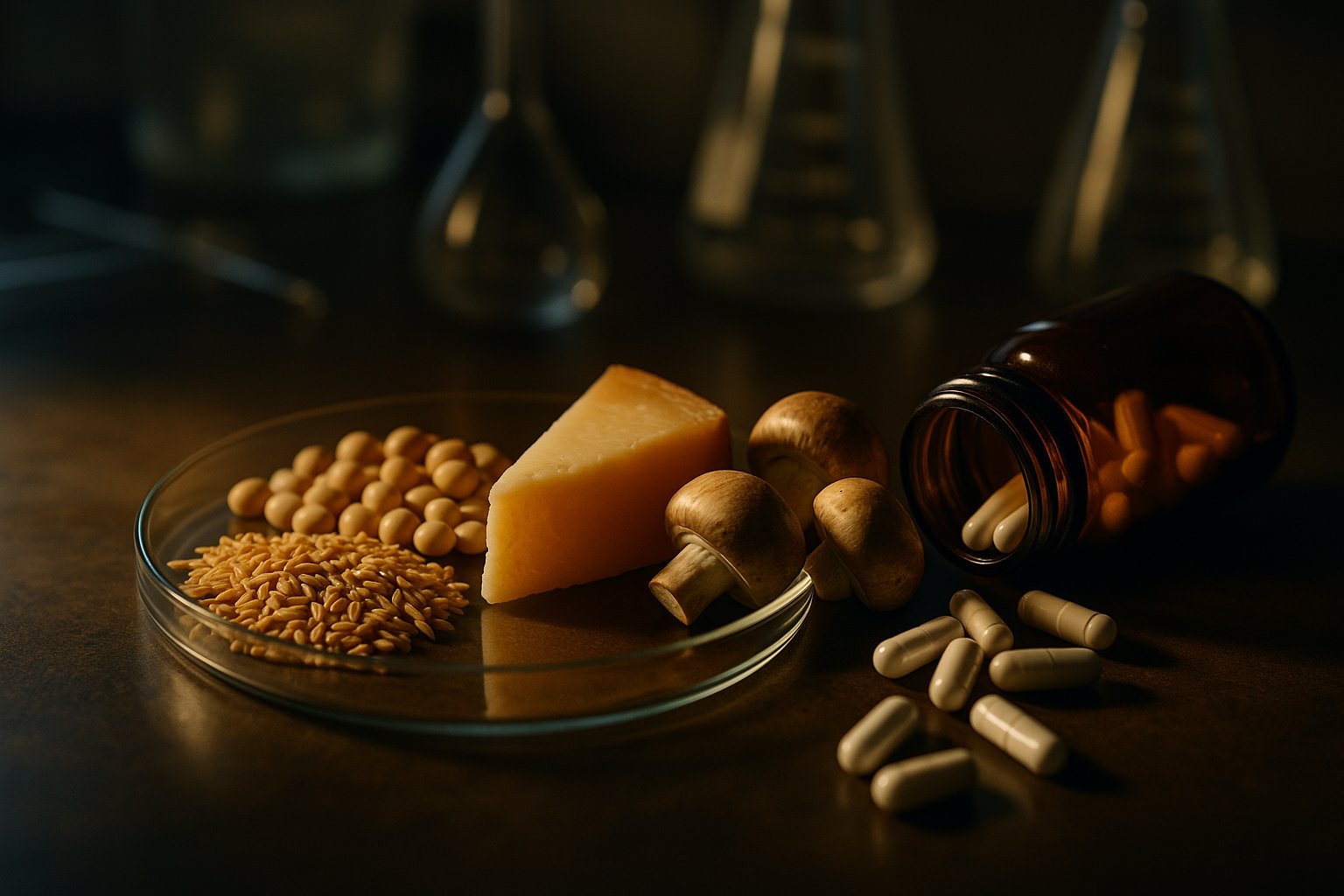
Glutathione is often called the body’s master antioxidant. Unlike ergothioneine, your body makes glutathione internally from amino acids, especially cysteine, glycine, and glutamate. It is deeply involved in detoxification, redox balance, and antioxidant recycling.
Glutathione is central to:
- liver detox pathways
- cellular antioxidant defense
- recycling vitamins C and E
- managing oxidative burden during illness or toxic exposure
Biggest Differences Between Ergothioneine and Glutathione
1. Source
- Ergothioneine: must come from food or supplements
- Glutathione: made inside the body, though production can decline or become stressed
2. Transport and targeting
Ergothioneine has a dedicated transporter and appears to accumulate in tissues under stress. Glutathione is everywhere in cellular metabolism, but oral glutathione can be less straightforward because absorption and breakdown are ongoing concerns depending on the form used.
3. Stability
Ergothioneine is notable for its stability. That is one reason researchers see it as distinct from more fragile antioxidants. Glutathione is biologically essential, but supplement delivery can be trickier, which is why some people use liposomal glutathione or NAC to support glutathione status instead.
4. Practical use case
Ergothioneine is often chosen for healthy-aging and foundational antioxidant support. Glutathione support is often chosen when someone is thinking about detoxification, oxidative overload, liver support, or immune stress.
Which One Is Better for Healthy Aging?
For broad healthy-aging support, ergothioneine may be the more interesting add-on because it is diet-derived, often under-consumed, and specifically discussed in the longevity-vitamin framework. Bruce Ames highlighted that angle in 2018, and earlier reviews by Cheah and Halliwell laid out its unusual antioxidant biology.
That said, glutathione remains absolutely central to basic cellular defense. It is not less important. It is just more endogenous and often approached indirectly through nutrition and precursor support.
When Ergothioneine Makes More Sense
Choose ergothioneine if you:
- want a low-friction healthy-aging supplement
- eat very few mushrooms
- are interested in brain, eye, and oxidative-stress resilience
- prefer a compound with a dedicated transporter and good stability
When Glutathione Support Makes More Sense
Choose glutathione-focused support if you:
- are targeting detox or liver support
- want to raise glutathione status through NAC, glycine, or liposomal glutathione
- are dealing with high oxidative burden from illness, exposure, or recovery
Can You Use Both Together?
Yes. In fact, that may be the smartest approach for some people. Ergothioneine and glutathione do not appear to be redundant. Ergothioneine can fit as a diet-derived protective nutrient, while glutathione remains a core intracellular antioxidant system.
A practical stack might include:
- ergothioneine for foundational support
- NAC or glycine to support glutathione production
- protein adequacy, selenium, and vitamin C for broader antioxidant systems
FAQ
Is ergothioneine stronger than glutathione?
Not really. They do different jobs. Ergothioneine is unusually stable and targeted, while glutathione is a central internal antioxidant system.
Should I take ergothioneine or NAC?
If your goal is glutathione support, NAC is often more direct. If your goal is broader healthy-aging support and mushroom-related nutrient coverage, ergothioneine may fit better.
Can ergothioneine raise glutathione?
It is better to think of ergothioneine as complementary to glutathione rather than a direct replacement or major glutathione booster.
Which is better for detox?
Glutathione support usually has the stronger detox connection. Ergothioneine is more often discussed for cellular protection and healthy aging.
Sources
- Cheah IK, Halliwell B. Ergothioneine; antioxidant potential, physiological function and role in disease. Biochim Biophys Acta. 2012.
- Ames BN. Prolonging healthy aging: Longevity vitamins and proteins. Proc Natl Acad Sci U S A. 2018.
- Rahman I et al. Glutathione in disease and aging. various reviews in oxidative stress literature.
This article is for informational purposes only and does not constitute medical advice. Consult your healthcare provider before starting any new supplement regimen.
Related Articles
- NAC and Glutathione Support Explained: How the Pathway Actually Works
- Best Ergothioneine Supplements for Healthy Aging and Antioxidant Support
- CoQ10 for Heart Health Support: Benefits, Limits, and Best Use Cases
Sources
- OseR, a bacterial redox sensor, regulates ergothioneine uptake via a Cys thiol switch, enhancing oxidative stress resistance and virulence. Redox biology. 2025. PMID: 40753760.
- Identification and characterization of a novel ergothioneine conjugate of raloxifene. Drug metabolism and disposition: the biological fate of chemicals. 2025. PMID: 39922060.
- Association of rheumatoid arthritis with ergothioneine levels in red blood cells: a case control study. The Journal of rheumatology. 2006. PMID: 17086603.
- Ergothioneine for Healthy Aging
- Ergothioneine: Mushrooms vs Capsules


Leave a Reply