
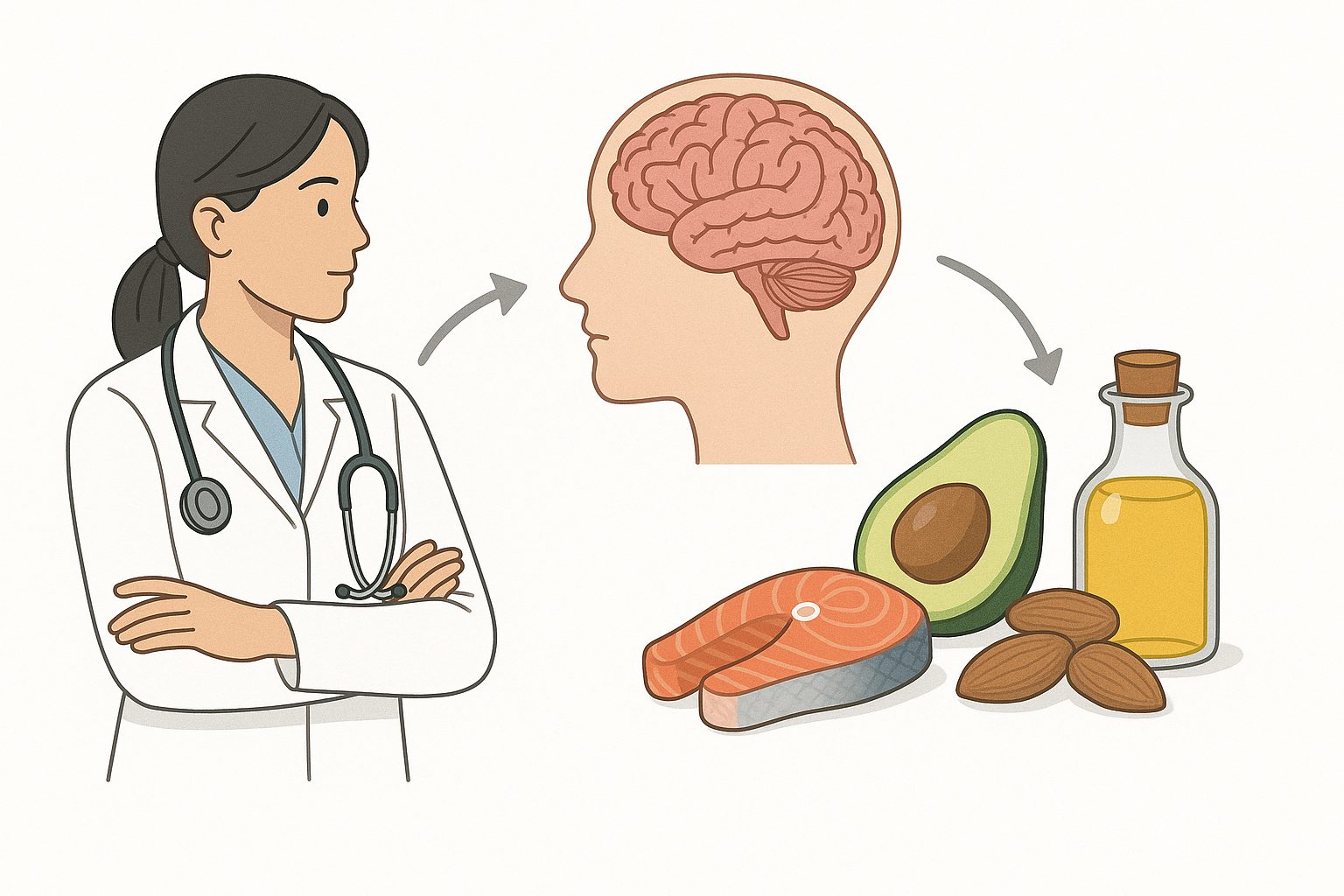
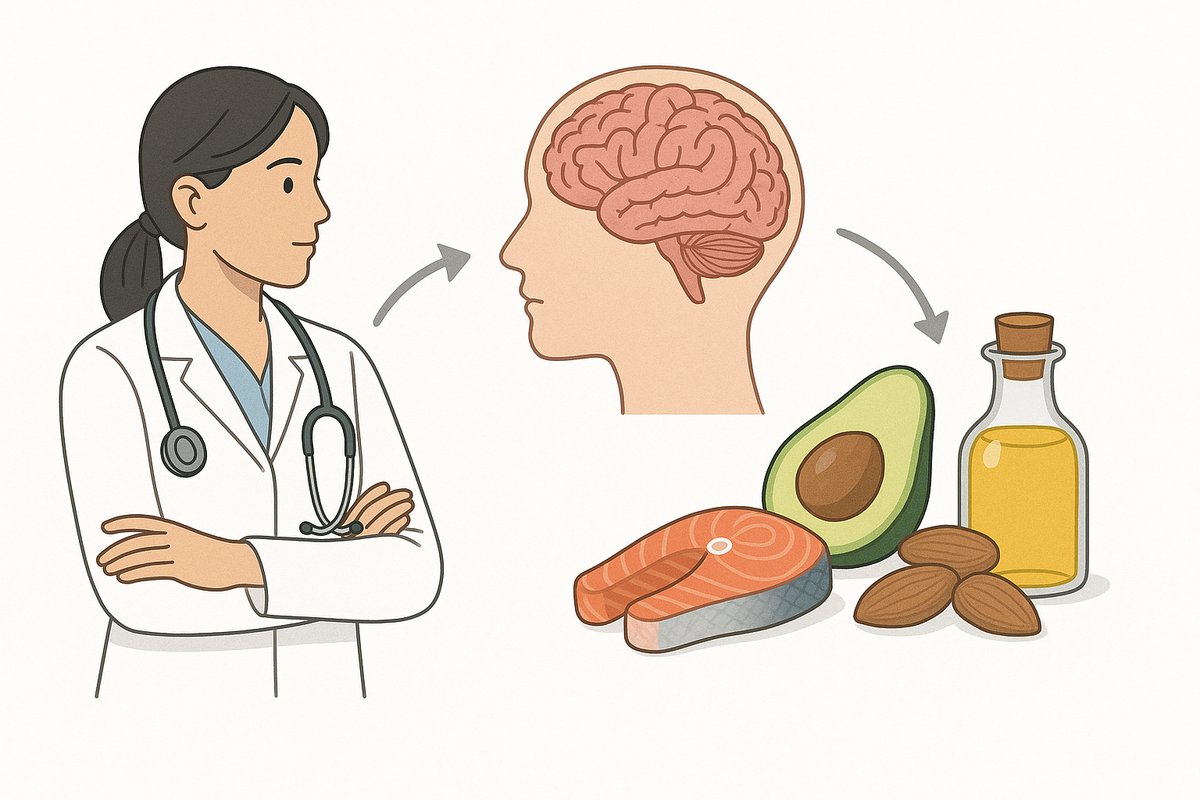
The relationship between dietary fat and mental health is more complex than any single headline can capture. Your brain is roughly 60% fat by dry weight. Cell membranes throughout the nervous system depend on fatty acids for structure and signaling. And yet decades of low-fat dietary advice may have inadvertently impacted mental health for some populations.
The relationship between dietary fat and mental health is complex and cannot be reduced to a simple good-fat versus bad-fat narrative. The clearest evidence concerns omega-3 fatty acids (EPA in particular) for depression, and trans fats, which are associated with increased depression risk. Saturated fat research in mental health is confounded. Low-fat diets may worsen mental health outcomes in some individuals. Overall dietary pattern (Mediterranean, for example) predicts mental health outcomes better than any individual fat type.
- EPA-dominant omega-3 supplementation (1-2 g EPA/day) has consistent meta-analytic support for reducing depressive symptoms as an adjunct to treatment.
- Industrial trans fats are associated with elevated depression risk in observational research (SUN cohort) and impair cell membrane function through pro-inflammatory pathways.
- The brain is approximately 60% fat by dry weight; adequate dietary fat intake supports cell membrane structure, neurotransmitter function, and myelin maintenance.
- Very low-fat diets (below 20% of calories) have been associated with increased irritability and depressive symptoms in some older studies, though causality is difficult to establish.
- Overall dietary patterns (Mediterranean diet rich in olive oil, fish, and nuts) consistently predict better mental health outcomes in observational research.
The Low-Fat Era and Its Mental Health Blind Spot
From the 1970s through the early 2000s, public health messaging aggressively promoted low-fat diets. While this was primarily aimed at cardiovascular disease, the mental health implications were largely ignored.
What limited evidence suggests:
- A handful of studies from the 1990s and 2000s associated very low-fat diets (below 20% of calories from fat) with increased irritability, hostility, and depression symptoms in some individuals.
- A 1998 study in Journal of Affective Disorders (Wells et al.) found that low-cholesterol diets were associated with increased depressive symptoms in women.
- The mechanism is plausible: inadequate fat intake could impair cell membrane fluidity, neurotransmitter receptor function, and myelin maintenance.
Important caveat: These studies are small, old, and observational. Nobody is arguing that high-fat diets cure depression. The point is that adequate fat intake from quality sources appears important for normal brain function.
Trans Fats: The Clearest Villain
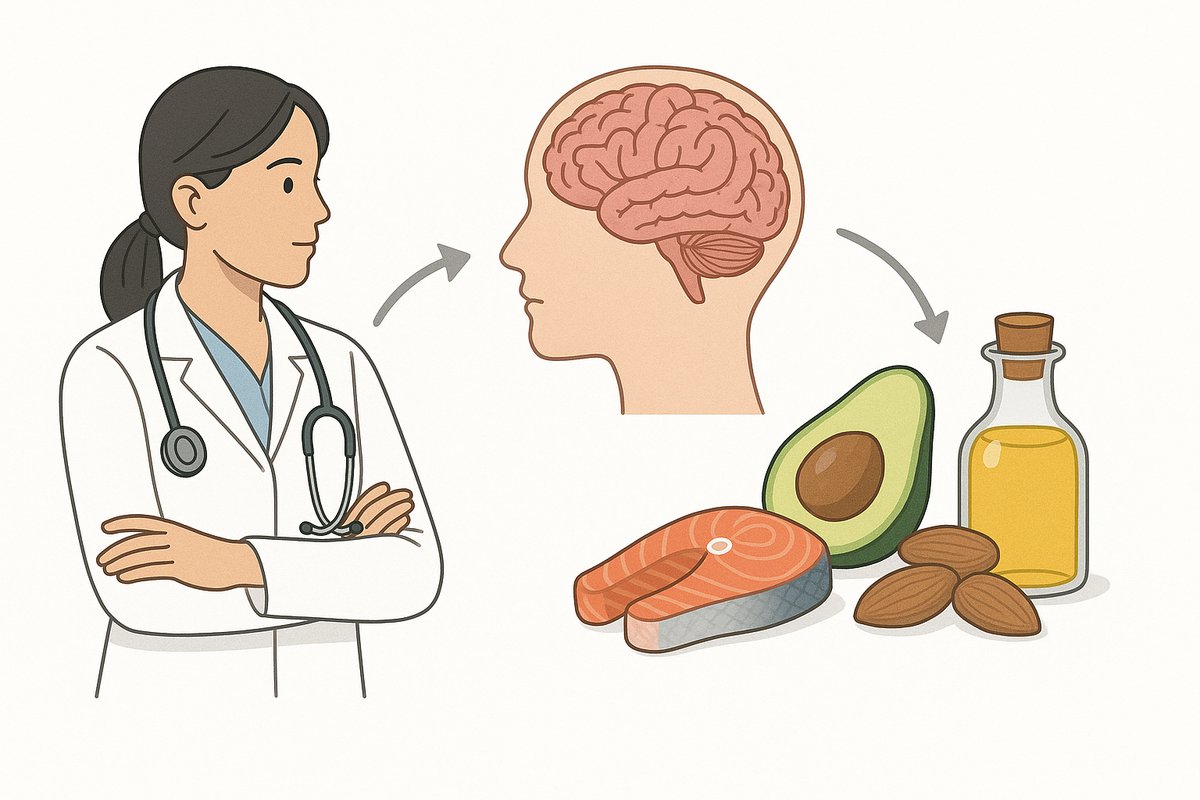
This is the area with the most consistent evidence:
- The SUN Project (Sánchez-Villegas et al., 2011, PLOS One) followed 12,059 Spanish university graduates for 6 years. It found that higher trans fat intake was significantly associated with depression risk (HR 1.48 for the highest vs. lowest quintile).
- The same study found olive oil and polyunsaturated fat intake were inversely associated with depression risk.
- Trans fats increase systemic inflammation (elevated CRP, IL-6), impair endothelial function, and disrupt cell membrane composition — all mechanisms with plausible links to depression.
Practical implication: Eliminating industrial trans fats (partially hydrogenated oils) from your diet is one of the clearest dietary steps you can take for both cardiovascular and mental health. The US banned artificial trans fats in 2020, but small amounts can still appear in processed foods — checking labels remains worthwhile.
The Omega-6 to Omega-3 Ratio
This is frequently discussed in mental health nutrition circles, and the basic science is legitimate even if the specific “ideal ratio” is debated:
- Western diets typically provide omega-6 to omega-3 ratios of 15:1 to 20:1
- Ancestral diets are estimated at roughly 1:1 to 4:1
- Higher omega-6/omega-3 ratios promote a more pro-inflammatory state
- Several observational studies associate higher ratios with increased depression risk
The nuance:
- Not all omega-6 fats are harmful. Linoleic acid from whole food sources (nuts, seeds) is different from omega-6 in heavily processed seed oils.
- Reducing omega-6 intake drastically is impractical and probably unnecessary. Increasing omega-3 intake (fatty fish, fish oil, flax, chia, walnuts) is more actionable and better supported.
- The ratio framework is a useful heuristic, not a precise clinical target.
Saturated Fat: Mixed and Confounded
Headlines claiming “saturated fat causes depression” or “saturated fat is fine for your brain” are both oversimplifications:
- Some observational studies associate high saturated fat intake with worse mental health outcomes, but these findings are heavily confounded — people eating lots of saturated fat tend to eat more ultra-processed food overall.
- The brain does contain saturated fatty acids and uses them structurally.
- A 2014 BMC Psychiatry study (Sánchez-Villegas et al.) found that among the different fat types, only trans fats had a clear deleterious association with depression. Saturated fat findings were inconsistent.
Honest take: Moderate saturated fat intake from whole food sources (eggs, dairy, coconut, meat) is probably fine for mental health in the context of an otherwise good diet. The problem is when saturated fat consumption comes primarily from ultra-processed food.
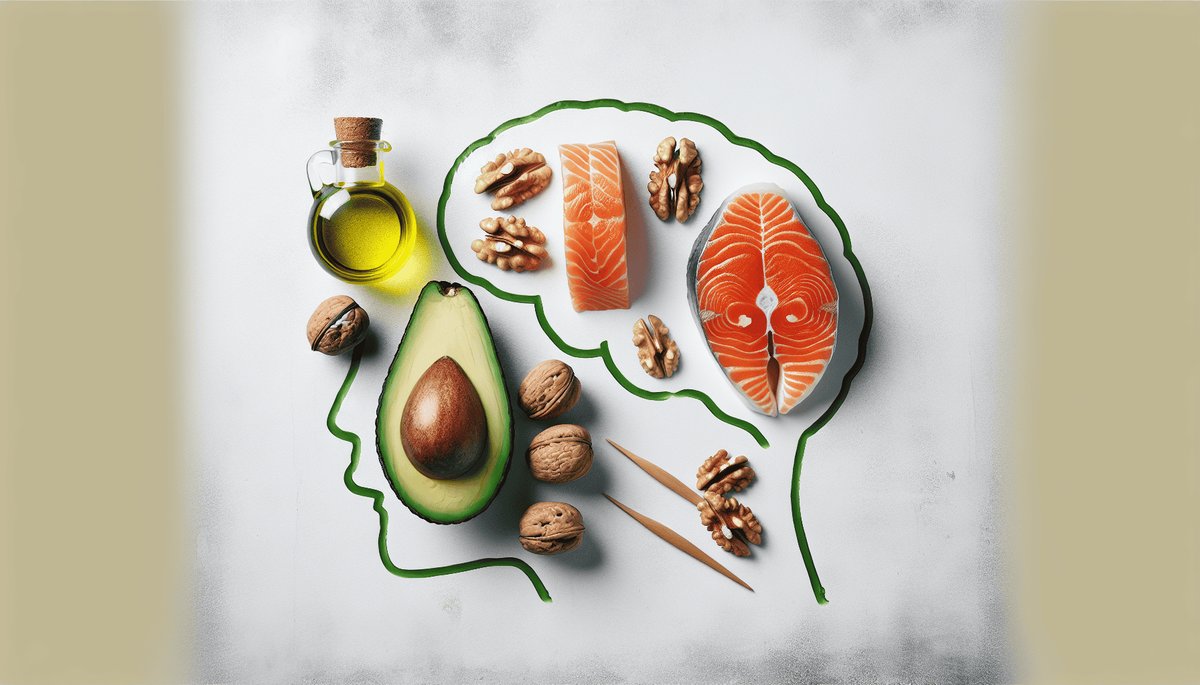
Ketogenic and High-Fat Diets: Early and Mostly Theoretical
Ketogenic diets have generated significant interest for neurological and psychiatric conditions:
- The ketogenic diet is well-established for epilepsy (since the 1920s).
- Emerging case reports and small pilot studies suggest potential benefit for bipolar disorder, schizophrenia, and possibly depression.
- A 2024 pilot trial at Stanford (Sethi et al., Psychiatry Research) found improvements in metabolic and psychiatric measures in people with serious mental illness on a ketogenic diet, but the study was small and uncontrolled.
- The proposed mechanisms include improved mitochondrial function, reduced neuroinflammation, stable blood glucose, and increased GABA/glutamate ratio.
Honest assessment: This is genuinely interesting early science. It is not a clinical recommendation. Ketogenic diets are difficult to maintain, can cause side effects, and the psychiatric evidence base is years away from being actionable for most people.
[ANECDOTAL EVIDENCE] Online communities (Reddit, keto forums) contain numerous reports of improved mood, reduced anxiety, and better mental clarity on ketogenic diets. Some of these may reflect genuine neurometabolic effects. Others likely reflect improved blood sugar stability, weight loss confidence, or the general psychological benefit of taking active control of one’s health. Without controlled studies, it is impossible to know the relative contributions.
MCT Oil: Brain Fuel Marketing vs. Evidence
Medium-chain triglycerides are marketed as “brain fuel” because they can be converted to ketones even without a full ketogenic diet:
- MCTs do produce ketones, which the brain can use for energy
- Some evidence for cognitive benefit in Alzheimer’s disease and mild cognitive impairment
- No meaningful clinical trial data for depression or anxiety
- Expensive relative to other fat sources
Practical take: MCT oil is fine if you enjoy it in coffee or smoothies. Do not buy it expecting it to treat mood disorders.
A Practical Fat Framework for Mental Health
- Eat fatty fish 2–3 times per week (salmon, sardines, mackerel, anchovies) or supplement with EPA-dominant omega-3s
- Use olive oil as your primary cooking/dressing fat — the SUN Project and Mediterranean diet evidence supports this
- Include nuts and avocados regularly
- Eliminate industrial trans fats — check labels for partially hydrogenated oils
- Do not fear moderate saturated fat from whole food sources
- Reduce highly processed seed oil-heavy foods — not because seed oils are poison, but because the foods containing them are usually ultra-processed
- Get adequate total fat — at least 25–30% of calories, likely more for most people
The Bottom Line
Your brain needs fat. The type and quality matter more than the total amount. Trans fats hurt. Omega-3s help. Olive oil and fatty fish are consistently associated with better mental health outcomes. Extreme low-fat diets may not serve your brain well. And the emerging high-fat/ketogenic research is interesting but not yet clinical-grade for psychiatric applications.
This article is for educational purposes and does not constitute medical advice.
FAQ
What dietary fats are best for mental health?
Omega-3 fatty acids—especially EPA from fatty fish or fish oil—have the strongest clinical evidence for depression support. Olive oil and monounsaturated fats are associated with better mental health outcomes in observational research. Industrial trans fats are the most clearly harmful category for mental health. Saturated fat research is mixed and confounded by food quality.
Do omega-3s help with depression?
Yes, with caveats. EPA-dominant omega-3 formulations (at least 1 gram EPA per day) show consistent modest benefit for depression as an adjunct to standard treatment. The effect is not large enough to replace antidepressants for moderate-severe depression, but it is real and well-supported by meta-analyses. DHA-dominant formulations show weaker effects.
Can low-fat diets cause depression?
Extremely low-fat diets may impair brain function by reducing the availability of fat-soluble nutrients and essential fatty acids needed for cell membrane integrity. Some older research associated very low-fat intake with increased irritability. However, most mental health research focuses on fat type rather than total fat restriction; the concern applies to extreme low-fat diets, not simply reducing excess fat.
Should I take fish oil for mental health?
EPA-dominant fish oil (at least 1 gram EPA per day) is a reasonable adjunctive approach for people with depression or mood instability, particularly when combined with professional treatment. For anxiety, evidence is weaker. For general mental wellbeing in healthy people without mood disorders, evidence is insufficient to make a universal recommendation, though fish oil has a good overall safety profile.
Related Articles
- Creatine for Cognitive Health: What the Research Says About Memory, Focus, and Brain Energy
- Best Metabolic Health Supplements in 2026: Blood Sugar, Insulin Sensitivity Fat Metabolism
- Omega-3s for Heart Health: REDUCE-IT and Beyond — What the Trials Actually Show
- Best Omega-3 for Brain Health: What to Look for in EPA and DHA
- Best Creatine for Brain Health: What to Buy and Why Monohydrate Still Wins
Sources
- Relationship Between Insoluble Dietary Fiber Intake and Non-Restorative Sleep in Japanese Adults: A Cross-Sectional Analysis of the NHNS Japan, 2014 and 2018. Nutrients. 2025. PMID: 41374039.
- Dietary Antioxidants and Cardiovascular Health: Insights from a 14-Year UK Biobank Trajectory Analysis. Antioxidants & redox signaling. 2026. PMID: 41656172.
- Adaptogens in Fatigue (2009)
- Omega-3s for Depression: EPA Evidence
- Dark Chocolate and Mood




Leave a Reply