

Published March 2026 | Supplements & Wellness
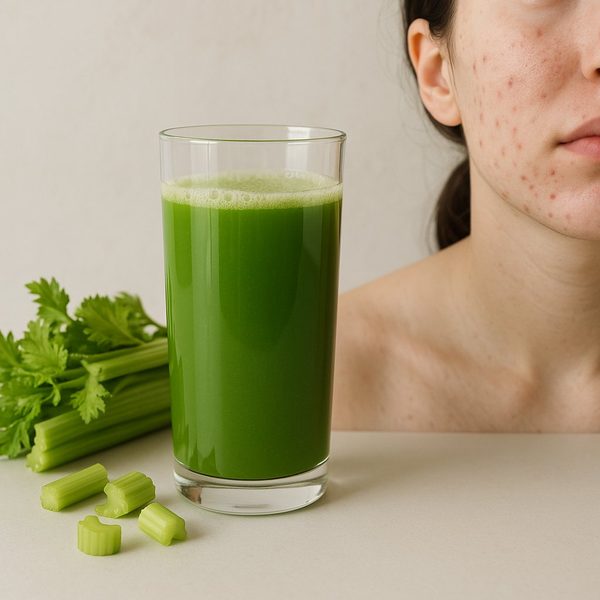
Celery juice for acne became a viral wellness trend largely through the promotion of Anthony William (the “Medical Medium”), who recommends 16 oz of fresh celery juice on an empty stomach every morning for a wide range of health conditions. His claims are not based on clinical research, and he holds no medical or nutritional credentials.
That said, dismissing everything popular isn’t helpful either. Let’s look at what we actually know.
Quick Answer: No clinical evidence supports celery juice as an acne treatment. While celery contains flavonoids with mild anti-inflammatory activity in lab settings, no human trials have tested it for acne. Perceived improvements from celery juice likely reflect hydration, dietary displacement of sugar, or concurrent lifestyle changes—not a direct effect of celery itself.
Key Takeaways
- No published clinical trials exist studying celery juice specifically for acne.
- Celery contains luteolin and apigenin (anti-inflammatory in lab studies), but in vitro effects don’t predict clinical outcomes.
- Reports of clearer skin likely reflect hydration, reduced sugar intake, or placebo effect.
- If celery juice replaces a sugary morning drink, the dietary change deserves the credit-not the celery.
- Celery juice is safe for most people but is not an evidence-based acne treatment.
The clinical evidence
There are no published clinical trials studying celery juice for acne. Not small ones, not preliminary ones. Zero.
This isn’t a case of “the evidence is mixed.” The evidence simply doesn’t exist.
What celery actually contains
Celery is a vegetable. It contains:
- Luteolin and apigenin – flavonoids with anti-inflammatory and antioxidant properties in lab (in vitro) studies
- Polyacetylenes – compounds with anti-inflammatory activity in cell studies
- Potassium, vitamin K, folate – standard vegetable nutrients
- Water – celery is about 95% water
The in vitro caveat
Lab studies show that luteolin and apigenin can reduce inflammatory markers. But in vitro activity does not predict clinical benefit from drinking celery juice. The concentrations used in cell studies are typically far higher than what would reach relevant tissues from drinking juice. This is the most common error in “superfood” reasoning.
Why some people might feel better
Celery juice has a genuinely passionate community of believers. People report clearer skin, better digestion, more energy, and reduced bloating. Possible explanations:
Hydration
Drinking 16 oz of liquid first thing in the morning is hydrating. Many people are mildly dehydrated, and improved hydration can improve skin appearance.
Dietary displacement
If celery juice replaces a sugary coffee drink, high-glycemic breakfast, or juice with added sugar, the dietary improvement could explain skin changes. High-glycemic diets have evidence linking them to acne (a 2007 study by Smith et al. in the American Journal of Clinical Nutrition found that a low-glycemic diet reduced acne).
Increased vegetable intake
Many people starting celery juice also begin eating more vegetables generally. More vegetables = more fiber, more micronutrients, less junk food.
Placebo and expectation
Skin conditions are notoriously responsive to placebo. When someone commits to a daily health ritual they believe in, perceived improvement is common.
Concurrent lifestyle changes
People who start celery juice often simultaneously improve sleep, reduce alcohol, or add other healthy habits. Attributing the improvement to celery specifically is impossible without a controlled study.
The Medical Medium problem
Anthony William claims to receive medical information from a spirit entity. His recommendations – including celery juice – are not derived from clinical research, peer review, or medical training. Some of his claims (e.g., that celery juice contains “sodium cluster salts” that are not identified by conventional chemistry) are scientifically meaningless.
This doesn’t mean celery is bad for you. It means the specific health claims attached to celery juice lack any credible basis.
Is celery juice harmful?
For most people, no. It’s a vegetable juice. Potential concerns:
- Oxalate content – relevant for people with kidney stone history
- Pesticide residues – celery is consistently on the “Dirty Dozen” list; organic may be preferable for daily juicing
- Medication interactions – celery contains furanocoumarins that can interact with some medications (similar to grapefruit); worth checking with a pharmacist
- Cost and time – daily juicing requires buying a lot of celery and cleaning a juicer
Bottom line
Celery juice is a vegetable. It’s not harmful for most people. But the acne claims attached to it are entirely unsupported by clinical evidence. If someone likes celery juice and it fits their routine, that’s fine. If they’re choosing it over proven acne treatments because of social media claims, that’s a problem.
The most honest statement: we don’t know if celery juice helps acne, because nobody has studied it.
This article is for informational purposes only and does not constitute medical advice.
Frequently Asked Questions
Does celery juice clear acne?
There is no clinical evidence that celery juice clears acne. No trials have tested it for this purpose. Anecdotal reports likely reflect other changes like hydration, reduced sugar, or overall diet improvement.
How long does celery juice take to work for acne?
Because no evidence supports celery juice for acne, there is no researched timeline. If you’re trying it, any skin change over weeks would be impossible to attribute to celery specifically without controlling for other dietary and lifestyle factors.
Is celery juice better than other acne supplements?
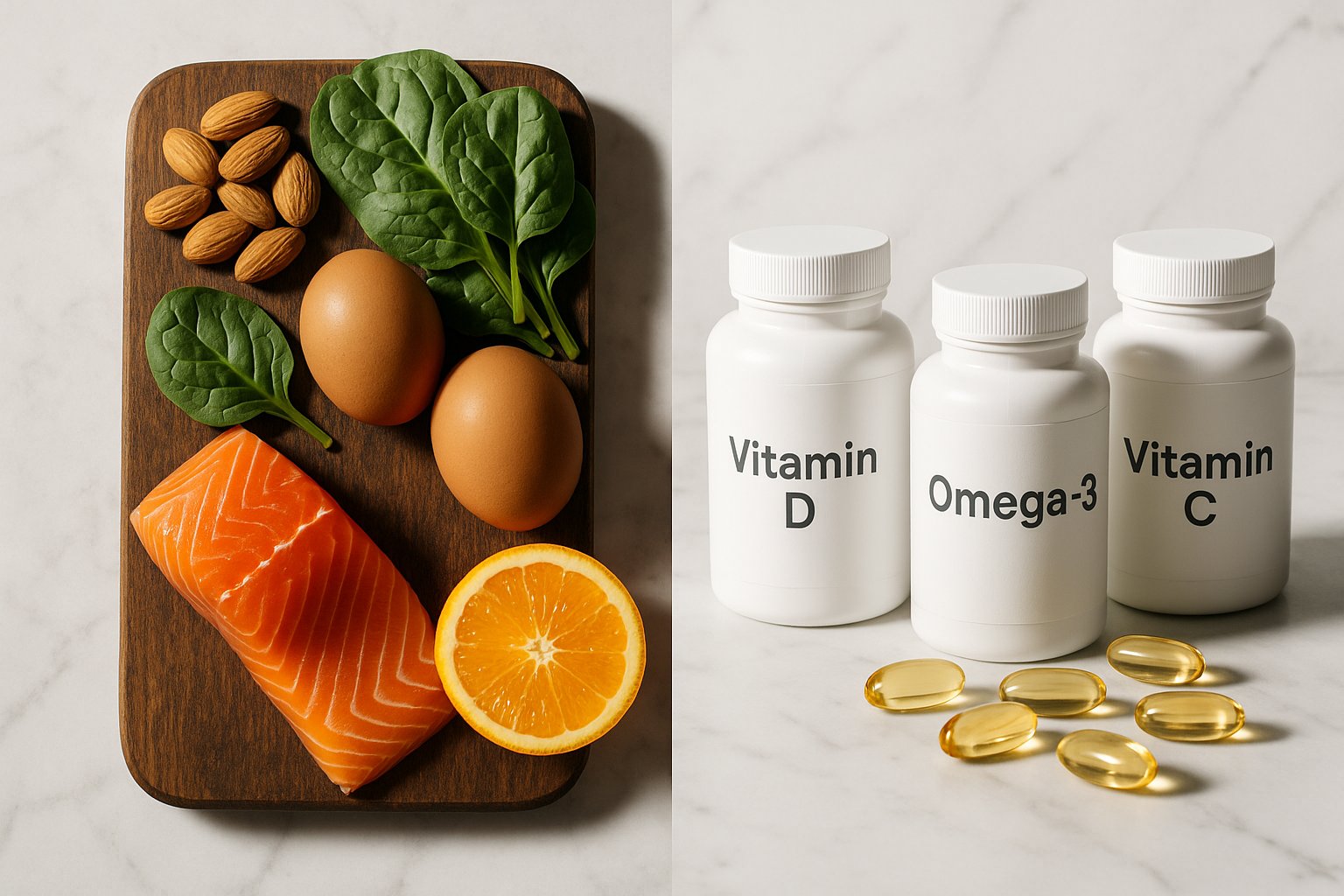
No. Supplements with actual clinical evidence for acne include omega-3 fatty acids, probiotics, and zinc. Celery juice has none of that evidence base.
Can celery juice make acne worse?
Unlikely for most people-it’s a vegetable juice. However, people sensitive to furanocoumarins or with kidney stone history should be cautious with high regular intake.
Related Articles
- Mullein vs. NAC for Lung Support: Which Has Better Evidence?
- Tart Cherry Juice for Arthritis and Joint Pain: Evidence Review for 2026
- Best Mullein Leaf and NAC Supplements for Lung Support in 2026: What the Evidence Actually Shows
- Best Supplements for Acne in 2026: What the Evidence Actually Says
Sources
- A Preliminary Analysis of the Influence of Elderberry Juice Consumption on Thyroid Metabolism in Mice and Humans Fed High-Fat Diets. Nutrients. 2025. PMID: 40004941.
- Mixed Berry Juice and Cellulose Fiber Have Differential Effects on Peripheral Blood Mononuclear Cell Respiration in Overweight Adults. Nutrients. 2023. PMID: 37049549.
- Neuroprotective effects of pomegranate (Punica granatum L.) juice and seed extract in paraquat-induced mouse model of Parkinson’s disease. BMC complementary medicine and therapies. 2021. PMID: 33902532.
- Essential micronutrients and biguanides (metformin) synergistic and antagonistic interactions on neurocognitive outcomes in type two diabetes mellitus: a systematic review of preclinical and clinical evidence. Frontiers in endocrinology. 2026. PMID: 41782745.
- Neuroprotective effects of a variety of pomegranate juice extracts against MPTP-induced cytotoxicity and oxidative stress in human primary neurons. Oxidative medicine and cellular longevity. 2013. PMID: 24223235.



Leave a Reply