Best Performance & Recovery Supplements in 2026

The most evidence-backed performance and recovery supplements for athletes are creatine monohydrate, caffeine, beta-alanine, dietary nitrates (beetroot), and protein (whey or plant-based). Creatine and caffeine have the strongest research support across multiple performance domains. Recovery is best supported by adequate protein intake (1.6-2.2 g/kg/day), sleep, and controlled training load. Most other supplements marketed for performance have weaker evidence or work only in narrow use cases.
- Creatine monohydrate (3-5 g/day) increases muscle phosphocreatine stores, improving high-intensity power output and recovery; the best-supported performance supplement overall.
- Caffeine (3-6 mg/kg body weight) improves endurance, strength, and cognitive performance; tolerance develops with chronic use so strategic timing matters.
- Beta-alanine buffers hydrogen ions in muscle, delaying fatigue during efforts lasting 1-4 minutes; produces tingling (paresthesia) that is harmless but distinctive.
- Dietary nitrates from beetroot juice increase nitric oxide availability, reducing oxygen cost of exercise; useful for endurance athletes.
- Recovery supplements with actual evidence: protein (post-exercise muscle protein synthesis), tart cherry juice (reduced DOMS), omega-3s (reduced inflammation), and creatine (glycogen resynthesis support).
The gap between a good workout and a great training program often comes down to recovery. You don’t get stronger during the workout — you get stronger during the repair process afterward. Performance supplements help you train harder, while recovery supplements help you bounce back faster and more completely.
This guide covers the most clinically validated compounds for both sides of the equation.

Performance Supplements: Train Harder
Creatine Monohydrate
The most studied sports supplement in history with over 500 peer-reviewed publications. Creatine saturates your phosphocreatine system, enabling faster ATP regeneration during high-intensity efforts. A 2017 meta-analysis showed creatine increases strength by 8%, power output by 14%, and lean body mass by 1–2 kg over 4–12 weeks. Clinical dose: 3–5 g/day (no loading phase necessary). Best for: strength, power, sprint performance, and increasingly recognized cognitive benefits.
Beta-Alanine
Increases intramuscular carnosine, buffering hydrogen ions that cause the burning sensation during intense exercise. Most effective for efforts lasting 1–4 minutes (rowing, 400–800m running, high-rep sets). A meta-analysis in Amino Acids showed a median improvement of 2.85% in exercise performance. Clinical dose: 3.2–6.4 g/day in divided doses (to minimize tingling paresthesia). Best for: muscular endurance and repeated high-intensity bouts.
Caffeine
Enhances performance through adenosine receptor blockade, increased catecholamine release, and reduced perceived exertion. One of the most consistently effective ergogenic aids across all exercise modalities. Clinical dose: 3–6 mg/kg body weight, taken 30–60 minutes before exercise. Best for: endurance, strength, power, and cognitive focus during training.
Citrulline Malate
Boosts nitric oxide production for improved blood flow and reduces ammonia accumulation during exercise. A 2019 meta-analysis found significant improvements in both aerobic and anaerobic performance. Clinical dose: 6–8 g taken 30–60 minutes pre-exercise. Best for: resistance training volume (more reps before failure) and endurance exercise.
Recovery Supplements: Bounce Back Faster
Tart Cherry Extract
Rich in anthocyanins that reduce exercise-induced inflammation and oxidative stress. Multiple RCTs show tart cherry supplementation reduces muscle soreness by 13–23%, accelerates strength recovery, and lowers inflammatory markers (CRP, IL-6) after intense exercise. Clinical dose: 480–960 mg concentrated extract or 8–12 oz juice, taken before and after exercise. Best for: reducing DOMS (delayed onset muscle soreness) and accelerating recovery between sessions.
Essential Amino Acids (EAAs)
All nine essential amino acids stimulate muscle protein synthesis more effectively than BCAAs alone. The leucine trigger works best in the context of all EAAs — BCAAs alone may actually impair recovery by creating an amino acid imbalance. Clinical dose: 6–12 g around training. Best for: maximizing muscle protein synthesis, especially during fasted training or caloric restriction.
Omega-3 Fatty Acids (EPA/DHA)
Beyond the general anti-inflammatory benefits covered in our omega-3 guide, high-dose EPA+DHA (2–4 g/day) specifically reduces exercise-induced muscle damage markers and improves muscle protein synthesis response to training. A 2020 study in the American Journal of Clinical Nutrition found omega-3 supplementation enhanced anabolic signaling in muscle tissue. Best for: chronic inflammation management and long-term training adaptation support.
Magnesium
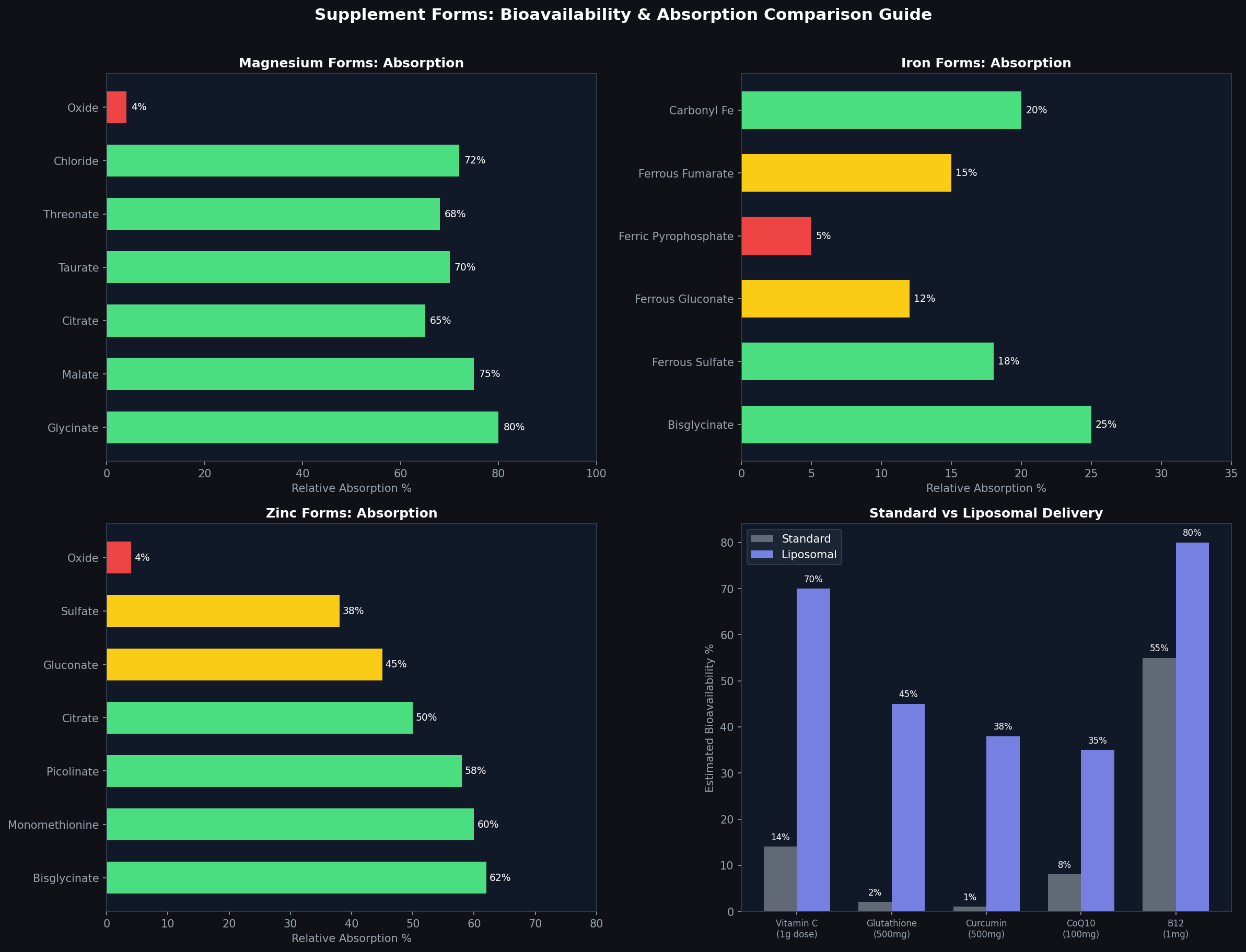
Involved in 600+ enzymatic reactions including ATP production, muscle contraction, and protein synthesis. Up to 50% of Americans are magnesium insufficient. Intense exercise increases magnesium requirements through sweat loss and metabolic demand. Clinical dose: 200–400 mg elemental magnesium (glycinate or threonate forms preferred for absorption and sleep support). Best for: sleep quality, muscle relaxation, and electrolyte replenishment.
Ashwagandha (KSM-66®)
An adaptogen that reduces cortisol (stress hormone) levels by 20–30% in clinical studies. Chronically elevated cortisol impairs recovery, promotes muscle breakdown, and disrupts sleep. A 2015 study in the Journal of the International Society of Sports Nutrition found KSM-66 improved strength, recovery, and body composition in resistance-trained men. Clinical dose: 300–600 mg/day. Best for: stress management, sleep quality, and hormonal optimization for recovery.
Best Performance & Recovery Supplements by Category
Best Creatine: Thorne Creatine Monohydrate
NSF Certified for Sport, pure creatine monohydrate with no fillers. Micronized for better mixability. 5 g per scoop. Trusted by professional athletes and sports organizations. Best for: the gold-standard creatine from a trusted manufacturer.
Best EAA Supplement: Kion Essential Amino Acids
All nine essential amino acids in research-backed ratios with optimal leucine content. Clean-sourced, naturally flavored, no artificial ingredients. Formulated by a team with deep exercise physiology backgrounds. Best for: intra-workout or peri-workout amino acid support.
Best Tart Cherry: Cheribundi Tart Cherry Juice Concentrate
Cold-pressed Montmorency tart cherry concentrate delivering anthocyanins equivalent to ~50 tart cherries per serving. Used in multiple published clinical trials. No added sugars. Best for: evidence-matched tart cherry dosing from the brand used in research.
Best All-in-One Recovery: Momentous Recovery
Combines tart cherry, curcumin (as HydroCurc®), and omega-3s in one formula. NSF Certified for Sport. Designed to address multiple recovery pathways — inflammation, oxidative stress, and muscle repair — simultaneously. Best for: simplifying recovery supplementation into one product.
Best Adaptogen for Athletes: Nootropics Depot KSM-66 Ashwagandha
600 mg of the full-spectrum KSM-66® extract per serving — the exact form and dose used in most positive clinical trials. Third-party tested with published COAs. Best for: cortisol management and recovery optimization.
Best Pre-Workout Stack: Legion Pulse
Contains citrulline malate (8 g), beta-alanine (3.6 g), betaine (2.5 g), and caffeine (350 mg) — all at clinical doses with a fully transparent label. No proprietary blends. NSF Certified for Sport options available. Best for: comprehensive pre-workout performance support.
Recovery Protocol: Putting It Together
Immediately post-workout:
- 6–12 g EAAs or 30–40 g protein
- 8 oz tart cherry juice or 480 mg extract
Daily (with meals):
- 3–5 g creatine monohydrate
- 2–3 g EPA+DHA
- 300–600 mg ashwagandha (KSM-66)
Before bed:
- 200–400 mg magnesium glycinate

Frequently Asked Questions
Is creatine safe for long-term use?
Yes. Creatine monohydrate has been studied for over 30 years with no evidence of harm to kidneys, liver, or any organ system in healthy individuals. The International Society of Sports Nutrition’s 2017 position stand confirms its safety for long-term use. It may transiently raise creatinine levels (a kidney marker), but this is a benign measurement artifact, not kidney damage.
Should I take BCAAs or EAAs?
EAAs are superior. BCAAs (leucine, isoleucine, valine) are three of the nine essential amino acids but cannot drive complete muscle protein synthesis alone. A 2017 study in Frontiers in Physiology found BCAAs actually decreased muscle protein synthesis by 22% compared to a complete EAA mixture due to the depletion of other essential aminos.
How important is sleep for recovery compared to supplements?
Sleep is far more important than any supplement. Growth hormone release, tissue repair, immune function, and cognitive consolidation all peak during deep sleep. No supplement can compensate for consistently poor sleep. Prioritize 7–9 hours of quality sleep, then layer supplements on top.
Can I take all these supplements together?
Yes. The compounds listed here don’t have known negative interactions with each other. However, start by adding one at a time to assess individual response and tolerance. Taking everything at once makes it impossible to identify what’s helping.
Do recovery supplements work for older adults?
Absolutely — and arguably more so. Recovery capacity declines with age due to reduced anabolic hormone levels, increased systemic inflammation, and slower protein synthesis. Creatine, omega-3s, magnesium, and tart cherry are particularly valuable for adults over 50 who want to maintain an active training program.
The Bottom Line
Performance and recovery supplementation is most effective when it’s systematic: clinical doses, consistent timing, and layered on top of adequate sleep, nutrition, and programming. Creatine, EAAs, tart cherry, and omega-3s form the evidence-based core — everything else is optimization on top of that foundation.
This article is for informational purposes only and does not constitute medical advice. Consult your healthcare provider before starting any new supplement regimen.
Related Articles
- Best Colostrum Supplements in 2026: Gut, Immunity, Recovery, and What the Evidence Really Says
- Best Nitric Oxide Supplements in 2026: Boost Blood Flow, Performance & Heart Health
- Best Astaxanthin Supplements in 2026: Eye, Skin, and Recovery Support Without the Hype
- Best Supplements for Blood Pressure in 2026: What the Evidence Actually Supports
- Best Supplements for Blood Sugar Support in 2026: Beyond Berberine
Sources
- A comprehensive review of the physiology and evidence base to guide the use of ergogenic and medical supplements for enhanced cycling performance. Journal of the International Society of Sports Nutrition. 2026. PMID: 41685663.
- Evidence-based post-exercise recovery strategies in basketball. The Physician and sportsmedicine. 2016. PMID: 26512912.
- Water immersion recovery for athletes: effect on exercise performance and practical recommendations. Sports medicine (Auckland, N.Z.). 2013. PMID: 23743793.
- Nutrition Support on GLP-1 Therapy (2025)
- Minimizing Muscle Loss: Review (2024)