
Best Eyeshadow for Contact Lens Wearers
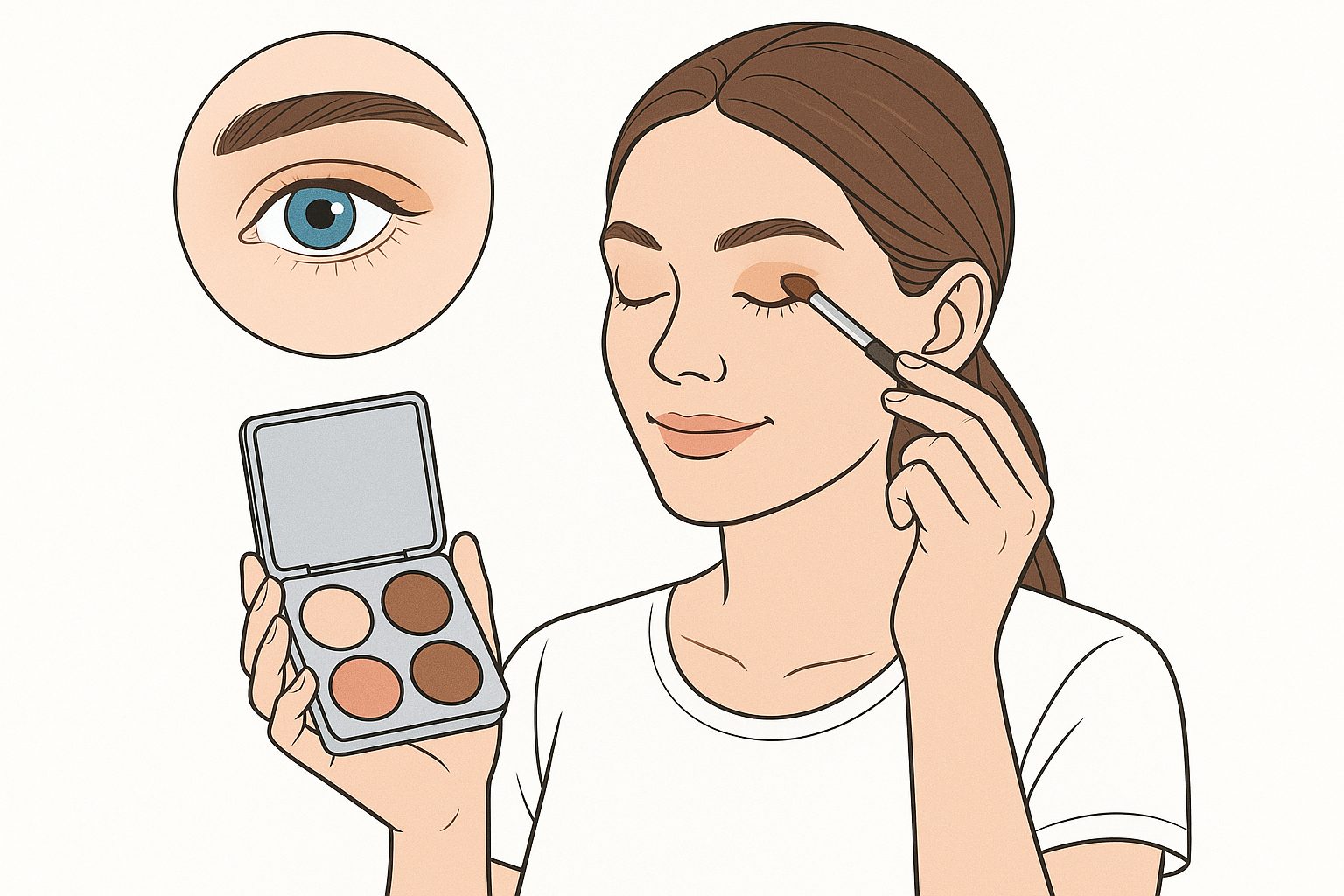
The best eyeshadow for contact lens wearers is low-fallout, finely milled, and easy to control. That usually means pressed powder shadows, cream shadow sticks, and smooth satin or matte formulas instead of loose pigment, chunky glitter, or anything that sheds visibly during application.
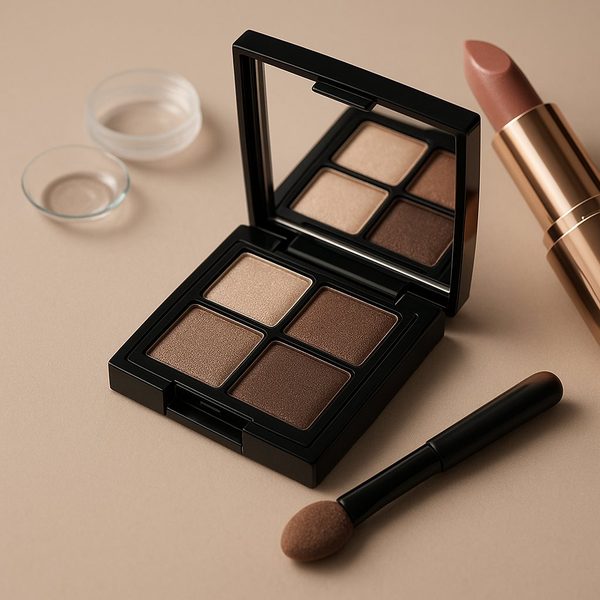
For lens wearers, the issue is not just beauty. It is mechanics. If shadow particles drift into the eye, they can get trapped under the lens and turn a normal makeup day into an irritating one fast.
Quick Answer: The best eyeshadow for contact lens wearers is pressed powder formula — fragrance-free, without glitter or loose shimmer particles that can migrate under lenses — applied after lenses are inserted and removed before taking lenses out.
Why Contact Lens Wearers Need Different Eyeshadow Habits
Contacts change the tolerance threshold for eye makeup. Tiny particles that might be mildly annoying to someone without lenses can feel much worse when a lens is sitting on the eye surface.
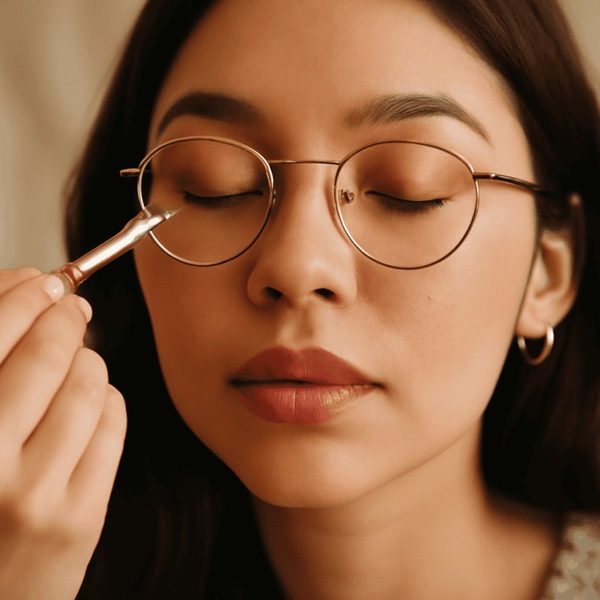
According to optometric guidance, contact lens wearers should be especially careful with makeup that flakes, sheds fibers, or is difficult to remove cleanly.
Best Eyeshadow Types for Contact Lens Wearers
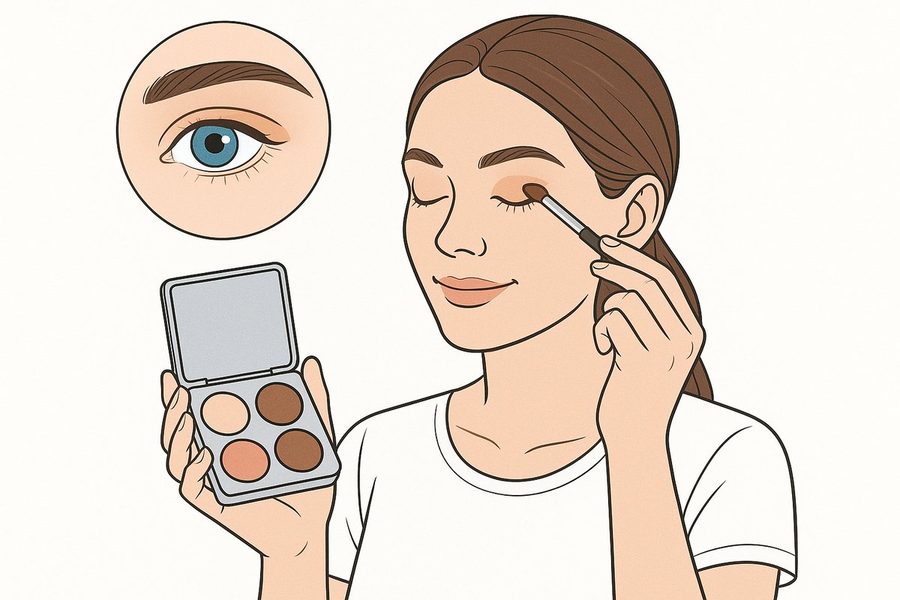
Pressed powder shadows
Pressed formulas are usually the easiest powder option because they create less airborne dust than loose pigment. Matte and satin finishes are especially practical.
Cream shadow sticks
These are excellent for contact lens wearers because they go directly onto the lid with very little fallout. They are quick, controlled, and travel-friendly.
Liquid-to-set shadows
Some liquid shadows work well if they dry down smoothly without flaking. They can be a smart compromise for people who want shimmer without loose particles.
Eyeshadow Types to Be Careful With
Loose pigments
These are beautiful in photos and annoying in real life if you wear contacts. Fine dust can drift down or into the eye during application.
Chunky glitter
This is probably the easiest category to skip. Glitter fallout and lenses are a bad pairing.
Very dry shimmer formulas
Some metallic powders look pretty but break apart as you blend them. If you can see fallout on your cheeks, assume some of it may head toward your eyes too.
Application Tips That Matter
Put lenses in before doing makeup
Contact lens guidance commonly recommends inserting soft lenses before applying makeup. That lowers the chance of transferring residue from your fingers onto the lens later.
Tap off excess shadow
This is basic, but effective. Excess powder is what becomes fallout.
Keep shimmer on the center lid, not the inner rim
You can still wear a pretty eye look without packing sparkle near the tear duct.
Use primer to reduce dust and creasing
A good primer helps shadow grip the lid instead of traveling around.
Clean the under-eye area before lenses come out
You do not want loose particles sitting around the eye while removing your contacts.
Best Finishes for Everyday Contact Lens Comfort
Matte
Matte is the safest everyday choice because it is usually the least messy.
Satin
Satin gives light reflection without the same risk level as chunky shimmer.
Smooth cream shimmer
If you want a dressier look, smooth cream shimmer is usually more lens-friendly than loose sparkle.
Common Mistakes Contact Lens Wearers Make
Applying makeup after touching lenses
If product residue is on your hands, it can transfer to the lens.
Using fiber-heavy mascara with powder fallout
That combination multiplies irritation risk.
Choosing glitter because it looks fun in the pan
Harsh but true: your contact lenses do not care how pretty the palette is.
Removing lenses after rubbing shadow around the eye
Gentle cleanup first, then remove contacts carefully.
FAQ: Best Eyeshadow for Contact Lens Wearers
What eyeshadow is best if I wear contact lenses?
Pressed matte or satin shadows and cream shadow sticks are usually the best choices because they create less fallout.
Should contact lens wearers avoid glitter eyeshadow?
Usually yes. Chunky glitter and loose sparkle are more likely to irritate the eye or get trapped under lenses.
Is cream eyeshadow better than powder for contacts?
Often yes. Cream formulas are easier to control and usually produce less airborne dust.
Do I put contacts in before or after eyeshadow?
Usually before makeup application, especially for soft lenses, based on common optometric guidance.
Sources
- American Optometric Association: Contact Lens Care – https://www.aoa.org/healthy-eyes/vision-and-vision-correction/contact-lens-care
- American Academy of Ophthalmology: Eye Makeup Safety Tips – https://www.aao.org/eye-health/tips-prevention/eye-makeup-safety-tips
Key Takeaways
- Insert contact lenses before applying any eye makeup — clean hands, no product contamination on the lens.
- Pressed powder eyeshadows are safer than loose glitter or shimmer — loose particles migrate under lenses and cause irritation.
- Fragrance-free eyeshadow reduces risk of allergic reaction near the ocular surface.
- Apply eyeshadow starting at the outer lid and working inward to minimize fallout near the inner corner.
- Remove contacts before removing eye makeup — this prevents makeup residue from being dragged onto the lens surface.
- Replace eyeshadow every 6-12 months and keep palettes clean to minimize bacterial contamination.
Related Articles
- Best Eyeshadow Sticks for Easy, One-Swipe Eye Looks in 2026
- Best Eyeshadow Sticks for Quick Makeup
- Best Black Seed Oil Capsules in 2026: What Nigella Sativa Can and Cannot Do
- Best Bold Colored Eyeliners for 2026 and How to Wear Them
- Best Butyrate and Tributyrin Supplements in 2026: What Actually Matters for Gut Barrier Support
Sources
- FDA: Eye Cosmetic Safety — ingredients and allergen guidance for cosmetics used near the eyes.
- American Academy of Ophthalmology: How to Use Cosmetics Safely Around Your Eyes.
- Nichols JJ, Willcox MDP, Bron AJ, et al. The TFOS International Workshop on Contact Lens Discomfort. Invest Ophthalmol Vis Sci. 2013;54(11):TFOS1-TFOS6.
- Relevant peer-reviewed sources for this topic. Accessed 2026.
📚 Part of our Best Makeup for Sensitive Skin hub. Explore all our sensitive skin makeup guides.


Leave a Reply