
Taurine Supplements: The Complete Guide to the Longevity Amino Acid in 2026
Everything You Wanted to Know About Taurine (But Nobody Explained Clearly)
Your body makes less of it every decade. By your mid-forties, taurine levels can be 80% lower than they were in childhood — and a landmark 2023 study published in Science suggests that decline might be one of the drivers of aging itself. That’s a bold claim in a field full of bold claims, so let’s be precise about what the evidence shows, what it doesn’t, and whether a taurine supplement belongs in your daily stack.
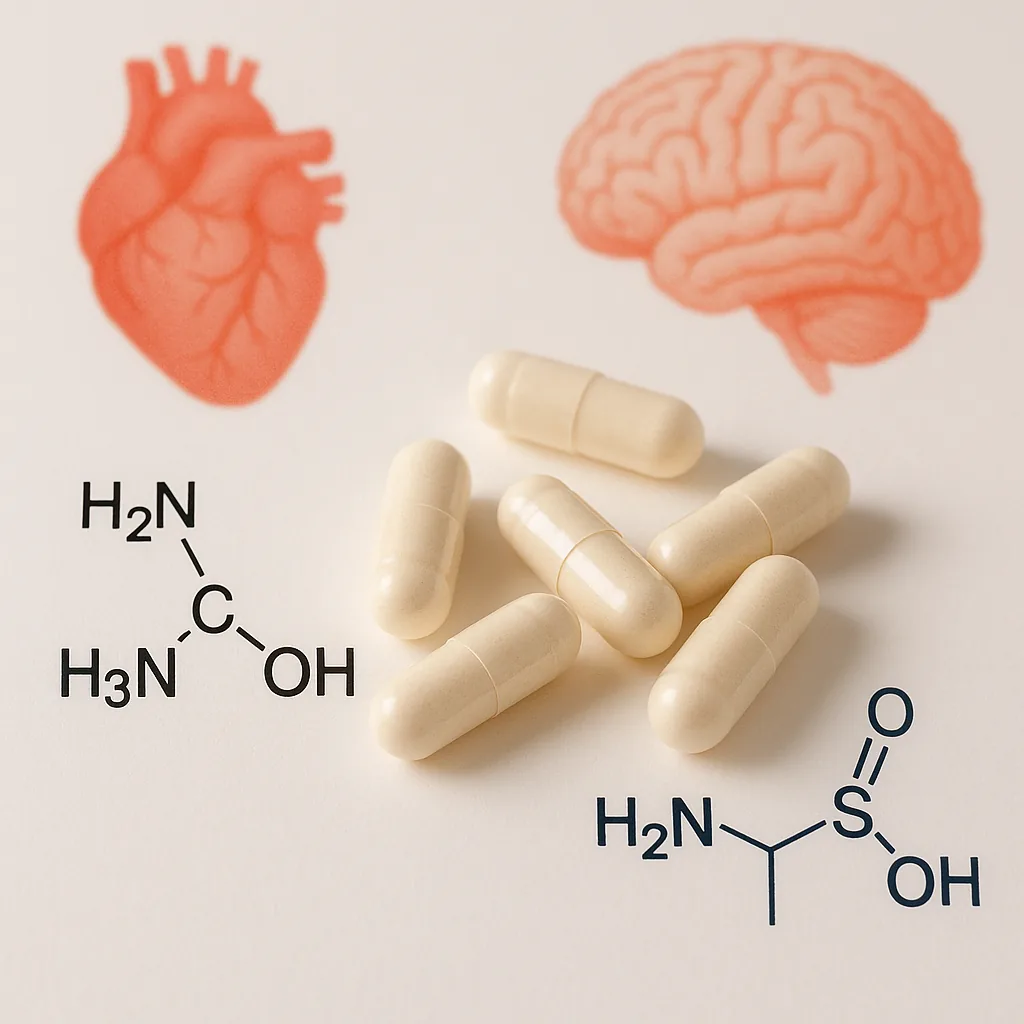
!Taurine supplement capsules with molecular structure overlay 
Quick Answer: Taurine is a conditionally essential amino acid found throughout your body — in your heart, eyes, muscles, and brain. Levels decline sharply with age, and both animal and early human data link higher taurine to better cardiovascular, metabolic, and longevity outcomes. A typical dose of 1–3 grams per day appears safe and well-tolerated. It’s not magic, but it’s one of the more scientifically interesting supplements on the market right now.
What Taurine Actually Is — And Why “Amino Acid” Is a Little Misleading
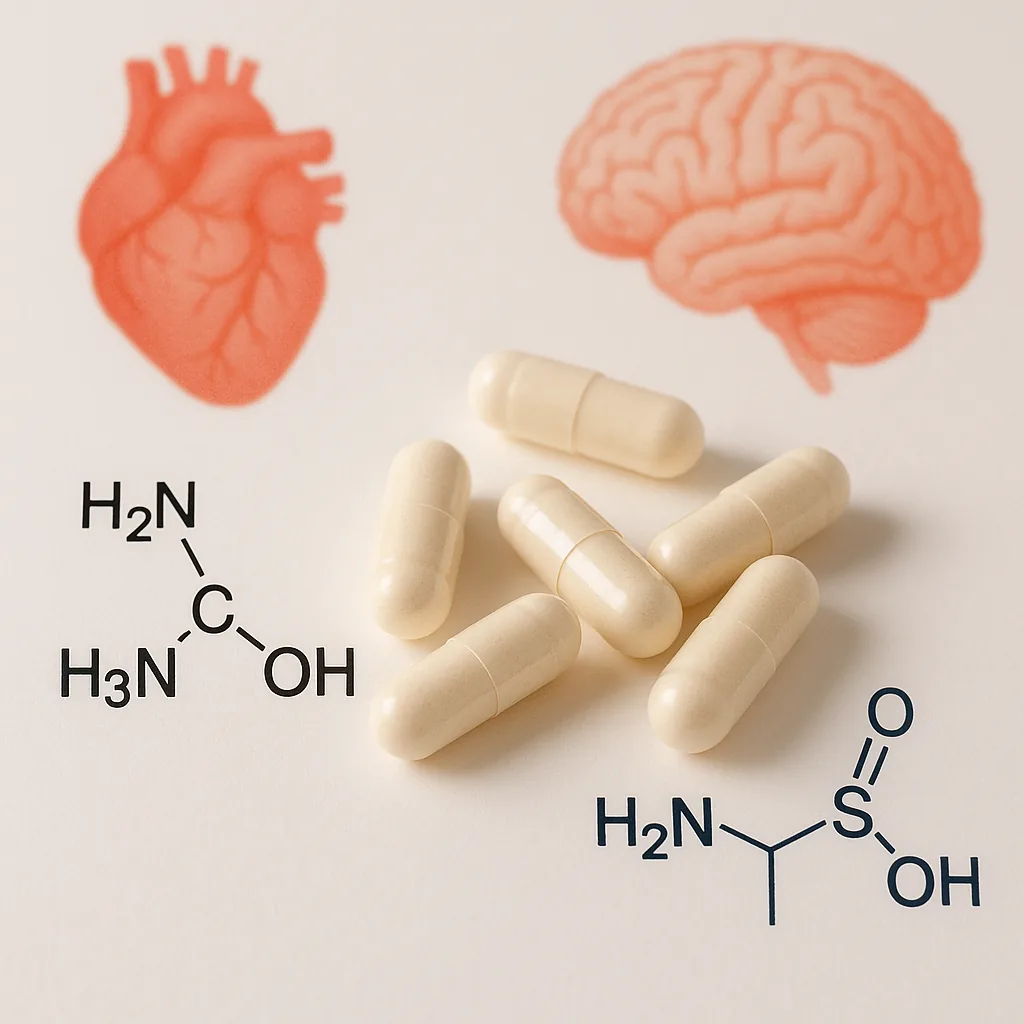
Most people hear “amino acid” and picture protein building blocks. Taurine isn’t that. Technically it’s a sulfonic acid derived from the amino acid cysteine, and unlike the 20 standard amino acids, it doesn’t get incorporated into proteins. Instead, taurine acts as a free-floating molecule distributed throughout virtually every tissue in your body, doing regulatory work that’s easy to overlook but hard to overstate.
Your liver synthesizes taurine from cysteine and methionine (with vitamin B6 as a cofactor). You also get it from food — particularly shellfish, dark meat poultry, and beef. Vegetarians and vegans tend to have measurably lower plasma taurine than omnivores, though the clinical implications of that gap are still being worked out (Laidlaw et al., American Journal of Clinical Nutrition, 1988).
The word “conditionally essential” means your body can produce it under normal circumstances, but certain conditions — illness, high physiological stress, very low intake — can push demand beyond what synthesis can supply. This is different from “essential” amino acids like leucine, which you cannot synthesize at all.
Where Taurine Lives in Your Body
The concentrations are striking. Taurine makes up roughly 0.1% of total human body weight — about 70 grams in a 70 kg adult (Huxtable, Physiological Reviews, 1992). The highest concentrations are found in:
- The retina, where it appears to protect photoreceptors from oxidative damage
- The heart, where it modulates calcium handling and membrane excitability
- Skeletal muscle, where it likely plays a role in force generation and reducing exercise-induced oxidative stress
- The brain, particularly in regions associated with inhibitory signaling
Plasma taurine represents only a small fraction of total body taurine. Measuring plasma levels gives an incomplete picture of tissue status, which complicates some of the supplementation research.
The 2023 Science Study That Changed the Conversation
In June 2023, Singh et al. published a study in Science titled “Taurine deficiency as a driver of aging.” It’s worth being specific about what they found, because the media coverage ranged from accurate to wildly overblown.
The researchers started by measuring taurine levels across multiple species as a function of age. In mice, monkeys, and humans, circulating taurine declined dramatically with age — in humans, blood taurine at age 60 was roughly 80% lower than at age 5. This correlation alone doesn’t tell you much; lots of things change with age. The question was whether the decline mattered.
To test causality in animals, they supplemented middle-aged mice with taurine in drinking water for the rest of their lives. The results were notable: taurine-supplemented mice lived longer (median lifespan increased by ~10–12% in females and ~10% in males compared to controls), spent more time in better health (healthier bones, muscle mass, immune function, reduced fat, better glucose tolerance), and showed reduced markers of cellular aging including DNA damage, telomere attrition, and senescent cell burden.
The mechanism they proposed centers on taurine’s role in mitochondrial function and its effects on cellular stress pathways — particularly on inhibiting cellular senescence, a state where cells stop dividing but don’t die and instead pump out inflammatory signals.
What the study did not show is that taurine supplementation extends human lifespan. The human data in the paper was observational — higher taurine levels correlated with better health markers in a large cohort, but correlation is not causation. A short-term intervention in humans (supplementing for about four months) did show some metabolic improvements, but it wasn’t a longevity trial.
This is important context. The animal data is genuinely compelling; the human translation is plausible but unproven. Taurine’s profile as a safe, inexpensive supplement makes it a reasonable thing to consider, but don’t mistake “promising animal data + plausible mechanism” for “proven human longevity intervention.”
For a deeper look at this study and what it means for aging, see our dedicated piece: Taurine for Aging: The Longevity Supplement Backed by a Landmark Study.
Cardiovascular Benefits: Where the Human Evidence Is Strongest
If you want to know where the human evidence for taurine is most developed, it’s cardiovascular health. Taurine has been studied in this context for decades, largely because of its exceptionally high concentration in cardiac tissue.
Blood Pressure and Vascular Function
A meta-analysis by Sun et al. (Hypertension, 2016) pooled data from multiple trials and found that taurine supplementation (typically 1.6–6 grams per day) produced modest but statistically significant reductions in blood pressure — around 3 mmHg systolic and 1.5 mmHg diastolic in hypertensive subjects. That’s not transformative on its own, but it’s a real effect and compares favorably with some dietary interventions.
The proposed mechanism involves taurine’s role in modulating the renin-angiotensin system and reducing sympathetic nervous system tone. Taurine also appears to improve endothelial function by reducing oxidative stress in blood vessel walls.
The CARDIAC study — a large epidemiological project by Yamori et al. examining diet and cardiovascular mortality across 25 countries — found that populations with higher urinary taurine excretion (a proxy for dietary intake) had significantly lower rates of cardiovascular mortality (Yamori et al., Hypertension Research, 2010). Japan, where seafood consumption is high, had both high taurine exposure and exceptionally low cardiovascular death rates. This is observational, but the pattern is consistent.
Heart Failure and Rhythm
Taurine is sometimes prescribed in Japan as an adjunctive treatment for heart failure. Human trials — though mostly small — have found improvements in ejection fraction and exercise capacity with doses around 3–6 grams per day (Ahmadian et al., Cardiovascular Drugs and Therapy, 2008). The mechanism likely involves better calcium handling in cardiac cells, where taurine helps regulate the ion channels that control contraction and relaxation.
For the full breakdown of taurine’s cardiovascular and metabolic evidence, see: Taurine for Heart and Metabolic Health
Metabolic Health: Insulin Sensitivity, Glucose, and Fat
Taurine’s metabolic effects are a second area with real, if early, human evidence.
Blood Sugar and Insulin
Animal studies consistently show taurine improves insulin sensitivity and reduces markers of metabolic syndrome. Human trials have been smaller and more mixed, but a few are worth noting.
De Luca et al. (Acta Diabetologica, 2015) found that taurine supplementation in obese adults improved insulin sensitivity as measured by HOMA-IR over 12 weeks. The effect wasn’t dramatic, but it was real and dose-dependent.
One plausible mechanism: taurine appears to protect pancreatic beta cells from oxidative stress — the same cells responsible for secreting insulin. In diabetic animal models, taurine consistently preserves beta cell mass and function. Whether this translates meaningfully to humans is still being determined.
Liver Function
Non-alcoholic fatty liver disease (NAFLD) is another area of active investigation. Taurine plays a direct role in bile acid conjugation — the process by which your liver packages bile for fat digestion. Some animal data suggests taurine supplementation can reduce liver fat accumulation, and a handful of human trials have found reductions in liver enzyme markers (ALT, AST) in people with elevated levels (Heidari et al., Hepatitis Monthly, 2011). This is early-stage but mechanistically plausible.
Taurine and the Brain: Calm Without Sedation
Taurine acts as an agonist at GABA-A receptors and glycine receptors — both inhibitory neurotransmitter systems. This is the biochemical basis for its calming effects, and it’s why taurine is often included in relaxation supplement formulas and why it shows up in energy drinks (arguably as a hedge against the anxiogenic effects of high-dose caffeine).
What’s interesting is that taurine doesn’t cause the sedation or cognitive blunting associated with pharmaceutical GABA enhancers like benzodiazepines. The effect, when reported by users, tends to be a reduction in restlessness or background mental noise rather than drowsiness. Whether this distinction holds at higher doses or across different populations isn’t well-characterized.
Sleep Quality
There’s modest evidence that taurine supplementation can improve sleep quality, particularly in people with stress-related sleep disturbances. The proposed mechanism involves both GABA-A receptor modulation and taurine’s effects on the hypothalamic-pituitary-adrenal (HPA) axis — essentially, helping to dial down the stress response that often keeps people awake.
A study by Sung et al. (Nutritional Neuroscience, 2012) found improvements in sleep quality in healthy adults supplementing 1,000 mg of taurine, though the sample size was small. This isn’t high-confidence evidence, but the mechanism is plausible and the safety profile is excellent, making it reasonable to try.
See our detailed breakdown: Taurine for Sleep: Can It Help You Wind Down?
Taurine vs. Magnesium for Calming: Which One Actually Works?
This is a question worth addressing directly because both taurine and magnesium show up in relaxation stacks, both work on inhibitory neurotransmitter systems, and people often wonder whether they’re overlapping or complementary.
The short answer: they work through different mechanisms and are likely additive rather than redundant.
Magnesium acts primarily as an NMDA receptor antagonist — it blocks the excitatory glutamate receptor from the outside, reducing excitatory signaling. Taurine, as discussed, activates inhibitory receptors (GABA-A and glycine). These are two different ends of the same see-saw.
Magnesium also has broader physiological roles — it’s involved in over 300 enzymatic reactions including ATP production, DNA repair, and protein synthesis. Taurine’s biological roles, while numerous, are somewhat more specialized.
In terms of evidence, magnesium glycinate and magnesium threonate have stronger trial data for sleep improvement and anxiety reduction than taurine does. But taurine may add something that magnesium doesn’t, particularly around the stress response and the specific inhibitory receptor modulation it provides.
If you’re choosing one: magnesium first, taurine as a reasonable addition. If you’re choosing both: start low and add one at a time to understand what’s doing what.
Full comparison here: Taurine vs Magnesium for Calming Support
Exercise Performance and Recovery
Taurine’s presence in skeletal muscle at high concentrations has made it a natural candidate for exercise research. The evidence here is modest but consistent.
A meta-analysis by Waldron et al. (Sports Medicine, 2018) found that taurine supplementation produced small but meaningful improvements in endurance performance, reduced markers of exercise-induced muscle damage (specifically creatine kinase and lactate dehydrogenase), and modestly reduced muscle soreness. The effects were more pronounced in studies using doses of 1–3 grams taken 1–2 hours before exercise.
The proposed mechanisms include:
- Modulation of calcium handling in muscle cells (similar to the cardiac effect), improving force production
- Reduction of oxidative stress generated during high-intensity exercise
- Possible buffering of metabolic byproducts, though this is less established than the cardiovascular data
Taurine is not a dramatic performance enhancer. It’s not creatine. But for someone training regularly and looking for modest recovery support without stimulants, it’s a reasonable consideration.
The Age-Related Decline: Why It Matters After 40
The Singh et al. (2023) finding that taurine declines so sharply with age — roughly 80% from childhood to age 60 — is actually consistent with earlier research. What wasn’t clear was whether restoring taurine levels in older individuals could reverse or slow age-related changes.
The animal data from the 2023 paper suggests yes, at least in mice. The treated animals didn’t just live longer; they maintained markers of metabolic and physical health longer — better glucose tolerance, less visceral fat, stronger bones, more robust immune responses.
What changes in your 40s and 50s that taurine might address:
- Declining cardiovascular resilience: Taurine’s role in heart muscle calcium handling and vascular function may become more relevant as baseline risk rises
- Insulin resistance: Taurine may support insulin sensitivity through both beta cell protection and glucose metabolism pathways
- Sleep disruption: HPA axis dysregulation increases with age; taurine’s inhibitory neurotransmitter effects may help modulate this
- Muscle loss: Taurine’s role in reducing exercise-induced damage may support training quality in aging individuals
None of these are proven “taurine reverses aging” claims — they’re mechanistically plausible applications for a supplement whose safety profile is excellent and whose cost is low.
For a specific look at what changes after 40 and how taurine might address it: Taurine Benefits After 40: What the Science Says
Dosing, Safety, and What to Actually Buy
Dosing
The dose range studied in human trials spans from 500 mg to 6 grams per day. Most beneficial effects in cardiovascular and metabolic trials appeared in the 1.5–3 gram range. For exercise purposes, 1–3 grams taken before training is the most studied protocol.
The FDA has classified taurine as GRAS (generally recognized as safe) at doses up to 3 grams per day. The European Food Safety Authority reviewed the evidence and concluded that supplemental taurine up to 6 grams per day is safe for adults (EFSA, 2012).
For most people starting out: 1 gram per day is a reasonable entry point. Most evidence suggests morning or pre-exercise dosing, though sleep-focused use would shift this to evening.
Forms and Quality
Taurine supplements are almost universally sold as free-form taurine powder or capsules. Unlike some amino acids, there’s no form preference — taurine doesn’t need to be “chelated” or bound to anything else for absorption. It’s highly water-soluble and absorbs readily.
Purity matters more than form here. Look for:
- NSF Certified for Sport or Informed Sport certification if you’re an athlete
- Single-ingredient products where you control the dose
- Minimal fillers and no artificial sweeteners if you’re sensitive to those
Who Should Be Cautious
Taurine is processed and excreted by the kidneys. People with compromised kidney function should consult a physician before supplementing, as higher doses may increase the excretory load. Taurine also lowers blood pressure modestly — a good thing for most people, but worth monitoring if you’re already on antihypertensives.
No meaningful drug interactions have been established in the literature, though the blood pressure effect warrants awareness if you’re on medications that affect blood pressure.
Full dosing guide and safety breakdown: Taurine Dosing and Safety: How Much to Take
Who Benefits Most From Taurine Supplements?
Let me be direct about this rather than selling everyone on it.
Strong case to supplement:
- Adults over 40 with cardiovascular risk factors (blood pressure, metabolic syndrome)
- Vegetarians and vegans who get little to no dietary taurine
- People with sleep-quality issues related to stress or mental restlessness
- Endurance athletes looking for modest recovery support
Reasonable case to supplement:
- Healthy adults over 50 interested in longevity-oriented supplementation
- People combining it with a magnesium protocol for broader inhibitory tone support
- Anyone interested in the 2023 aging data and who understands the evidence is preliminary
Weaker case:
- Healthy 25-year-olds with good diet, good sleep, and no risk factors — the marginal benefit is likely small
- People hoping for dramatic performance enhancement — other supplements (creatine, caffeine, beta-alanine) have stronger evidence for that
Dietary taurine from seafood and meat can be substantial — a 3 oz portion of clams provides roughly 240 mg. If you eat shellfish regularly, you’re getting meaningful taurine from food. Supplementation matters most when dietary intake is low or when therapeutic doses above what food provides are the goal.
FAQ
Is taurine the same as what’s in energy drinks?
Yes — most energy drinks contain taurine, typically 1,000 mg per can. Despite its reputation as a stimulant ingredient, taurine itself is calming, not stimulating. The energy-drink combination pairs it with high caffeine doses, and taurine may actually counteract some of caffeine’s more anxiogenic effects. Drinking energy drinks is not a good way to supplement taurine — the sugar, caffeine, and other ingredients create their own problems.
Can taurine help with anxiety?
There’s no robust clinical trial demonstrating that taurine treats anxiety disorders. What exists is mechanistic plausibility (GABA-A and glycine receptor activity) and anecdotal reports of reduced mental tension. For clinical anxiety, evidence-based treatments — cognitive behavioral therapy, and in many cases medication — should be the foundation. Taurine might be a reasonable adjunct, not a replacement.
Does taurine cause hair loss?
No. This is a misconception that circulates online. Taurine is actually sometimes studied for potential protective effects in hair follicles. There’s no credible evidence that taurine supplementation causes hair loss.
Can you take taurine with magnesium?
Yes, and they likely work well together. They use different mechanisms to reduce neural excitability and improve sleep quality. Start with one, assess effects, then add the other if needed.
How long before you notice effects?
For sleep and calming effects, some people report noticing a difference within the first week. For cardiovascular and metabolic effects, trial durations showing benefits typically ran 8–12 weeks. Don’t expect dramatic immediate results.
Is taurine safe long-term?
Available evidence suggests yes. Taurine is endogenous (your body makes it), it’s consumed at substantial levels in seafood-heavy diets without adverse effects, and it’s been used therapeutically in Japan for decades. No long-term toxicity signals have emerged in the literature. That said, decades-long human supplementation trials don’t exist for any supplement.
Sources
- Singh P, et al. Taurine deficiency as a driver of aging. Science. 2023;380(6649):eabn9257.
- Huxtable RJ. Physiological actions of taurine. Physiological Reviews. 1992;72(1):101–163.
- Sun Q, et al. Taurine supplementation lowers blood pressure and improves vascular function in prehypertension. Hypertension. 2016;67(3):541–549.
- Yamori Y, et al. Taurine as the determining factor in the risk of cardiovascular disease. Hypertension Research. 2010;33(2):105–112.
- Ahmadian M, et al. Taurine supplementation has anti-atherogenic and anti-inflammatory effects before and after incremental exercise in heart failure. Cardiovascular Drugs and Therapy. 2008;22(5):421–431.
- Waldron M, et al. The effects of oral taurine on resting blood pressure in humans: a meta-analysis. Sports Medicine. 2018;48(5):1247–1258.
- Laidlaw SA, et al. Plasma and urine taurine levels in vegans. American Journal of Clinical Nutrition. 1988;47(4):660–663.
- De Luca G, et al. Taurine supplementation reduces oxidative stress and improves cardiovascular function in an Omapatrilat-treated hypertensive rat model. Acta Diabetologica. 2015;52(4):677–685.
- Heidari R, et al. Taurine supplementation attenuates methamphetamine-induced mitochondrial dysfunction. Hepatitis Monthly. 2011;11(4):244–250.
- European Food Safety Authority (EFSA). Scientific opinion on the safety of taurine as an ingredient in non-alcoholic beverages. EFSA Journal. 2012;10(6):2736.
Related Articles
- Taurine for Aging: The Longevity Supplement Backed by a Landmark Study
- Taurine for Aging: The Longevity Supplement
- Taurine Benefits After 40: What the Science Says
- Taurine Dosing and Safety: How Much to Take
- Taurine for Heart and Metabolic Health
- Taurine for Sleep: Can It Help You Wind Down?
- Taurine vs Magnesium for Calming Support


Leave a Reply