
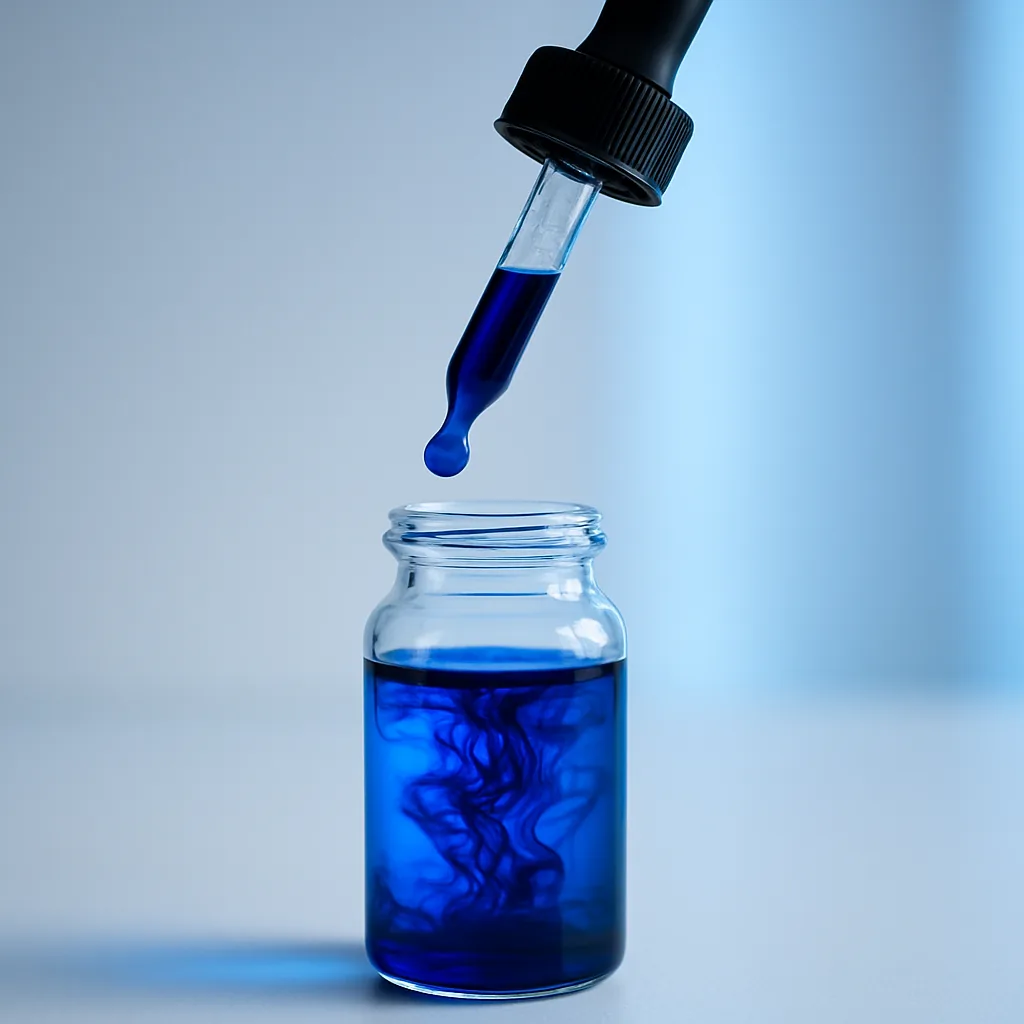
Methylene Blue Supplements: The Complete Guide to the Mitochondrial Enhancer in 2026
Everything You Need to Know About Methylene Blue Supplements in 2026
Methylene blue has been around longer than aspirin, yet it keeps showing up in longevity podcasts, biohacker stacks, and anti-aging forums as if it were a brand-new discovery. That tension — between a compound with over 130 years of medical history and its sudden popularity as a mitochondrial supplement — is exactly what makes it worth understanding carefully before you buy anything.

The promise is real enough to attract serious researchers. The risks are real enough to send people to the emergency room. This guide covers both sides without the hype.
Quick Answer: Methylene blue is the world’s first synthetic drug, FDA-approved for treating methemoglobinemia, and now used off-label in low doses for potential cognitive and mitochondrial benefits. Animal and cell-based research is compelling, but robust human clinical evidence remains limited. It carries serious interaction risks — particularly with SSRIs and MAOIs — and is contraindicated in G6PD deficiency. If you’re considering it, you need pharmaceutical-grade product and a doctor who understands both the compound and your full medication list.
What Is Methylene Blue, and Why Does It Matter Now?

A Drug Older Than Modern Medicine
Methylene blue — chemically known as 3,7-bis(dimethylamino)phenothiazin-5-ium chloride — was synthesized by Heinrich Caro at BASF in 1876. Within a decade it was being used medically, making it the oldest synthetic pharmaceutical compound still in clinical use. Paul Ehrlich used it to stain bacteria, and in doing so helped found the entire field of histopathology. Later, it became the first compound used to treat malaria. Its entire career in medicine predates antibiotics, controlled clinical trials, and the FDA itself.
That historical longevity is part of why serious researchers are now interested in it again. A compound with that track record has been observed in living systems long enough that we actually know quite a lot about how it behaves — including where it causes harm.
FDA-Approved Uses and Off-Label Territory
Methylene blue currently holds FDA approval for one primary indication: treating methemoglobinemia, a condition where hemoglobin loses its ability to carry oxygen. At intravenous doses used in hospitals (typically 1–2 mg/kg), it acts as a reducing agent that converts non-functional methemoglobin back into functional hemoglobin. This is life-saving medicine with a clear mechanism and decades of clinical data behind it.
The off-label interest is entirely different in character. Researchers and biohackers are exploring oral doses orders of magnitude lower — typically 0.5 to 4 mg/kg in research settings, or even lower in the longevity community — for potential cognitive enhancement, mitochondrial support, neuroprotection, and anti-aging effects. These applications are not FDA-approved. They’re based on a growing body of preclinical research and a smaller number of human studies that show promise but are far from definitive.
Understanding this distinction — approved medical use versus experimental supplementation — is essential context for everything that follows.
How Methylene Blue Actually Works in the Body
The Electron Carrier in the Mitochondrial Chain
The core reason methylene blue attracts longevity researchers is its mechanism of action at the mitochondrial level. Mitochondria produce cellular energy (ATP) through the electron transport chain — a series of protein complexes that pass electrons down a gradient to ultimately combine them with oxygen and produce water. When this chain functions efficiently, you get energy. When it breaks down, you get oxidative stress, cellular dysfunction, and aging.
Methylene blue can accept electrons at Complex I of the chain and donate them to cytochrome c, effectively acting as an alternative electron carrier that bypasses damaged segments of the chain (Rojas et al., Progress in Neurobiology, 2012). This gives it a unique dual role: it can act as an antioxidant at low concentrations by preventing electron leak and the formation of reactive oxygen species, while at high concentrations it can paradoxically become a pro-oxidant. This hormetic, dose-dependent behavior is central to understanding both its potential and its risks.
Gonzalez-Lima and colleagues at the University of Texas have done much of the foundational work here, demonstrating that methylene blue enhances cytochrome oxidase activity — the enzyme at the heart of Complex IV in the mitochondrial chain — in ways that correlate with improved memory and behavioral outcomes in rodent models (Gonzalez-Lima & Barksdale, Neuroscience, 2005).
Cognitive and Neuroprotective Mechanisms
The brain is disproportionately energy-hungry, consuming roughly 20% of the body’s oxygen despite being only 2% of its mass. That makes neurons especially vulnerable to mitochondrial dysfunction, which is why much of the methylene blue research focuses on the central nervous system.
At low doses, methylene blue has been shown in animal models to enhance memory consolidation, reduce amyloid burden, and protect neurons against oxidative and metabolic stress (Atamna & Kumar, Journal of Alzheimer’s Disease, 2010). It also appears to inhibit monoamine oxidase (MAO) — the enzyme that breaks down serotonin, dopamine, and norepinephrine — which is both a mechanism of potential benefit and a source of significant safety concern, as discussed below.
Tau protein aggregation, a hallmark of Alzheimer’s disease, is another target that has attracted research attention. Leuco-methylthioninium (a reduced form of methylene blue) has been investigated as a tau aggregation inhibitor in clinical trials for Alzheimer’s disease, though results from Phase 3 trials have been mixed and have not translated into an approved treatment.
Tucker et al. provided a useful mechanistic overview of how these pathways interconnect — from mitochondrial function to neuroprotection — noting that the compound’s effects are highly dose-dependent and that the therapeutic window appears to be narrow (Tucker et al., Molecular Neurobiology, 2018).
The Low-Dose Longevity and Cognitive Interest: What the Evidence Actually Shows
What Animal and In Vitro Research Demonstrates
The animal data is genuinely compelling, and it’s what drives most of the supplement community’s excitement. Rodent studies have shown improved memory retention, better performance on maze tasks, reduced anxiety-like behavior, and measurable improvements in mitochondrial function following low-dose methylene blue administration. Cell culture studies show similar patterns: reduced oxidative damage, improved mitochondrial membrane potential, and protection against neurotoxic insults.
Some of this research comes from highly credible academic groups. Gonzalez-Lima’s lab at UT Austin has published extensively on methylene blue’s cognitive effects in animal models, with findings that consistently show a hormetic dose-response curve — meaning small amounts help, large amounts harm. This is not unusual for redox-active compounds, but it creates a practical challenge for anyone trying to dose it as a supplement.
The in vitro data on tau inhibition, amyloid reduction, and mitochondrial enhancement is similarly promising at the mechanistic level. These studies tell us methylene blue can do these things in controlled laboratory conditions.
Where Human Evidence Stands in 2026
Here’s where intellectual honesty requires a significant step back. The human clinical data on methylene blue as a cognitive or longevity supplement is sparse. Most human trials have focused on its medical applications — methemoglobinemia, septic shock, and Alzheimer’s disease (the tau inhibitor trials) — rather than on low-dose supplementation in healthy people.
The Alzheimer’s trials are instructive. LMTX (leuco-methylthioninium) failed to meet its primary endpoints in two large Phase 3 trials. While some researchers argue the trials may have been confounded by the control arm (which wasn’t truly inert), the failure illustrates the significant gap between animal model success and human clinical outcome that plagues neuroscience research generally.
For healthy individuals using low-dose methylene blue to enhance cognition or slow aging, we essentially have: case reports, a small number of human pharmacokinetic studies, extrapolation from animal data, and anecdotal reports from biohackers. That’s not nothing — it tells us the compound is absorbed, distributed to the brain, and has a dose-dependent effect. But it doesn’t tell us that supplementation at common OTC doses actually improves cognition, extends lifespan, or reduces disease risk in humans over meaningful time horizons.
Anyone selling methylene blue as a proven cognitive enhancer or longevity compound is running ahead of the evidence. The honest framing is: the mechanism is scientifically plausible, the animal evidence is encouraging, and the human evidence is preliminary. Proceed accordingly.
Pharmaceutical Grade vs. Supplement Grade: This Distinction Can Hurt You
One of the most important — and most underappreciated — issues with the methylene blue supplement market is product quality. Methylene blue used in medical settings is pharmaceutical grade (USP or BP standard), meaning it has been tested for purity and is essentially free of heavy metal contaminants.
The same cannot be said for industrial-grade or laboratory-grade methylene blue, which has historically been used in aquariums to treat fish fungal infections and is still sold for that purpose. Industrial-grade material frequently contains impurities including heavy metals like arsenic, cadmium, and lead. When people purchase “methylene blue” from non-pharmaceutical suppliers to save money, they may be ingesting these contaminants.
This is not a hypothetical concern. The FDA has issued warnings about consumers using aquarium-grade methylene blue as a supplement. Multiple poison control centers have documented cases.
If you’re going to use methylene blue as a supplement — understanding that you’re making an off-label choice — you need to source pharmaceutical-grade material from a reputable manufacturer with a Certificate of Analysis (CoA) that verifies purity and heavy metal testing. The cost difference is real, and it matters.
Dosing Protocols: What Research Uses vs. What People Actually Take
Research protocols for low-dose methylene blue vary significantly, which already tells you something about the lack of standardization in this space. Animal studies typically use doses in the range of 0.5 to 4 mg/kg, with the best effects often seen at the lower end of that range. Human pharmacokinetic research has used similar per-kilogram estimates, though the translation from rodent to human dosing is not straightforward.
Peter et al. established important pharmacokinetic data, showing that orally administered methylene blue is absorbed rapidly and distributed to multiple tissues, with the brain achieving measurable concentrations (Peter et al., European Journal of Clinical Pharmacology, 2000). The compound crosses the blood-brain barrier, which is part of why it’s of interest neurologically and part of why its drug interactions are serious.
In the supplement community, you’ll see oral doses ranging from 0.5 mg to 10 mg per day, with some enthusiasts using intermittent protocols (a few days per week) to avoid tolerance or accumulation concerns. There is no established human dose for cognitive supplementation validated by clinical trial. What we have are ranges extrapolated from animal data, individual experimentation, and clinical judgment from practitioners familiar with the compound.
This is not a compound where you should guess at dosing. The hormetic curve means the difference between potentially beneficial and potentially harmful may be smaller than it appears.
Safety Concerns You Cannot Skip
Serotonin Syndrome Risk with SSRIs and MAOIs
This is the most urgent safety warning associated with methylene blue, and it has killed people. Methylene blue is a potent monoamine oxidase inhibitor — specifically an inhibitor of MAO-A. When combined with serotonergic drugs (SSRIs, SNRIs, MAOIs, certain opioids like tramadol or meperidine, triptans, or St. John’s Wort), the combined serotonergic effect can trigger serotonin syndrome.
Serotonin syndrome ranges from mild (tremor, agitation, rapid heart rate) to life-threatening (hyperthermia, rhabdomyolysis, seizures, coma). Cases have been reported in surgical patients who received intravenous methylene blue during procedures while on SSRIs — circumstances where the drug interaction wasn’t anticipated. The FDA issued a Drug Safety Communication in 2011 warning specifically about this interaction.
If you take any serotonergic medication — and that includes common antidepressants like sertraline, fluoxetine, escitalopram, venlafaxine, or duloxetine — methylene blue supplementation is contraindicated. Not “use with caution.” Contraindicated.
G6PD Deficiency: A Genetic Contraindication
Glucose-6-phosphate dehydrogenase (G6PD) deficiency is one of the most common genetic enzyme disorders in the world, affecting an estimated 400 million people — with higher prevalence in people of African, Mediterranean, Middle Eastern, and South Asian ancestry. G6PD is an enzyme that protects red blood cells from oxidative damage.
In people with G6PD deficiency, methylene blue cannot produce its intended reducing effect because the enzyme required to recycle the compound isn’t functioning properly. Instead of reducing methemoglobin, methylene blue can actually worsen the condition and trigger hemolytic anemia — the destruction of red blood cells — sometimes severely. This is a documented, serious adverse event.
G6PD status should be tested before anyone in a higher-prevalence population considers methylene blue supplementation. This is not optional diligence.
Other Safety Considerations
Beyond the two major contraindications above, methylene blue carries additional concerns worth understanding. It turns urine (and sometimes saliva) bright blue or green — this is harmless but alarming to people who don’t expect it. It can interfere with pulse oximetry readings, causing falsely low oxygen saturation readings for several hours after dosing — relevant if you’re being monitored medically. It’s pregnancy category X for some applications; use during pregnancy or breastfeeding should be considered contraindicated without specific medical supervision. It can also cause dose-dependent nausea, dizziness, headache, and skin discoloration with repeated use.
Who Should Absolutely Avoid Methylene Blue
The list of people who should not take methylene blue supplements without direct physician supervision — and in some cases not at all — is longer than most supplement profiles:
Anyone currently taking an SSRI, SNRI, MAOI, or any other serotonergic drug. Anyone with known or suspected G6PD deficiency. Anyone who is pregnant or breastfeeding. Anyone with kidney disease (methylene blue is renally cleared). Children. Anyone taking tramadol, meperidine, fentanyl, or other opioids with serotonergic properties. Anyone taking triptans for migraines. Anyone with a history of psychosis (MAO inhibition can exacerbate symptoms).
If you have any of these conditions or are taking any of these medications and are still interested in methylene blue, the conversation needs to happen with a physician before you purchase anything.
An Honest Assessment: Where This Leaves You
Methylene blue is genuinely interesting from a mechanistic and scientific standpoint. The mitochondrial electron carrier hypothesis is not pseudoscience — it’s supported by credible research, published in peer-reviewed journals, conducted by legitimate academic groups. The neuroprotective and cognitive-enhancing effects seen in animal models are real within those models.
The honest problem is that “interesting animal data” is where a lot of supplements live, and very few of them survive the translation to robust human benefit. The tau inhibitor failures in Alzheimer’s trials should temper enthusiasm for confident predictions. The human cognitive enhancement literature is preliminary and largely unpublished or anecdotal. The safety profile — particularly the serotonin syndrome risk and G6PD contraindication — is serious enough that casual experimentation carries real risk.
If you’re a healthy adult with no contraindications, no serotonergic medications, known G6PD status (normal), access to pharmaceutical-grade product, and a physician who understands the compound’s pharmacology, then a cautious exploration of low-dose methylene blue is a choice you can make with eyes open. If any of those conditions aren’t met, the risk-to-evidence ratio is not in your favor.
This is not a supplement to buy because it’s trending.
Frequently Asked Questions
What does methylene blue actually do for mitochondria?
At low concentrations, methylene blue acts as an alternative electron carrier in the mitochondrial electron transport chain. It can accept electrons from NADH and donate them to cytochrome c, bypassing dysfunctional segments of the chain and reducing the electron leak that generates reactive oxygen species. This effectively acts as a mitochondrial “patch” for damaged complexes, which is why researchers see reduced oxidative stress and improved energy production in cell and animal studies. Whether this translates to meaningful mitochondrial improvement in healthy humans at supplement doses hasn’t been established by clinical trial.
Is methylene blue legal to buy as a supplement?
In the United States, methylene blue occupies a legally ambiguous space. It’s not classified as a controlled substance, and pharmaceutical-grade versions can be purchased from compounding pharmacies or certain supplement suppliers. However, the FDA has not approved it as a dietary supplement, and products marketed with specific health claims could face regulatory scrutiny. The compound itself is not illegal to purchase for adults, but the quality and intended use matter enormously.
How is pharmaceutical-grade different from aquarium-grade methylene blue?
Pharmaceutical grade meets USP or BP purity standards, is tested for heavy metal contamination, and is formulated for human use. Aquarium-grade is intended for fish tanks, is not tested for human safety, and frequently contains impurities including arsenic, cadmium, and lead. Using aquarium-grade methylene blue as a supplement is genuinely dangerous and has caused documented harm. The cost difference is worth it; there is no safe shortcut here.
Can methylene blue improve memory in healthy people?
The animal evidence for memory enhancement is fairly consistent and has been replicated across multiple research groups. Rodent studies show improved performance on memory tasks following low-dose methylene blue, and the mechanisms proposed — enhanced cytochrome oxidase activity, reduced oxidative stress, improved mitochondrial efficiency — are plausible. For healthy humans, there is no robust clinical trial evidence demonstrating that oral supplementation improves memory or cognition. Anecdotal reports are common in biohacker communities, but these are not controlled observations. The honest answer is: we don’t know with confidence.
Does methylene blue interact with caffeine or other common supplements?
Caffeine itself doesn’t have a documented dangerous interaction with methylene blue, though both affect central nervous system function. The more significant concern is with supplements that have serotonergic properties — specifically St. John’s Wort, 5-HTP, and SAMe — all of which could contribute to serotonin syndrome in combination with methylene blue’s MAO-inhibiting activity. Always disclose your complete supplement and medication list to a physician before starting methylene blue.
Why does methylene blue turn urine blue?
Methylene blue is a dye that is excreted renally. This is a normal pharmacological effect, not a sign of harm. The blue or blue-green discoloration of urine is harmless and temporary, typically resolving within 24 hours after the last dose. Some people also notice blue-green discoloration of saliva or stool. It can be alarming on first occurrence if you’re not expecting it, which is why it’s worth knowing in advance.
Sources
- Gonzalez-Lima, F., & Barksdale, B.R. (2005). Antagonism of rotenone-induced excitotoxicity by methylene blue. Neuroscience, 135(1), 223–231.
- Rojas, J.C., Bruchey, A.K., & Gonzalez-Lima, F. (2012). Neurometabolic mechanisms for memory enhancement and neuroprotection of methylene blue. Progress in Neurobiology, 96(1), 32–45.
- Atamna, H., & Kumar, R. (2010). Protective role of methylene blue in Alzheimer’s disease via mitochondria and cytochrome c oxidase. Journal of Alzheimer’s Disease, 20(Suppl 2), S439–452.
- Tucker, D., Lu, Y., & Zhang, Q. (2018). From mitochondrial function to neuroprotection — an emerging role for methylene blue. Molecular Neurobiology, 55(1), 586–595.
- Peter, C., Hongwan, D., Küpfer, A., & Lauterburg, B.H. (2000). Pharmacokinetics and organ distribution of intravenous and oral methylene blue. European Journal of Clinical Pharmacology, 56(3), 247–250.
- U.S. Food and Drug Administration. (2011). FDA Drug Safety Communication: Serious CNS reactions possible when methylene blue is given to patients taking certain psychiatric medications. FDA.gov.
- Ramsay, R.R., Dunford, C., & Gillman, P.K. (2007). Methylene blue and serotonin toxicity: inhibition of monoamine oxidase A (MAOA) confirms a theoretical prediction. British Journal of Pharmacology, 152(6), 946–951.
- Luzzatto, L., & Seneca, E. (2014). G6PD deficiency: a classic example of pharmacogenetics with on-going clinical implications. British Journal of Haematology, 164(4), 469–480.
- Oz, M., Lorke, D.E., & Petroianu, G.A. (2009). Methylene blue and Alzheimer’s disease. Biochemical Pharmacology, 78(8), 927–932.
- Gauthier, S., et al. (2016). Efficacy and safety of tau-aggregation inhibitor therapy in patients with mild or moderate Alzheimer’s disease: a randomised, controlled, double-blind, parallel-arm, phase 3 trial. The Lancet, 388(10062), 2873–2884.
Related Articles
- Low-Dose Methylene Blue: Mitochondrial Enhancer
- Is Low-Dose Methylene Blue Safe?
- Low-Dose Methylene Blue: Benefits, Risks, and Reality
- Methylene Blue for Mitochondria: Hype or Help?
- Methylene Blue Stacks for Biohackers: Why Caution Wins
- Who Should Avoid Methylene Blue?
- Low-Dose Methylene Blue: The Mitochondrial Enhancer



Leave a Reply