
Published March 2026 | Supplements & Wellness
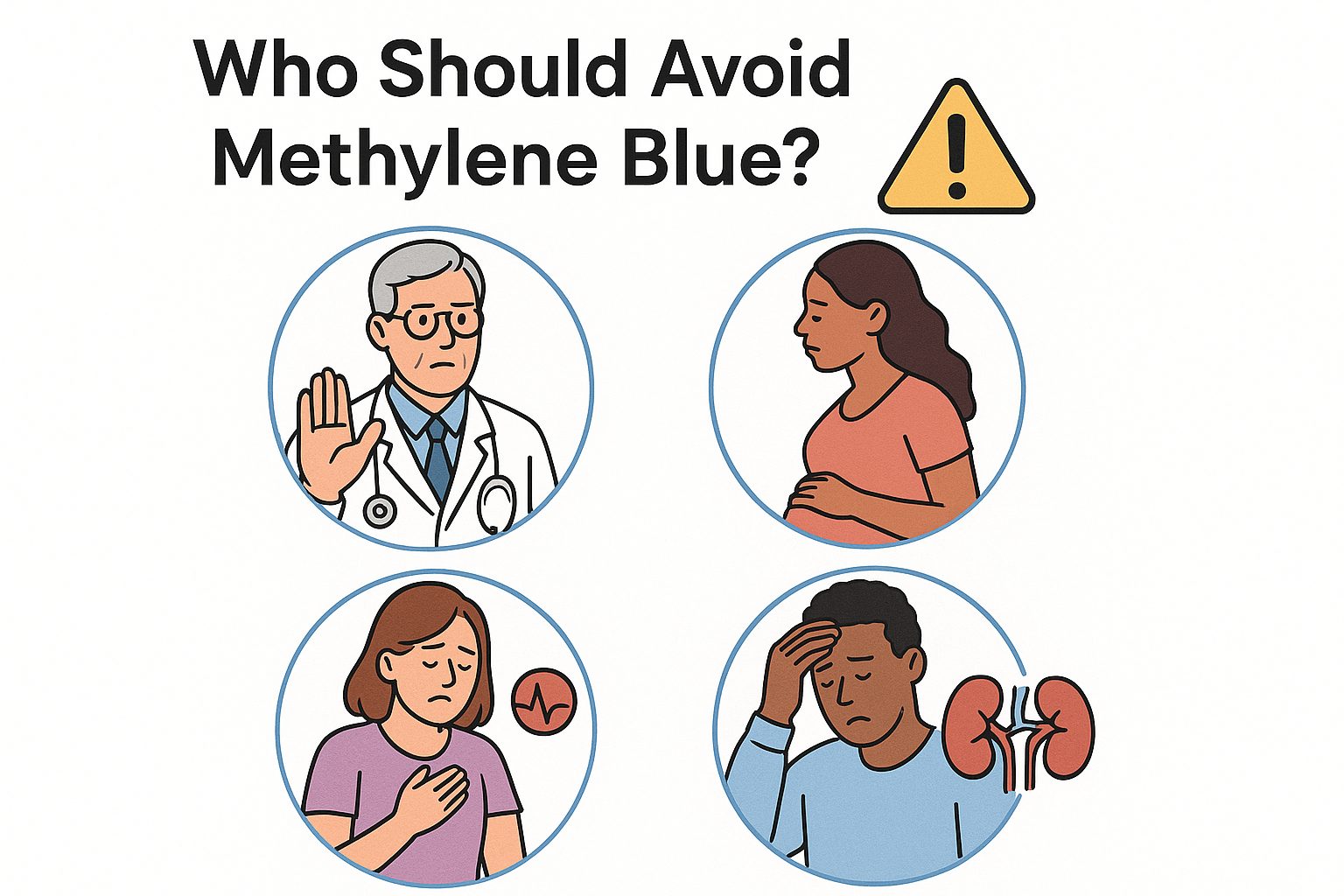
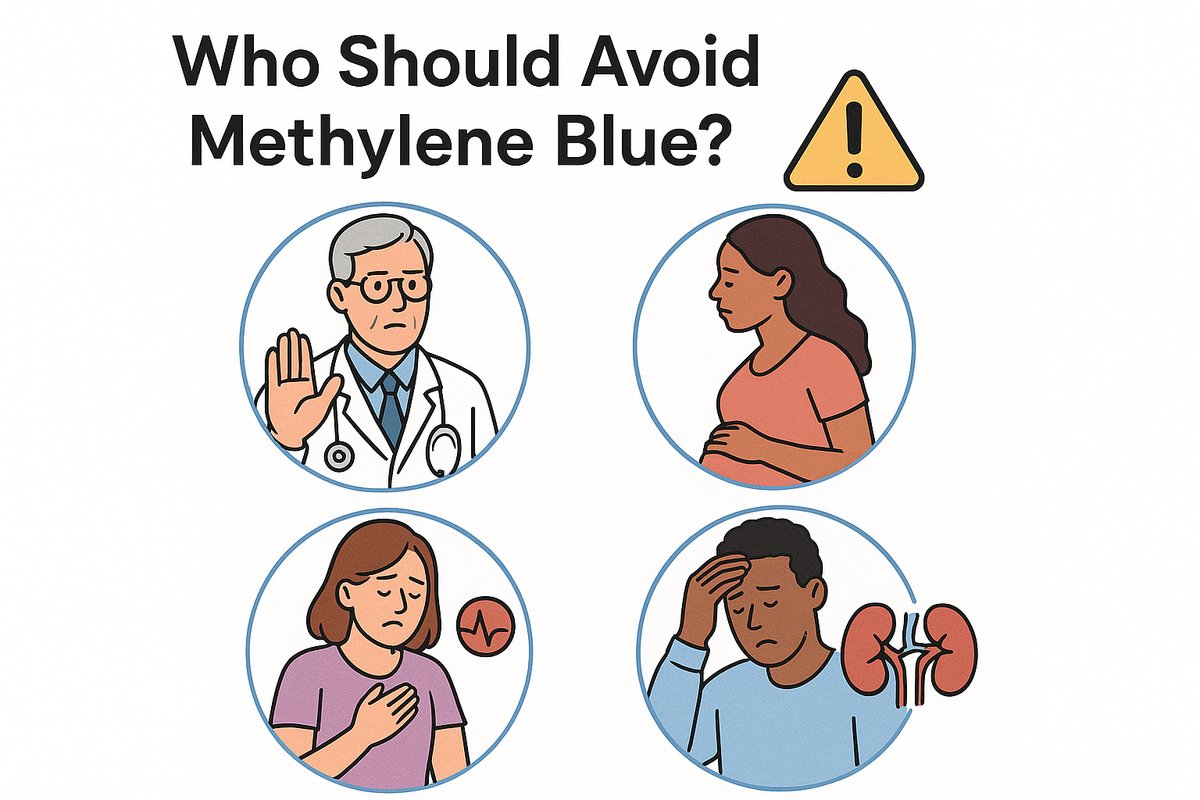
Methylene blue has a significant contraindication and interaction profile that excludes a meaningful fraction of the general population. Absolute contraindications: G6PD deficiency (can cause life-threatening hemolytic anemia); pregnancy (methemoglobin-reducing action can harm fetal hemoglobin); any current use of serotonergic medications (SSRIs, SNRIs, MAOIs, tramadol, meperidine, linezolid, dextromethorphan, 5-HTP) — serotonin syndrome risk is documented and potentially fatal. Strong cautions: known pulmonary disease (methylene blue can impair nitric oxide-mediated pulmonary vasodilation); people on phenothiazine antipsychotics (pharmacological interference); history of kidney disease (reduced clearance of methylene blue). This list covers a very large percentage of adults over 50, where the supplement is most marketed.
- G6PD deficiency affects approximately 400 million people globally (most prevalent in African, Mediterranean, Middle Eastern, and South Asian populations) — this is not a rare condition, and methylene blue is an absolute contraindication due to oxidative hemolytic anemia risk.
- The serotonergic drug interaction list is longer than most users realize: beyond obvious antidepressants (SSRIs, SNRIs), it includes tramadol, meperidine, dextromethorphan (common in cough medicines), linezolid (antibiotic), fentanyl, lithium, and to a lesser extent triptans — these are extremely common medications.
- Pregnancy is an absolute contraindication: methylene blue injected into the amniotic fluid (used historically for twin identification) caused intestinal atresia in the fetus; oral doses in pregnancy have unknown but potentially serious risks to fetal hemoglobin and methemoglobin.
- People with COPD, pulmonary hypertension, or other significant lung conditions should avoid methylene blue because it inhibits nitric oxide synthase — the primary vasodilator mechanism in pulmonary vasculature, potentially worsening pulmonary hypertension.
- The ‘healthy biohacker’ assumption is risky: many adults in the target demographic (40-60+) are on SSRIs for anxiety/depression, take tramadol for pain, use DXM-containing OTC cough products, or have undiagnosed G6PD deficiency — any of these creates a contraindication.
If you are searching who should avoid methylene blue, you are asking the right question. Too much online content starts with possible benefits and buries the contraindications. That is backwards.
For most people, methylene blue should be treated as a high-caution compound, not a casual supplement. And for some groups, it should generally be avoided unless a qualified medical professional specifically directs otherwise.
1. People Taking SSRIs, SNRIs, or Other Serotonergic Drugs
This is the biggest red flag.
Methylene blue can act as a monoamine oxidase inhibitor, which means it can interact with serotonergic medications and increase the risk of serotonin syndrome. The FDA has specifically warned about this interaction.
That includes many people taking:
- SSRIs
- SNRIs
- certain tricyclic antidepressants
- some migraine drugs
- some opioids
- other serotonergic agents
If you are on psychiatric medication, this topic should not be treated casually.
2. People With G6PD Deficiency
Methylene blue can trigger hemolysis in people with G6PD deficiency. This is a classic and important contraindication, not an obscure side note.
Anyone with known G6PD deficiency should avoid self-experimenting with methylene blue.
3. Pregnant or Breastfeeding Individuals
Pregnancy and breastfeeding are not the time for speculative biohacking. Given methylene blue’s pharmacology and known safety concerns, it belongs in the avoid-or-medical-supervision-only category here.
4. People With Significant Kidney Problems or Complex Medical Conditions
Anyone with impaired clearance, serious chronic illness, or complex medication regimens should be especially cautious. Even if the exact risk depends on the case, this is not a compound to layer on casually.
5. Anyone Using Multiple Prescription Medications
Even if none of the medications are obviously serotonergic, polypharmacy increases unpredictability. The risk is not just one known interaction; it is the overall complexity.
6. People Buying Non-Pharmaceutical-Grade Product
This category gets overlooked. Even if someone might tolerate methylene blue in theory, that says nothing about the safety of a poorly sourced product. Lab or industrial-grade dye is not the same thing as a properly manufactured pharmaceutical-grade preparation.
7. People Chasing a Vague Goal
This may sound less medical, but it matters. If someone cannot answer why they want methylene blue beyond “I heard it helps energy,” that is usually a signal to stop. Advanced compounds should have a clear purpose, not just curiosity plus hype.
Safer First Steps Before Considering Methylene Blue
For most people, there are better places to start:
- improve sleep quality
- increase daylight exposure and activity
- lift weights and walk after meals
- address blood sugar instability
- review iron, B12, thyroid, and other common fatigue issues with a clinician
- consider lower-risk supplements with better evidence for general use, such as creatine when appropriate
Why This Matters
The problem with methylene blue discourse is not that the compound is uninteresting. It is that internet wellness culture often strips away context. A compound can be scientifically intriguing and still be a poor choice for broad public self-experimentation.
That is exactly the case here.
FAQ
Who absolutely should not take methylene blue?
People on serotonergic medications and those with G6PD deficiency are among the clearest high-risk groups.
Can people on antidepressants take methylene blue?
Not without explicit medical guidance. The interaction risk is serious.
Should pregnant women avoid methylene blue?
Yes, unless there is a medically directed reason and supervision.
Is methylene blue safe if bought online?
Not necessarily. Product grade and purity are major concerns.
Sources
- Effectiveness of photodynamic therapy against Escherichia coli: Influence of light dose fractionation in the presence of porphyrins, methylene blue and zinc phthalocyanine disulfonate. Journal of photochemistry and photobiology. B, Biology. 2026. PMID: 41833221.
- Effectiveness of Methylene Blue Photosensitizer-Loaded Chitosan and Sepiolite Nanoparticles and Er, Cr: YSGG Laser on the Smear Layer and Push-out Bond Strength of Glass Fiber Post to Canal Dentin: An In Vitro SEM Evaluation. Photobiomodulation, photomedicine, and laser surgery. 2026. PMID: 41574501.
- Dual-wavelength photoacoustic atlas method to estimate fractional methylene blue and hemoglobin contents. Journal of biomedical optics. 2022. PMID: 36050818.
- The Role of Methylene Blue Spray to Keep Parathyroid Gland and Recurrent Laryngeal Nerve Safe During Thyroidectomy. Chirurgia (Bucharest, Romania : 1990). 2023. PMID: 37480355.
- Indocyanine green and methylene blue dye guided sentinel lymph node biopsy in patients with penile cancer (PeCa): results of 50 inguinal basins assessed at a single institution in India. World journal of urology. 2024. PMID: 39331184.
Related Articles
- Methylene Blue Stacks for Biohackers: Why Caution Beats Cleverness
- Low-Dose Methylene Blue Guide: Benefits, Risks, and a Reality Check
- Is Low-Dose Methylene Blue Safe? What Cautious Readers Should Know
- Methylene Blue for Mitochondria: Hype or Help?
- Low-Dose Methylene Blue: The Mitochondrial Enhancer Gaining Longevity Attention
📚 Part of our Longevity Supplements Guide hub. Explore all our longevity supplement evidence reviews.


Leave a Reply