
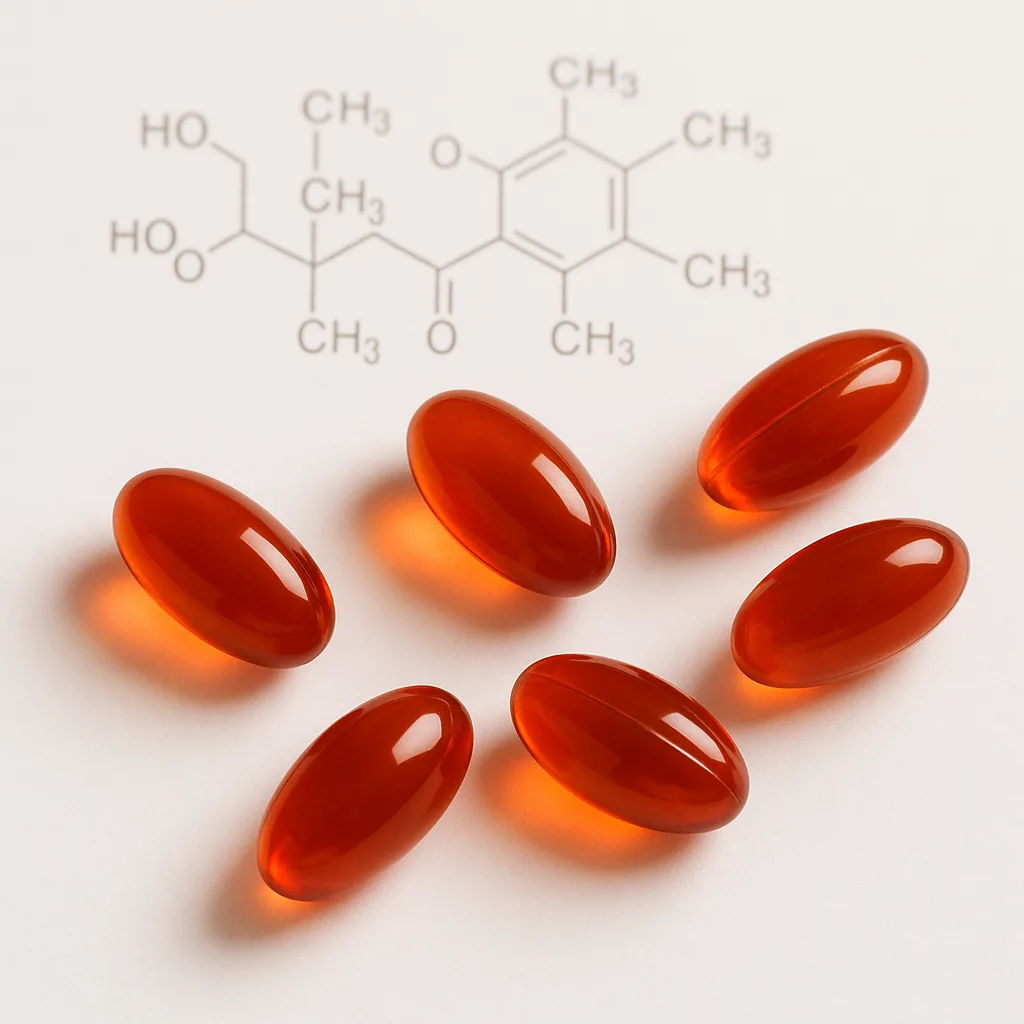
CoQ10 and Ubiquinol Supplements: The Complete Guide for 2026

CoQ10 and Ubiquinol: What They Actually Do, Who Needs Them, and How to Choose
Your body makes CoQ10 naturally — and that’s part of why the supplement conversation is so easily misread. If you already produce it, why take more? The answer has everything to do with how CoQ10 production changes over time, what happens when you’re on certain medications, and the difference between ubiquinone and ubiquinol that most labels don’t explain clearly. Here’s what the research actually shows about one of the most widely sold supplements on the market.

Quick Answer: CoQ10 (coenzyme Q10) is a fat-soluble compound critical for mitochondrial energy production. It declines with age and is depleted by statin medications. Ubiquinol is the active, reduced form with better absorption in older adults. The strongest clinical evidence supports CoQ10 for heart failure (particularly the Q-SYMBIO trial), statin-induced muscle symptoms, and mitochondrial disorders. Evidence for blood pressure, fertility, and fatigue is meaningful but more variable. Standard dosing ranges from 100–300 mg/day depending on the condition.
What CoQ10 Is and Why It Matters
CoQ10, also known as ubiquinone (or coenzyme Q10), is a fat-soluble compound found in virtually every cell of the human body. Its primary job is serving as an electron carrier in the mitochondrial electron transport chain — the biochemical assembly line that produces ATP, the molecule your cells use for energy.
Think of CoQ10 as the shuttle bus in your cells’ energy factory. Without enough of it, the factory slows down. Every organ that burns energy intensively — the heart, brain, kidneys, liver — has high CoQ10 concentrations. The heart is particularly relevant, running continuously and demanding an enormous, uninterrupted energy supply.
CoQ10 also functions as a fat-soluble antioxidant, protecting lipid membranes and mitochondrial membranes from oxidative damage. This dual role — energy production and antioxidant protection — is why it appears in research across such diverse conditions.
The problem is that your body’s ability to synthesize CoQ10 peaks in your 20s and then begins a slow, steady decline. By your 40s, CoQ10 levels in heart tissue can be measurably lower than they were at peak production. By your 70s, the decline can be substantial. Add statin medications to the picture — which inhibit the same biochemical pathway that produces CoQ10 — and you have a population with genuinely suboptimal CoQ10 status.
Ubiquinone vs Ubiquinol: The Form Distinction That Actually Matters
This is one of the more legitimate distinctions in supplement marketing, though it’s often overstated.
Ubiquinone
Ubiquinone is the oxidized form of CoQ10. It’s what most supplements historically contained, it’s well-studied, and it’s effective — but it needs to be converted to ubiquinol in the body before it can function as an antioxidant and perform its mitochondrial role.
Ubiquinol
Ubiquinol is the reduced (active) form of CoQ10. It doesn’t need conversion — the body can use it directly. A landmark 2007 pharmacokinetic study by Hosoe et al. in Regulatory Toxicology and Pharmacology demonstrated that ubiquinol achieved significantly higher plasma concentrations than ubiquinone at the same dose in human subjects.
Who This Matters For
In younger, healthy adults, the body efficiently converts ubiquinone to ubiquinol. The absorption advantage of ubiquinol is smaller in this population. But in older adults, people with chronic disease, or anyone with compromised conversion capacity, ubiquinol offers a meaningful absorption advantage. A 2016 study by Fischer et al. in PLOS ONE found that baseline CoQ10 status was a significant determinant of muscular strength in two independent cohorts of older adults, supporting the functional relevance of maintaining adequate CoQ10 levels as a component of muscle health with aging.
The practical takeaway: If you’re under 40 and healthy, standard ubiquinone is likely adequate. If you’re over 50, managing heart disease or mitochondrial dysfunction, or have had poor results with ubiquinone, ubiquinol is worth the additional cost.
For a more detailed breakdown, see our article CoQ10 vs Ubiquinol: What Is the Real Difference?.
The Clinical Evidence: What CoQ10 Has and Hasn’t Proven
Heart Failure
This is CoQ10’s strongest domain, anchored by one of the most significant supplement trials in cardiovascular medicine: the Q-SYMBIO trial.
Published in JACC: Heart Failure in 2014, Q-SYMBIO was a multicenter, randomized, double-blind, placebo-controlled trial involving 420 patients with severe heart failure (NYHA class III–IV). Participants received 100 mg of CoQ10 three times daily or placebo. After two years, the CoQ10 group had a 42% reduction in major adverse cardiovascular events and significantly reduced cardiovascular mortality compared to placebo (Mortensen et al., 2014).
This is not a small, industry-funded pilot study. It’s a rigorously designed trial with hard clinical endpoints — the kind of evidence that changes prescribing patterns. Several cardiologists now recommend CoQ10 as adjunctive therapy in heart failure management.
Earlier meta-analyses (Rosenfeldt et al., 2007) had suggested CoQ10 could improve ejection fraction in heart failure patients, but the Q-SYMBIO trial was the first large trial to demonstrate a mortality benefit.
Blood Pressure
The blood pressure evidence is real but modest. A 2007 meta-analysis by Rosenfeldt et al. in the Journal of Human Hypertension, which pooled data from 12 clinical trials involving 362 patients, found CoQ10 supplementation reduced systolic blood pressure by an average of 17 mmHg and diastolic blood pressure by 10 mmHg compared to placebo.
These are meaningful numbers if accurate — comparable to some pharmaceutical interventions. But the trials included in that meta-analysis were small and varied in quality. The effect size may be optimistic. More recent systematic reviews have found more modest results, particularly in people without significant baseline hypertension.
The consensus interpretation: CoQ10 may contribute to blood pressure reduction as part of a comprehensive cardiovascular support strategy, particularly in people already managing heart disease. It is not a reliable standalone antihypertensive for most people.
See our detailed evidence review: CoQ10 for Blood Pressure: What the Evidence Shows and CoQ10 for Blood Pressure: Evidence Review.
Statin-Induced Muscle Symptoms
Statins inhibit HMG-CoA reductase — the enzyme that drives cholesterol synthesis. But HMG-CoA reductase is also a step in the biosynthesis of CoQ10. Statins, by design, reduce endogenous CoQ10 production. This is not controversial; it’s biochemistry.
What is more debated is whether CoQ10 supplementation reliably reverses statin-induced myopathy (muscle pain and weakness). The evidence here is mixed. A 2015 meta-analysis by Banach et al. in Mayo Clinic Proceedings found no statistically significant reduction in statin-induced muscle pain (P = 0.20) or plasma creatine kinase (P = 0.38) with CoQ10 versus placebo across 6 randomized controlled trials, though the authors noted high heterogeneity and called for larger well-designed trials.
Clinically, many physicians recommend 100–200 mg/day CoQ10 for patients on statins who are experiencing muscle symptoms. The risk-benefit profile of trying CoQ10 is strongly favorable: it’s safe, relatively inexpensive, and has at least a plausible mechanism. Whether it works for a given individual is something they can assess within 4–8 weeks.
For product guidance in this specific context, see Best CoQ10 for Statin Users: What to Look For.
Fatigue and Energy After 40
This is where CoQ10 evidence is softer but still meaningful for the right population. Randomized trials in healthy young adults consistently fail to show CoQ10’s effect on exercise performance or energy. The population where evidence exists is people with deficiency: older adults, people with chronic fatigue syndrome, and those with mitochondrial disorders.
A 2008 study by Córdova et al. in the Journal of Physiology and Biochemistry found improvements in muscle performance and reduced oxidative stress markers in older trained athletes supplementing with CoQ10. A 2008 trial by Mizuno et al. in Nutrition found that 300 mg/day CoQ10 reduced fatigue sensation in healthy but sedentary middle-aged subjects.
The logic tracks: if your CoQ10 production has declined with age and your mitochondrial efficiency has dropped with it, restoring CoQ10 levels to something closer to optimal should have functional effects. But if your CoQ10 status is already adequate, supplementing won’t make a healthy mitochondrion run faster than its design allows.
See our full analysis: CoQ10 for Fatigue After 40: Can It Help Energy Levels?.
Fertility
Mitochondrial function is critical in both male and female fertility. Sperm require substantial energy for motility; oocytes have enormous mitochondrial demands during fertilization and early embryo development.
A 2013 meta-analysis by Lafuente et al. in the Journal of Assisted Reproduction and Genetics found that CoQ10 supplementation improved sperm motility and concentration in men with idiopathic male infertility. Effect sizes were modest but statistically significant.
In women, particularly older women undergoing IVF, CoQ10 is being studied for its potential to improve egg quality. A 2018 randomized trial by Xu et al. in Reproductive Biology and Endocrinology found that 600 mg/day CoQ10 for 60 days before egg retrieval improved fertilization rates and embryo quality in women with poor ovarian response, though the trial was small and results should be viewed as preliminary.
Migraine Prevention
Migraine has a mitochondrial component — neuronal energy metabolism dysfunction is one proposed mechanism. A 2005 randomized trial by Sandor et al. in Neurology found that 300 mg/day CoQ10 (three 100 mg doses) reduced migraine frequency by 47.6% versus 14.4% for placebo. This is a statistically significant, clinically meaningful result, and CoQ10 is now included in several evidence-based migraine prevention guidelines.
Age-Related Decline in CoQ10: Why This Matters Practically
Your body synthesizes CoQ10 through a multi-step pathway involving the mevalonate pathway — the same pathway statins target. Peak production occurs in your mid-20s. From there, tissue concentrations decline progressively.
By age 40, heart tissue CoQ10 concentrations may be 30–40% lower than peak levels. By age 70–80, the decline in some tissues approaches 50–60% of peak (Kalen et al., Lipids, 1989). This isn’t a fringe claim — it’s been replicated in tissue analysis studies across multiple research groups.
This age-related decline is the most compelling argument for CoQ10 supplementation in otherwise healthy adults past 40. It’s not about treating a disease; it’s about supporting a biochemical process that your body is naturally doing less efficiently than it used to.
How CoQ10 Is Absorbed: The Fat-Soluble Factor
CoQ10 is fat-soluble, which has significant practical implications for how and when you take it. Taken on an empty stomach, absorption is poor. Taken with a meal containing fat, absorption improves substantially.
Several formulation strategies have been developed to improve bioavailability:
Emulsified forms: Lipid-based delivery systems or emulsions can improve absorption compared to dry powder capsules.
Softgels with oil: CoQ10 dissolved in oil (commonly olive oil or medium-chain triglycerides) in softgel capsules absorbs better than pressed powder tablets.
Crystal-free forms: Some manufacturers use processing techniques to ensure CoQ10 remains in solution rather than crystallizing, which improves absorption.
Cyclodextrin complexes: Emerging formulation technologies show promise for improving aqueous dispersibility and absorption.
The practical guidance: take CoQ10 with your largest meal of the day, ideally one containing fat. If you’re taking 300 mg/day or more, splitting the dose into two or three smaller doses throughout the day is preferable to a single large dose — absorption rate-limits at higher single doses.
Dosing by Condition: A Practical Reference
Rather than one-size-fits-all dosing, the evidence points to condition-specific protocols:
General cardiovascular support (over 40): 100–200 mg/day of ubiquinone, or 100 mg/day of ubiquinol.
Heart failure (as adjunct): 100–300 mg/day, divided into two or three doses. The Q-SYMBIO trial used 300 mg/day total.
Statin-induced muscle symptoms: 100–200 mg/day. Give it 4–8 weeks to assess effect.
Blood pressure support: 100–200 mg/day as part of a broader cardiovascular approach.
Migraine prevention: 300 mg/day, divided into three 100 mg doses (matching the Sandor et al. trial protocol).
Male fertility: 200–300 mg/day for at least 3 months (sperm cycle duration matters).
IVF support (women, poor ovarian responders): 600 mg/day for 60 days before retrieval, under physician guidance.
Fatigue/energy in older adults: 100–300 mg/day, with meals.
For a consolidated dosing guide, see How Much CoQ10 Should You Take Daily?.
Who Benefits Most from CoQ10 Supplementation
Not everyone needs CoQ10 supplementation. Here’s who the evidence most clearly supports:
Adults over 50: Declining endogenous synthesis makes supplementation increasingly rational with age.
Statin users: Biochemical rationale is strong; clinical benefit for muscle symptoms is probable.
People with heart failure or cardiomyopathy: Best clinical evidence. Should be used as adjunct under physician supervision.
People with mitochondrial disorders: Established medical use.
People with migraine: Evidence supports 300 mg/day for prevention.
Couples trying to conceive, especially when male factor is present: Modest but real evidence for sperm motility improvements.
People with chronic fatigue or fibromyalgia: Some evidence; worth a trial.
Healthy adults under 40 without risk factors or deficiency: The evidence here is thin. CoQ10 is unlikely to make a meaningful difference in people with robust endogenous production.
For full heart health context, see CoQ10 for Heart Health Support.
Safety and Drug Interactions
CoQ10 has an excellent safety profile. It’s been used at doses up to 1,200 mg/day in clinical trials without serious adverse effects. The most commonly reported side effects at standard doses are mild GI symptoms — nausea, diarrhea, or appetite suppression — that resolve with food or dose reduction.
The most clinically significant interaction is with warfarin. CoQ10’s structural similarity to vitamin K means it may reduce warfarin’s anticoagulant effect. People on warfarin should have their INR monitored if starting or stopping CoQ10 supplementation.
CoQ10 may also have additive blood pressure-lowering effects with antihypertensive medications, which can be beneficial but warrants monitoring.
No serious interactions with statins have been identified — CoQ10 does not appear to reduce statin efficacy.
How to Choose a Quality CoQ10 Supplement
The CoQ10 market is large and uneven. Here’s what to look for:
Form: Ubiquinol for adults over 50, people with absorption concerns, or anyone who hasn’t responded to ubiquinone. Ubiquinone is adequate for most healthy younger adults.
Formulation: Softgels with oil or emulsified forms > dry powder capsules for absorption.
Dose: Match to your specific purpose (see dosing section above). Supplements ranging from 50–600 mg are commercially available.
Third-party testing: NSF International, USP, or Informed Sport certification verifies label accuracy and product purity.
Brand transparency: Legitimate manufacturers disclose CoQ10 source, form, and can provide Certificates of Analysis.
For our curated picks based on these criteria, see Best CoQ10 Supplements 2026: Ubiquinol vs Ubiquinone and our updated Best CoQ10 Supplements in 2026.
Frequently Asked Questions
How long does CoQ10 take to work?
It depends on the application. For statin-induced muscle symptoms, some people notice improvement within 2–4 weeks. For cardiovascular outcomes, the Q-SYMBIO trial showed significant benefits emerging over 2 years. For fatigue, 4–8 weeks at an adequate dose is a reasonable trial period. Plasma CoQ10 levels stabilize within 2–4 weeks of consistent supplementation.
Does CoQ10 actually give you more energy?
Not directly in the way a stimulant does — it won’t make you feel buzzed. What it may do in deficient individuals is improve the efficiency of mitochondrial energy production, which can translate to less fatigue, better exercise tolerance, and improved stamina. In people with adequate CoQ10 levels, the effect is likely negligible.
Can CoQ10 be taken long-term?
Yes. There is no evidence of harm with long-term CoQ10 supplementation at therapeutic doses. Clinical trials have extended up to 4 years. It is not a cycling supplement.
Is there a food source of CoQ10?
Yes — beef heart, organ meats, and oily fish (sardines, mackerel) contain meaningful amounts. But the amounts from food are orders of magnitude lower than therapeutic doses. A serving of beef heart contains roughly 11 mg of CoQ10; a standard supplement dose is 100–300 mg.
Can CoQ10 reverse aging?
No. CoQ10 doesn’t reverse aging, but it may help offset some age-related mitochondrial decline. The distinction matters — it’s a support tool for a specific physiological need, not a longevity intervention with robust human evidence behind it in that specific framing.
Does CoQ10 need to be refrigerated?
Most CoQ10 supplements don’t require refrigeration, but they should be stored away from heat and light, which can degrade the compound. Some ubiquinol products recommend refrigeration after opening because ubiquinol is more prone to oxidation than ubiquinone. Check the manufacturer’s guidance.
Is CoQ10 the same as PQQ?
No. PQQ (pyrroloquinoline quinone) is a different compound that also supports mitochondrial function, specifically by stimulating mitochondrial biogenesis (the creation of new mitochondria). Some supplements combine CoQ10 and PQQ, and there’s theoretical synergy, but they are distinct molecules with different mechanisms.
Sources
- Mortensen, S. A., Rosenfeldt, F., Kumar, A., et al. (2014). The effect of coenzyme Q10 on morbidity and mortality in chronic heart failure: results from Q-SYMBIO: a randomized double-blind trial. JACC: Heart Failure, 2(6), 641–649.
- Rosenfeldt, F. L., Haas, S. J., Krum, H., et al. (2007). Coenzyme Q10 in the treatment of hypertension: a meta-analysis of the clinical trials. Journal of Human Hypertension, 21(4), 297–306.
- Sandor, P. S., Di Clemente, L., Coppola, G., et al. (2005). Efficacy of coenzyme Q10 in migraine prophylaxis: a randomized controlled trial. Neurology, 64(4), 713–715.
- Hosoe, K., Kitano, M., Kishida, H., Kubo, H., Fujii, K., & Kitahara, M. (2007). Study on safety and bioavailability of ubiquinol (Kaneka QH) after single and 4-week multiple oral administration to healthy volunteers. Regulatory Toxicology and Pharmacology, 47(1), 19–28.
- Fischer, A., Onur, S., Niklowitz, P., et al. (2014). Coenzyme Q10 Status as a Determinant of Muscular Strength in Two Independent Cohorts. PLOS ONE, 9(12), e111840.
- Banach, M., Serban, C., Sahebkar, A., et al. (2015). Effects of coenzyme Q10 on statin-induced myopathy: a meta-analysis of randomized controlled trials. Mayo Clinic Proceedings, 90(1), 24–34.
- Lafuente, R., González-Comadrán, M., Solà, I., et al. (2013). Coenzyme Q10 and male infertility: a meta-analysis. Journal of Assisted Reproduction and Genetics, 30(9), 1147–1156.
- Xu, Y., Nisenblat, V., Lu, C., et al. (2018). Pretreatment with coenzyme Q10 improves ovarian response and embryo quality in low-prognosis young women with decreased ovarian reserve. Reproductive Biology and Endocrinology, 16(1), 29.
- Kalen, A., Appelkvist, E. L., & Dallner, G. (1989). Age-related changes in the lipid compositions of rat and human tissues. Lipids, 24(7), 579–584.
- Mizuno, K., Tanaka, M., Nozaki, S., et al. (2008). Antifatigue effects of coenzyme Q10 during physical fatigue. Nutrition, 24(4), 293–299.
- Córdova A, Navas FJ, Gómez-Garduño J, et al. (2008). Effects of coenzyme Q10 supplementation on muscle performance and oxidative stress in older trained athletes. Journal of Physiology and Biochemistry.
Related Articles
- Best CoQ10 Supplements 2026: Ubiquinol vs Ubiquinone
- CoQ10 for Blood Pressure: What the Evidence Shows
- Best CoQ10 for Statin Users: What to Look For
- CoQ10 for Fatigue After 40: Can It Help Energy Levels?
- CoQ10 for Heart Health Support
- CoQ10 vs Ubiquinol: What Is the Real Difference?
- How Much CoQ10 Should You Take Daily?
- CoQ10 for Blood Pressure: Evidence Review
- Best CoQ10 Supplements in 2026

Leave a Reply