Best Supplements for Energy in 2026: Beyond Caffeine — What Actually Works
Quick Answer: Effective energy supplements work by addressing specific root causes of fatigue — mitochondrial inefficiency, nutrient deficiencies, adrenal stress, poor oxygen delivery, or thyroid dysfunction — rather than simply stimulating the nervous system the way caffeine does. The best-evidenced options include CoQ10 (mitochondrial function), B-complex vitamins (energy metabolism cofactors), iron (if deficient, for oxygen transport), creatine (cellular energy buffering), and adaptogens like rhodiola and cordyceps for HPA axis-mediated fatigue. Root cause identification before supplementing produces dramatically better results.
Everyone is tired. That’s not hyperbole — a 2020 survey found that over 45% of Americans report feeling tired or fatigued most of the time. Fatigue is one of the most common complaints in primary care medicine, and it’s also one of the most complex, because “I’m tired” can mean twenty different things biologically.
This is why the energy supplement category is simultaneously useful and oversold. There are supplements that genuinely improve energy — not by chemically stimulating alertness the way caffeine or amphetamines do, but by addressing specific metabolic deficiencies and inefficiencies that cause cellular energy production to run below capacity. The key word is “specific.” The wrong energy supplement for your particular root cause is not just ineffective; it’s a distraction from actually solving the problem.
Understanding the most common root causes of non-pathological fatigue is what transforms this from a list of supplements into a coherent strategy.
The Root Cause Framework: Why “Energy Supplements” Vary So Wildly in Effect
Fatigue in otherwise healthy adults most commonly stems from a handful of overlapping categories:
Mitochondrial inefficiency: Mitochondria are the cells’ energy-producing organelles, converting fuel (glucose, fatty acids) to ATP. When mitochondria are stressed, nutrient-depleted, or simply running below optimal capacity (as commonly happens with age and oxidative damage), less ATP is produced per unit of fuel consumed. CoQ10 and PQQ address this category.
Nutrient deficiency: Several vitamins and minerals are essential cofactors in the enzymatic reactions of energy metabolism. B vitamins, iron, magnesium, and iodine deficiencies all produce measurable fatigue. This category has clear, targeted solutions — but only if you’re actually deficient.
Adrenal/HPA axis dysregulation: Chronic psychological and physiological stress activates the hypothalamic-pituitary-adrenal (HPA) axis, which governs cortisol production. Dysregulation of this system — which can manifest as either consistently high or inappropriately low cortisol — produces fatigue that doesn’t respond to sleep. Adaptogens (rhodiola, ashwagandha, cordyceps) address this category.
Poor oxygen delivery: Red blood cells deliver oxygen to every cell, and oxygen is essential for aerobic ATP production. Iron deficiency anemia reduces this delivery, producing fatigue even at moderate activity levels.
Thyroid dysfunction: The thyroid governs metabolic rate throughout the body. Even subclinical hypothyroidism produces fatigue, weight gain, and cognitive fog. This is a medical diagnosis requiring testing, not supplement intervention, but certain nutrients support thyroid function.
With that framework in mind, here are the most evidence-supported supplements for each relevant root cause.
CoQ10: Powering the Mitochondrial Engine
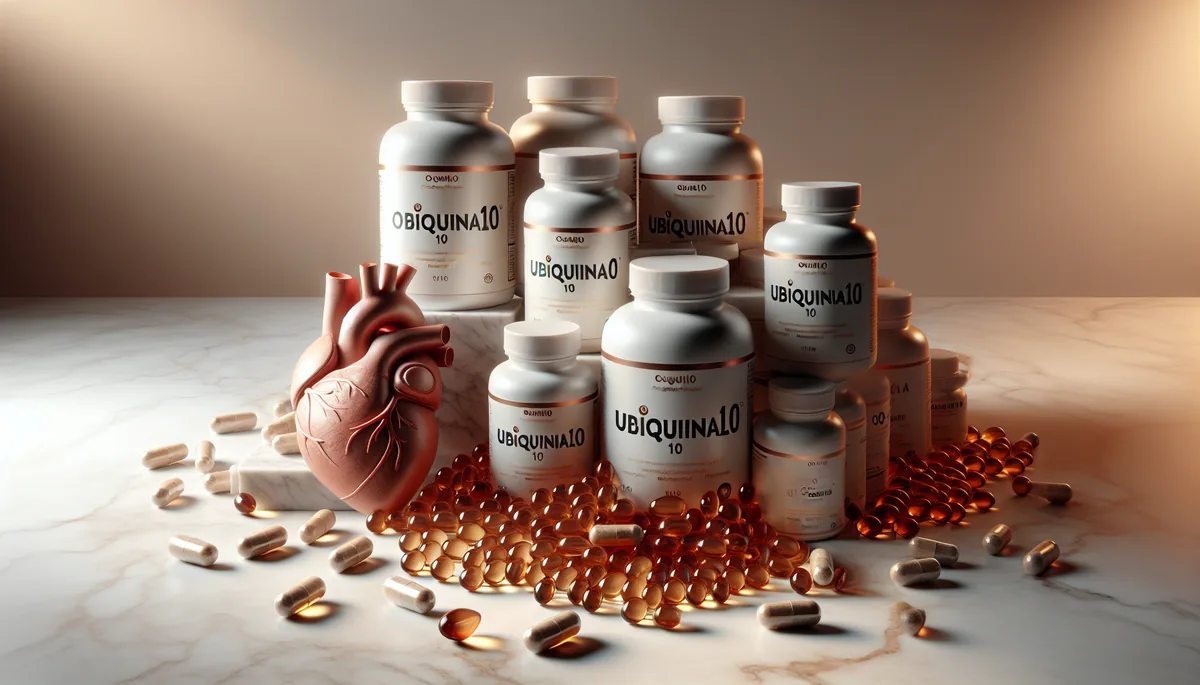
Coenzyme Q10 (ubiquinol or ubiquinone) is a fat-soluble molecule that lives in the inner mitochondrial membrane and is essential for the electron transport chain — the final step in ATP production. Without adequate CoQ10, the electron transport chain becomes inefficient, reducing ATP output per molecule of fuel.
CoQ10 is produced endogenously, but production declines significantly with age — by an estimated 50% between age 20 and 80. It’s also depleted by statins (cholesterol-lowering drugs), which is why statin-associated muscle fatigue and myopathy are strongly linked to CoQ10 depletion and why statin users are routinely advised to supplement.
Clinical evidence for CoQ10 and fatigue is strongest in two populations: statin users (where replenishment is mechanistically logical) and people with chronic fatigue syndrome. A 2019 meta-analysis in BioFactors found CoQ10 supplementation significantly reduced fatigue severity in several conditions including fibromyalgia and heart failure. For otherwise healthy adults experiencing age-related energy decline, evidence is more limited but mechanistically plausible.
The form debate: Ubiquinol (the reduced, active form) is more readily absorbable than ubiquinone (the oxidized form) in older adults and people with absorption issues. For people under 40 with good health, ubiquinone is adequately converted. For those over 40, or anyone specifically targeting mitochondrial support, ubiquinol is worth the modest additional cost.
Dosing: 100–300 mg/day ubiquinol or 200–600 mg/day ubiquinone, taken with a fat-containing meal for best absorption.
B Vitamins: The Energy Metabolism Backbone
B vitamins don’t give you energy in the way caffeine does — they don’t stimulate the nervous system. What they do is serve as essential cofactors in the metabolic pathways that extract energy from food. B1 (thiamine) is needed for pyruvate dehydrogenase. B2 (riboflavin) and B3 (niacin) form FAD and NAD+ — the electron carriers of cellular respiration. B5 (pantothenic acid) is part of coenzyme A. B6 is needed for amino acid metabolism and neurotransmitter synthesis. B12 and folate support cell division and methylation.
When B vitamins are deficient, these pathways slow — and fatigue is often the first symptom. B12 deficiency is particularly common: it’s found in vegans and vegetarians (B12 is only in animal products), people over 50 (due to reduced intrinsic factor), those taking metformin or proton pump inhibitors, and people with malabsorption conditions.
The key principle: if you’re already replete in B vitamins, additional supplementation won’t dramatically increase energy. B vitamins are water-soluble and excess is excreted in urine — which is why urine turns bright yellow after taking a B-complex. But if you’re deficient, correction is often transformative for fatigue.
B-complex supplementation is appropriate as a baseline for vegans, older adults, people under significant stress (stress depletes B5 and B6 preferentially), and anyone with diet quality concerns. The methylated forms of folate and B12 are worth considering for people with MTHFR variants.
Iron: The Oxygen Delivery Bottleneck
Iron deficiency — even without full anemia (termed “iron deficiency without anemia” or “pre-anemia”) — is one of the most common and most missed causes of fatigue, particularly in premenopausal women, endurance athletes, and vegetarians.
Ferritin (stored iron) is the key measure. Many labs flag ferritin as normal at levels above 12–15 ng/mL. But functional iron deficiency symptoms (fatigue, reduced exercise tolerance, cognitive fog, hair shedding) commonly appear at ferritin levels below 30–50 ng/mL. If you’re fatigued and haven’t tested ferritin, it’s one of the most valuable and cheapest tests to run.
If ferritin is low, iron supplementation is appropriate. Ferrous bisglycinate (iron glycinate chelate) is the best-tolerated oral iron form — significantly less GI irritation than ferrous sulfate, with comparable bioavailability. Taking iron with vitamin C enhances absorption; taking it with calcium, antacids, or coffee significantly impairs it.
Critically: iron supplementation in people who are not deficient is not just unnecessary but potentially harmful. Iron is a redox-active metal and excess iron drives oxidative stress. Never supplement iron without testing. Iron testing is simple, cheap, and potentially transformative if you’ve been chronically fatigued.
Creatine: Not Just for Muscles
Creatine is best known as a performance supplement for strength athletes, but its mechanism has broad relevance for energy. Creatine is stored in muscle (and brain) as phosphocreatine, which rapidly regenerates ATP during high-intensity output. More fundamentally, creatine buffers the entire ATP-ADP energy cycle, allowing cells to sustain higher energy output for longer before fatigue sets in.
Beyond acute exercise performance, creatine has been shown to improve cognitive performance — particularly in conditions of sleep deprivation and mental fatigue. A 2003 study in Psychopharmacology found creatine supplementation improved working memory and processing speed in healthy volunteers under sleep deprivation conditions. This brain-energy effect is mechanistically plausible, as the brain is highly ATP-demanding.
Creatine is also one of the few supplements with meaningful evidence for age-related fatigue. Creatine stores decline with age, and supplementation in older adults shows consistent improvements in physical energy, cognitive performance, and muscle function across multiple RCTs.
Dosing: 3–5 g/day of creatine monohydrate. No loading phase is necessary for general use. Take consistently — the benefits accrue from intramuscular and cerebral creatine saturation over 2–4 weeks, not from acute doses. Creatine is the most validated, cheapest, and most multipurpose supplement on this list.
Rhodiola Rosea: Adaptogen With Genuine Evidence
Rhodiola rosea is an adaptogenic herb from the Arctic and mountainous regions of Europe and Asia. Adaptogens are defined by their ability to normalize stress responses — they help the body resist physical and mental stressors and return to homeostasis. Rhodiola’s primary active compounds, rosavins and salidroside, influence the HPA axis, monoamine oxidase (MAO) activity, and cellular stress response proteins.
Rhodiola’s evidence base for fatigue is substantially better than most adaptogens. A 2009 randomized placebo-controlled trial published in Planta Medica found rhodiola supplementation (288 mg/day of standardized extract) significantly reduced fatigue, improved mental performance, and lowered cortisol response to stress over 28 days. A 2012 systematic review of 11 RCTs found consistent evidence for rhodiola reducing mental and physical fatigue.
Mechanistically, rhodiola appears to work specifically on fatigue driven by HPA axis dysregulation — the kind of exhaustion that follows prolonged stress and manifests as “tired but wired,” difficulty recovering from exercise, or cognitive sluggishness. If your fatigue has a stress component, rhodiola is the best-evidenced adaptogen choice.
Dosing: 200–400 mg/day of standardized rhodiola (standardized to 3% rosavins and 1% salidroside), taken in the morning or early afternoon. Rhodiola is mildly stimulating and may worsen sleep if taken in the evening.
Cordyceps: Oxygen Utilization and ATP Synthesis
Cordyceps (Cordyceps sinensis and Cordyceps militaris) are fungi that have been used in Traditional Chinese Medicine for centuries to combat fatigue and improve stamina. Their primary mechanisms appear to involve increasing cellular oxygen utilization and ATP production, partly through adenosine-related compounds and beta-glucan polysaccharides.
Clinical evidence in humans is growing but not as robust as for the other compounds on this list. A 2010 randomized trial found Cordyceps militaris supplementation improved VO₂ max (maximal oxygen uptake) in older adults. Several trials in athletes have found modest improvements in endurance performance. A review in the Journal of Dietary Supplements found consistent but small effects on exercise capacity across available trials.
Cordyceps is most relevant for people whose fatigue has a physical performance component — reduced stamina during exercise, slow recovery, or reduced aerobic capacity. The evidence doesn’t strongly support cordyceps for pure mental fatigue or the fatigue associated with stress.
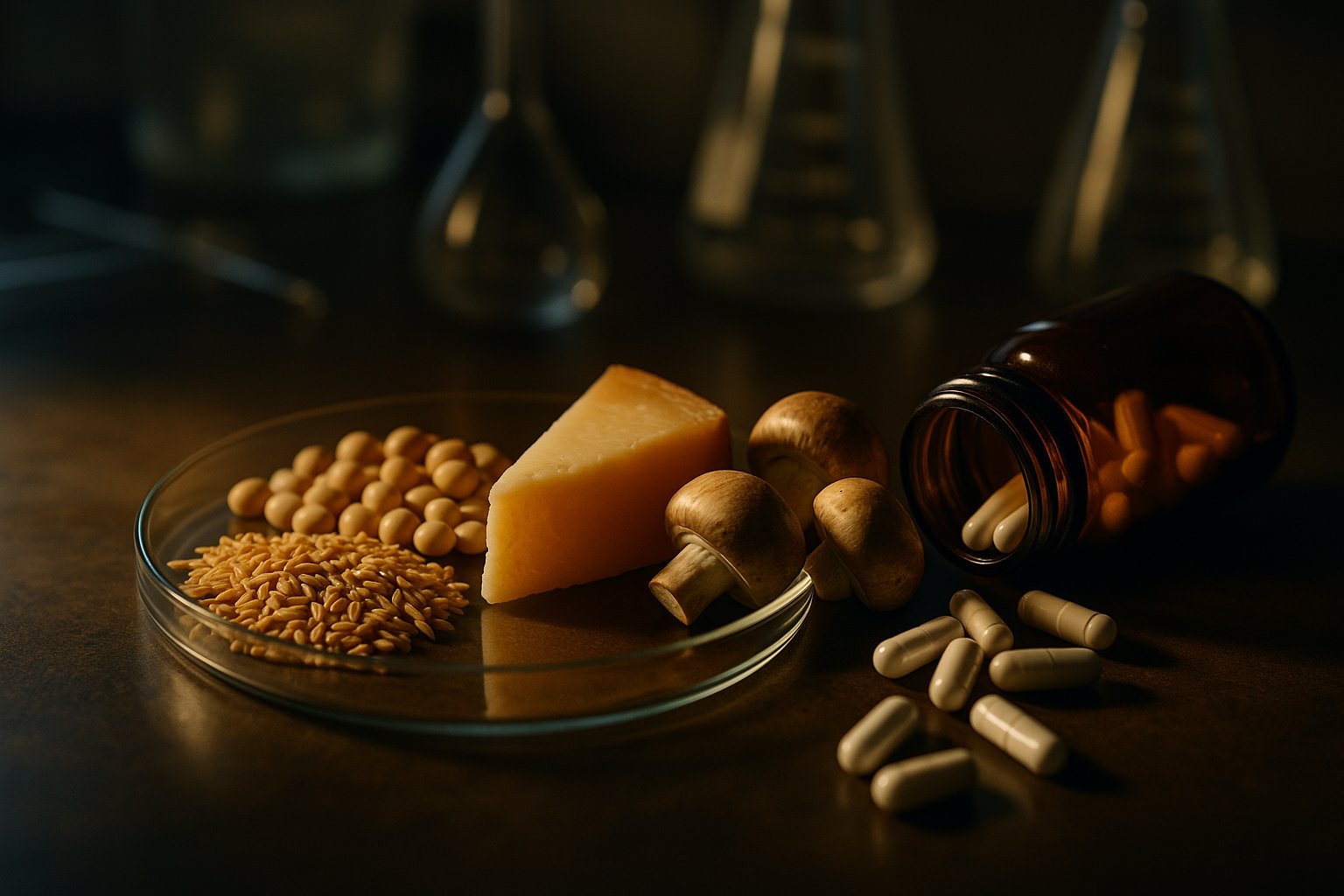
The form matter note: wild-harvested Cordyceps sinensis is extremely expensive. Most commercial products use Cordyceps militaris cultivated on grain substrates, which contains the relevant bioactives (cordycepin, adenosine, beta-glucans) and is the form used in most human research.
PQQ: Mitochondrial Biogenesis
Pyrroloquinoline quinone (PQQ) is a redox cofactor that acts as a potent antioxidant in mitochondria and may stimulate mitochondrial biogenesis — the creation of new mitochondria. It does this through activation of PGC-1α, the master regulator of mitochondrial production.
PQQ is found in small amounts in fermented foods and some plant foods, but dietary amounts are far below supplemental doses used in research. A 2013 randomized trial in Journal of Nutritional Science found PQQ supplementation (20 mg/day) improved self-reported vitality, sleep quality, and appetite compared to placebo, with blood markers of mitochondrial function also improving.
PQQ is often combined with CoQ10 in mitochondria-focused supplement protocols, and there’s evidence these compounds have additive effects on mitochondrial function — PQQ supporting new mitochondria production while CoQ10 optimizes the function of existing mitochondria.
Dosing: 10–20 mg/day PQQ, with CoQ10 if targeting mitochondrial energy production specifically.
FAQ
Is caffeine an energy supplement? Caffeine is the world’s most used psychoactive drug, and it works by blocking adenosine receptors — adenosine is the molecule that builds up as a sleep signal during waking hours. Caffeine doesn’t restore energy; it temporarily blocks your perception of fatigue. It’s effective short-term but doesn’t address underlying causes of chronic fatigue and can worsen HPA axis dysregulation with heavy chronic use.
Should I just take an energy drink instead? Most energy drinks combine caffeine with B vitamins, typically at doses too low to have meaningful metabolic effects in replete individuals. The caffeine is doing the work. That’s not inherently wrong, but it’s not the same as addressing root causes.
How do I know if my fatigue is from a deficiency vs. lifestyle? Basic bloodwork covering B12, ferritin, thyroid (TSH, free T3, free T4), and vitamin D covers the most common deficiency-based causes. If all are normal, fatigue more likely reflects lifestyle factors (sleep quality, chronic stress, fitness level, diet quality) or requires further medical evaluation.
Can I take all these supplements together? CoQ10, B-complex, creatine, and rhodiola are a logical combination with complementary mechanisms and no significant interactions. Adding iron should only happen with confirmed deficiency. PQQ and CoQ10 pair well. This doesn’t need to be all taken simultaneously — rotating or building the stack incrementally helps you identify what’s working.
Spasov, A.A., et al. (2000). A double-blind, placebo-controlled pilot study of the stimulating and adaptogenic effect of Rhodiola rosea. Phytomedicine, 7(2), 85–89. https://pubmed.ncbi.nlm.nih.gov/10839209/
Rawson, E.S., & Venezia, A.C. (2011). Use of creatine in the elderly and evidence for effects on cognitive function. Amino Acids, 40(5), 1349–1362. https://pubmed.ncbi.nlm.nih.gov/21394604/
Harris, R.C., et al. (1992). Elevation of creatine in resting and exercised muscle of normal subjects by creatine supplementation. Clinical Science, 83(3), 367–374. https://pubmed.ncbi.nlm.nih.gov/1327657/
Chen, S., et al. (2010). Randomized double-blind clinical trial of Cordyceps sinensis for fatigue. Evidence-Based Complementary and Alternative Medicine, 7(3), 333–340. https://pubmed.ncbi.nlm.nih.gov/18955338/
Nakano, M., et al. (2012). Effect of pyrroloquinoline quinone (PQQ) on mental status and psychophysiology. Journal of Nutritional Science and Vitaminology, 58(5), 358–362. https://pubmed.ncbi.nlm.nih.gov/23200926/
This article is for informational purposes only and does not constitute medical advice. Chronic fatigue may indicate an underlying medical condition. Always consult a healthcare provider for persistent fatigue, especially before supplementing iron or making significant changes to your supplement regimen.





Leave a Reply