Best Sleep Supplements in 2026: What Actually Works
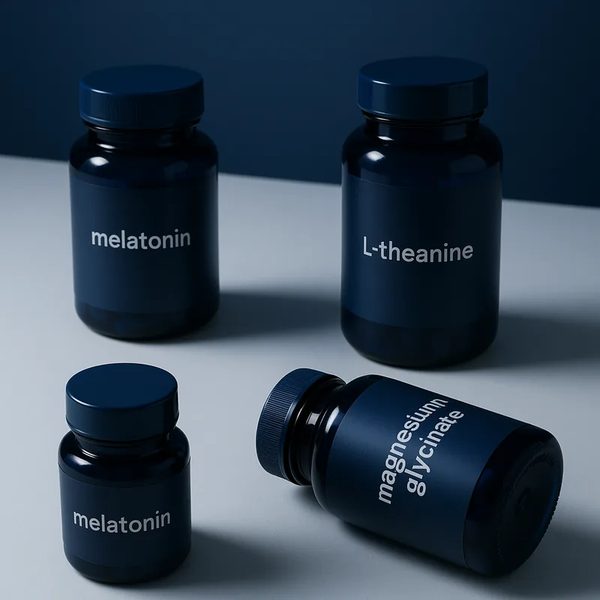
Quick Answer: The most evidence-backed sleep supplements are low-dose melatonin (0.5–1 mg for circadian reset), magnesium glycinate (300–400 mg for relaxation and sleep quality), and L-theanine (100–200 mg for reducing sleep latency). Ashwagandha and apigenin show solid promise for stress-related sleep issues. GABA supplements have real limitations due to poor blood-brain barrier penetration. The best approach is stacking 2–3 well-targeted supplements rather than a single high-dose magic pill.
Americans spent over $52 billion on sleep aids in 2024, yet more than a third of U.S. adults still report getting less than 7 hours per night. The problem isn’t a shortage of products — it’s a shortage of clarity about what actually works, why it works, and how to use it correctly.
This guide gives you an honest, evidence-tiered look at every major sleep supplement. We’ll cover what each one does mechanistically, what the clinical research shows, how to dose and time them, and how to build a stack tailored to your specific sleep problem — because falling asleep too slowly is a different problem than waking up at 3am, which is different from sleeping 9 hours and still feeling groggy.
Understanding Sleep Architecture First
Before picking supplements, it helps to know what you’re optimizing. Sleep isn’t just “off.” It cycles through stages:
N1: Light sleep, transition to deeper stages (5% of night)
N2: True sleep, body temperature drops, heart rate slows (45–55%)
Different sleep supplements affect different stages. Melatonin primarily signals sleep onset, not sleep depth. Magnesium tends to increase slow-wave sleep. Some supplements (including high-dose melatonin and many sedatives) can suppress REM — which feels like better sleep but actually impairs emotional processing and memory consolidation.
The goal isn’t sedation. It’s optimizing the architecture.
Evidence Tiers for Sleep Supplements
Here’s how to think about the evidence:
| Tier | What It Means | |——|————–| | Tier 1 | Multiple well-designed RCTs in humans with consistent results | | Tier 2 | Some human RCTs, mixed results, or limited population studied | | Tier 3 | Mechanistic rationale + some positive evidence, but incomplete picture | | Tier 4 | Promising animal/in vitro data, limited human trials |
With that framework, let’s go through the major players.
Melatonin: Tier 1 (For the Right Purpose)
Melatonin is the most misused sleep supplement in existence. Most people take too much of it and misunderstand what it actually does.
What it does: Melatonin is a circadian signal, not a sedative. Your pineal gland releases it when darkness falls, telling your body it’s nighttime. Supplemental melatonin reinforces this signal — it doesn’t knock you out, it moves your sleep window earlier.
What the research shows: Melatonin is highly effective for:
Jet lag and shift work (resetting circadian rhythm)
Delayed sleep phase disorder
Sleep onset in older adults (who produce less melatonin naturally)
It’s much less effective for primary insomnia in healthy adults — the kind where you lie awake anxious and wired despite being tired.
Dosing: The research on melatonin dosing is counterintuitive. Higher doses don’t work better. The physiological secretion is 0.1–0.3 mg. Most supplements are 5–10 mg — 10 to 100x what your body naturally produces. This doesn’t improve sleep quality and may desensitize melatonin receptors over time.
The evidence-based dose is 0.5–1 mg, taken 60–90 minutes before your target bedtime.
Our melatonin guide 2026 covers the full low-dose vs high-dose debate with the research citations.
Magnesium: Tier 1
Magnesium is probably the most broadly effective sleep supplement because it addresses a widespread nutritional deficiency rather than just sedating the nervous system.
What it does: Magnesium acts as a natural NMDA receptor antagonist and GABA agonist. It reduces neuronal excitability, lowers cortisol, relaxes muscles, and helps regulate the circadian rhythm via effects on the pineal gland.
What the research shows: A 2012 RCT in elderly adults found that 500 mg/day of magnesium significantly improved sleep efficiency, sleep time, early morning awakening, and melatonin levels compared to placebo. Multiple studies have replicated improvements in sleep quality, particularly in people who are magnesium-insufficient.
Form matters: Glycinate is the preferred form — highly bioavailable, minimal GI side effects, and the glycine component has its own sleep-promoting properties. Threonate is also excellent if cognitive benefits are desired alongside sleep.
Dose: 300–400 mg magnesium glycinate, 30–60 minutes before bed.
L-theanine is an amino acid found almost exclusively in green tea. It increases alpha brain waves (associated with relaxed alertness) and modulates GABA, dopamine, and serotonin pathways.
What it does: Reduces sleep latency (time to fall asleep) and promotes relaxation without sedation. Notably, it doesn’t cause next-day grogginess, which makes it excellent for people who need to function fully the next morning.
What the research shows: Human studies show significant improvements in sleep quality scores, particularly in stress-related sleep disruption. One RCT in boys with ADHD found meaningful improvements in sleep efficiency and percentage of time actually sleeping.
Synergy: L-theanine pairs well with magnesium. The combination reduces racing thoughts and physical tension simultaneously.
Dose: 100–200 mg, 30–60 minutes before bed. Some people use 200–400 mg for stronger effect.
Apigenin: Tier 2
Apigenin is a flavonoid found in chamomile — it’s essentially the active compound behind chamomile tea’s famous calming effects, but in a concentrated, standardized form.
What it does: Apigenin binds to GABA-A receptors (the same receptors targeted by benzodiazepines, but more gently). It also has mild anti-anxiety and anti-inflammatory properties.
What the research shows: The evidence base is smaller than for melatonin or magnesium, but it’s growing. Apigenin reduced sleep onset latency and improved sleep quality in several human trials. It gained a lot of attention after Andrew Huberman began recommending it, which sparked more systematic interest.
Dose: 50 mg, taken 30–60 minutes before bed. Higher doses may cause excessive drowsiness.
Adaptogens don’t sedate — they normalize. For people whose sleep problems are driven by elevated cortisol and HPA axis dysregulation (stress-induced insomnia), adaptogens can be remarkably effective.
Ashwagandha (KSM-66 or Sensoril extract): The best-studied adaptogen for sleep. A double-blind RCT published in Medicine found that 600 mg/day of ashwagandha root extract significantly improved sleep onset latency, total sleep time, sleep efficiency, and quality of life measures versus placebo. It works by reducing cortisol and modulating GABA pathways.
Magnolia bark extract (honokiol/magnolol): Binds to GABA-A receptors and reduces stress hormones. Shows promise in human trials for improving sleep quality without suppressing REM.
Lemon balm: Mild anxiolytic, works best for people whose primary issue is anxiety or inability to “turn the brain off.”
L-tryptophan is an essential amino acid and the dietary precursor to serotonin and melatonin. The pathway goes: tryptophan → 5-HTP → serotonin → melatonin.
What it does: Supports the natural production of both serotonin (mood, emotional stability) and melatonin (sleep onset). This makes it a gentler, more physiological approach than supplementing melatonin directly.
Important considerations: Tryptophan competes with other large neutral amino acids for blood-brain barrier transport. Taking it on an empty stomach (or with a small carbohydrate to clear competing amino acids) improves uptake. It should not be combined with SSRIs or MAOIs without medical supervision due to serotonin syndrome risk.
Dose: 500 mg–2 g, taken on an empty stomach 60 minutes before bed.
GABA (gamma-aminobutyric acid) is the brain’s main inhibitory neurotransmitter. If your brain has insufficient GABA activity, you’re wired, anxious, and unable to relax into sleep. So supplementing GABA sounds logical — except for one problem.
The blood-brain barrier issue: Standard GABA supplements don’t efficiently cross the blood-brain barrier. Oral GABA that you swallow mostly stays in the periphery, where it has some effects (reduced heart rate, mild relaxation) but doesn’t reliably raise central GABA activity.
The exception: Certain specialized forms — PharmaGABA (naturally fermented GABA), and indirect GABA boosters like magnesium, apigenin, and theanine — appear to have better CNS effects. Some researchers also argue that gut GABA may affect brain activity via the vagus nerve.
Bottom line: GABA supplements aren’t useless, but they’re not as straightforward as marketing implies. Our GABA supplements guide covers the blood-brain barrier debate in full.
Shift Workers: A Special Case
If you work irregular hours, your circadian rhythm is under constant assault. Standard sleep supplement advice barely applies — you need a different protocol.
Key considerations for shift workers:
Time melatonin to the beginning of your intended sleep window, not to conventional nighttime
Prioritize blackout curtains and sleep masks
Magnesium is valuable regardless of schedule
Avoid bright light for 2 hours before sleep, even if “bedtime” is 10am
Consider low-dose melatonin to help with daytime sleep
Abbasi, B., et al. (2012). The effect of magnesium supplementation on primary insomnia in elderly: A double-blind placebo-controlled clinical trial. Journal of Research in Medical Sciences, 17(12), 1161–1169.
Costello, R.B., et al. (2014). The effectiveness of melatonin for promoting healthy sleep: a rapid evidence assessment of the literature. Nutrition Journal, 13, 106.
Chandrasekhar, K., Kapoor, J., & Anishetty, S. (2012). A prospective, randomized double-blind, placebo-controlled study of safety and efficacy of a high-concentration full-spectrum extract of ashwagandha root in reducing stress and anxiety in adults. Indian Journal of Psychological Medicine, 34(3), 255–262.
Hidese, S., et al. (2019). Effects of L-Theanine Administration on Stress-Related Symptoms and Cognitive Functions in Healthy Adults: A Randomized Controlled Trial. Nutrients, 11(10), 2362.


Leave a Reply