Best Liver Supplements in 2026: Milk Thistle, NAC, TUDCA, and What Actually Helps
Quick Answer: The liver doesn’t need a “detox” — it performs continuous detoxification on its own. What it can need is protection from damage caused by toxins, alcohol, medications, or metabolic disease. The best-evidenced liver supplements are milk thistle (silymarin), N-acetyl cysteine (NAC), and TUDCA — each with distinct mechanisms and use cases. Artichoke leaf extract shows promise for fatty liver and bile function. The “detox” marketing around most liver supplements is unsupported; genuine hepatoprotection is a more honest and achievable goal.
Walk through any supplement retailer and you’ll find rows of products promising to “cleanse,” “detoxify,” or “flush” the liver. It’s a compelling pitch — the liver is one of the body’s most metabolically active organs, filtering blood, processing medications, neutralizing toxins, and producing bile around the clock. The idea that it might accumulate “sludge” that needs flushing out feels intuitively plausible.
The reality is more interesting than the marketing. Your liver doesn’t store toxins waiting to be cleansed — it continuously processes and eliminates them through well-defined enzymatic pathways. When these pathways become overwhelmed or damaged — by alcohol, acetaminophen, non-alcoholic fatty liver disease (NAFLD), or certain medications — the problem isn’t that toxins are sitting there; it’s that hepatocytes (liver cells) are sustaining damage they can’t repair fast enough. The goal of genuine liver support isn’t flushing; it’s protecting hepatocytes from oxidative injury and supporting the regenerative capacity of liver tissue.
That distinction matters enormously when evaluating liver supplements. The compounds with real evidence don’t work by “flushing” anything — they work by reducing oxidative stress, supporting glutathione synthesis, improving bile flow, and in some cases providing cytoprotection at the cellular level.
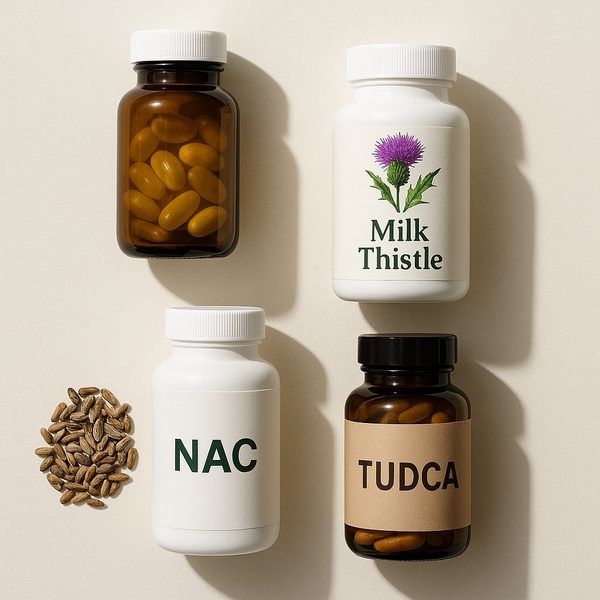
Milk Thistle (Silymarin): The Best-Studied Hepatoprotective Herb
Milk thistle (Silybum marianum) has been used medicinally for over 2,000 years, which is a longer track record than almost anything else in the supplement aisle. Its active compound complex — silymarin, a mixture of flavonolignans including silybin, silydianin, and silychristin — has been studied in hundreds of clinical trials and preclinical models.
Silymarin works through several mechanisms simultaneously. It stabilizes hepatocyte cell membranes, making them less permeable to toxins. It inhibits leukotriene synthesis and NF-κB activation, reducing liver inflammation. It stimulates ribosomal RNA synthesis, which supports protein production and liver cell regeneration. And critically, it acts as a potent antioxidant that preserves glutathione levels in liver tissue — glutathione being the liver’s primary tool for detoxifying reactive metabolites.
Clinical evidence is most robust for two conditions: alcoholic liver disease and toxic hepatitis. For alcoholic liver disease, multiple randomized trials and meta-analyses have found that silymarin supplementation improves liver enzyme levels (ALT, AST) and slows histological damage progression. A comprehensive Cochrane review found inconsistent but generally favorable effects across 13 randomized trials.
For NAFLD — non-alcoholic fatty liver disease, now among the most common liver conditions in industrialized countries — silymarin has shown meaningful benefits in reducing liver fat content, improving liver enzymes, and decreasing insulin resistance in several RCTs. A 2020 meta-analysis in Phytomedicine found silymarin significantly reduced ALT, AST, and liver steatosis compared to placebo in NAFLD patients.
The important caveats: silymarin’s bioavailability from standard extracts is poor. Silybin is poorly water-soluble and doesn’t absorb well. Phospholipid complexes (silybin-phosphatidylcholine, marketed as Siliphos or Milk Thistle Phytosome) significantly improve bioavailability — studies suggest 3–5 times better absorption than standard extracts. If you’re using milk thistle therapeutically, the phytosome form is worth seeking out. Standard extract doses are typically 420–600 mg/day of 70–80% silymarin; phytosome forms can be effective at 240–360 mg/day silybin equivalent.
NAC (N-Acetyl Cysteine): The Glutathione Precursor With Proven Emergency Use
NAC is one of the few supplements whose efficacy is so well-established that it’s used in hospital emergency departments worldwide as a first-line treatment for acetaminophen (Tylenol) overdose — the leading cause of acute liver failure in many Western countries.
The mechanism is straightforward: acetaminophen is metabolized in part to NAPQI, a highly reactive toxic metabolite that glutathione normally neutralizes. Overdose depletes glutathione faster than the liver can replace it, causing NAPQI to accumulate and destroy hepatocytes. NAC replenishes cysteine — the rate-limiting amino acid in glutathione synthesis — allowing the liver to restore its glutathione levels and neutralize NAPQI before fatal damage occurs. Administered within 8–10 hours of overdose, NAC essentially prevents acute liver failure.
For more everyday use, NAC’s relevance comes from the same basic mechanism: supporting glutathione levels under conditions of elevated oxidative stress. The liver is the primary site of glutathione synthesis and the organ most exposed to reactive metabolites. People who consume alcohol regularly, take multiple medications, have fatty liver disease, or are exposed to occupational toxins are under sustained oxidative burden on their liver.
Clinical evidence for NAC in chronic liver conditions is promising but less definitive than for acute overdose. A 2010 trial in Hepatology found NAC improved outcomes in non-acetaminophen acute liver failure. Multiple trials in NAFLD patients have found NAC reduces liver enzymes and markers of oxidative stress. It also appears to reduce liver fibrosis markers in some studies, likely through its effects on glutathione and its direct antifibrotic properties.
Dosing for liver support: 600–1800 mg/day in divided doses. NAC is also a mucolytic (it breaks down mucus), which is why it’s used for respiratory conditions — a useful secondary benefit for many users. It should be taken with water; on an empty stomach can cause nausea at higher doses.
One regulatory note: the FDA has been attempting to reclassify NAC as a drug rather than a supplement in the US, citing its use as an approved pharmaceutical. The regulatory situation has remained in flux since 2020; as of this writing, NAC remains widely available as a supplement, but the situation may evolve.
TUDCA: Bile Acid Support and Emerging Hepatoprotection
TUDCA (tauroursodeoxycholic acid) is a water-soluble bile acid that occurs naturally in small amounts in human bile. It’s the primary active compound in bear bile, which has been used in traditional Chinese medicine for centuries, though modern TUDCA supplements are synthesized or derived from plant sources, not animals.
TUDCA works through mechanisms distinct from milk thistle and NAC. Its primary action is as a cytoprotective bile acid — it competes with hydrophobic (fat-soluble) bile acids that can damage hepatocytes at elevated concentrations. During liver stress or cholestasis (impaired bile flow), toxic bile acids accumulate and trigger hepatocyte apoptosis (cell death). TUDCA displaces these toxic bile acids and directly inhibits mitochondrial membrane permeability, preventing the apoptosis cascade.
Beyond its bile acid competition mechanism, TUDCA also acts as a chemical chaperone for the endoplasmic reticulum — it reduces ER stress, which is increasingly recognized as a driver of liver damage in fatty liver disease, alcoholic hepatitis, and metabolic syndrome.
Clinical evidence is emerging but not yet as extensive as for milk thistle or NAC. A randomized trial published in Hepatology found TUDCA supplementation improved liver enzymes and liver histology in NAFLD patients. Studies in cholestatic liver disease — conditions where bile flow is impaired — have shown consistent benefits. TUDCA is approved as a prescription drug for primary biliary cholangitis in some countries.
For supplementation, TUDCA is typically used at 250–1000 mg/day. It’s particularly popular among people taking anabolic steroids or other compounds with known hepatotoxicity, as it appears to provide meaningful cytoprotective benefit in that context. It’s also gaining attention in the longevity community for its ER stress-reducing properties.
Artichoke Leaf Extract: Bile Flow and Fatty Liver Support
Artichoke leaf extract (Cynara scolymus) is often grouped with milk thistle but works through distinctly different mechanisms. Its primary bioactive compounds — cynarin, chlorogenic acid, and luteolin — stimulate bile production in the liver (choleresis) and bile release from the gallbladder (cholagogue effect). This improved bile flow helps fat digestion and may reduce cholesterol absorption by increasing bile acid excretion.
For NAFLD, artichoke leaf extract has shown real promise. A 2018 randomized trial in Phytotherapy Research found significant reductions in liver enzymes, liver fat content, and blood lipids after 8 weeks of artichoke leaf supplementation (1800 mg/day) compared to placebo. A systematic review confirmed consistent benefits on liver enzymes across multiple trials.
Artichoke leaf is also one of the more accessible and affordable liver-supportive compounds, with good tolerability and minimal side effects at typical doses (600–1800 mg/day of standardized extract). People with bile duct obstruction or gallstones should avoid it due to its cholagogue effect.
The “Detox” Myth vs. Real Hepatoprotection
It’s worth being direct about what liver supplements cannot do. They cannot:
Accelerate the removal of alcohol from your bloodstream (alcohol is metabolized at a fixed rate regardless of supplements)
Remove environmental toxins that have already accumulated in body fat
“Reset” or “restart” the liver
Compensate for ongoing heavy alcohol use or replace evidence-based treatments for hepatitis
What the evidence-supported compounds genuinely can do:
Reduce hepatocyte damage from oxidative stress
Improve liver enzyme markers in fatty liver disease
Support glutathione levels that maintain the liver’s detoxification pathways
Slow progression of certain forms of liver damage
Support recovery from liver stress caused by alcohol, medications, or metabolic conditions
The practical takeaway: if your goal is genuinely protecting your liver from the stresses of modern life — alcohol, medications, high-fat diet, metabolic disease — then milk thistle (phytosome form), NAC, and potentially TUDCA form a legitimate evidence-based stack. Marketing language about “flushing” or “cleansing” should be treated as a red flag, not a selling point.
FAQ
Can liver supplements reverse liver damage? It depends on the type and extent of damage. Early-stage NAFLD (simple steatosis) is often reversible with lifestyle changes, and milk thistle/NAC may support that reversal. Advanced fibrosis or cirrhosis requires medical management. Supplements support the liver’s regenerative processes — they don’t replace them.
Is TUDCA safe for long-term use? TUDCA has a good safety profile in the doses used for supplementation. It’s been used at higher doses in clinical settings for months without serious adverse effects. The main contraindication is active bile duct obstruction.
Can I take milk thistle and NAC together? Yes, and the combination is frequently used. They have complementary mechanisms — silymarin stabilizes cell membranes and has direct antioxidant effects, while NAC supports glutathione synthesis. Adding TUDCA to this stack creates a comprehensive hepatoprotective approach.
Do liver supplements interact with medications? NAC and silymarin can potentially affect drug metabolism through cytochrome P450 enzymes. If you’re taking medications processed by the liver — particularly statins, immunosuppressants, or anticoagulants — consult your doctor before adding liver supplements.
How long before liver supplements show results? Liver enzyme improvements typically appear within 4–12 weeks of consistent supplementation in clinical trials. Subjective effects are rarely noticeable because the liver doesn’t send pain signals until significant damage has occurred.
Xiang, Z., et al. (2020). Effectiveness of milk thistle on liver enzyme in patients with NAFLD. Phytomedicine, 68, 153163. https://pubmed.ncbi.nlm.nih.gov/31951980/
Rangboo, V., et al. (2016). The effect of artichoke leaf extract on liver enzymes. International Journal of Hepatology, 2016, 4030476. https://pubmed.ncbi.nlm.nih.gov/27123318/
Lee, W.M., et al. (2009). Intravenous N-acetylcysteine improves transplant-free survival in non-acetaminophen acute liver failure. Gastroenterology, 137(3), 856–864. https://pubmed.ncbi.nlm.nih.gov/19524577/
Related Articles
Castor Oil for Liver Detox: What the Evidence Actually Shows
This article is for informational purposes only and does not constitute medical advice. Liver disease requires professional diagnosis and treatment. If you have elevated liver enzymes, hepatitis, or any liver condition, consult a hepatologist or gastroenterologist before beginning any supplement regimen.
[…] (or through choleretic herbs like artichoke and milk thistle, which are often featured in liver supplements) is considered important not just for digestive comfort but for long-term nutritional […]






Leave a Reply