Best Cortisol Manager Supplements: Adaptogens That Actually Work
Quick Answer: Cortisol manager supplements use adaptogenic herbs and targeted nutrients — including ashwagandha (KSM-66), phosphatidylserine, rhodiola rosea, holy basil, and magnesium — to help regulate the body’s stress response. Research suggests these compounds may meaningfully reduce elevated cortisol levels and improve stress-related symptoms, though they work best as part of a comprehensive stress management strategy.
Cortisol gets a bad reputation, and to some extent it deserves it. This primary stress hormone — produced by the adrenal glands in response to signals from the brain’s HPA (hypothalamic-pituitary-adrenal) axis — is absolutely essential for life. It mobilizes energy during emergencies, regulates inflammation, governs sleep-wake cycles, and keeps blood pressure from dropping dangerously low. The problem isn’t cortisol itself. The problem is chronic, dysregulated cortisol — the kind that comes from unrelenting psychological stress, poor sleep, overtraining, or blood sugar instability — and the cascade of effects that follows.
Chronically elevated cortisol has been linked to weight gain (especially abdominal fat), disrupted sleep architecture, immune suppression, blood sugar dysregulation, anxiety, memory impairment, and accelerated cellular aging. A 2020 review in Psychoneuroendocrinology documented that sustained hypercortisolism is associated with reduced hippocampal volume and cognitive decline over time (Shields et al., 2020). These aren’t trivial concerns.
The growing market for “cortisol manager” supplements reflects a genuine need — people under chronic stress looking for effective, non-pharmaceutical tools to bring their stress response back into balance. But the category is also flooded with products making outsized claims. This guide breaks down what the science actually says about each major ingredient.
Understanding Cortisol Dysregulation
Before diving into specific supplements, it’s worth understanding the landscape of cortisol dysregulation, because “high cortisol” is actually a more nuanced picture than most supplement marketing suggests.
Cortisol follows a diurnal rhythm: it should peak sharply in the morning (the cortisol awakening response, or CAR), remain moderately elevated through the day to support energy and alertness, then decline toward evening to allow sleep. Chronic stress disrupts this pattern in several ways:
Blunted morning CAR: Chronically stressed people often show a flattened, delayed morning cortisol peak — leaving them feeling groggy and fatigued at the start of the day.
Elevated evening cortisol: Stress tends to flatten the evening decline, resulting in high nighttime cortisol that blocks deep sleep and suppresses melatonin.
Overall HPA axis dysregulation: In long-standing burnout states, the feedback loop that normally tells the adrenals to stop producing cortisol can become dysfunctional in either direction — sometimes resulting in chronically elevated levels, sometimes in flatlined “adrenal fatigue” patterns.
The best cortisol support supplements tend to be adaptogenic — meaning they help normalize the stress response in both directions, reducing excess cortisol while supporting healthy stress resilience, rather than simply suppressing cortisol production outright.
The Key Cortisol Manager Ingredients: What the Research Shows
1. Ashwagandha (KSM-66) — The Most Well-Studied Adaptogen for Cortisol
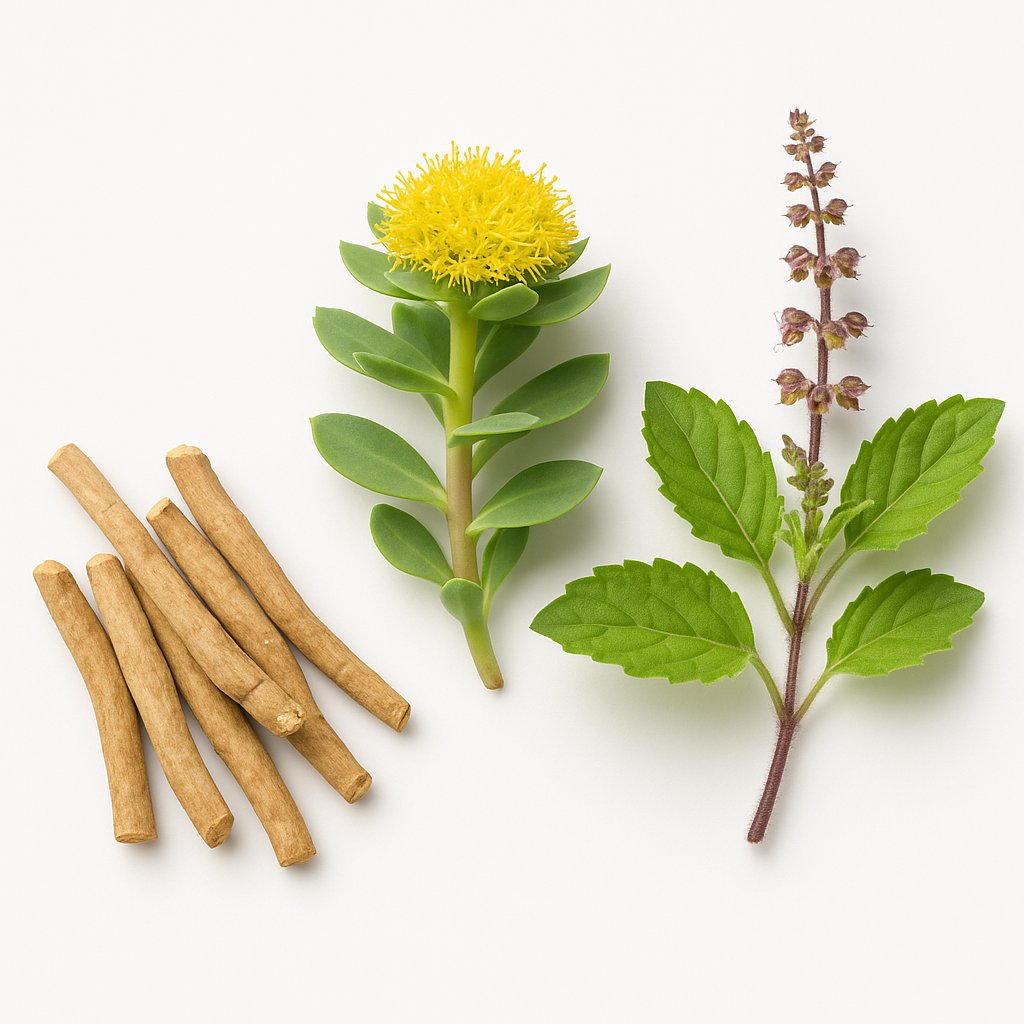
Ashwagandha (Withania somnifera) has been used in Ayurvedic medicine for thousands of years, but what matters for evidence-minded consumers is the modern clinical trial record — and it’s surprisingly strong.
The KSM-66 extract, a full-spectrum root extract standardized to ≥5% withanolides, has been the subject of multiple well-designed randomized controlled trials (RCTs). The landmark 2012 study by Chandrasekhar et al., published in the Indian Journal of Psychological Medicine, enrolled 64 adults with chronic stress and found that 300 mg of KSM-66 twice daily for 60 days produced a 27.9% reduction in serum cortisol compared to placebo. Subjects also reported significant improvements in perceived stress, anxiety, and quality of life scores.
A 2019 RCT published in Medicine (Salve et al.) replicated these findings, showing that 240 mg of a standardized ashwagandha extract once daily produced a 23% reduction in morning cortisol after 60 days, along with improvements in sleep quality. The sleep improvement is particularly relevant — ashwagandha appears to work partly through promoting GABAergic activity in the brain, which helps quiet the neurological overactivation that keeps the HPA axis running hot.
The mechanism behind ashwagandha’s cortisol-lowering effects involves several pathways: modulation of the HPA axis at the hypothalamic level, reduction of inflammatory cytokines that can drive cortisol secretion, and direct antagonism of stress-induced neurological changes. For a deeper dive into ashwagandha and cortisol, see our detailed guide at ashwagandha for cortisol and KSM-66 ashwagandha.
Typical dose: 300–600 mg of standardized extract daily, often split into two doses.
2. Phosphatidylserine — The Brain Phospholipid That Blunts Stress
Phosphatidylserine (PS) is a phospholipid that forms a critical component of brain cell membranes. It’s been researched for cognitive support for decades, but its cortisol-modulating properties are equally compelling.
A pivotal study by Monteleone et al. in Neuroendocrinology (1990) found that supplemental phosphatidylserine (800 mg/day) significantly blunted the cortisol and ACTH response to physical stress in healthy men. A follow-up study by the same group confirmed the effect at a lower dose of 400 mg. The mechanism appears to involve PS’s ability to modulate glucocorticoid receptors and dampen HPA axis reactivity.
More recent research has focused on exercise-induced cortisol. A 2008 study in the Journal of the International Society of Sports Nutrition found that 600 mg/day of phosphatidylserine for 10 days significantly reduced post-exercise cortisol spikes in endurance athletes, while preserving testosterone levels — a combination that’s particularly valuable for recovery and body composition.
PS is arguably one of the best-documented cortisol modulators for exercise and acute psychological stress scenarios. Its limitation is cost: high-quality phosphatidylserine (typically soy-derived or sunflower-derived) is expensive, and many products include inadequate doses to keep costs down. Look for at least 200–400 mg per serving for meaningful effect.
Typical dose: 200–800 mg daily, often split across two doses.
3. Rhodiola Rosea — Adaptogen for Mental Fatigue and Stress Resilience
Rhodiola rosea is a Scandinavian and Siberian adaptogenic herb standardized for its active compounds rosavin and salidroside. Unlike ashwagandha, which has a somewhat sedating quality (it’s a “calming adaptogen”), rhodiola tends to be more energizing and is particularly well-suited for mental fatigue and burnout states.
A 2009 study published in Phytomedicine (Olsson et al.) examined the effects of rhodiola (SHR-5 extract, 576 mg/day) in burnout patients over 12 weeks and found significant improvements in stress symptoms, fatigue, and cognitive function. The authors proposed that rhodiola’s effects involve modulation of stress-response proteins (including heat shock proteins) and inhibition of cortisol secretion via HPA axis normalization.
A 2015 double-blind RCT by Darbinyan et al. in Nordic Journal of Psychiatry found that rhodiola produced improvements in burnout symptoms that were statistically similar to sertraline (an antidepressant) in a small comparative trial, with significantly fewer side effects — a remarkable finding that has spurred additional research interest.
For people who feel both mentally exhausted and cortisol-driven (the characteristic pattern of burnout — tired but wired), rhodiola’s stimulating adaptogenic profile may be more appropriate than ashwagandha alone. The two are often stacked together in cortisol manager formulas.
Typical dose: 200–600 mg of standardized extract daily (standardized to 3% rosavins and 1% salidroside).
4. Holy Basil (Tulsi) — The Ayurvedic Adaptogen
Holy basil (Ocimum sanctum or O. tenuiflorum), known as tulsi in Ayurveda, is a different plant from culinary basil and has a distinct phytochemical profile. Its active compounds include eugenol, ursolic acid, and rosmarinic acid, which modulate cortisol through anti-inflammatory and adaptogenic mechanisms.
A 2012 randomized crossover study published in the Journal of Ayurveda and Integrative Medicine found that 300 mg of holy basil extract twice daily for 30 days significantly reduced general stress symptoms and cognitive errors related to stress compared to placebo. Urinary cortisol metabolites were also reduced, suggesting direct HPA axis modulation (Bhattacharyya et al., 2012).
Holy basil also has meaningful effects on blood glucose — it may help blunt stress-induced blood sugar elevations that in turn feed back into cortisol secretion. This makes it a particularly interesting inclusion in cortisol management stacks for people who experience stress-related blood sugar dysregulation.
Typical dose: 300–600 mg of standardized extract daily.
5. Magnesium — The Foundational Mineral for Stress Regulation
It almost feels too simple, but magnesium is one of the most important cortisol-regulating nutrients in the human body. The HPA axis requires magnesium at multiple steps, and cortisol itself can deplete magnesium by increasing urinary excretion — creating a vicious cycle where stress lowers magnesium, which makes the stress response worse.
A comprehensive 2020 review in Nutrients (Pickering et al.) documented the bidirectional relationship between magnesium status and HPA axis regulation, concluding that magnesium deficiency is associated with increased anxiety and HPA axis reactivity, while magnesium supplementation in deficient individuals produces significant improvements in stress measures. The caveat is “in deficient individuals” — magnesium supplementation has the most dramatic effects when baseline status is low, which is quite common given that studies suggest 45–60% of Americans are below the RDA for magnesium.
For cortisol management, magnesium glycinate or magnesium threonate tend to be preferred forms due to their higher bioavailability and lower laxative effects compared to oxide or citrate. See our guide on magnesium for anxiety for form-by-form comparisons and dosing specifics.
Typical dose: 200–400 mg of elemental magnesium daily from a high-bioavailability form.
Ingredient Comparison Table
Ingredient
Primary Mechanism
Key Evidence
Dose Range
Best For
Ashwagandha KSM-66
HPA axis modulation, GABAergic
27% cortisol reduction (Chandrasekhar, 2012)
300–600 mg/day
Chronic stress, sleep disruption
Phosphatidylserine
Glucocorticoid receptor modulation
Blunts exercise cortisol spike
200–800 mg/day
Exercise stress, cognitive pressure
Rhodiola Rosea
Heat shock proteins, HPA normalization
Burnout improvement (Olsson, 2009)
200–600 mg/day
Mental fatigue, burnout
Holy Basil
Anti-inflammatory, blood sugar
Reduced urinary cortisol metabolites
300–600 mg/day
Stress + blood sugar dysregulation
Magnesium
HPA axis cofactor
Deficiency correction improves HPA
200–400 mg/day
Foundation for all stress management
When Cortisol Management Really Matters
Cortisol support isn’t for everyone, and it’s worth being honest about who benefits most versus who might be reaching for a supplement when lifestyle changes are the more important intervention.
Strong candidates for cortisol manager supplementation:
People in objectively high-stress environments (demanding careers, caregiving roles, chronic illness) who are also implementing sleep hygiene and stress-reduction practices
People with documented elevated cortisol markers (late-night salivary cortisol, elevated 24-hour urinary cortisol, or elevated serum cortisol)
Those in recovery from burnout, particularly when physical and cognitive fatigue dominate
Less likely to benefit from supplementation alone:
People in acute life crises who haven’t addressed sleep, diet, or social support
Those with medical conditions causing cortisol dysregulation (Cushing’s disease, Addison’s disease, adrenal tumors) — these require medical management
People who are simply not sleeping enough — no adaptogen overcomes chronic sleep restriction
It’s also worth noting that cortisol supplements for weight loss have received significant marketing attention, but the reality is more nuanced — addressing cortisol may help reduce stress-driven eating and cortisol-associated visceral fat accumulation, but it’s not a weight loss shortcut.
Stacking Strategy: Building an Effective Cortisol Support Protocol
For people who want to build a comprehensive cortisol management stack rather than relying on a single ingredient, a practical approach might look like:
Morning (with breakfast):
KSM-66 Ashwagandha 300 mg
Rhodiola Rosea 300 mg (on an empty stomach for better absorption, or with a light breakfast)
Magnesium threonate 144 mg elemental
Evening (with dinner or 30 min before bed):
KSM-66 Ashwagandha 300 mg (second dose)
Phosphatidylserine 300 mg
Magnesium glycinate 200–400 mg
Holy basil can be added at either meal or at both. This stack addresses morning energy and stress resilience while supporting evening cortisol decline and sleep quality.
Keep in mind that adaptogens generally take 2–4 weeks to reach full effect. Don’t evaluate results after just a few days. Many people notice modest improvements in sleep quality first, followed by stress reactivity improvements within 3–6 weeks.
Cortisol manager supplements use adaptogens and targeted nutrients to help normalize the HPA axis stress response rather than simply suppressing cortisol production
Ashwagandha KSM-66 has the strongest clinical evidence, with multiple RCTs showing 23–28% reductions in serum cortisol in stressed populations
Phosphatidylserine is particularly effective for exercise-induced and acute psychological stress cortisol spikes
Rhodiola is best suited for burnout and mental fatigue states; ashwagandha is better for chronic stress and sleep disruption
Magnesium is a foundational requirement — deficiency worsens the stress response and is extremely common
A combined stack typically outperforms any single ingredient; allow 3–6 weeks for full effects
Supplements work best alongside sleep optimization, stress management practices, and stable blood sugar
Frequently Asked Questions
How quickly do cortisol manager supplements work?
Most adaptogens require consistent use over 2–4 weeks before measurable effects develop. Some people notice modest improvements in sleep quality or stress reactivity within the first week, but robust, reliable effects from ashwagandha, rhodiola, and similar compounds are typically observed at the 4–8 week mark in clinical trials.
Can I take cortisol manager supplements long-term?
Generally yes, for the ingredients discussed here. Ashwagandha, rhodiola, phosphatidylserine, and magnesium have been studied in trials lasting 8–12 weeks or longer with good safety profiles. Some practitioners recommend cycling adaptogens (e.g., 3 months on, 1 month off) to prevent tolerance, though this is precautionary rather than evidence-mandated.
Will lowering cortisol make me feel tired or groggy?
Not typically with adaptogenic approaches. Unlike prescription cortisol-lowering drugs, adaptogens normalize the stress response rather than blunting it outright. Many users report feeling more calmly energized — less reactive to stress, better able to focus, with more consistent energy through the day — rather than sedated.
Is there a risk of cortisol being too low?
Yes, this is a real concern, and it’s part of why working with adaptogens (which help normalize rather than suppress) is preferable to aggressive cortisol suppression. Signs of genuinely low cortisol include extreme fatigue, low blood pressure, salt cravings, and inability to tolerate stress. If you suspect this, consult a physician and request a salivary cortisol panel rather than self-medicating.
Do cortisol supplements interact with medications?
Several deserve caution. Ashwagandha may potentiate thyroid medications and sedatives. Rhodiola may interact with antidepressants (particularly MAOIs and SSRIs). Phosphatidylserine may have mild blood-thinning properties. Always consult a healthcare provider if you’re on prescription medications before adding cortisol supplements.
Sources
Chandrasekhar, K., et al., “A prospective, randomized double-blind, placebo-controlled study of safety and efficacy of a high-concentration full-spectrum extract of Ashwagandha root in reducing stress and anxiety in adults,” Indian Journal of Psychological Medicine, 2012.
Salve, J., et al., “Adaptogenic and anxiolytic effects of ashwagandha root extract in healthy adults,” Medicine, 2019.
Monteleone, P., et al., “Blunting by chronic phosphatidylserine administration of the stress-induced activation of the hypothalamo-pituitary-adrenal axis in healthy men,” Neuroendocrinology, 1990.
Olsson, E.M., et al., “A randomised, double-blind, placebo-controlled, parallel-group study of the standardised extract SHR-5 of the roots of Rhodiola rosea in the treatment of subjects with stress-related fatigue,” Planta Medica, 2009.
Bhattacharyya, D., et al., “Controlled programmed trial of Ocimum sanctum leaf on generalized anxiety disorders,” Journal of Ayurveda and Integrative Medicine, 2012.
Pickering, G., et al., “Magnesium Status and Stress: The Vicious Circle Concept Revisited,” Nutrients, 2020.
Shields, G.S., et al., “The effects of acute stress on episodic memory: A meta-analysis and integrative review,” Psychological Bulletin, 2017.



Leave a Reply