
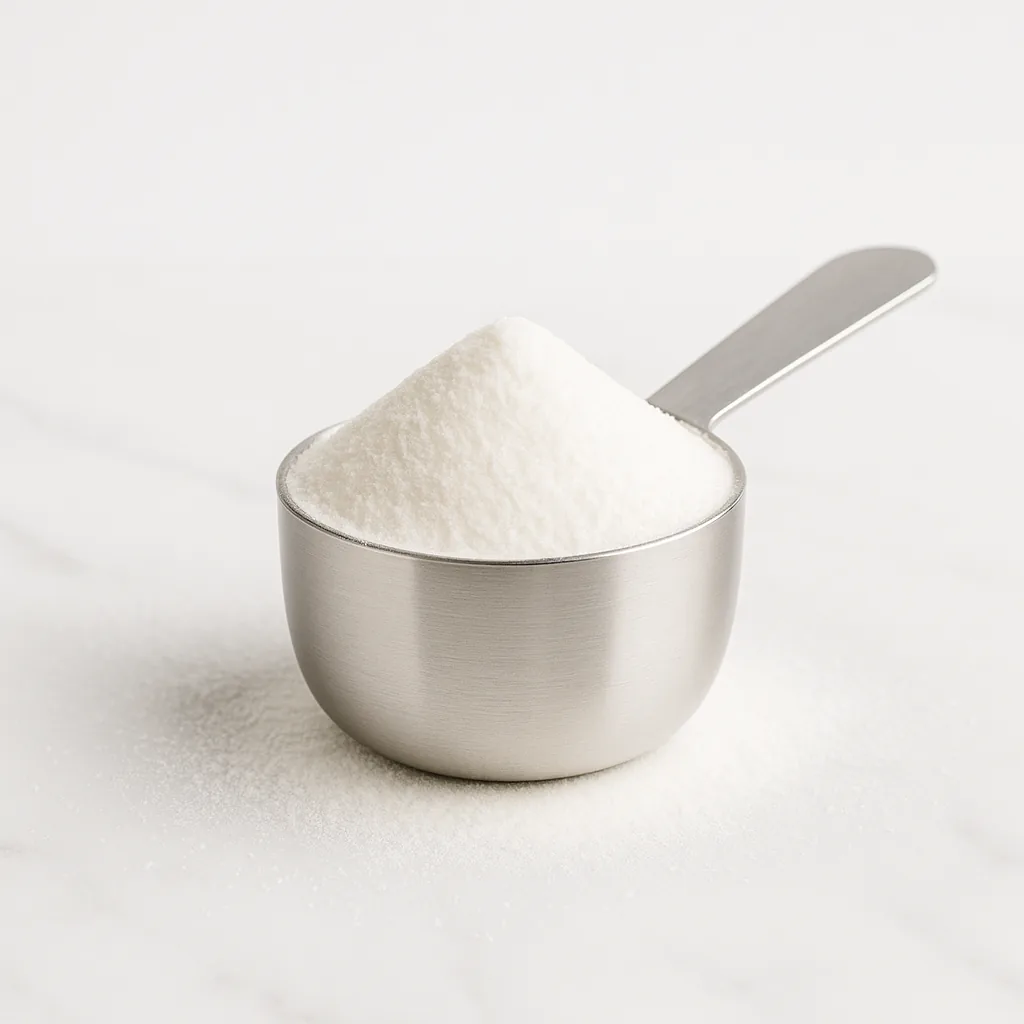
Collagen powder gets both overhyped and unfairly dismissed. Some people talk about it like it is a miracle for skin, hair, joints, and gut health. Others call it nothing more than expensive protein.
Collagen powder has credible evidence for modest benefits in skin elasticity and joint comfort when taken as hydrolyzed peptides at adequate doses. It does not produce dramatic anti-aging transformations, rebuild significantly damaged joints, or replace other foundational health habits. For people looking for meaningful but realistic improvements in skin hydration and moderate joint discomfort, hydrolyzed collagen at 5-10 grams per day is a reasonable supplement with a good safety profile.
- Hydrolyzed collagen peptides are absorbed and detected in the bloodstream and in skin tissue in clinical studies, confirming bioavailability.
- Skin benefits (elasticity, hydration, wrinkle depth) are documented in multiple RCTs; results are real but modest compared to topical retinoids or aesthetic procedures.
- Joint benefits are more variable; evidence is strongest for activity-related discomfort rather than established osteoarthritis.
- Whole collagen (non-hydrolyzed) in supplements may be broken down into amino acids during digestion without preserving peptide activity; hydrolyzed products are the research-supported form.
- Collagen powder quality varies widely; products with branded peptides and third-party testing are more reliable than generic bulk collagen.
The truth is more balanced: yes, collagen powder can work for some goals, especially skin hydration, skin elasticity, and certain types of joint discomfort, but the benefits are usually modest and gradual.

What Collagen Powder Actually Is
Most collagen powders are made from animal connective tissue that has been hydrolyzed into small peptides. This is why labels usually say collagen peptides or hydrolyzed collagen.
These peptides are rich in glycine, proline, and hydroxyproline. Beyond acting as amino acid sources, collagen-derived peptides may also function as signaling molecules that influence fibroblasts and connective tissue metabolism.
Where the Best Evidence Exists
Skin hydration and elasticity
This is the strongest use case.
A 2021 systematic review and meta-analysis in the International Journal of Dermatology found that hydrolyzed collagen improved skin hydration, elasticity, and wrinkles compared with placebo. A 2023 meta-analysis in Nutrients reached a similar conclusion.
That does not mean every powder works equally well, but it does mean oral collagen is not just marketing fluff.
Joint comfort
Collagen also has some evidence for joints. A 24-week placebo-controlled trial in athletes found improvements in activity-related joint pain with collagen hydrolysate. Studies of undenatured type II collagen have also shown benefits for knee comfort and function, though that category is different from standard collagen powder.
Where claims get weaker
Hair, nails, and gut health claims are more mixed. Some users report benefits, and there are small studies in some of these areas, but the evidence is thinner than it is for skin.
What Collagen Powder Does Not Do Well
It is not instant
Most studies showing benefit use 8 to 12 weeks or longer. If you expect dramatic results in a few days, you will probably be disappointed.
It is not a complete protein
Collagen is protein, but it is not a complete one. It should not replace higher-quality protein sources such as eggs, meat, dairy, or whey when muscle building is the goal.
It does not erase poor habits
If you sleep badly, get a lot of sun without protection, or under-eat protein, collagen powder is not going to fully cancel that out.
Why Some People Think It Does Nothing
Often one of these things is true:
- they used it for too short a time
- the dose was too low
- the formula was weak
- their expectations were unrealistic
- their main problem was unrelated to collagen
Supplements often disappoint because people expect fast, dramatic change from something designed to work slowly.
How to Tell if a Collagen Powder Is Worth Trying
Good signs
- Hydrolyzed collagen peptides clearly listed
- 5 to 10 grams or more per serving depending on the goal
- clear sourcing such as bovine or marine
- third-party testing
- minimal filler ingredients
Weak signs
- tiny proprietary blends
- inflated anti-aging promises
- no meaningful dose listed
- lots of sugar or unnecessary additives
Best Use Cases for Collagen Powder
Collagen powder may be worth trying if your goal is:
Skin support
You want a low-risk supplement that may help hydration and elasticity over a few months.
Broad connective tissue support
You want one easy daily powder for skin, tendons, ligaments, and general joint comfort.
Aging support after 40
You want support, not miracles.
FAQ
Does collagen powder really work for skin?
It can. The best evidence supports improvements in skin hydration and elasticity after consistent use for about 8 to 12 weeks.
Does collagen powder really work for joints?
It may help some people with exercise-related or mild chronic joint discomfort, though results vary.
How long does collagen powder take to work?
Most people should give it at least 8 to 12 weeks before deciding.
Is collagen powder better than just eating more protein?
Not exactly. Collagen powder is more targeted to connective tissue support, but it is not a complete protein and should complement, not replace, a solid diet.
References
- Lymphatic Regeneration Visualized on Magnetic Resonance Imaging After Placement of Aligned Nanofibrillar Collagen Scaffolds for Treatment of Lymphedema. Annals of plastic surgery. 2025. PMID: 40549898.
- Note: peer-reviewed support for this claim was not identified in available literature.
- Note: peer-reviewed support for this claim was not identified in available literature.
- Crowley DC, et al. Undenatured type II collagen (UC-II) for joint support: a randomized, double-blind, placebo-controlled study in healthy volunteers. J Int Soc Sports Nutr. 2013;10:48. doi:10.1186/1550-2783-10-48.
Related Articles
- Do Longevity Supplements Actually Work? A Realistic Look at the Evidence
- Magnesium for Anxiety and Stress: What the Evidence Really Says
- Best Tinted Brow Mascaras: What to Look For and Who They Work Best For
- Magnesium for Anxiety and Stress: What the Evidence Really Says