
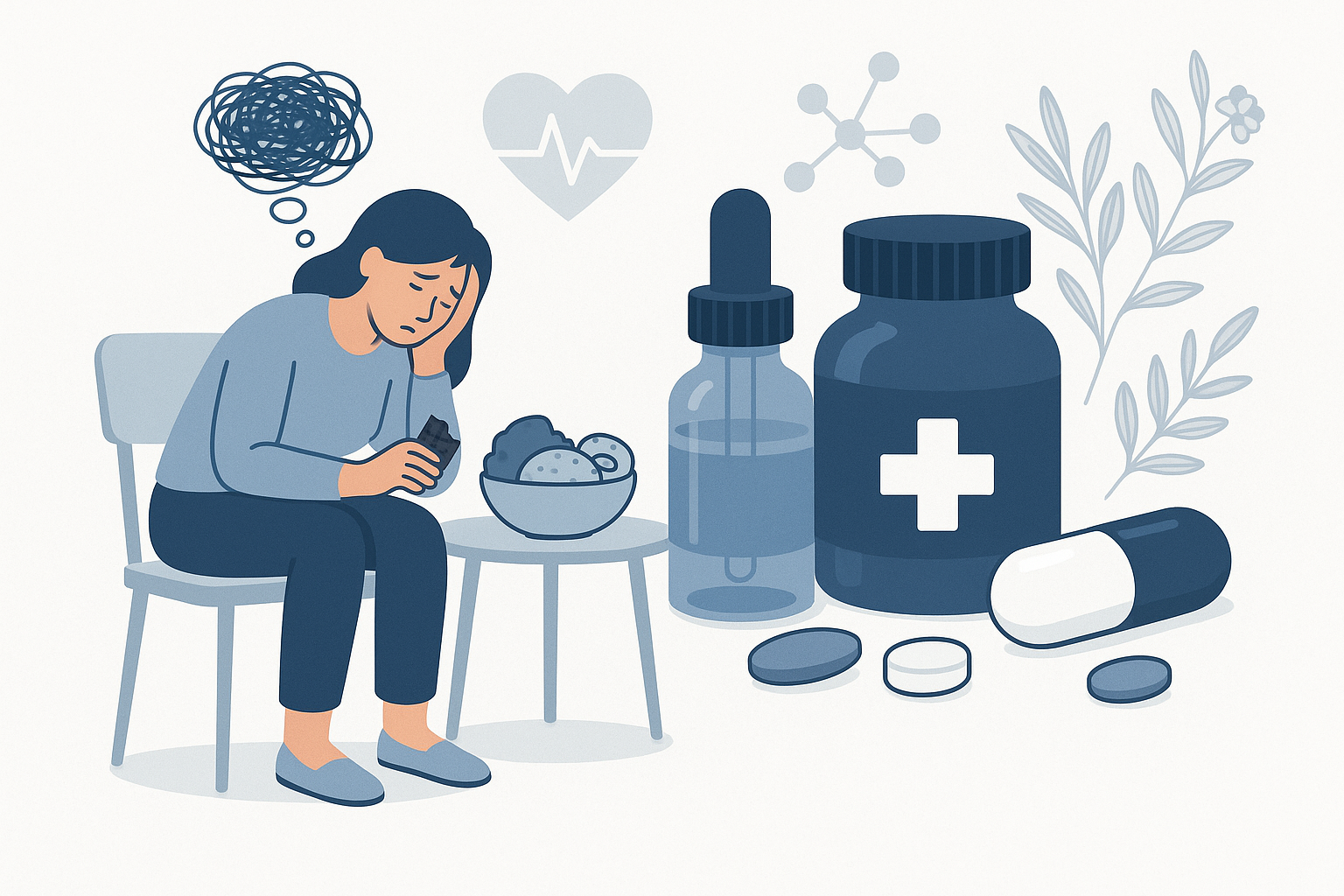
Quick Answer: A few supplements (like ashwagandha, saffron, magnesium, and L-theanine) may modestly reduce stress load or cravings, but stress eating is mostly a behavior-and-environment problem. Supplements can support progress, but they rarely solve stress eating by themselves.
Key Takeaways
- Stress eating is driven by cortisol, sleep disruption, emotional coping patterns, and food environment cues.
- Supplements can help at the margins, especially if stress physiology is high.
- Ashwagandha and saffron have some of the better evidence for stress/craving support.
- Magnesium and L-theanine may support sleep and calm, indirectly reducing impulsive eating.
- “Cortisol blocker” marketing usually overpromises compared with real trial outcomes.
- The highest-leverage interventions are sleep, protein/fiber structure, trigger redesign, and coping skills.
Why Stress Eating Is So Common (and So Sticky)
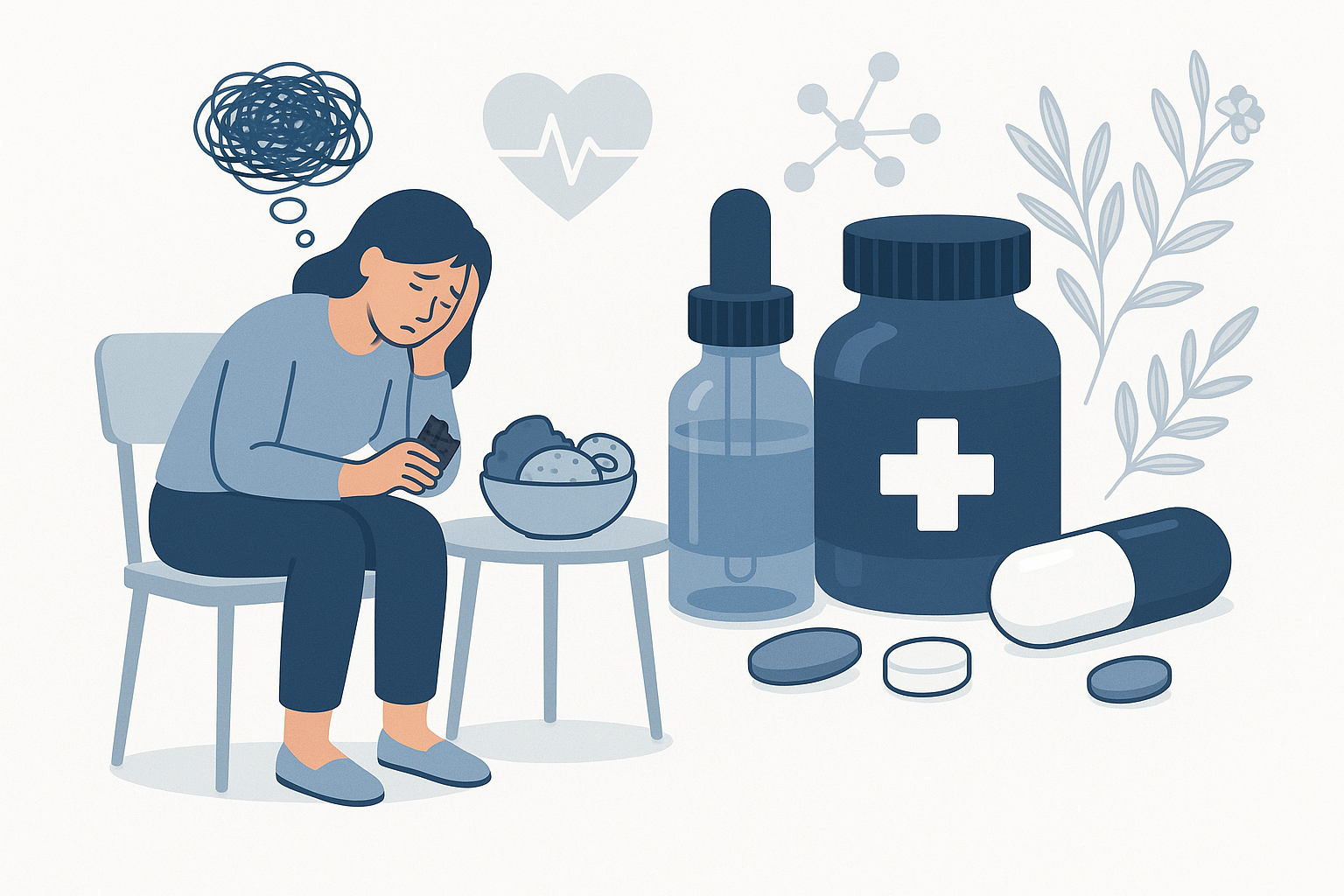
When stress rises, appetite and reward systems often shift in the same direction: quick energy, quick comfort, quick dopamine. Highly palatable foods become more compelling, especially at night or after prolonged cognitive load.
This is not a character flaw. It is a predictable neurobiology + habit-loop interaction.
Parent guide for context:
The Core Mechanisms Behind Stress Eating
1) Cortisol and appetite signaling
Elevated stress hormones can increase hunger drive and preference for calorie-dense foods.
2) Sleep debt amplifies cravings
Poor sleep shifts appetite hormones and worsens impulse control. Many “stress eating” episodes are really stress + fatigue episodes.
3) Emotional regulation through food
Food becomes fast relief from anxiety, frustration, boredom, or loneliness.
4) Habit reinforcement
Cue → snack → temporary relief repeats until automatic. This loop is powerful, and supplements alone cannot rewrite it.
Supplements With Reasonable (But Modest) Utility
1) Ashwagandha
Ashwagandha has some of the strongest stress-targeting evidence among popular adaptogens, with trials showing cortisol and stress-score improvements in certain groups.
How it may help stress eating:
- Lower stress load may reduce intensity/frequency of urge spikes
- Improved sleep quality in some users can reduce nighttime overeating patterns
Typical range used: around 300–600 mg/day standardized extracts.
2) Saffron
Saffron has small but interesting data for snacking frequency and appetite perception in certain populations.
How it may help:
- May reduce hedonic “I want a treat now” intensity
- Could support mood tone in mild stress-eating phenotypes
Typical range: around 28–30 mg/day standardized extract.
3) Magnesium (especially glycinate)
Magnesium may improve stress resilience and sleep quality when intake/status is low.
How it may help:
- Better sleep = better appetite regulation
- Reduced evening tension can lower “snack for sedation” behavior
4) L-Theanine
L-theanine can support calm alertness without sedation.
How it may help:
- Useful for high-anxiety snack triggers (work overload, social stress)
- Better emotional bandwidth may reduce impulsive eating decisions
Supplements That Are Commonly Overhyped
“Cortisol blockers”
Most blend products repackage known ingredients at unclear doses, then promise fat loss or appetite shutdown. The evidence does not support that level of claim.
Chromium as a universal craving fix
Chromium has niche evidence in specific contexts but is not a broad cure for stress-related overeating.
Proprietary blends with no dose transparency
If the label hides ingredient amounts, it is hard to match research dosing and impossible to evaluate value.
The High-Impact Strategy Most People Skip
Supplements should sit on top of a structured behavior plan, not replace one.
Practical anti-stress-eating framework
- Stabilize meals (protein + fiber + planned carbs)
- Prevent long fasting gaps that trigger rebound snacking
- Pre-plan “default” stress snack alternatives
- Use friction design (harder access to trigger foods)
- Build non-food decompression rituals (walk, shower, breathwork, short reset)
- Protect sleep timing as aggressively as possible
When this framework is in place, supplements can add incremental value.
A Simple 8-Week Trial Approach
If you want to test supplements intelligently:
- Week 1–2: stabilize meals and sleep schedule first
- Week 3: add one supplement (not four at once)
- Week 4–8: track binge episodes, evening cravings, and stress ratings
- Reassess based on data, not hope
Possible outcomes:
- Clear benefit: keep
- Mild/no benefit: rotate or stop
- Side effects or no change: discontinue
Safe Internal Cross-Links
- Cortisol Belly Fat Myth vs Reality
- How to Test Your Cortisol Levels
- Best Supplements to Reduce Cortisol and Belly Fat
FAQ
Can supplements stop stress eating completely?
Usually no. They may reduce stress intensity or cravings, but behavior loops and food environment still need direct work.
Which supplement is most evidence-based for stress-related eating?
Ashwagandha has the best stress/cortisol data; saffron has useful appetite/snacking signal in smaller studies.
How quickly do supplements help cravings?
Some people notice shifts within 1–2 weeks, but a fair evaluation is usually 6–8 weeks.
Should I combine multiple stress supplements at once?
Not initially. Start one at a time so you can identify what is helping or causing side effects.
What matters more than supplements for stress eating?
Sleep, meal structure, trigger redesign, and emotional coping skills.
A Better Replacement for “Willpower”: Implementation Scripts
Most stress-eating progress comes from pre-written decisions, not from motivation bursts.
Example scripts:
- “If I get a 9 PM sugar urge, I drink water, wait 10 minutes, then choose protein + fruit if still hungry.”
- “If work stress spikes, I do a 5-minute walk before opening food apps.”
- “If I snack after dinner, it must be from my pre-planned list, not from random pantry browsing.”
This reduces decision fatigue and makes cravings less chaotic.
Environmental Design That Lowers Relapse
Tiny environment shifts can outperform expensive supplement stacks:
- Keep trigger foods out of immediate line-of-sight
- Pre-portion snack options to avoid grazing
- Move high-protein options to easiest-access shelf
- Reduce delivery-app friction (log out, remove saved cards)
These changes feel boring, but they reduce cue exposure and impulse opportunities.
What Success Should Look Like After 8 Weeks
Success is rarely “zero cravings.” Better markers are:
- Fewer high-intensity binge episodes
- Faster recovery after slips
- More planned eating, less reactive eating
- Better sleep and morning appetite stability
When these improve, long-term weight and metabolic outcomes usually follow.
Bottom Line
Stress eating is a systems problem. Supplements can help around the edges, especially when stress physiology is high, but they are not the engine of change. If you prioritize sleep, structure, and coping mechanics first, then layer targeted supplements, results are usually better and more sustainable.
Related Articles
- Best Supplements for Anxiety in 2026
- Supplements for Menopause Belly Fat
- Magnesium and Sleep in Perimenopause
- Best Fiber Supplements in 2026
- Best Supplements for Blood Sugar Support
Sources
- Chandrasekhar K, Kapoor J, Anishetty S. A prospective, randomized double-blind, placebo-controlled study of safety and efficacy of a high-concentration full-spectrum extract of ashwagandha root in reducing stress and anxiety in adults. Indian J Psychol Med. 2012;34(3):255-262.
- Salve J, Pate S, Debnath K, Langade D. Adaptogenic and anxiolytic effects of ashwagandha root extract in healthy adults: a double-blind, randomized, placebo-controlled clinical study. Cureus. 2019;11(12):e6466.
- Lopresti AL, Smith SJ, Malvi H, Kodgule R. An investigation into the stress-relieving and pharmacological actions of an ashwagandha (Withania somnifera) extract. Medicine (Baltimore). 2019;98(37):e17186.
- Langade D, Kanchi S, Salve J, Debnath K, Ambegaokar D. Efficacy and safety of ashwagandha (Withania somnifera) root extract in insomnia and anxiety. Cureus. 2019;11(9):e5797.
- Dallman MF, Pecoraro N, Akana SF, et al. Chronic stress and obesity: a new view of "comfort food." Proc Natl Acad Sci USA. 2003;100(20):11696-11701.


Leave a Reply