Quick Answer: The best foundation match is not just the right depth—it is the right depth, undertone, and wear behavior in real light. If you test along the jawline, check the shade in daylight, and wait long enough to catch oxidation, you will avoid most of the classic shade-matching mistakes.
Foundation shade matching is usually treated like a shopping problem, but it is really a diagnostic process. The goal is not to find the prettiest swatch on your hand. The goal is to find the shade that visually disappears across the face-to-neck transition while still looking believable after your skincare, sunscreen, and skin oils have had time to interact with the formula.
That is why this guide stays methodology-first. If you want a formula for older skin, start with our mature-skin foundation guide. If your biggest issue is breakdown in heat and oil, our sweat-proof foundation guide is a better fit. Here, the focus is how to match shade correctly before those formula choices even start.
Why so many foundation matches fail
Most people mismatch foundation for one of four reasons:
they test on the hand instead of the jawline
they confuse surface redness with undertone
they judge the shade before oxidation happens
they choose coverage first and shade logic second
The first two mistakes create obvious neck mismatch. The third creates the common “looked right in store, orange by noon” problem. The fourth leads people into buying the wrong family entirely because they fell in love with a finish before confirming the shade range works for them.
Start with skin depth, then undertone
Depth is how light or deep the shade is
Foundation depth should blend into the border between face and neck, not just the center of the face. Some people have more facial redness, sallowness, or post-inflammatory pigment than their neck. Matching only the cheeks can pull you too pink, too yellow, or too deep.
Undertone is the subtle color direction underneath the surface
Most brands sort shades into warm, cool, neutral, olive, or golden families, but the labels are not perfectly standardized. A “neutral” in one line may still lean peach. A “warm” shade may be distinctly golden, yellow, or even orange. Treat brand labels as hints, not facts.
As a practical starting point:
Cool undertones often carry more pink, red, or rosy tones.
Warm undertones often read golden, yellow, or peach.
Neutral undertones balance warm and cool without leaning strongly either way.
Olive undertones may look green-gray, muted golden, or slightly ashy in the wrong shade family.
How to swatch foundation correctly
Use the jawline, not the wrist
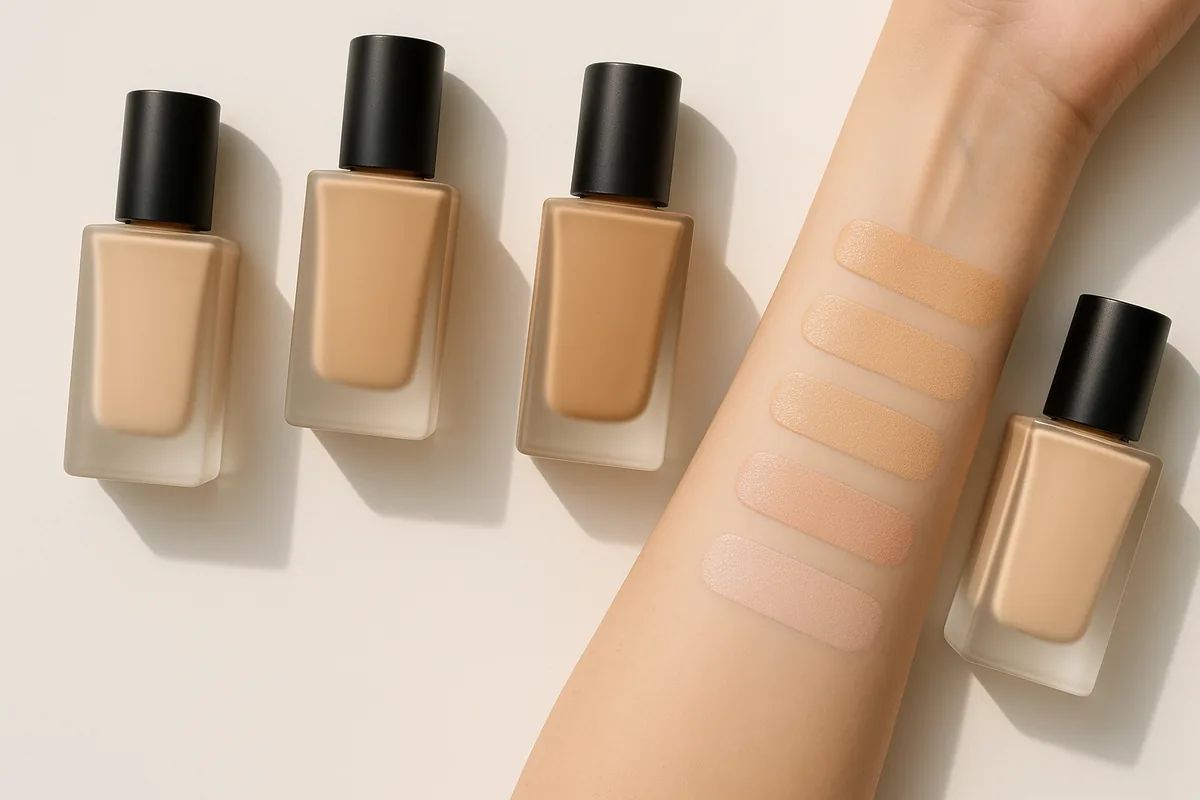
The wrist is useful for jewelry, not foundation. Swatch 2–3 close shades in vertical stripes from lower cheek to jaw and slightly onto the neck. The right one should fade rather than announce itself.
Check in natural light whenever possible
Store lighting can exaggerate pinkness, flatten depth, or make warm shades look more wearable than they are. Step near a window or check the match in daylight before deciding. A shade that looks perfect under bright retail lighting may look flat, orange, or gray outdoors.
Give oxidation time to show up
Some formulas deepen or shift warm after 10–30 minutes. That is oxidation, and it matters. If you only judge the fresh swatch, you may buy a shade that later looks half a step too deep or too orange. Wait long enough to see where the product settles before committing.
How skincare and sunscreen affect shade matching
Foundation does not sit on bare lab skin. It sits over moisturizer, SPF, primer, and natural oil production. Mineral sunscreens can leave a cast that changes how a shade reads at first. Rich skincare can thin out pigment payoff. Oilier skin can deepen the look of some formulas through the day.
If you always wear SPF under foundation, test shades over your usual sunscreen. That gives you a more realistic answer than testing on bare skin in a store.
Undertone mistakes that cause the most visible mismatch
Choosing too pink to hide redness
Redness is a surface condition, not always an undertone signal. People with warm or neutral undertones often buy too-pink foundation because their cheeks look flushed. That can make the overall face look mask-like once the redness is covered.
Choosing too yellow to look “brighter”
A slightly warm shade can sometimes look lively under store lights, but too much yellow can make the face look disconnected from the neck or emphasize grayness around the mouth. Brightness is not the same thing as accuracy.
Ignoring olive undertones
Olive complexions are often underserved and frequently mislabeled as neutral or warm. When standard shades look either too pink or too orange, olive is worth considering. This is one reason exact brand-by-brand testing matters.
What to do when you are between shades
Choose the better undertone first, then adjust depth with bronzer or strategic concealer if needed.
Keep a lighter and deeper seasonal shade if your skin tone shifts significantly across the year.
Avoid forcing a strong undertone mismatch just because the depth seems close.
If you are shopping for a complexion product with built-in sun protection, our tinted SPF guide explains why many SPF bases still need careful shade testing.
How this applies to deeper complexions
Shade matching becomes even more nuanced as depth increases because undertone mistakes are often more obvious: formulas can pull ashy, red, orange, or dull very quickly when the base pigments are off. If that is your main concern, our guide to makeup for deep and dark skin tones goes deeper on ashiness avoidance, concealer balance, and product-selection pitfalls.
Key Takeaways
Good foundation matching requires the right depth, undertone, and wear behavior—not just the closest bottle color.
Always swatch along the jawline and check the result in daylight if you can.
Wait long enough to catch oxidation before deciding a match is correct.
Brand undertone labels are inconsistent, so trust the visual result more than the printed category.
Test shades over your real skincare and sunscreen routine for the most accurate answer.
FAQ
Where should you swatch foundation to find the right shade?
The jawline is the best place to swatch because it lets you compare face and neck at the same time. Hand and wrist swatches are much less reliable for actual foundation matching.
How do you tell undertone apart from surface redness?
Undertone is the underlying color direction of the skin, while redness can come from irritation, flushing, acne, or sensitivity. That is why a pink-looking cheek does not always mean a cool-toned foundation is the right match.
What is oxidation in foundation?
Oxidation is when a foundation deepens or shifts color after it has been on the skin for a while. It often makes a shade look darker, warmer, or more orange than it did at first application.
What if no foundation shade looks exactly right?
Pick the closest undertone first, then fine-tune with seasonal shades, mixer drops, or strategic concealer and bronzer placement. A slight depth issue is easier to correct than a strong undertone mismatch.






Leave a Reply