
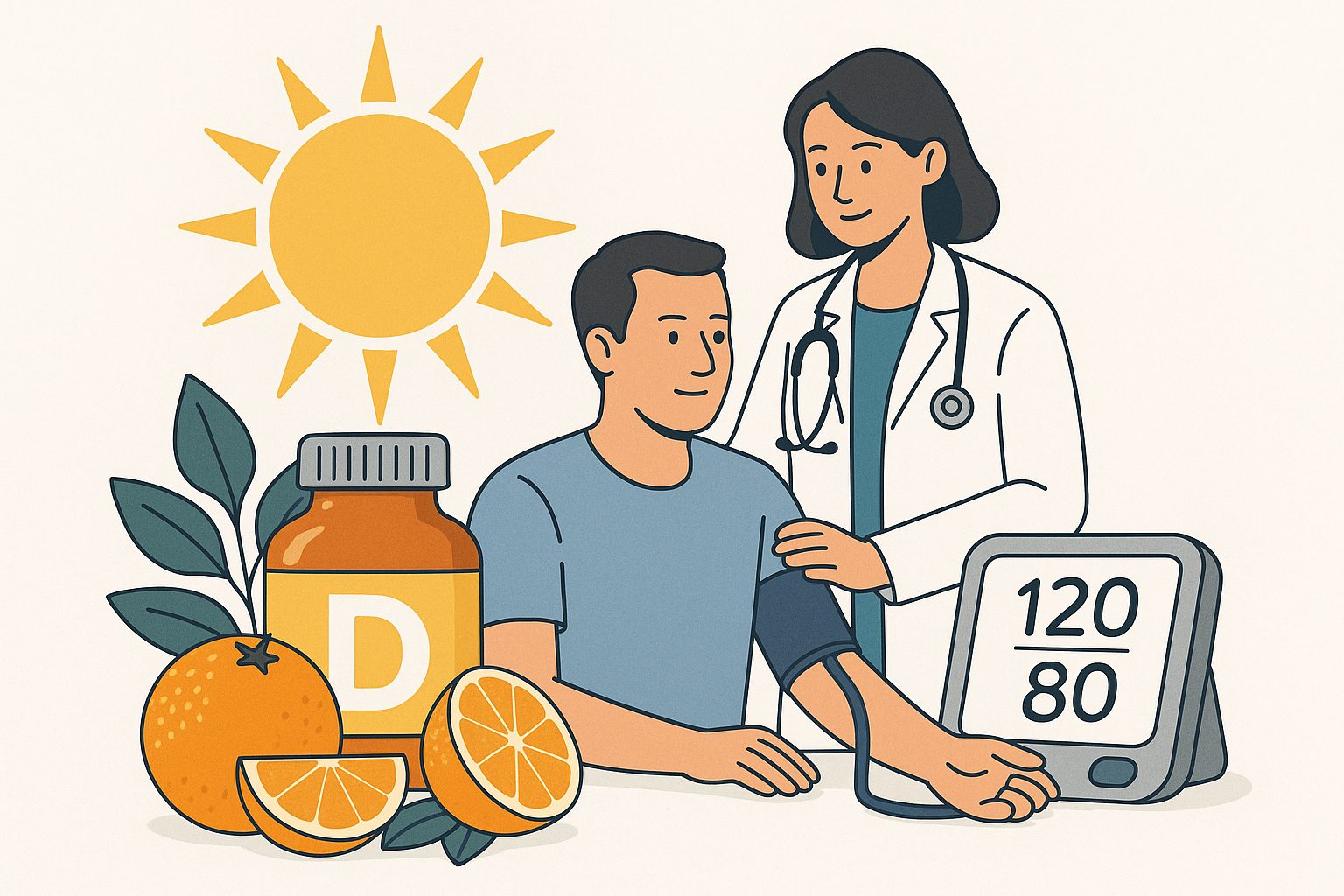
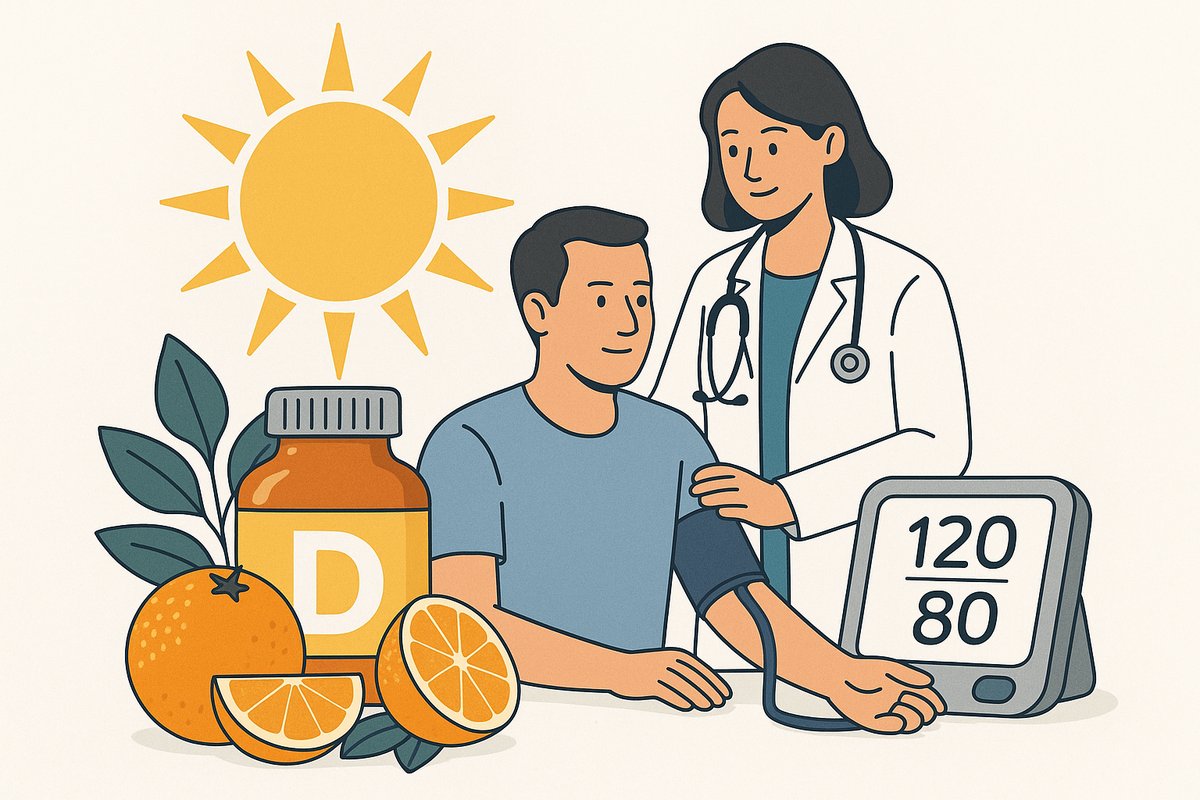
Few supplements have a wider gap between their observational promise and their trial results than vitamin D for blood pressure. The story of why that gap exists is one of the most instructive lessons in supplement science.
Quick Answer: Observational studies consistently link low vitamin D levels with higher blood pressure, but randomized controlled trials show little to no meaningful blood pressure reduction from vitamin D supplementation. This gap is a classic example of confounding-low vitamin D and hypertension share common causes (obesity, sun avoidance, poor diet) without a direct causal relationship. Correcting vitamin D deficiency is still important for other reasons, but expecting it to lower blood pressure is not well-supported.
Key Takeaways
- Large-scale RCTs (including VITAL with 25,000+ participants) found no significant blood pressure reduction from vitamin D supplementation.
- Observational associations between low vitamin D and high BP are likely explained by shared confounders, not a causal relationship.
- Vitamin D receptors exist in vascular smooth muscle and affect renin production, creating a plausible mechanism-but mechanism does not equal clinical effect.
- Correcting severe vitamin D deficiency remains important for bone health, immune function, and overall health-just not specifically for blood pressure.
- Do not supplement with vitamin D primarily for blood pressure; use established interventions (diet, potassium, exercise, weight management).
The Observational Signal
The correlation between low vitamin D and high blood pressure is robust and consistent:

- Multiple large cohort studies show inverse associations between 25-OH-D levels and BP
- People with vitamin D deficiency (<20 ng/mL) have significantly higher rates of hypertension
- The association holds across populations, ethnicities, and latitudes [1]
This makes mechanistic sense: vitamin D receptors exist in vascular smooth muscle and endothelial cells, and vitamin D modulates the renin-angiotensin-aldosterone system (RAAS). Low vitamin D upregulates renin, which drives aldosterone-mediated sodium retention and vasoconstriction [2].
The Intervention Reality
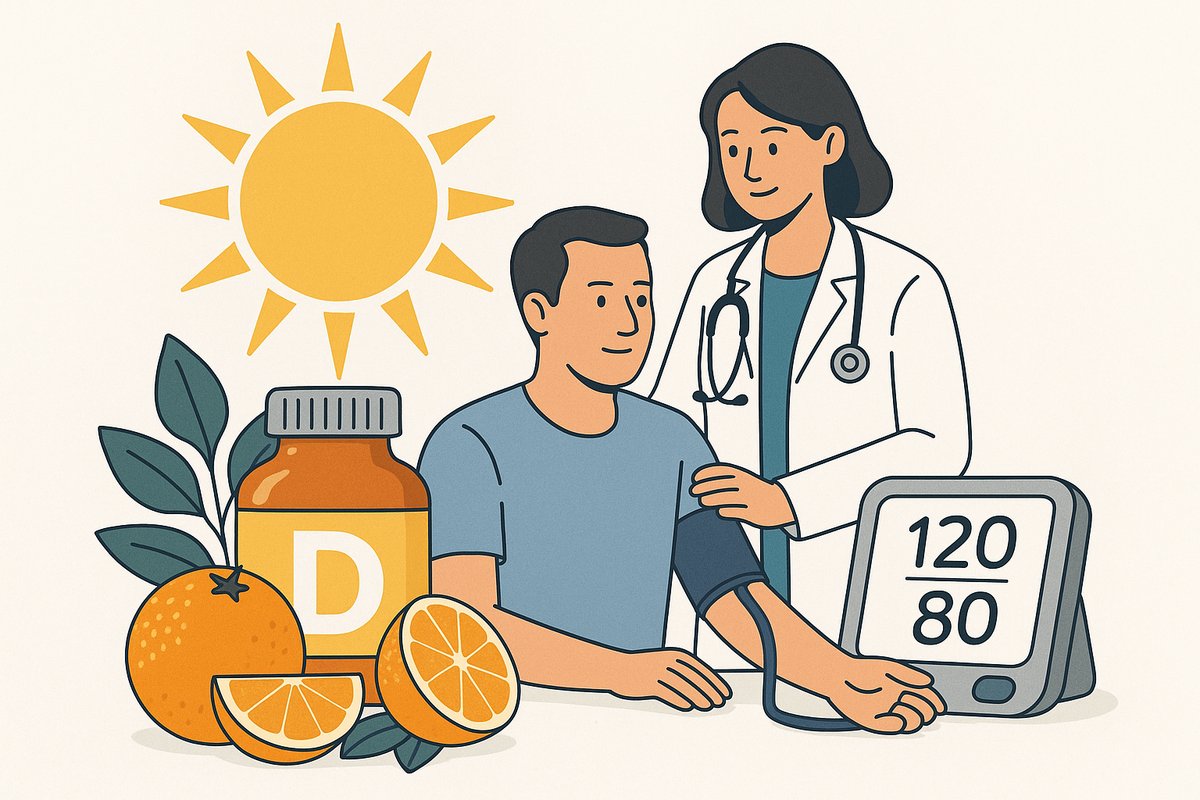
When researchers actually gave vitamin D supplements to people in randomized controlled trials, the results were underwhelming:
Beveridge et al. (2015, JAMA Internal Medicine) – Meta-analysis of 46 RCTs (4,541 participants): Vitamin D supplementation produced no significant reduction in SBP or DBP [3].
VITAL Hypertension sub-study (2020) – Part of the massive VITAL trial (25,871 participants): 2,000 IU/day vitamin D3 for 5+ years produced no BP benefit compared to placebo [4].
Individual trials in deficient populations – A few small trials in severely deficient individuals (<12 ng/mL) showed modest reductions (~2-4 mmHg), but these are correcting a deficiency state, not demonstrating a pharmacological effect.
Why the Disconnect?
Several explanations:
- Confounding – People with low vitamin D tend to be less active, more obese, and have worse diets. These factors independently raise BP. Vitamin D may be a marker of poor health rather than a cause of high BP.
- Reverse causation – Chronic illness reduces time outdoors, which lowers vitamin D. The illness – or the inactivity it causes – may be driving both.
- Threshold vs. dose-response – Correcting severe deficiency may help, but once levels are adequate (>20-30 ng/mL), more vitamin D doesn’t further lower BP.
- Small effect size – Even if real, the BP effect of vitamin D may be too small (1-2 mmHg) to detect reliably in trials.
The Practical Takeaway
- Correct deficiency if present – Getting to 30-50 ng/mL 25-OH-D is reasonable for overall health (bones, immune function, mood). If it slightly helps BP, that’s a bonus.
- Don’t supplement vitamin D specifically to lower BP – The trial evidence doesn’t support this.
- Don’t stop your vitamin D – If you’re already taking it for bone health, immune support, or deficiency correction, continue. Just don’t expect it to meaningfully change your blood pressure.
This is one of the clearest examples of why “associated with” ? “caused by” in nutrition research. Observational studies generate hypotheses. Randomized trials test them. Sometimes the hypothesis doesn’t hold up.
Frequently Asked Questions
Does vitamin D lower blood pressure?
In large, well-designed randomized trials, vitamin D supplementation does not meaningfully lower blood pressure. The association seen in observational studies appears to reflect confounding factors rather than a causal relationship.
What causes the link between low vitamin D and high blood pressure in studies?
Both low vitamin D and hypertension are more common in people with obesity, sedentary lifestyles, sun avoidance, and poor dietary patterns. These shared risk factors create an apparent correlation that disappears in controlled trials where vitamin D levels are experimentally altered.
Is there any benefit to correcting vitamin D deficiency for cardiovascular health?
The evidence for cardiovascular benefits of vitamin D supplementation is weak overall. Some subgroup analyses suggest benefits in severely deficient individuals, but meta-analyses of RCTs do not support supplementation for cardiovascular protection as a general recommendation.
What vitamin D level should I aim for?
Most clinical guidelines suggest a 25-hydroxy vitamin D level of at least 20-30 ng/mL (50-75 nmol/L) for bone health. Optimal levels for other health outcomes remain debated. Targeting 40-60 ng/mL is common in functional medicine, but evidence for benefits beyond 30 ng/mL for non-bone outcomes is limited.
References
- The impact of essential fatty acid, B vitamins, vitamin C, magnesium and zinc supplementation on stress levels in women: a systematic review. JBI database of systematic reviews and implementation reports. 2017. PMID: 28178022.
- Li YC, et al. 1,25-Dihydroxyvitamin D3 is a negative endocrine regulator of the renin-angiotensin system. J Clin Invest. 2002;110(2):229-238.
- Beveridge LA, et al. Effect of Vitamin D Supplementation on Blood Pressure: A Systematic Review and Meta-analysis. JAMA Intern Med. 2015;175(5):745-754.
- Manson JE, et al. Vitamin D Supplements and Prevention of Cancer and Cardiovascular Disease. N Engl J Med. 2019;380(1):33-44.
Related Articles
- Aged Garlic Extract for Blood Pressure: What the Trials Actually Show
- Best Supplements for Blood Pressure in 2026: What the Evidence Actually Supports
- Beetroot and Nitrate Supplements: Performance, Blood Pressure, and Dosing
- Potassium Supplements for Blood Pressure: What the Research Shows
- Nitric Oxide and Blood Pressure: What Supplements Actually Help
Sources
- Ashwagandha Hormonal Effects: RCT (2019)
- Ashwagandha Well-Being: RCT (2022)
- Adaptogens in Fatigue (2009)
- CoQ10 for Blood Pressure
- Hibiscus Tea for Blood Pressure
📝 Cite This Article
Richard Shoemake. “Vitamin D for Blood Pressure: Do Trials Support It?.” New Online Products, 2026-03-27. https://newonlineproducts.com/2026/03/27/vitamin-d-and-blood-pressure-why-the-observational-data-doesnt-match-the-trials/




Leave a Reply