
Published March 2026 | Supplements & Wellness
Vitamin C and collagen are two of the most popular skin supplements overall, and people frequently ask whether they help with acne. The short answer: not directly, but they play supporting roles that matter.
Quick Answer: Vitamin C and collagen do not directly treat active acne, but they support skin healing and may reduce post-acne hyperpigmentation and scarring. Vitamin C is essential for collagen synthesis and has antioxidant properties; oral collagen peptides show early evidence for improving skin texture. Neither replaces proven acne treatments.
Key Takeaways
- Vitamin C does not reduce active acne lesions, but it may reduce post-inflammatory hyperpigmentation (PIH) after breakouts.
- Vitamin C is required for collagen synthesis; deficiency slows wound healing, including recovery from acne scarring.
- Oral collagen peptides have some evidence for improving skin hydration and elasticity, though not specifically for acne.
- Topical vitamin C serums have stronger evidence for brightening and PIH reduction than oral supplementation.
- Neither vitamin C nor collagen replaces proven acne treatments (retinoids, benzoyl peroxide, antibiotics).
Vitamin C and acne
What vitamin C actually does for skin
Vitamin C (ascorbic acid) is a cofactor in collagen synthesis, a potent antioxidant, and plays a role in wound healing. Topical vitamin C has reasonable evidence for:

- Reducing post-inflammatory hyperpigmentation (PIH) – the dark spots acne leaves
- Photoprotection (supporting sunscreen, not replacing it)
- Brightening and evening skin tone
Oral vitamin C and active acne
No clinical trials have demonstrated that oral vitamin C supplementation reduces acne lesion counts. The antioxidant and anti-inflammatory properties are real, but they haven’t translated into measurable acne improvement in studies.
That said, severe vitamin C deficiency impairs wound healing and collagen formation. Anyone eating a diet very low in fruits and vegetables could benefit from supplementation for general skin health – just not specifically for acne.
Where vitamin C genuinely helps in acne
Post-acne marks. For people whose main complaint is the dark spots and discoloration that linger after breakouts (especially common in darker skin tones), topical vitamin C serums (10-20% L-ascorbic acid) have evidence supporting improvement. This isn’t treating acne – it’s treating what acne left behind.
Collagen and acne
The evidence for collagen and skin
Oral collagen peptides have a growing evidence base for skin hydration and elasticity. A 2019 meta-analysis in the Journal of Drugs in Dermatology found that collagen supplementation improved skin hydration, elasticity, and wrinkle appearance across multiple trials.
Collagen for acne specifically
No published clinical trials study collagen supplementation for acne reduction. There is no evidence that collagen reduces breakouts, oiliness, or comedone formation.
The indirect connection
Collagen may help with:
- Acne scar healing – by supporting dermal repair and skin structure over time
- Overall skin barrier health – a healthier barrier may be more resilient
- Post-inflammatory texture – smoother, more hydrated skin may show less scarring
These are reasonable inferences but not proven acne benefits.
Vitamin C + collagen synergy
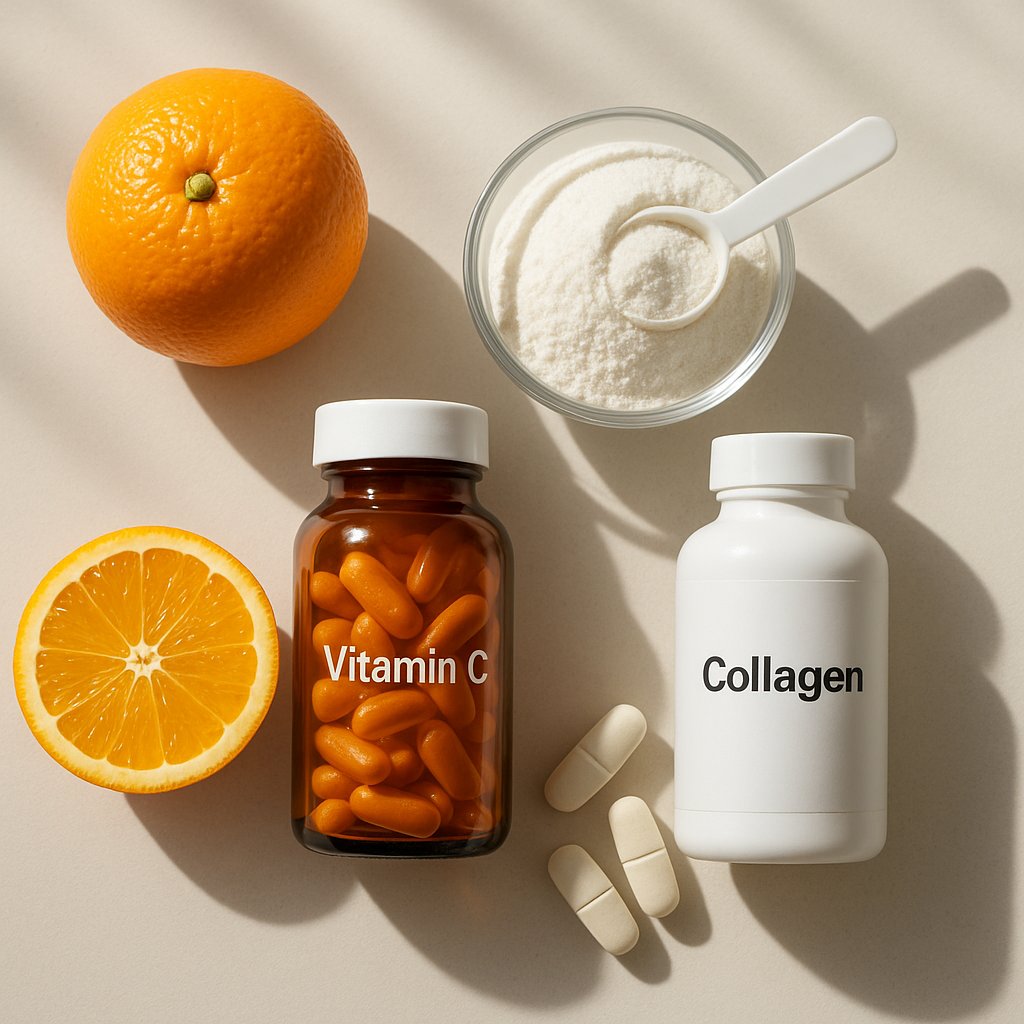
Vitamin C is required for collagen synthesis. Many collagen supplements include vitamin C for this reason. The combination makes biochemical sense for general skin support. For acne specifically, the synergy doesn’t change the fact that neither has direct evidence for reducing breakouts.
The anecdotal picture
In collagen supplement communities and skin health forums, some users report that their skin “looks clearer” after starting collagen. Separating this from improved hydration, concurrent diet improvements, and expectation effects is essentially impossible. Some users also note that certain collagen supplements (particularly those with added biotin) seem to trigger breakouts, though this is also anecdotal.
Practical recommendations
- For active acne: Neither vitamin C nor collagen supplements are treatments. Focus on proven topicals and dermatology.
- For post-acne pigmentation: Topical vitamin C (L-ascorbic acid 10-20%) is worth trying. Oral vitamin C alone won’t accomplish this.
- For post-acne scars and texture: Collagen peptides (5-10 g/day) are reasonable as general skin support alongside dermatological scar treatments.
- For general skin health: Both are fine to take. They just aren’t acne-specific.
Bottom line
Vitamin C and collagen are solid general skin health supplements. They are not acne treatments, and marketing them as such is misleading. Their real value in the acne context is downstream – helping with marks, scars, and skin quality after the acne itself is managed.
This article is for informational purposes only and does not constitute medical advice.
Frequently Asked Questions
Does vitamin C clear acne?
No. Vitamin C does not directly clear active breakouts. Its benefit for acne-prone skin is in reducing post-inflammatory hyperpigmentation (the dark spots that linger after pimples heal) and supporting collagen synthesis for scar recovery.
Should I take vitamin C or use it topically for acne benefits?
For post-acne hyperpigmentation, topical vitamin C (L-ascorbic acid serums at 10-20%) has stronger evidence than oral supplementation. Oral vitamin C supports overall collagen production but is less targeted for skin.
Does collagen help acne scars?
Oral collagen peptides show some early evidence for improving skin elasticity and texture, which may support scar appearance. Clinical evidence specifically for acne scar improvement is limited but plausible given collagen’s role in wound healing.
How much vitamin C should I take for skin health?
The RDA is 75-90 mg/day; doses of 500-1000 mg are common in supplements. Excess vitamin C above absorption is excreted. There is no strong evidence that megadoses (above 1 g/day) provide additional skin benefits over moderate doses.
Related Articles
- Pantothenic Acid (Vitamin B5) for Acne: Does It Work?
- Collagen With Vitamin C: Is It Better or Just Smarter Marketing?
- Best Fungal Acne Safe Blush and Bronzer for a Natural Finish
- Best Fungal Acne Safe Concealer for Spot Coverage Without Congestion
- Probiotics for Acne: The Gut-Skin Axis Explained
Sources
- Optimized collagenase biosynthesis (Bacillus siamensis strain Z1) and its application in collagen hydrolysate-mediated silver and zinc oxide nanoparticles synthesis and characterization with antibacterial, antioxidant and cytotoxic activities. PloS one. 2026. PMID: 41838715.
- Lymphatic Regeneration Visualized on Magnetic Resonance Imaging After Placement of Aligned Nanofibrillar Collagen Scaffolds for Treatment of Lymphedema. Annals of plastic surgery. 2025. PMID: 40549898.
- Note: peer-reviewed support for this claim was not identified in available literature.
- Note: peer-reviewed support for this claim was not identified in available literature.
- Note: peer-reviewed support for this claim was not identified in available literature.