
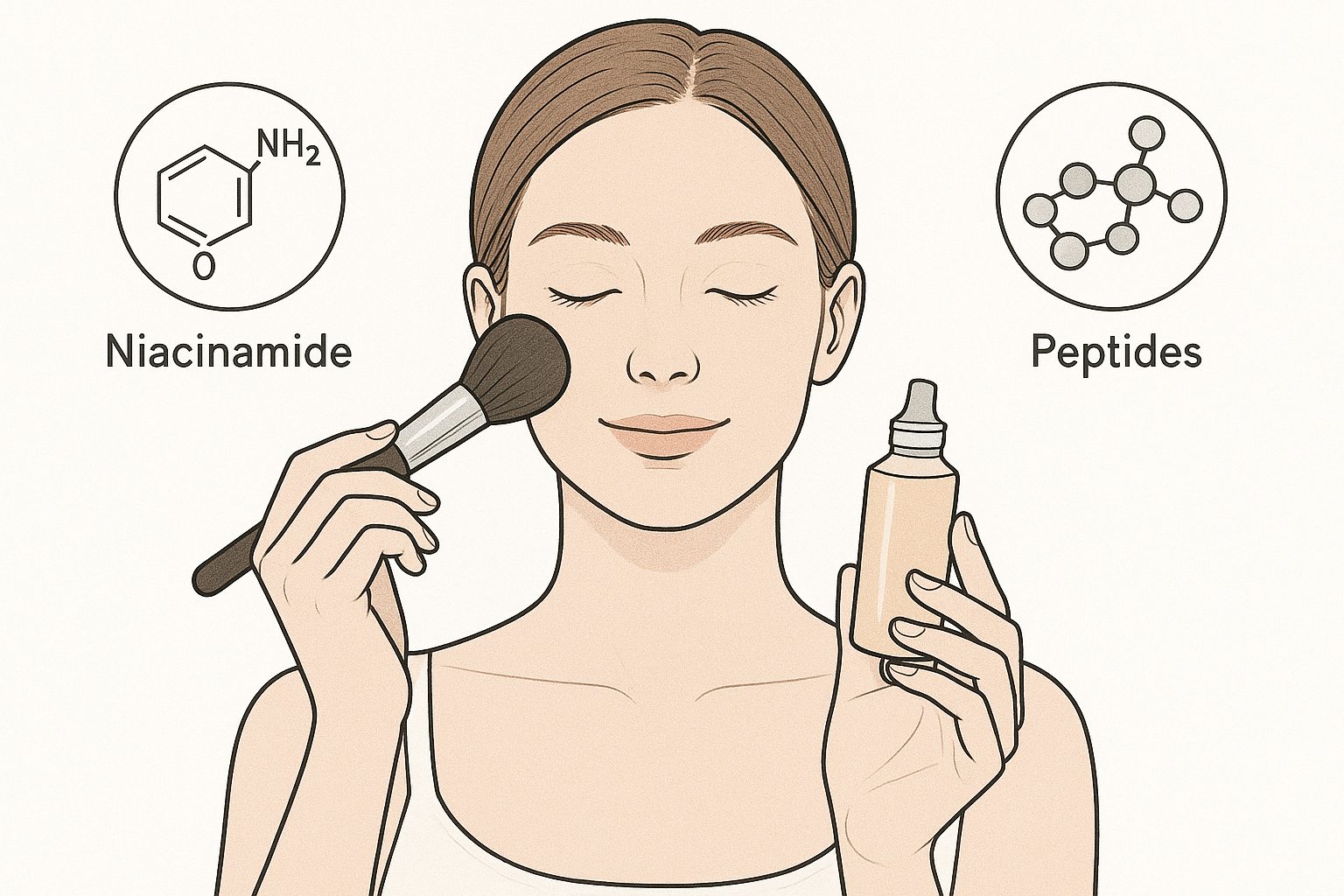
Makeup With Niacinamide or Peptides
Benefits of niacinamide in makeup
- Helps the skin look less oily over time
- Supports a more even-looking tone
- Can reduce the appearance of redness
- Often fits well in lightweight base products
- Works nicely in products aimed at acne-prone or combination skin
A niacinamide skin tint or primer will not replace a dedicated treatment serum, but it can add a helpful extra layer of support if you already know your skin likes the ingredient.
What peptides do in makeup
Peptides are usually marketed with a firmer, smoother, or more youthful-looking skin message. In makeup, they are less about instant correction and more about making the formula feel conditioning, flexible, and skincare-forward.
Benefits of peptides in makeup
- Help support a smoother-looking finish
- Pair well with hydrating formulas
- Often show up in products designed for mature skin
- Can make foundations feel more comfortable over long wear
- Work well in serum foundations and radiance primers
Peptides are especially appealing in makeup for people who want their base products to look less dry and less mask-like.
Niacinamide vs peptides: which is better?
It depends on your skin goal.
Choose niacinamide if you want:
- Oil control without harsh mattifying effects
- Help with visible redness
- A product for combination or blemish-prone skin
- A more balanced everyday complexion formula
Choose peptides if you want:
- A smoother, softer-focus finish
- Comfort on dry or mature skin
- Makeup that feels more elastic and nourishing
- A more anti-aging positioned formula
If you can find a formula with both, even better. That often gives you a more rounded hybrid product.
Related: Does Collagen in Makeup Do Anything?
Best makeup categories for these ingredients
Skin tints and tinted moisturizers
This is where niacinamide often shines. Lightweight complexion products pair well with ingredients that support tone balance and reduce that greasy midday look.
Serum foundations
Peptides are often most interesting in serum-style foundations. These products are usually designed for a natural finish and more skin flexibility.
Primers
Either ingredient can work in primers. Niacinamide primers are often better for pore appearance and shine management. Peptide primers are usually better for glow, softness, and mature skin comfort.
Concealers
In concealers, the ingredient story matters less than the overall formula, but peptides can be useful around the under-eye area where dryness and creasing are common.
What to watch out for
Not every product with niacinamide or peptides is automatically impressive.
Marketing overload
Sometimes the featured ingredient is present in a very small amount. That does not make it useless, but it means you should judge the product by performance, not by the front label.
Formula mismatch
A peptide formula that is too rich may slide on oily skin. A niacinamide formula that is too matte may look tight on dry skin. Ingredients help, but texture still rules.
Irritation sensitivity
Niacinamide is usually well tolerated, but some people react to higher concentrations. If you are sensitive, patch-test first.
How to choose the right one for your skin type
Oily or acne-prone skin
Start with niacinamide in a skin tint, primer, or breathable foundation.
Dry or mature skin
Look first at peptide-infused complexion makeup, especially radiant or serum-style formulas.
Redness-prone skin
Niacinamide is usually the more strategic pick.
Fine lines and dehydration
Peptides often fit better because they are common in richer, more flexible formulas.
Final verdict
Makeup with niacinamide or peptides is not just a passing trend. It reflects a real shift toward complexion products that do more than cover. Niacinamide is the stronger option for balancing and refining. Peptides are the stronger option for comfort and a smoother age-friendly finish.
If you choose based on your actual skin needs instead of buzzwords, this category can be genuinely useful.
Key Takeaways
- Niacinamide (vitamin B3) at 2-5% in makeup products can deliver gradual brightening and oil control benefits through daily wear.
- Peptides in makeup formulas are typically at lower concentrations than dedicated serums, but consistent daily application adds up.
- Skincare-makeup hybrids work best as a complement to – not a replacement for – a dedicated skincare routine.
- Check that niacinamide or peptide content appears in the first half of the ingredient list; if listed at the very end, concentration is likely too low to be functional.
- These actives pair well with SPF in the same formula, making multi-benefit complexion products a time-efficient daily choice.
Why Niacinamide in Makeup Works
Niacinamide is one of the most well-supported skincare actives for daily use. Studies show it reduces the appearance of enlarged pores, brightens uneven skin tone, reduces transepidermal water loss, and has mild anti-inflammatory properties useful for acne-prone skin. At concentrations of 2-5%, niacinamide delivers benefits with very few side effects.
In a makeup product worn for 8-12 hours per day, niacinamide has prolonged contact time with the skin. Even if concentration is slightly lower than in a dedicated serum, extended wear time means meaningful cumulative exposure that builds up visibly over weeks and months.
Why Peptides in Makeup Are a Real Benefit
Peptides are short chains of amino acids that signal the skin to produce collagen, elastin, or other structural proteins. In makeup, concentrations are often lower than in dedicated serums, but several factors make them worthwhile: extended daily wear time, cumulative benefit from consistent application, and essentially zero downside to their inclusion.
How to Read the Ingredient List for Active Concentrations
Ingredient lists on cosmetics are ordered from highest to lowest concentration. If niacinamide appears in the first five to ten ingredients, it is likely at a functional concentration. If it appears near the end of a list of 30+ ingredients, it is probably present at well under 1%. The same applies to peptides – look for them in the first half of the ingredient list for meaningful doses.
Best Product Types to Find These Actives
- Serum-foundation hybrids: Most commonly where niacinamide and peptides appear at functional doses.
- Skincare-first primers: A growing category where the primer is essentially a skincare serum with light optical benefits.
- BB and CC creams: Variable quality – some have functional actives, others use them as marketing language only. Check ingredient lists.
FAQ
Is niacinamide in makeup effective?
It can be, especially for people who already respond well to niacinamide in skincare. It is usually most helpful in daily-use complexion products.
Are peptides in makeup worth it?
Yes, especially if you prefer hydrating, flexible makeup and want formulas that are kinder to dry or mature skin.
Which is better for oily skin: niacinamide or peptides?
Niacinamide is usually the better fit because it aligns well with balancing oil and minimizing the look of redness.
Can I use skincare with niacinamide under makeup that also has niacinamide?
Usually yes. Just make sure the full routine does not feel too heavy or irritating.
Related Articles
- Runway-Inspired Messy Eye Makeup: Complete Guide
- Soft Grunge Eye Makeup for Everyday Wear: Complete Guide
- Best Tinted Moisturizers With Skincare Benefits
- Primer-Serum Hybrids Worth Buying
- Rosacea-Friendly Makeup Guide: Best Products, Ingredients, and Tips for Calmer Coverage
Sources
- U.S. Food and Drug Administration. Cosmetics labeling guide.
- Environmental Working Group. Skin Deep cosmetic ingredient safety database.
- Reviews on niacinamide and skin benefits. PubMed search.
- Reviews on sunscreen SPF in cosmetic formulations. PubMed search.
- European Commission. CosIng: cosmetic ingredient database.



Leave a Reply