
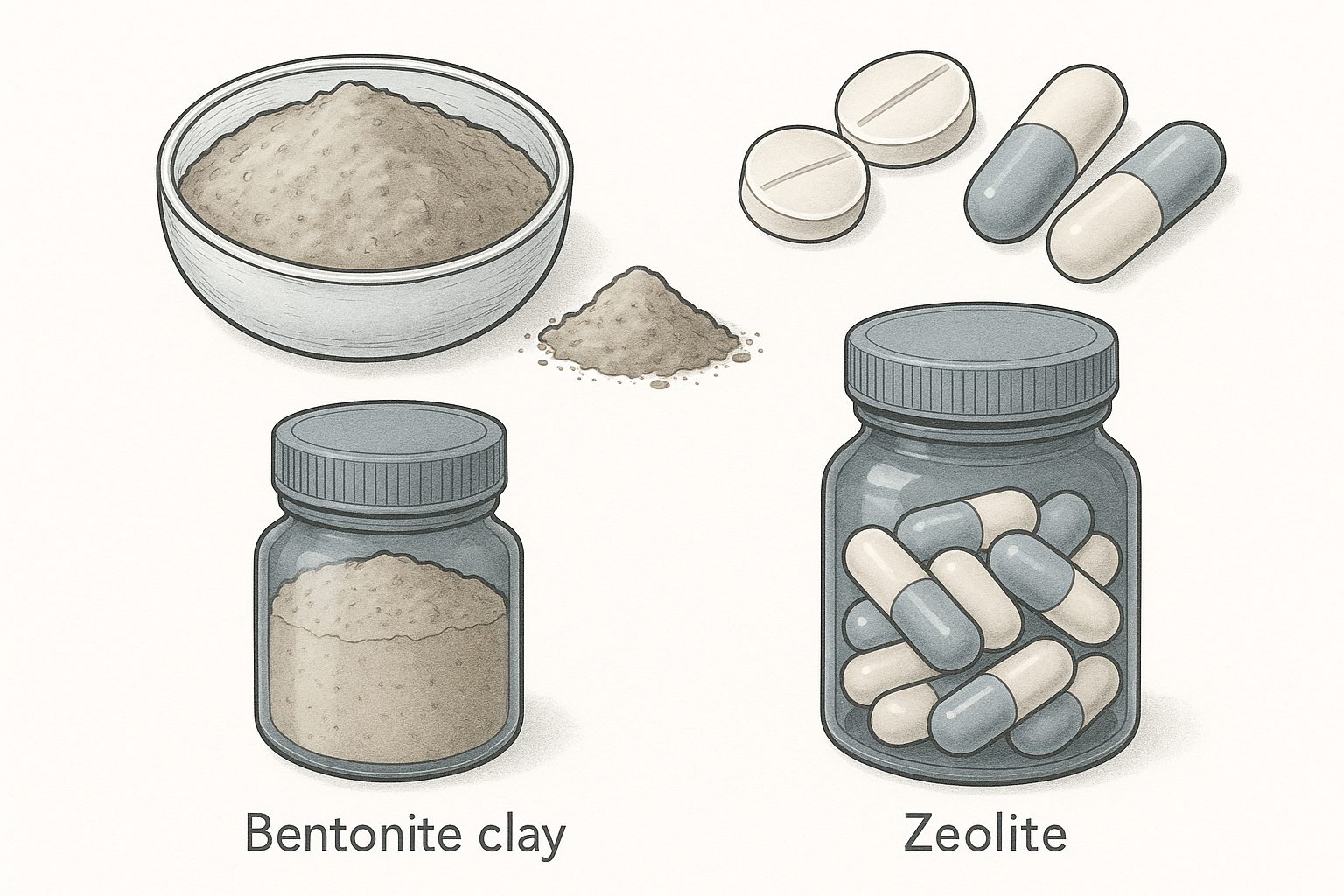
Bentonite Clay and Zeolite Supplements
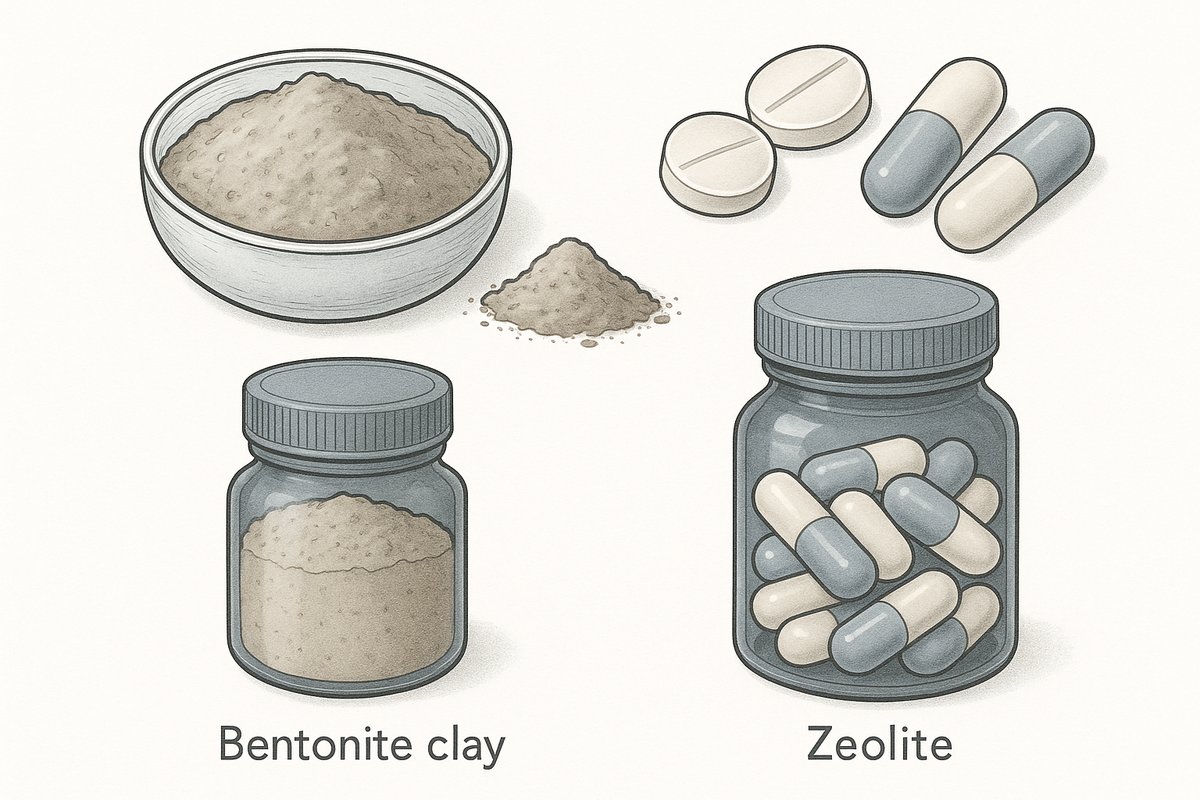
Bentonite clay and zeolite (typically clinoptilolite) are two of the most popular mineral-based binder supplements. They come from volcanic origins, they’ve been used in agriculture for decades, and they’re now marketed to humans for everything from mycotoxin binding to daily detoxification. Here’s what the science actually supports.
Quick Answer: Bentonite clay and zeolite are mineral compounds with ion-exchange properties that can bind certain heavy metals and toxins in the GI tract. Limited clinical evidence exists for meaningful benefit in healthy people. Safety concerns include heavy metal contamination in some bentonite products, and both can interfere with medication absorption if taken at the same time.
Key Takeaways
- Bentonite clay and zeolite have negatively charged surface structures that can bind positively charged toxins and heavy metals in the gut.
- Clinical evidence for meaningful heavy metal reduction in healthy people is limited and inconsistent.
- Some commercial bentonite clay products have been found contaminated with lead and arsenic in independent lab testing.
- Like activated charcoal, these mineral binders may impair absorption of medications and nutrients if timed incorrectly.
- They are most relevant in specific clinical contexts (e.g., documented mycotoxin or heavy metal exposure) rather than for general wellness.
Bentonite Clay
What It Is
Bentonite is a montmorillonite clay formed from volcanic ash. It has a layered structure with a large surface area and a negative charge that attracts positively charged molecules. There are two main types: sodium bentonite (swells more, used industrially) and calcium bentonite (used in supplements and some food-grade applications).
Where the Evidence Is Strong: Mycotoxin Binding in Agriculture
The strongest evidence for bentonite comes from animal agriculture. Decades of research show bentonite effectively binds aflatoxins in livestock feed, reducing animal exposure and protecting the food supply (Phillips et al., 2008). This is well-established and non-controversial.
Human Evidence: Limited but Real
A notable clinical trial by Afriyie-Gyawu et al. (2008, 2012) studied calcium bentonite clay (NovaSil) in Ghanaian adults with high dietary aflatoxin exposure. The clay significantly reduced urinary aflatoxin-albumin adducts-a biomarker of aflatoxin exposure-without measurable adverse effects on nutrient status over the study period.
Important context: This was in a population with genuinely high aflatoxin exposure from contaminated grain. This doesn’t translate to someone in a developed country with regulated food supplies taking clay capsules “just in case.”
What About Heavy Metals?
Bentonite can bind some heavy metals in laboratory settings (cadmium, lead). However, clay itself can contain trace heavy metals, including lead and arsenic, depending on the source. In 2016, the FDA warned against a specific brand of bentonite clay that contained elevated lead levels. Source matters enormously with clay products.
Risks
- Contamination: Clay can contain the very heavy metals it’s supposed to bind. Third-party testing is essential.
- Constipation: Clay absorbs water and can cause or worsen constipation.
- Medication binding: Like all binders, clay can reduce drug absorption.
- Nutrient binding: Mineral exchange isn’t perfectly selective.
- Dental damage: Some people drink clay slurries, which can erode enamel.
Zeolite (Clinoptilolite)
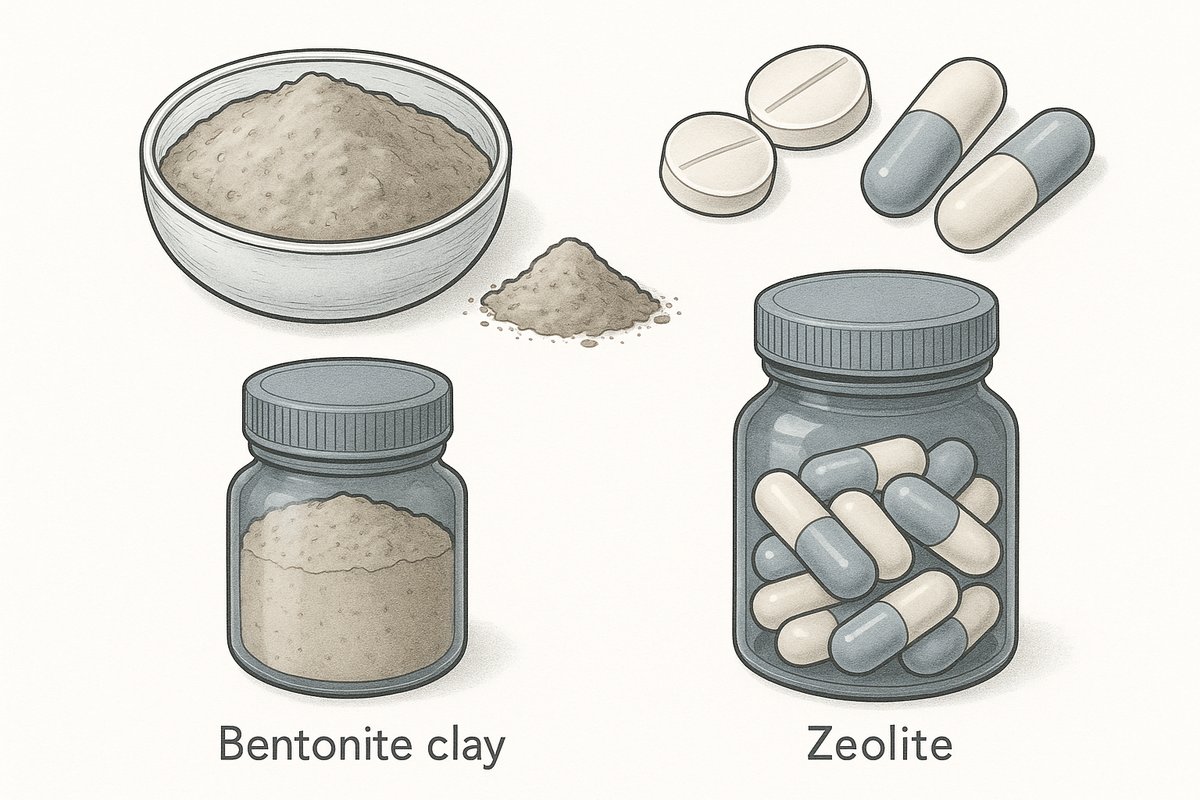
What It Is
Clinoptilolite is a naturally occurring zeolite-a microporous aluminosilicate mineral with a cage-like structure. It works through ion exchange: it trades ions trapped in its structure (like calcium or potassium) for ions in its environment (like heavy metals or ammonium). It’s been used in water treatment, nuclear waste cleanup, and agriculture.
The Safety Question: Aluminum
Zeolite contains aluminum in its crystalline structure, which understandably raises concerns. A 2018 critical review in Frontiers in Pharmacology (Kraljevic Pavelic et al.) addressed this directly: in human supplementation studies and animal studies, aluminum from clinoptilolite does not appear to enter systemic circulation. The crystal structure is stable enough in GI conditions to retain its aluminum. Synthetic zeolite A (a different material) did release aluminum in rats, but natural clinoptilolite did not.
A 2022 Frontiers in Medicine study across three clinical trials confirmed PMA-zeolite (a specific tribomechanically activated form) did not increase blood levels of metal contaminants.
What the Evidence Shows
- Gut barrier function: A randomized, double-blind, placebo-controlled trial (Lamprecht et al., 2015) found zeolite supplementation reduced zonulin (a marker of intestinal permeability) in endurance athletes. This is one of the better-designed binder studies available.
- Heavy metal binding: Lab and animal evidence supports ion-exchange binding of lead, cadmium, and other metals. Human evidence for meaningful detoxification is preliminary.
- Mycotoxin binding: Animal data supports zeolite binding of certain mycotoxins, similar to bentonite.
- Cancer claims: Some companies reference a zeolite patent for cancer treatment. Memorial Sloan Kettering explicitly states: “Zeolites have not been studied as a cancer drug in human clinical trials and zeolite supplements have not been approved as safe or effective” for cancer.
Risks
- Source quality: Like clay, zeolite quality varies enormously. Contaminant levels depend on the mineral deposit.
- Ion exchange unpredictability: Zeolite exchanges ions-it can release minerals while binding others. Long-term effects on mineral balance haven’t been well-studied in supplement users.
- Medication interactions: Same concern as all binders.
- Overhyped products: Many zeolite supplements make claims far beyond the evidence, including cancer prevention and systemic detoxification.
Bentonite vs. Zeolite: How to Choose
| Consideration | Bentonite Clay | Zeolite (Clinoptilolite) |
|—|—|—|
| Strongest evidence for | Aflatoxin binding (human trial) | Gut barrier support (RCT in athletes) |
| Mechanism | Surface adsorption + interlayer absorption | Ion exchange in cage structure |
| Contamination risk | Higher (variable lead/arsenic) | Lower (stable crystal structure) |
| Constipation risk | Higher | Lower |
| Human safety data | Moderate (NovaSil trials) | Moderate (multiple clinical trials) |
Practical Guidance
If you’re using either under practitioner guidance for a specific reason (confirmed mycotoxin exposure, as part of a mold illness protocol):
- Choose third-party tested products – especially for clay, where contamination risk is real
- Separate from medications by 2-4 hours
- Take on an empty stomach
- Stay hydrated – especially with clay
- Don’t use long-term without monitoring
- Report to your doctor – especially if you take prescription medications
If you’re a healthy person in a developed country with no specific exposure concern, the evidence doesn’t strongly support daily use of either supplement.
This article is for informational purposes only and does not constitute medical advice.
Frequently Asked Questions
Is bentonite clay safe to take internally?
Potentially, but product quality matters enormously. Some bentonite products have been independently tested and found to contain elevated lead or arsenic. If using internally, choose products with third-party heavy metal testing from a reputable lab.
Does zeolite remove heavy metals?
Zeolite (clinoptilolite) can bind heavy metals in the GI tract in laboratory and animal models. Human evidence for meaningful blood heavy metal reduction in healthy people is limited and inconsistent. It is not a substitute for medical treatment of heavy metal poisoning.
Can bentonite clay interact with medications?
Yes. Like activated charcoal, bentonite clay can bind to and reduce the absorption of medications taken at the same time. Always separate clay use from medication by at least 2 hours, and consult a healthcare provider before use.
What is bentonite clay actually made of?
Bentonite is a volcanic ash-derived clay primarily composed of montmorillonite, an aluminium phyllosilicate mineral. It swells in water and has significant ion-exchange capacity, which underlies its binding properties.
References
- Note: peer-reviewed support for this claim was not identified in available literature.
- Afriyie-Gyawu E, et al. NovaSil clay intervention in Ghanaians at high risk for aflatoxicosis. Food Additives & Contaminants. 2008;25(8):1033-1046.
- Kraljevic Pavelic S, et al. Critical Review on Zeolite Clinoptilolite Safety and Medical Applications in vivo. Frontiers in Pharmacology. 2018;9:1350.
- Lamprecht M, et al. Effects of zeolite supplementation on parameters of intestinal barrier integrity, inflammation, redox biology and performance in aerobically trained subjects. Journal of the International Society of Sports Nutrition. 2015;12:40.
- Shamsabad FN, Salehi MH, Shams J, Ghazanfari T (2026). Comparative inhibitory effects of zeolite, sepiolite, and kaolinite on A549 lung cancer cells. PloS one. PMID: 41671218.
- Memorial Sloan Kettering Cancer Center. Zeolite. Accessed 2026.
Related Articles
- Best Binder Supplements in 2026: Charcoal, Clay, Chlorella, and What the Evidence Actually Supports
- Best Supplements for Acne in 2026: What the Evidence Actually Says
- Omega-3 Supplements That Do Not Cause Fish Burps: What Actually Helps
- Women’s Sports Nutrition Supplements in 2026: What Actually Helps Performance?
- Best Supplements for Insulin Sensitivity in 2026: What Actually Improves How Your Body Responds to Insulin
Sources
- EDTA Chelation Reappraisal: Clinical Trials and Risk/Benefit (2012)
- Chelation in Metal Intoxication: Agents and Strategies (2010)
- Role of Chelation in Other Metal Poisonings (2013)
- Prebiotic Potential of Herbal Medicines in Digestive Health (2018)
- Herbal Formula Improves GI Symptoms: Clinical Trial (2020)
Leave a Reply